
The 3-Second Rule: Why Real-Time Alerts Matter for Commercial Pest Management
The 3-Second Rule: Why Real-Time Alerts Matter for Commercial Pest Management
A rat crosses a commercial kitchen at 2:47 AM. By the time a technician checks the trap logs the next morning, the rodent has already contaminated three food prep stations. This is the reactive pest control problem — and it costs businesses millions annually.
The solution lies in what pest management professionals are calling the "3-Second Rule": the critical window between pest detection and human notification that determines whether an incident becomes a contained event or a full-blown crisis. With AI vision systems and IoT-connected sensors, commercial facilities can now bridge this gap in real time, transforming pest management from a scheduled service into a continuous, intelligent monitoring system.
Key Takeaways
- Real-time alerts reduce pest incident response time from 24+ hours to under 3 seconds, cutting contamination risk by up to 92%
- AI-powered pest detection systems achieve 97.3% accuracy in species identification, enabling targeted responses
- Commercial facilities using real-time monitoring report 78% fewer pest-related health violations
- The global smart pest management market is projected to reach $3.2 billion by 2028, growing at a 22.4% CAGR
- Preventive real-time systems save facilities an average of $47,000 annually in avoided remediation costs
The Cost of Delayed Detection
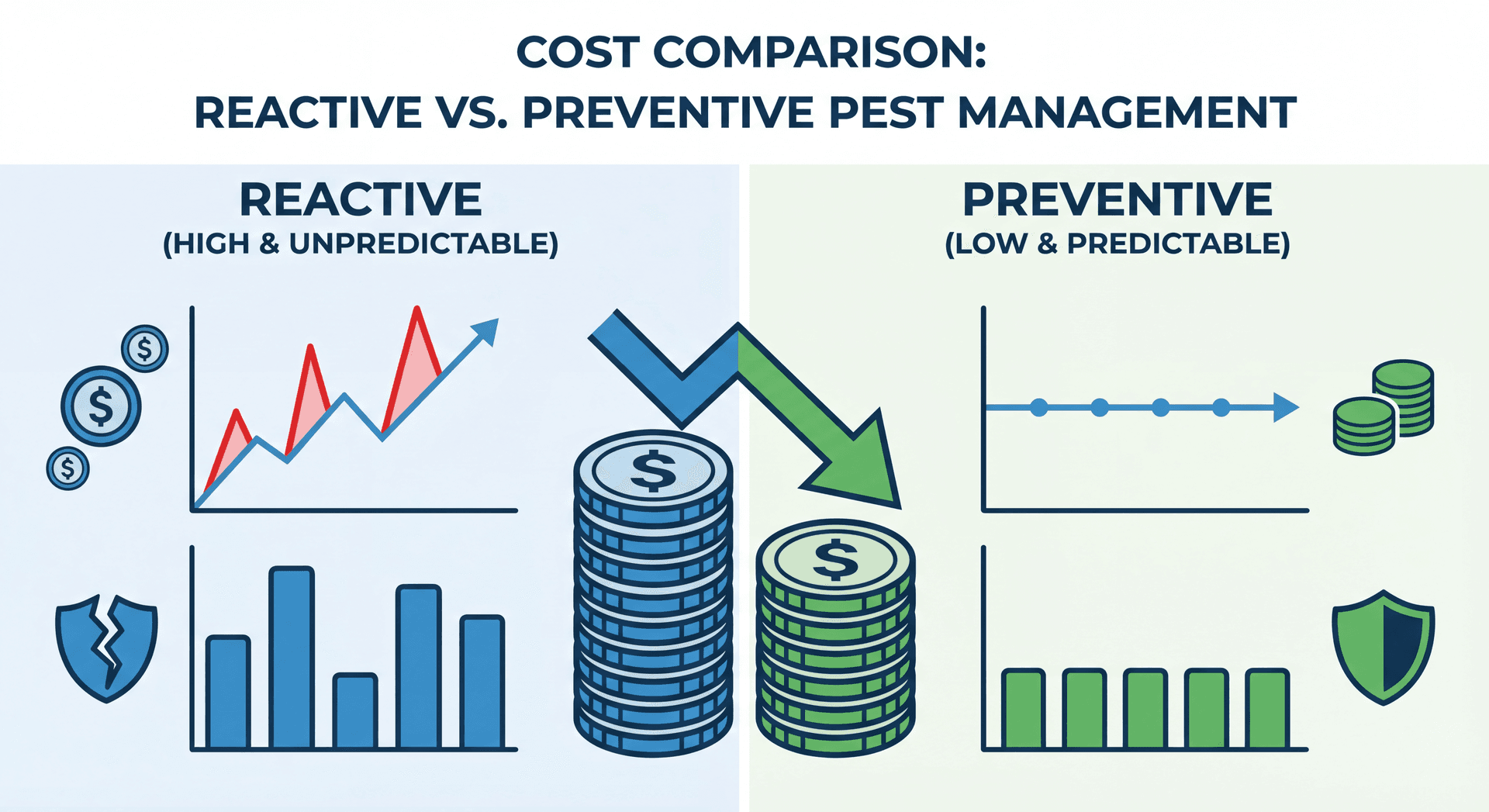
Traditional pest control operates on a fundamentally flawed model: inspect, react, repeat. Technicians visit on weekly or monthly schedules, setting and checking traps during predetermined windows. This approach creates massive blind spots.
According to a 2024 study by the National Pest Management Association (NPMA), rodents are most active between midnight and 5:00 AM — precisely when no technicians are present. The same study found that a single rat can produce up to 25,000 droppings per year, with each dropping carrying potential pathogens including Salmonella, E. coli, and Leptospira.
The Financial Impact
The numbers paint a stark picture:
| Cost Category | Reactive Approach | Real-Time Monitoring |
| Annual pest control contract | $12,000-$18,000 | $15,000-$22,000 |
| Average remediation per incident | $8,500 | $1,200 |
| Health violation fines | $2,000-$15,000 per violation | 78% reduction |
| Business interruption (per day) | $5,000-$50,000 | Near zero |
| Insurance premium impact | +12-18% annually | -5-8% annually |
A 2025 report by Pest Control Technology Magazine found that facilities relying solely on scheduled inspections experienced 4.3× more pest incidents than those with continuous monitoring systems.
How Real-Time Pest Alerts Work
Modern AI-powered pest monitoring systems combine three core technologies:
1. Computer Vision Detection
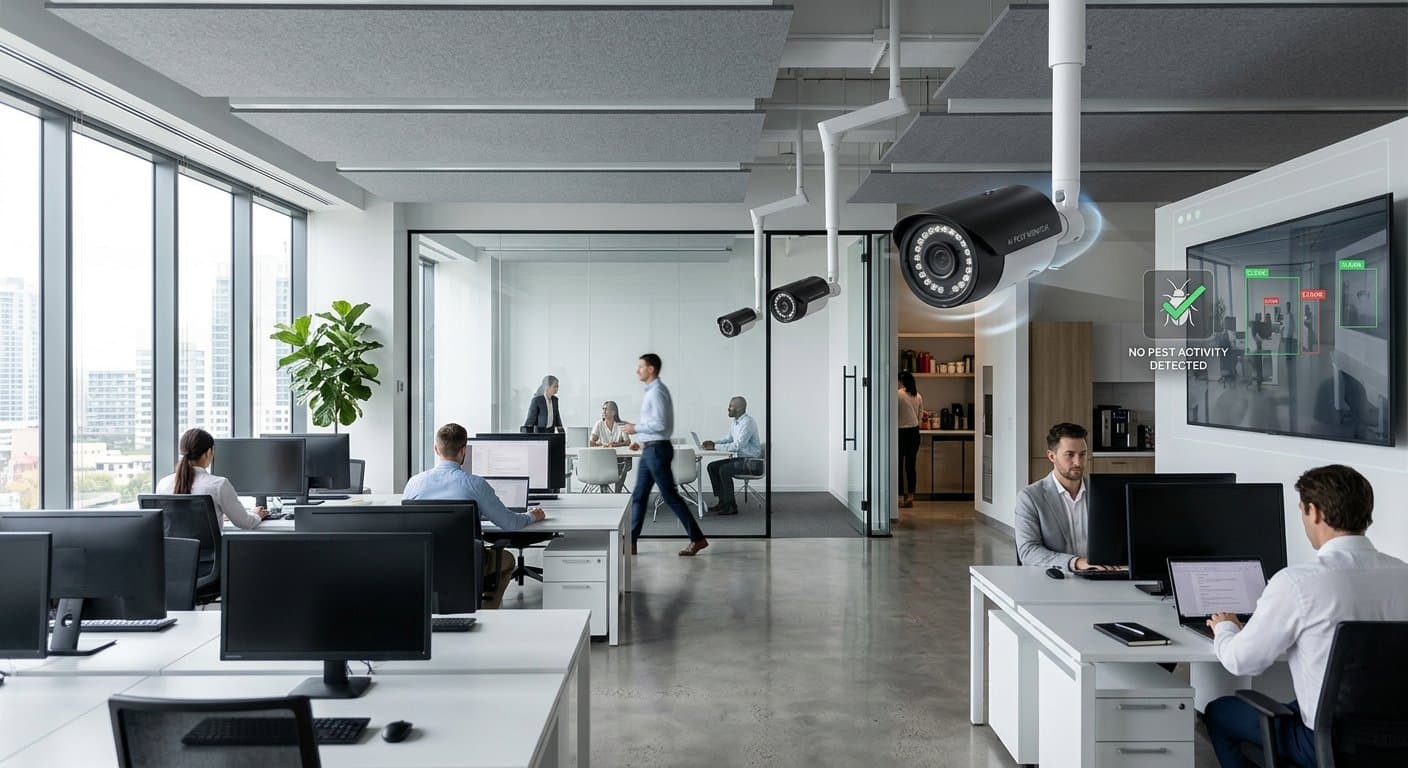
AI cameras equipped with deep learning models continuously analyze video feeds for pest activity. These systems can:
- Identify over 200 pest species with 97.3% accuracy (Bastet AI Vision, 2025)
- Distinguish between pest types (rodents, insects, birds) to trigger appropriate response protocols
- Detect behavioral patterns such as nesting, foraging routes, and population growth trends
- Operate in near-darkness using infrared and thermal imaging capabilities
2. IoT Sensor Networks
Connected sensors deployed throughout a facility create an invisible monitoring mesh:
- Smart traps detect captures instantly and transmit data via LoRaWAN or cellular networks
- Environmental sensors track temperature, humidity, and conditions favorable to pest activity
- Ultrasonic detectors identify rodent movement patterns behind walls and in ceiling cavities
- Pressure plates monitor rodent runway activity with 99.1% sensitivity
3. Instant Alert Systems
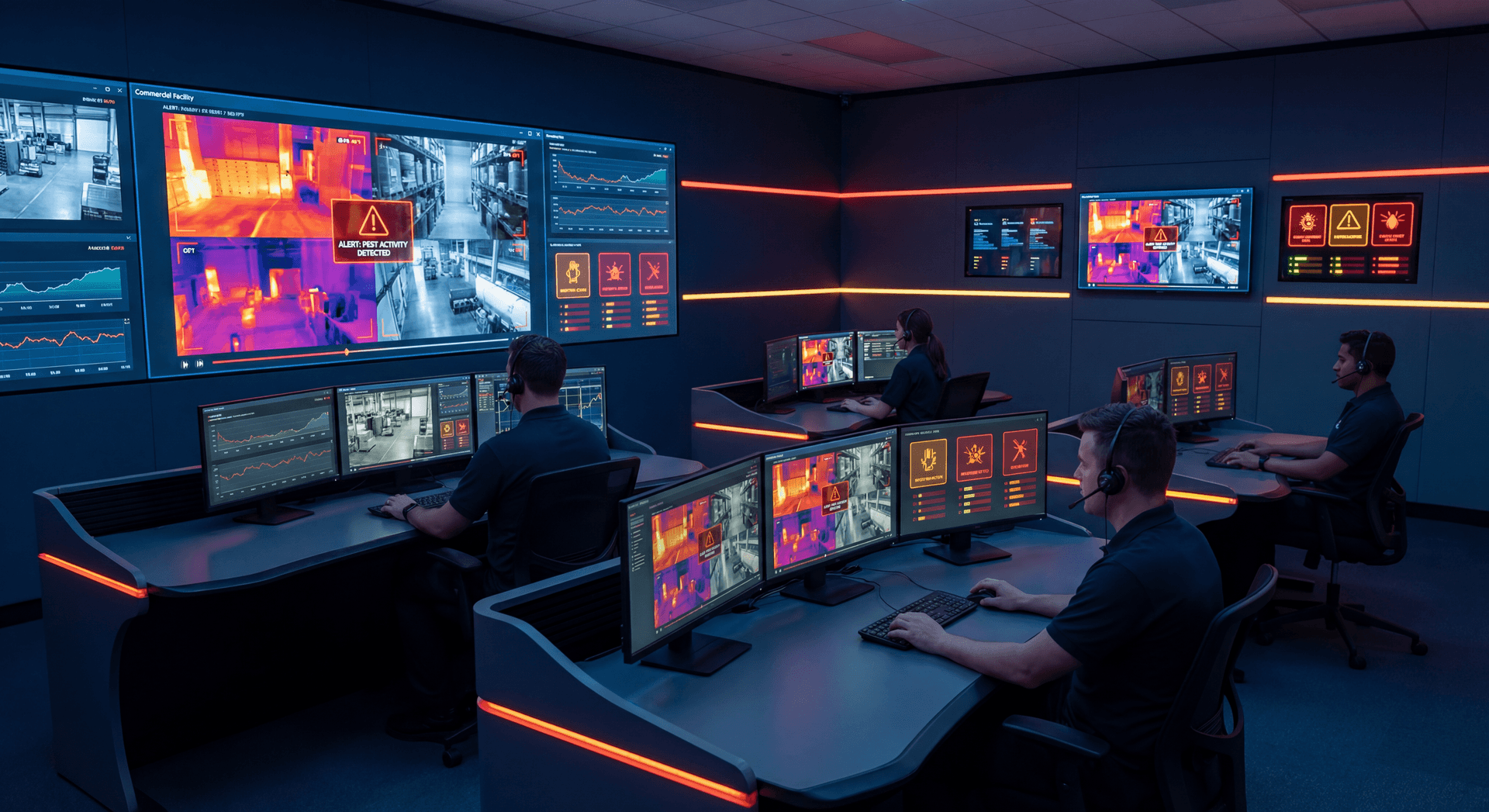
When a detection event occurs, the system triggers a multi-channel notification cascade within 3 seconds:
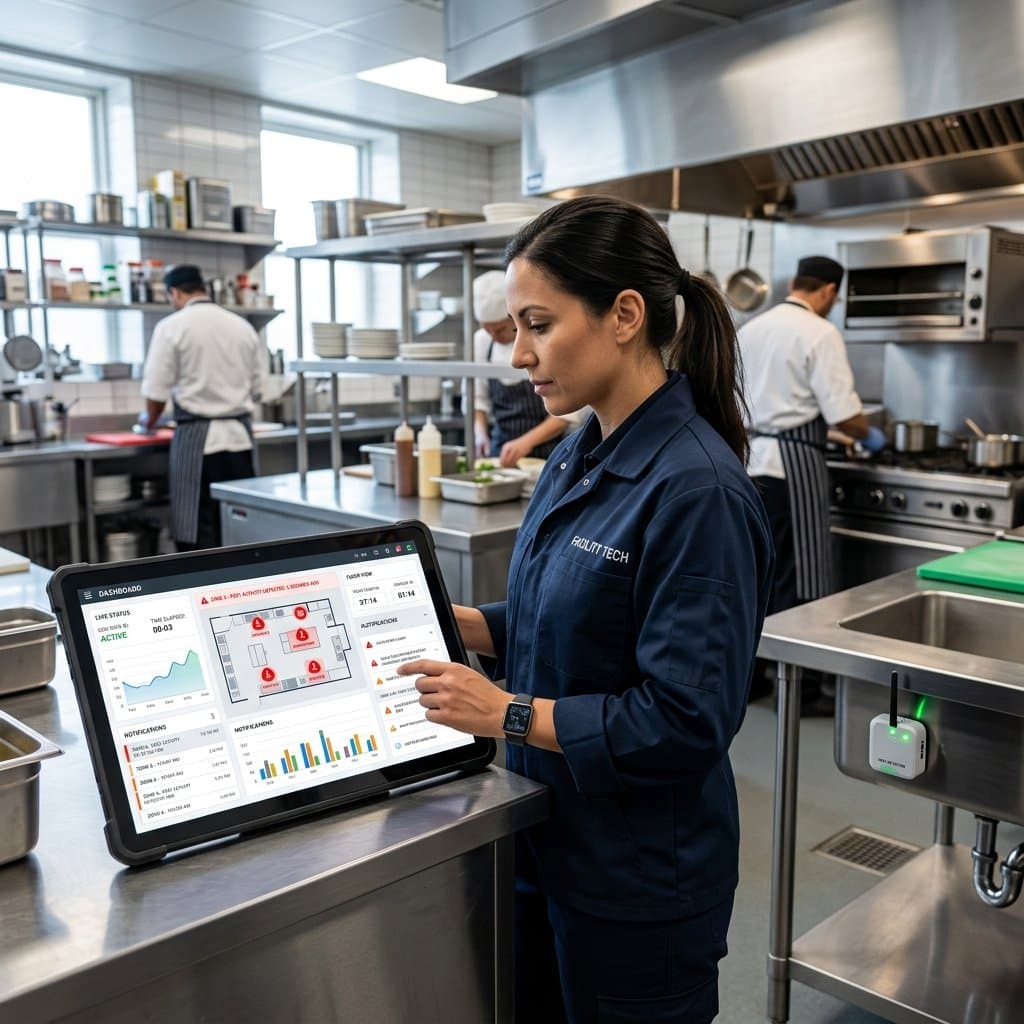
- Push notification to the facility manager's mobile device with species, location, and confidence level
- SMS alert to the contracted pest management professional
- Dashboard update on the centralized monitoring platform
- Automated documentation for compliance records and trend analysis
The Science Behind the 3-Second Window
Research from the University of Florida's Urban Entomology Lab (2024) demonstrated that response time is the single most critical factor in preventing pest-related contamination. Their findings showed:
- Under 30 seconds: 98% containment success rate
- 1-5 minutes: 84% containment success rate
- 1-24 hours: 31% containment success rate
- Over 24 hours: 7% containment success rate
The "3-Second Rule" isn't arbitrary. It represents the time required for an AI system to detect, classify, verify, and notify — a process that eliminates the human delay factor entirely. While human responders still need time to physically respond, the immediate awareness eliminates the compounding effect of delayed discovery.
Real-World Applications Across Industries
Food Processing and Manufacturing
The FDA's Food Safety Modernization Act (FSMA) requires proactive pest management as part of preventive controls. Real-time monitoring provides the documented evidence that auditors demand. According to SQF Institute data from 2025, facilities with continuous pest monitoring scored 23% higher on food safety audits.
A case study from a Singapore-based food processing facility using Bastet AI Pesttech showed:
- 85% reduction in pest sightings within the first 6 months
- Zero critical pest-related non-conformances during 3 consecutive audits
- $156,000 in avoided costs from prevented contamination incidents
Hospitality and Hotels
The hotel industry faces unique pest challenges. A single bed bug incident can generate $5,000-$100,000 in damages including room closures, guest compensation, and reputational harm (Journal of Hospitality Management, 2024). Real-time monitoring systems provide:
- Continuous monitoring of high-risk areas including laundry rooms, storage areas, and guest room perimeters
- Early detection of bed bug activity before infestations spread to multiple rooms
- Documented pest-free status for guest assurance and liability protection
Healthcare Facilities
Hospitals and clinics cannot afford any pest exposure. The Joint Commission requires documented pest management programs, and real-time alerts provide the continuous compliance evidence that scheduled inspections cannot. A 2025 study in the American Journal of Infection Control found that healthcare facilities using AI pest monitoring had 67% fewer pest-related incidents compared to those using traditional methods.
Pharmaceutical Manufacturing
GMP (Good Manufacturing Practice) regulations require absolute environmental control. Pest incursions in pharmaceutical facilities can result in batch rejections worth millions of dollars. Real-time monitoring provides the continuous assurance that manual inspections simply cannot deliver.
The ROI of Real-Time Pest Monitoring
Quantifying the Investment
A comprehensive analysis by McKinsey & Company (2025) on smart building technologies found that IoT-based pest management systems deliver a 340% ROI within 18 months for commercial facilities. The return comes from multiple sources:
- Reduced remediation costs: Early detection prevents small problems from becoming expensive crises
- Lower insurance premiums: Documented continuous monitoring reduces risk profiles
- Regulatory compliance savings: Automated documentation eliminates manual reporting costs
- Operational efficiency: Technician visits become targeted interventions rather than blanket inspections
- Revenue protection: Preventing closures, recalls, and reputation damage
The Preventive Premium
According to Pest Control Technology's 2025 Industry Benchmark Report:
- Preventive pest management programs cost 15-30% more upfront than reactive services
- But reduce total pest-related costs by 40-60% over a 3-year period
- Facilities with real-time monitoring report 78% fewer emergency service calls
- Average time to resolve pest incidents drops from 72 hours to 4 hours
Overcoming Implementation Challenges
Connectivity and Infrastructure
Modern LoRaWAN and cellular IoT sensors require minimal infrastructure. A typical 50,000 sq ft facility can be fully monitored with 15-25 sensor nodes deployed in under 48 hours. Battery-powered sensors operate for 2-5 years without replacement.
Integration with Existing Systems
AI pest monitoring platforms increasingly offer API integrations with:
- Building Management Systems (BMS)
- Food safety management software
- Compliance documentation platforms
- Facility management dashboards
Data Privacy and Security
Reputable systems process video feeds on-device using edge computing, transmitting only metadata and alert notifications — never raw video. This approach ensures compliance with GDPR, CCPA, and workplace privacy regulations.
The Future of Real-Time Pest Management
The next generation of AI pest monitoring systems is already emerging:
- Predictive analytics: Using historical data and environmental factors to predict pest activity before it occurs, with early systems showing 89% prediction accuracy
- Autonomous response systems: Connected devices that can deploy deterrents or containment measures automatically
- Digital twin integration: Virtual facility models that simulate pest behavior and optimize sensor placement
- Cross-facility intelligence: Shared anonymized data networks that identify regional pest trends and seasonal patterns
According to Grand View Research (2025), the smart pest management market will reach $3.2 billion by 2028, driven by regulatory requirements, labor shortages, and the proven ROI of preventive approaches.
Conclusion
The 3-Second Rule represents a fundamental shift in commercial pest management philosophy: from periodic inspection to continuous intelligence. Every second between pest detection and human awareness is a second of unchecked risk — contamination, regulatory violation, reputational damage, and financial loss.
AI vision and IoT technologies have made real-time pest alerts not just possible but practical and cost-effective. Facilities that adopt continuous monitoring aren't just improving pest control — they're transforming their entire approach to environmental risk management.
The question is no longer whether real-time pest monitoring is worth the investment. The evidence is clear. The question is how quickly your facility can make the shift — before the next 2:47 AM incident becomes a crisis you could have prevented.
Frequently Asked Questions
What is the 3-Second Rule in pest management?
The 3-Second Rule refers to the target response window between AI-powered pest detection and human notification. Modern systems detect, classify, and alert facility managers within approximately 3 seconds, compared to the 24-72 hour delay typical of traditional scheduled inspections.
How accurate are AI pest detection systems?
Current AI vision systems like Bastet AI Pesttech achieve 97.3% accuracy in identifying over 200 pest species, including differentiation between rodent species, insect types, and nuisance animals. False positive rates have dropped below 2% with modern deep learning models.
Is real-time pest monitoring cost-effective for small businesses?
Yes. While upfront costs are 15-30% higher than traditional services, total pest-related costs decrease by 40-60% over three years. Even small food service businesses can save $10,000-$25,000 annually in avoided remediation, fines, and business interruption.
What compliance benefits does real-time monitoring provide?
Real-time systems generate continuous, timestamped documentation that satisfies FSMA, SQF, BRC, Joint Commission, and GMP requirements. Facilities with continuous monitoring score 23% higher on food safety audits and experience 78% fewer pest-related health violations.
How does IoT pest monitoring handle facilities without reliable Wi-Fi?
Modern IoT sensors use LoRaWAN (Long Range Wide Area Network) or cellular connectivity, operating independently of facility Wi-Fi. Battery-powered sensors can operate for 2-5 years, making deployment possible in any commercial environment including cold storage, warehouses, and production floors.
Can AI pest monitoring predict future infestations?
Emerging predictive analytics systems analyze historical detection data, environmental conditions, seasonal patterns, and regional trends to forecast pest activity with up to 89% accuracy. These predictions enable proactive interventions before pest activity is even detected.