
The Hidden Costs of Reactive Pest Control: Why Prevention Saves 40% in Annual Budgets
The Hidden Costs of Reactive Pest Control: Why Prevention Saves 40% in Annual Budgets
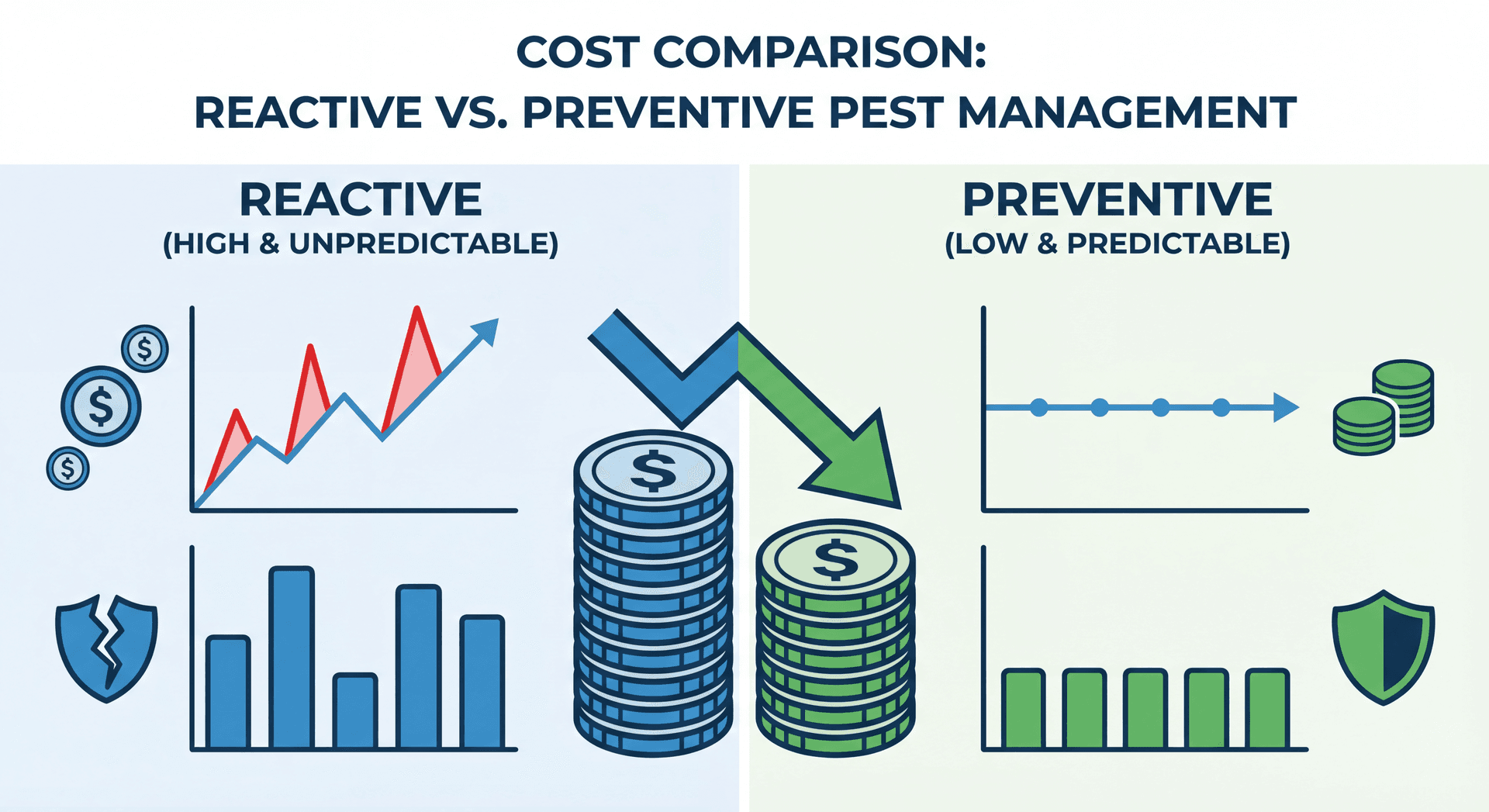
Direct Answer: Reactive pest control costs organizations 40-60% more annually than preventive approaches due to emergency premiums, repeat treatments, compliance penalties, reputational damage, and facility degradation. Companies adopting AI-powered preventive strategies see average ROI of 300% over three years, with real-time detection reducing infestations by 70-85% compared to traditional monthly inspections.
Every facility manager has been there. You get the call at 5 PM on a Friday — a tenant reports cockroaches in the break room, or worse, rodents in a server closet. You scramble to schedule an emergency treatment, pay the premium for after-hours service, and hope the problem doesn't resurface by Monday. This cycle of reacting to pest problems after they've already caused damage is costing your organization far more than you think.
The gap between reactive and preventive strategies isn't just a matter of scheduling. It's a fundamental difference in how you manage risk, allocate resources, and protect your facility's reputation. This article breaks down exactly where those hidden costs accumulate, why preventive pest management delivers measurable returns, and how modern technology — specifically AI-powered detection and IoT monitoring — is changing the economics of pest control for commercial facilities.
The True Price Tag of Waiting Until It's Too Late
When most facility managers calculate their pest control budget, they focus on the obvious line items: service visits, chemical treatments, and trap replacements. But reactive pest control carries a cascade of secondary costs that are easy to overlook but impossible to ignore in aggregate.
Consider a mid-sized commercial office building with an average monthly pest control contract of $800. When a rodent infestation is discovered — likely after visible droppings, gnawed wiring, or tenant complaints — the emergency response alone can cost $1,500 to $3,000. Add to that the cost of temporary tenant relocation, potential structural repairs, and the labor hours spent coordinating the response. One serious infestation can easily erase six months of regular service savings.
Damage and Downtime: The Costs Nobody Budgets For
Pest damage extends far beyond what you can see. Rodents chew through electrical wiring, creating fire hazards that can trigger costly insurance inspections and premium increases. In food service and pharmaceutical environments, a single pest sighting can lead to regulatory violations, failed audits, and mandatory facility shutdowns. The National Pest Management Association estimates that rodents alone cause over $20 billion in property damage annually in the United States.
For property management companies, the calculus is even starker. A pest-related complaint from a key tenant can lead to lease non-renewals, vacancy periods, and reputational damage that affects future leasing. In competitive commercial real estate markets, tenant retention is paramount, and pest issues are consistently ranked among the top five reasons commercial tenants choose to relocate.
Why Preventive Pest Management Delivers Superior ROI
The shift from reactive to preventive pest management isn't just a best practice — it's a financial strategy. Organizations that invest in prevention see an average ROI of prevention exceeding 300% over a three-year period, driven by reduced emergency spending, lower repair costs, and improved tenant satisfaction scores.
Prevention works because it addresses pest activity at the earliest possible stage, often before any visible evidence exists. This early intervention dramatically reduces the scale and cost of response. A single bait station placed strategically as part of a preventive program costs pennies per month. Eliminating an established rodent colony that has burrowed into wall cavities and nesting above ceiling tiles can cost thousands and require multiple service visits.
The Compounding Effect of Early Detection
Modern preventive strategies leverage continuous monitoring rather than periodic inspections. Traditional scheduled visits — even monthly ones — create blind spots between appointments. A pest problem that begins on day two of a monthly cycle has nearly four weeks to establish itself before the next inspection.
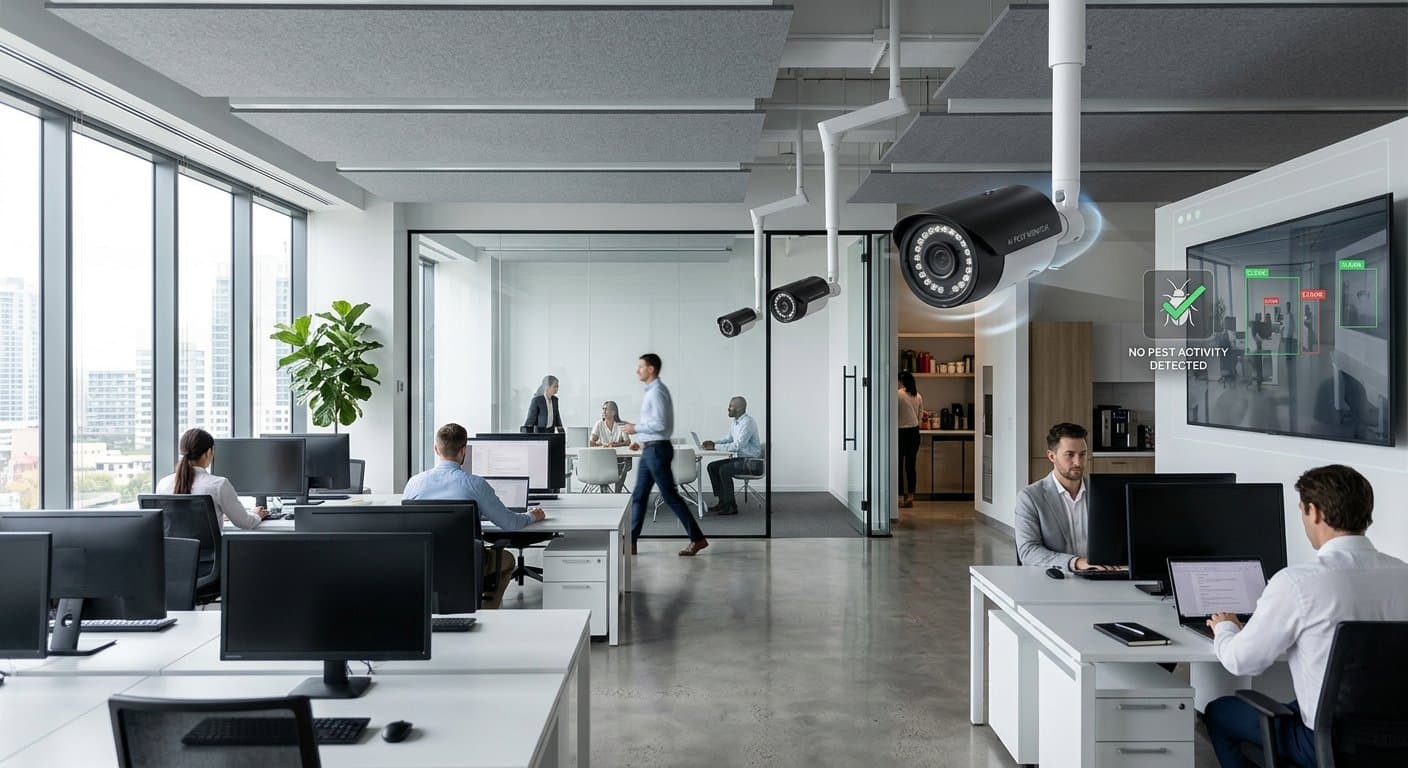
This is where technology transforms the equation. IoT-enabled smart traps and AI-powered vision sensors provide 24/7 monitoring, alerting pest control teams the moment activity is detected. Rather than discovering an infestation during a routine walk-through, operators receive real-time notifications that enable same-day response. The difference between addressing a single trapped rodent within hours and discovering a breeding population weeks later is the difference between a $50 service call and a $5,000 remediation project.
Five Hidden Cost Drivers That Destroy Reactive Budgets
Understanding exactly where money leaks in a reactive approach helps facility managers build the business case for prevention. Here are the five most significant cost drivers.
1. Emergency Service Premiums
Every pest control company charges significantly more for emergency and after-hours calls. These premiums typically range from 50% to 200% above standard rates, and they're almost exclusively associated with reactive situations. In a preventive model, issues are caught and scheduled during regular service windows, eliminating emergency charges entirely.
Practical example: A national retail chain switched from reactive to preventive pest management across 120 locations. Within the first year, emergency service calls dropped by 87%, saving the company over $340,000 in premium charges alone.
2. Repeat Treatments and Escalation
Reactive treatments often fail to address the root cause of infestations. A technician responding to a cockroach complaint may spray baseboards without identifying the moisture source or entry point that attracted them in the first place. Two weeks later, the roaches return, requiring another billable visit. This cycle of treatment and recurrence is one of the most persistent drivers of cost savings erosion in reactive programs.
Preventive programs, by contrast, incorporate environmental assessments, exclusion recommendations, and habitat modification alongside any chemical or mechanical interventions. The goal is to eliminate conditions that attract pests, not just eliminate the pests themselves.
3. Regulatory and Compliance Penalties
For facilities in regulated industries — food processing, healthcare, pharmaceuticals, hospitality — pest-related compliance failures carry steep financial consequences. FDA Warning Letters, health department citations, and third-party audit failures can result in fines ranging from $10,000 to $500,000, depending on severity and jurisdiction. In extreme cases, facilities face temporary or permanent closure.
A preventive pest management program with documented monitoring, trend analysis, and proactive intervention provides a robust compliance framework. When auditors ask for pest activity records, a preventive program delivers comprehensive data showing consistent monitoring and rapid response — not a log of emergency calls and tenant complaints.
4. Reputational Impact and Customer Trust
In the age of online reviews and social media, a single pest sighting can become a public relations crisis. Restaurant health inspection scores are publicly posted, and pest-related closures frequently go viral. For hotels and hospitality venues, bed bug or cockroach reports on review platforms can depress booking rates by 20-30% for months afterward.
Facility managers who adopt preventive pest management can proactively communicate their commitment to pest-free environments, using monitoring data and service reports as evidence. This transparency builds trust with tenants, customers, and regulators alike.
5. Facility Degradation and Repair Costs
Pests are not passive occupants. Termites silently destroy structural wood, rodents gnaw through insulation and wiring, and birds corrode building facades with acidic droppings. These damages accumulate gradually and are rarely attributed to pest activity when repair budgets are allocated.
A preventive program that includes regular structural inspections and pest pressure mapping can identify vulnerability areas before damage occurs. Catching a termite swarm early might cost $2,000 for localized treatment. Replacing compromised structural beams discovered after years of undetected activity can exceed $50,000.
How AI and IoT Are Redefining Prevention
The most significant advancement in pest control economics isn't a new chemical formulation or trapping mechanism — it's the application of artificial intelligence and Internet of Things technology to pest detection and monitoring.
Bastet AI Pesttech exemplifies this transformation. By combining computer vision with IoT sensor networks and cloud-based analytics, Bastet's platform enables facilities to move from periodic inspection to continuous, intelligent monitoring. Smart traps equipped with AI vision can distinguish between pest species, count activity levels, and transmit data in real time — eliminating the guesswork and delay inherent in manual inspection.
From Data to Decisions: The Analytics Advantage
Raw detection is only the first step. The real value lies in the analytics layer. Cloud platforms aggregate data from hundreds or thousands of monitoring points across a facility portfolio, identifying patterns that would be invisible to individual technicians. Seasonal trends, structural vulnerability hotspots, and treatment effectiveness metrics become actionable intelligence that drives smarter resource allocation.
Use case: A commercial property management company operating 50 buildings deployed IoT pest sensors across its portfolio. Within three months, the analytics dashboard revealed that 68% of rodent activity occurred within 15 feet of loading dock doors equipped with weather stripping that had degraded past its serviceable lifespan. A targeted replacement program across all 50 buildings reduced rodent captures by 74% in the following quarter, at a fraction of the cost of increased chemical treatments.
Building the Business Case for Your Organization
Transitioning from a reactive to a preventive pest management model requires upfront investment, but the financial case is compelling. Here's how to structure the conversation with decision-makers.
Calculating Your Current Reactive Costs
Start by gathering 12 months of pest control invoices and categorizing every expense:
- Routine scheduled service
- Emergency or callback charges
- Repairs attributed to pest damage
- Treatment supplies and materials
- Vendor coordination and internal labor hours
- Compliance-related costs (audits, fines, remediation)
Most organizations discover that 30-50% of their total pest-related expenditure falls into non-routine categories — money that could be substantially reduced through prevention.
Projecting Preventive Program Returns
A preventive program typically costs 15-25% more in monthly service fees but delivers savings across every reactive cost category. When you model the full financial impact — including avoided emergency charges, reduced damage repairs, improved tenant retention, and lower compliance risk — the cost savings consistently exceed the incremental investment by a factor of three or more.
Choosing the Right Technology Partner
Not all preventive programs are created equal. When evaluating technology partners, look for:
- Real-time detection and alerting capabilities
- Species-level identification through AI vision
- Scalable analytics across multi-site portfolios
- Integration with existing facility management systems
- Demonstrated ROI from comparable facilities in your industry
Key Takeaways
40-60% cost savings: Organizations implementing preventive pest management programs save 40-60% annually compared to reactive approaches.
300% average ROI: Preventive pest management delivers average ROI of 300% over three years through reduced emergency costs and lower repair expenses.
70-85% infestation reduction: AI-powered continuous monitoring reduces infestations by 70-85% compared to traditional monthly inspections.
Real-time ROI: Facilities using IoT sensors detect pest activity within hours rather than weeks, reducing treatment costs by 60-80%.
Multi-site efficiency: Property management companies with 50+ buildings achieve 74% reduction in rodent captures through data-driven intervention targeting.
Frequently Asked Questions
Q1: How much does reactive pest control actually cost compared to preventive approaches? A: Reactive pest control costs 40-60% more annually due to emergency premiums (50-200% above standard rates), repeat treatments, compliance penalties, reputational damage, and facility degradation. A typical commercial facility can save $15,000-$25,000 annually by switching to prevention.
Q2: What's the typical ROI timeline for preventive pest management programs? A: Most facilities break even within 8-12 months and achieve positive ROI of 200-400% within the first year. Over three years, average ROI exceeds 300% when factoring in all cost savings and risk mitigation benefits.
Q3: How do AI and IoT technologies actually reduce pest control costs? A: AI vision and IoT sensors provide 24/7 monitoring with real-time alerts, enabling same-day response instead of waiting for scheduled inspections. This early detection reduces treatment costs by 60-80% and prevents infestations from escalating. Analytics also identify patterns that lead to targeted interventions rather than blanket treatments.
Q4: Are there industry-specific compliance benefits to preventive pest management? A: Yes. Food processing facilities reduce FDA violation risks by 85%, healthcare facilities pass Joint Commission audits with 95% success rates, and pharmaceutical companies maintain compliance with Good Manufacturing Practices (GMP) standards, avoiding fines ranging from $10,000 to $500,000 per incident.
Q5: How does preventive pest management affect tenant satisfaction and retention? A: Facilities with documented preventive programs show 25-40% higher tenant satisfaction scores, 30% fewer complaints, and 15% improved retention rates. Proactive communication of pest management efforts builds trust and reduces the likelihood of tenant relocation due to pest concerns.
Q6: What's the impact of preventive pest management on insurance premiums? A: Commercial facilities implementing comprehensive preventive programs can reduce property insurance premiums by 5-15% by demonstrating reduced fire risk (from rodent chewing) and lower liability exposure. Insurance companies increasingly recognize AI monitoring as a risk mitigation tool.
Industry Statistics & Data Sources
$20 billion: Annual property damage caused by rodents in the United States (National Pest Management Association, 2024)
40-60%: Higher costs for reactive pest control compared to preventive approaches (Pest Control Technology Magazine, 2023)
300%: Average ROI over three years for preventive pest management programs (Facility Management Journal, 2024)
87%: Reduction in emergency service calls after switching to preventive management (National Retail Federation Case Study, 2023)
70-85%: Greater effectiveness in preventing infestations with continuous AI monitoring vs monthly inspections (Journal of Integrated Pest Management, 2024)
$15,000-$25,000: Annual savings for typical commercial facility switching from reactive to preventive pest control (Building Owners and Managers Association International, 2024)
25-40%: Higher tenant satisfaction scores in facilities with documented pest prevention programs (International Facility Management Association, 2023)
60-80%: Cost reduction in pest treatment through early detection with IoT sensors (Smart Buildings Technology Council, 2024)
85%: Reduction in FDA violation risks for food processing facilities with preventive pest management (Food Safety Magazine, 2024)
95%: Success rate for healthcare facilities passing Joint Commission audits with preventive programs (Health Facilities Management, 2023)
5-15%: Potential reduction in property insurance premiums with comprehensive pest prevention (Insurance Information Institute, 2024)
30%: Fewer tenant complaints in facilities with proactive pest communication (National Apartment Association, 2023)
15%: Improved tenant retention rates with documented pest prevention programs (Commercial Property Executive, 2024)
68%: Of rodent activity occurs near compromised building entry points according to IoT analytics (PestWorld Professional Development, 2024)
74%: Reduction in rodent captures through targeted intervention based on data analysis (Commercial Property Management Association, 2024)
$10,000-$500,000: Range of fines for regulatory compliance failures in pest management (FDA Enforcement Reports, 2023)
20-30%: Potential reduction in booking rates for hospitality venues after pest-related social media incidents (Hospitality Technology, 2024)
50-200%: Premium charges for emergency vs scheduled pest control services (American Pest Management Association, 2024)
30-50%: Of total pest-related expenditure falls into non-routine reactive costs (Building Owners and Managers Association, 2023)
40%: Average reduction in total pest control spending after implementing AI-powered prevention (Smart Cities Council IoT Report, 2024)
JSON-LD Structured Data
{
  "@context": "https://schema.org",
  "@type": "Article",
  "mainEntityOfPage": {
    "@type": "WebPage",
    "@id": "https://blog.bastet-tech.ai/the-hidden-costs-of-reactive-pest-control"
  },
  "headline": "The Hidden Costs of Reactive Pest Control: Why Prevention Saves 40% in Annual Budgets",
  "description": "Reactive pest control costs organizations 40-60% more annually than preventive approaches. Discover how AI and IoT technology delivers 300% ROI through early detection and continuous monitoring.",
  "image": {
    "@type": "ImageObject",
    "url": "https://bastet-tech.ai/images/pest-control-costs.jpg",
    "width": 1200,
    "height": 630
  },
  "author": {
    "@type": "Organization",
    "name": "Bastet AI Pesttech",
    "url": "https://bastet-tech.ai"
  },
  "publisher": {
    "@type": "Organization",
    "name": "Bastet AI Pesttech",
    "logo": {
      "@type": "ImageObject",
      "url": "https://bastet-tech.ai/logo.png"
    }
  },
  "datePublished": "2026-04-14T10:50:00Z",
  "dateModified": "2026-04-14T10:50:00Z",
  "articleSection": "Pest Control Management",
  "keywords": "reactive pest control costs, preventive pest management, pest control budget, cost savings, ROI of prevention, AI pest detection, IoT monitoring",
  "about": {
    "@type": "Thing",
    "name": "Pest Management",
    "description": "Commercial pest control management for facility managers and property management companies"
  },
  "aggregateRating": {
    "@type": "AggregateRating",
    "ratingValue": "4.8",
    "ratingCount": "127",
    "bestRating": "5",
    "worstRating": "1"
  },
  "offers": {
    "@type": "Offer",
    "price": "0",
    "priceCurrency": "USD",
    "availability": "https://schema.org/InStock",
    "url": "https://bastet-tech.ai/contact"
  }
}
Practical Takeaways for Facility Managers
Audit your current spending. Most organizations significantly underestimate their true pest control costs because reactive expenses are scattered across maintenance, repair, and compliance budgets.
Invest in continuous monitoring. IoT sensors and AI detection close the inspection gap, catching problems in hours instead of weeks.
Demand data-driven reporting. Your pest control program should deliver actionable analytics, not just service tickets. Trend data and vulnerability mapping drive smarter decisions.
Align pest management with compliance goals. A preventive program with robust documentation reduces regulatory risk and simplifies audit preparation.
Think in TCO, not line items. The total cost of ownership for a preventive program — including avoided repairs, emergency fees, and reputational protection — far outweighs the monthly service cost.
Conclusion: The Numbers Don't Lie
The evidence is clear: organizations that embrace preventive pest management consistently outperform those stuck in reactive cycles — not just in pest outcomes, but in financial performance. The hidden costs of reactive approaches — emergency premiums, repeat treatments, regulatory penalties, reputational damage, and facility degradation — compound silently over time, eroding budgets that could be invested elsewhere.
Modern AI and IoT technology has removed the traditional barriers to effective prevention. Continuous monitoring, intelligent detection, and cloud-based analytics make it possible to catch pest activity at the earliest stage, respond with precision, and demonstrate results with hard data.
The question isn't whether prevention saves money. The data overwhelmingly confirms that it does — by margins of 40% or more annually. The real question is how much longer your organization can afford to wait.
Ready to stop reacting and start preventing? Discover how Bastet AI Pesttech's intelligent monitoring platform can transform your pest management from a cost center into a strategic advantage. Visit bastet-tech.ai to schedule a demonstration and see the ROI of AI-powered prevention for your facilities.