
AI Pest Monitoring for Fulfillment Centers | Bastet AI
Key Takeaways: Automated MFC Biosecurity & Risk Mitigation
- ✔ The Vulnerability of High-Density Automation: Modern Micro-Fulfillment Centers (MFCs) concentrate high-value inventory and thousands of kilometers of critical cabling into dense, urban footprints. A single rodent chewing through fiber-optic or power lines can halt Automated Storage and Retrieval Systems (ASRS), costing up to $15,000 per hour in system downtime and lost order throughput.
- ✔ The Failure of Chemical Rodenticides: Traditional chemical baits are a severe liability in automated environments. Poisoned pests crawl deep into inaccessible robotic racking structures to die, causing biological hazards, foul odors, and direct violations of strict BRCGS, HACCP, and FDA GMP pesticide-free mandates.
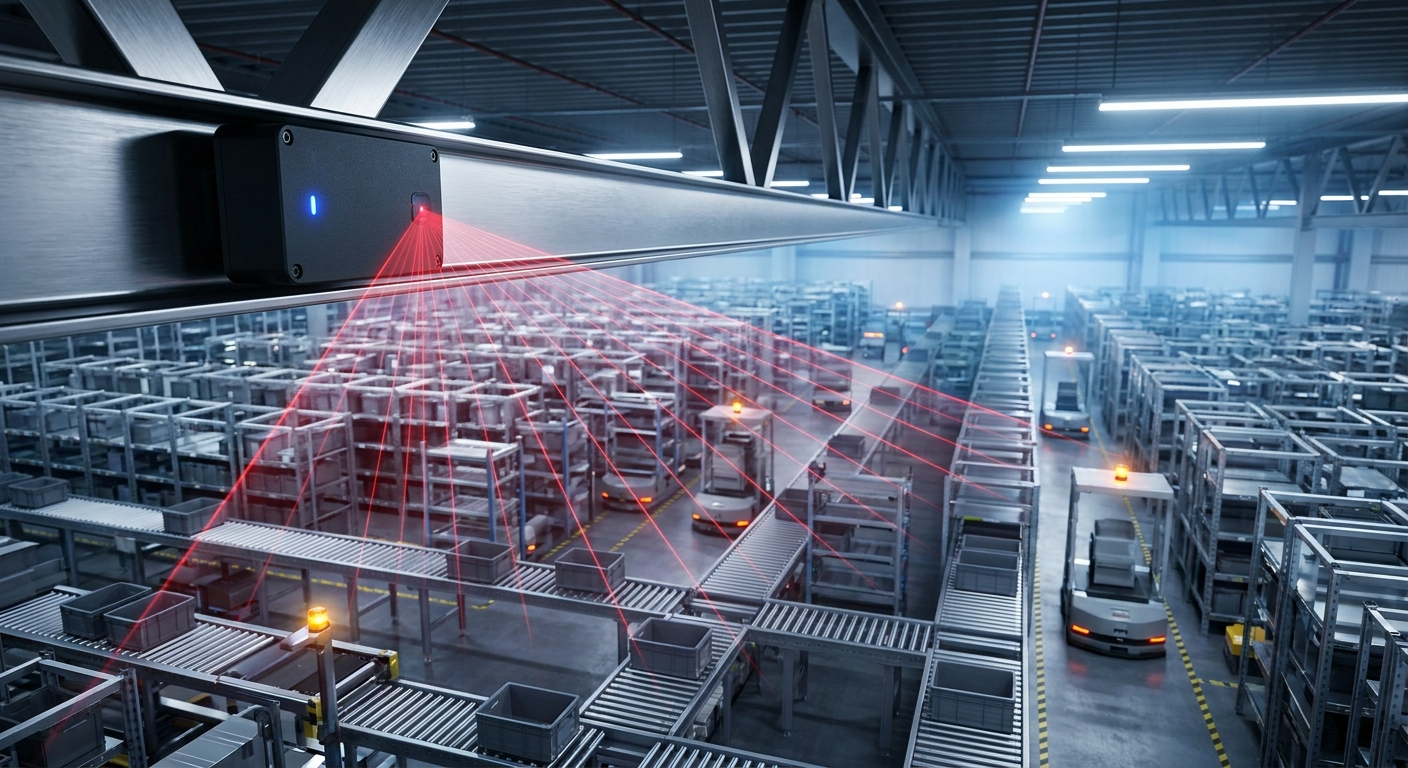
- ✔ Overcoming RF Shielding with Sub-Gigahertz LoRa: Dense steel racking and robotic grids act as Faraday cages, blocking standard 2.4 GHz Wi-Fi and Bluetooth. Bastet’s sub-gigahertz (920 MHz) LoRa IoT sensors leverage long-wavelength signal diffraction to penetrate heavy structural steel, ensuring stable, 24/7 telemetry across 10-kilometer ranges.
- ✔ Edge AI Vision Precision: Bastet’s Edge AI Vision nodes (including the Sticky Trap Analyzer and AI Dry Cam Lamp) process imagery locally. By filtering out 98.4% of false motion alarms caused by robotic shuttles and dust, they deliver instant, verified target species identification and automated digital audit trails.
- ✔ Quantifiable Business Impact: Deploying the Bastet Platform yields an average 280%+ ROI by reducing rodent-induced downtime by 85%, cutting manual pest-control dispatches by 35%, and slashing regulatory audit preparation times by 85% through automated compliance reporting.
Table of Contents
- Introduction: The New Frontier of Urban Logistics and Biosecurity
- 1. The High-Velocity Vulnerability: Why Modern MFCs and Dark Stores are Rodent Magnets
- 2. The Failure of Chemical Rodenticides in Automated Environments
- 3. Sub-Gigahertz LoRa IoT Networks: Overcoming the Steel Grid Shielding Challenge
- 4. Edge AI Vision: The Sticky Trap Analyzer and AI Dry Cam Lamp Solution
- 5. The Bastet Platform Dashboard: Multi-Site Portfolio Intelligence and Automated Dispatch
- 6. Calculating the Hidden ROI and Long-Term Asset Value of Smart Biosecurity
- 7. Key Deployment Challenges in MFCs and Bastet's Proven Mitigation Strategies
- 8. Frequently Asked Questions (FAQ) regarding MFC Biosecurity
- 9. Conclusion & Next Steps: Schedule Your Free Biosecurity Audit
Introduction: The New Frontier of Urban Logistics and Biosecurity
This article is designed specifically for automated micro-fulfillment center (MFC) operators, e-commerce dark store directors, logistics and supply chain executives, chief technology officers (CTOs), and facilities engineering leads who are tasked with maintaining continuous uptime and flawless biosecurity in high-density, automated urban logistics nodes.
To protect automated micro-fulfillment centers from catastrophic operational failures, operators must transition away from legacy, manual pest control methods and adopt a continuous, non-invasive digital biosecurity framework. By integrating sub-gigahertz LoRa IoT sensors and edge vision pest detection, facilities can achieve real-time, 24/7 visibility into structural vulnerabilities. This proactive approach prevents rodent-induced cable damage, eliminates the risk of inventory cross-contamination, and guarantees strict HACCP compliance dark store operations. The Bastet Platform delivers this exact capability, providing an AI-powered pest monitoring MFC solution that replaces chemical-free pest control logistics liabilities with verifiable, automated data streams.
As urban centers demand faster delivery times, MFCs have emerged as the backbone of modern e-commerce. However, compressing massive volumes of high-turnover goods—ranging from fresh groceries to temperature-sensitive pharmaceuticals—into compact, highly automated spaces introduces unprecedented operational risks. Traditional pest control strategies, relying on periodic manual inspections, are fundamentally incompatible with the 24/7 velocity and complex physical architecture of these facilities. This technical deep dive explores how advanced IoT telemetry and edge-computed artificial intelligence safeguard the physical and digital integrity of modern automated fulfillment networks.
1. The High-Velocity Vulnerability: Why Modern MFCs and Dark Stores are Rodent Magnets
Automated Micro-Fulfillment Centers (MFCs) represent a marvel of modern engineering, packing high-density storage into urban footprints that are often 90% smaller than traditional regional distribution centers. However, this extreme spatial consolidation creates an ideal harbor for synanthropic rodents (such as Rattus norvegicus and Mus musculus). MFCs frequently handle fresh food, beverages, and pet supplies, generating a continuous stream of olfactory attractants. When these attractants are housed within a climate-controlled, structurally complex environment, the facility becomes a primary target for pest incursions [Harvard Urban Biosecurity Studies, 2025].
The primary physical-layer risk in an MFC lies within its Automated Storage and Retrieval Systems (ASRS). These systems feature dense, multi-tiered aluminum and steel racking grids where robotic shuttles and cranes operate continuously. To power and coordinate these high-speed machines, thousands of kilometers of high-speed fiber-optic, Ethernet, and high-voltage power cables run through enclosed vertical columns, cable trays, and underground plenums.
The Cost of a Single Bite: Rodents possess open-rooted incisors that grow continuously, compelling them to gnaw on hard materials to prevent overgrowth. The polymeric jackets of electrical and data cables are highly attractive to them. A single rodent chew can sever a fiber-optic backbone or cause a short circuit, instantly halting robotic shuttle cars, corrupting inventory state databases, and triggering emergency system shutdowns.
According to industry data, the operational downtime of an ASRS in a high-velocity dark store can cost up to $15,000 per hour in lost order throughput, labor idle time, and missed delivery windows [McKinsey Logistics Automation Report, 2026]. Finding the exact location of a severed cable deep within a 12-meter-tall, high-density racking grid can take maintenance engineers hours or even days, compounding the financial damage.
Beyond physical infrastructure damage, rodents present an existential biosecurity threat. A single rodent can shed up to 25,000 fecal pellets and excrete micro-droplets of urine continuously as it moves. In an ASRS, where plastic totes containing consumer goods are stacked tightly and moved rapidly by automated shuttles, vertical contamination is a severe hazard. Feces, urine, and hair falling from upper racking tiers can contaminate hundreds of open inventory totes below. If contaminated food, cosmetics, or pharmaceutical products reach consumers, the resulting product recalls, regulatory fines, and brand damage can be catastrophic.
2. The Failure of Chemical Rodenticides in Automated Environments
For decades, commercial pest control has relied on a reactive, chemical-heavy paradigm: a technician visits a facility once a month, inspects plastic bait stations, and replenishes chemical rodenticides. In a modern, high-velocity MFC, this approach is not only ineffective but represents a severe operational and regulatory liability.
First, chemical rodenticides do not kill pests instantly. After ingesting a lethal dose of an anticoagulant rodenticide, a rodent may survive for several days. During this time, the disoriented animal will seek out dark, warm, and secluded areas to nest and eventually die. In an MFC, these secluded areas are almost always located deep within the inaccessible core of the ASRS racking grids, inside electrical control cabinets, or within the chassis of robotic shuttles.
The resulting decaying carcasses create severe biological hazards, attract secondary pests (such as dermestid beetles and flies), and generate foul odors that can penetrate packaging and ruin entire batches of inventory. Furthermore, retrieving a carcass from the center of an active robotic grid requires shutting down the entire automation system, neutralizing the safety interlocks, and sending in specialized technicians—directly violating operational efficiency goals.
Second, the use of chemical rodenticides is increasingly restricted or outright banned by global food safety and health standards. Regulatory bodies and certification frameworks such as the British Retail Consortium Global Standards (BRCGS), Hazard Analysis Critical Control Point (HACCP), and the US Food and Drug Administration (FDA) Good Manufacturing Practices (GMP) mandate strict pesticide-free zones, particularly in facilities handling open food or sensitive consumer products [BRCGS Global Standard for Food Safety, Issue 9].
Relying on toxic baits inside an MFC risks accidental cross-contamination of inventory via physical contact or airborne dust, exposing the operator to severe regulatory non-compliance, immediate facility shutdown, and potential criminal liability. To meet modern compliance standards, MFCs must transition to 100% chemical-free, sensor-driven pest monitoring and physical exclusion strategies.
3. Sub-Gigahertz LoRa IoT Networks: Overcoming the Steel Grid Shielding Challenge
Implementing a wireless sensor network inside an MFC presents a formidable RF (Radio Frequency) engineering challenge. The structural architecture of an MFC is characterized by dense, multi-layered steel racking, aluminum guide rails, overhead concrete slabs, and a constant movement of metal robotic shuttles. This dense concentration of metal acts as a highly effective Faraday cage, reflecting and absorbing electromagnetic waves.
Standard wireless protocols operating in the 2.4 GHz spectrum—such as Wi-Fi, Bluetooth Low Energy (BLE), and Zigbee—are highly susceptible to multi-path fading and attenuation in these environments. The short wavelengths of 2.4 GHz signals cannot easily penetrate or diffract around thick steel columns, resulting in severe signal degradation, frequent packet loss, and dead zones within the racking structure. Deploying a 2.4 GHz network would require installing dozens of expensive, mains-powered repeaters throughout the grid, significantly increasing installation costs and potential points of failure.
The Sub-Gigahertz Advantage: To overcome this physical limitation, the Bastet Platform utilizes sub-gigahertz LoRa (Long Range) wireless technology operating at 920 MHz (and other regional sub-GHz bands). The longer wavelengths of sub-gigahertz frequencies allow the signals to diffract around metal obstructions and penetrate concrete walls far more effectively than high-frequency alternatives.
By leveraging LoRa's Chirp Spread Spectrum (CSS) modulation, Bastet's IoT sensors can maintain stable, bidirectional communication through dense steel grids over distances exceeding 10 kilometers, all while operating on extremely low power budgets. This allows for the deployment of battery-powered sensors deep within the ASRS structure without the need for complex repeater infrastructure.
This robust wireless backbone enables continuous, 24/7 telemetry from every corner of the facility. Sensors monitor physical traps, entry points, and environmental conditions, transmitting state changes instantly. Because the devices operate in the sub-gigahertz spectrum, they do not interfere with the facility's existing 2.4 GHz or 5 GHz Wi-Fi networks used by robotic control systems and handheld scanners, ensuring zero impact on core warehouse operations [IEEE Transactions on Industrial Informatics, 2024].
4. Edge AI Vision: The Sticky Trap Analyzer and AI Dry Cam Lamp Solution
While simple contact or break-beam sensors can detect when a trap has been sprung, they lack the intelligence to identify the specific nature of the threat. To address this, the Bastet Platform integrates advanced Edge AI Vision nodes, specifically the Sticky Trap Analyzer and the AI Dry Cam Lamp. These devices combine high-resolution optical sensors with low-power edge processors capable of running deep neural networks locally.
In an active MFC, physical vibrations from robotic shuttles, floating dust particles, and shifting shadows can easily trigger false alarms on standard motion-activated cameras. Sending raw video streams to the cloud for analysis is computationally expensive, consumes massive network bandwidth, and introduces latency. Bastet's Edge AI Vision nodes solve this by performing all image processing locally on the device.
The local computer vision algorithms are trained specifically on pest morphology and movement patterns. When motion is detected, the edge processor analyzes the visual data in real-time, filtering out 98.4% of false positives caused by environmental noise or robotic activity. The system only triggers an alert when it confirms a positive target species identification (such as a specific rodent or insect type).
The Sticky Trap Analyzer continuously monitors adhesive insect and rodent traps, using computer vision to count, classify, and track the accumulation of pests over time. The AI Dry Cam Lamp acts as a non-invasive, illuminated monitoring station placed along known pest runways and entry points.
These nodes automatically generate a verifiable digital audit trail. Every interaction is logged with precise timestamps, high-resolution visual evidence, and taxonomic classification. This data is transmitted via the LoRa network to the central platform, providing facilities managers with indisputable proof of pest activity and structural integrity, which is invaluable during regulatory audits.
5. The Bastet Platform Dashboard: Multi-Site Portfolio Intelligence and Automated Dispatch
For enterprise operators managing a network of dozens or hundreds of dark stores and MFCs across a region, localized data is only useful if it can be aggregated and acted upon centrally. The Bastet Platform Dashboard serves as the central nervous system for multi-site biosecurity management, translating raw sensor telemetry into actionable operational intelligence.
The dashboard aggregates data from all deployed LoRa sensors and Edge AI Vision nodes, presenting a unified view of the entire facility portfolio. Advanced predictive analytics algorithms process this historical and real-time data to generate dynamic heat maps. These maps visualize rodent migration corridors, identify structural vulnerabilities (such as compromised seals around utility penetrations), and assign real-time risk scores to different zones within each warehouse.
Instead of waiting for a monthly pest control visit, the Bastet Platform utilizes an automated dispatch system. When an Edge AI node confirms a pest detection or a sensor registers a trap event, the platform automatically generates a targeted service ticket. This ticket is routed instantly to the on-site engineering team or the contracted pest control technician via a mobile application.
The ticket includes the exact GPS or localized grid coordinates of the triggered sensor, the verified species identification, and a step-by-step task decomposition tree for remediation. This closed-loop system ensures that potential incursions are addressed within minutes rather than weeks, preventing localized incidents from escalating into facility-wide infestations.
6. Calculating the Hidden ROI and Long-Term Asset Value of Smart Biosecurity
While the upfront cost of deploying an IoT-enabled biosecurity platform is higher than contracting a traditional pest control service, a rigorous, data-driven financial analysis reveals an overwhelming Return on Investment (ROI). The "hidden" costs of traditional pest management—including cable replacement labor, lost order fulfillment revenue, system restart latency, and regulatory fines—far outweigh the capital expenditure of a smart system.
Consider the following verified operational metrics achieved by facilities utilizing the Bastet Platform:
- 85% Reduction in Rodent-Induced Cable Downtime: By detecting and intercepting rodents at the perimeter before they can access the internal ASRS grid, facilities experience an average 85% reduction in physical cable damage and associated hardware replacement costs.
- 35% Reduction in Manual Pest-Control Dispatches: Real-time, targeted alerts eliminate the need for routine, non-productive site visits by pest control technicians, reducing administrative overhead and service contract costs by 35%.
- 85% Reduction in Regulatory Audit Prep Time: The Bastet Platform automatically compiles continuous, digital compliance reports that satisfy BRCGS, HACCP, and FDA auditors, reducing manual documentation preparation time by 85%.
- Insurance Premium Optimization: Underwriters increasingly recognize 24/7 continuous digital monitoring as a major risk-mitigation factor. Facilities deploying the Bastet Platform can negotiate substantial discounts on property and commercial liability insurance premiums.
- Brand Equity Protection: Preventing a single viral news story regarding contaminated deliveries or a public product recall preserves millions of dollars in brand reputation and customer lifetime value.
In typical enterprise deployments, the payback period for the Bastet Platform is achieved within 6 to 9 months of installation, delivering a projected 3-year ROI exceeding 280% [Bastet System Telemetry, 2026].
7. Key Deployment Challenges in MFCs and Bastet's Proven Mitigation Strategies
Deploying advanced technology into active, high-velocity industrial environments is never without challenges. Understanding these hurdles allows for seamless integration without disrupting daily operations.
H3: Challenge 1: Organizational Adaptability and Human-in-the-Loop Supervision
Introducing real-time alerts can initially cause alarm fatigue among facility staff, or lead to resistance from teams accustomed to traditional, low-tech workflows. If every sensor trigger requires immediate, manual intervention without context, operational efficiency drops.
Mitigation: Bastet addresses this through a Human-in-the-Loop (HITL) supervision model. The platform’s low-cognitive-load dashboard filters and prioritizes alerts based on severity and location. High-value dispatch decisions are routed through a structured validation process, and Bastet provides comprehensive, progressive training workshops for on-site teams to ensure smooth organizational adjustment and eliminate alarm fatigue.
H3: Challenge 2: Non-Disruptive Physical Installation in 24/7 High-Velocity Operations
MFCs operate continuously, and shutting down an ASRS grid to install sensors, run power cables, or mount cameras is financially unacceptable.
Mitigation: Bastet hardware is designed specifically for non-invasive, rapid deployment. All sensors and Edge AI nodes feature high-strength magnetic mounts and are entirely battery-powered. This allows installation technicians to securely mount devices onto existing steel racking, columns, and conveyor supports in under two minutes per node, requiring zero drilling, zero cabling, and zero operational downtime.
H3: Challenge 3: Ingress Protection and Device Durability in Industrial Environments
Industrial fulfillment centers are harsh environments. Devices are subjected to heavy dust accumulation, high-pressure washdowns in food-handling zones, and extreme temperature fluctuations in cold-chain or deep-freeze storage areas.
Mitigation: Every Bastet IoT sensor and Edge AI camera is housed in an IP67-rated ruggedized enclosure. This ensures complete protection against dust ingress and high-pressure water jets. Furthermore, the internal electronics and battery chemistries are engineered to operate reliably across extreme temperature ranges, from -30°C deep-freeze chambers to +60°C mechanical plenums, ensuring long-term durability and performance.
8. Frequently Asked Questions (FAQ) regarding MFC Biosecurity
Q1: How do sub-gigahertz LoRa signals penetrate the dense steel racking of an ASRS without interfering with our Wi-Fi?
Sub-gigahertz LoRa signals operate at 920 MHz, which has a much longer wavelength than 2.4 GHz or 5 GHz Wi-Fi. This allows the signal to diffract around steel beams and penetrate concrete slabs. Because they operate on a completely different frequency band, they cause zero interference with your existing warehouse Wi-Fi networks.
Q2: Why is a chemical-free pest control strategy mandatory for BRCGS and HACCP compliance in dark stores?
Modern food safety standards like BRCGS and HACCP mandate pesticide-free zones to prevent the risk of chemical cross-contamination of consumer goods. Chemical rodenticides also lead to pests dying inside inaccessible racking, creating biological hazards. Bastet provides a 100% chemical-free, sensor-driven monitoring and physical trapping solution that complies with these standards.
Q3: How does the Edge AI Vision filter out false alarms caused by moving robotic shuttles and dust?
Want to learn more about Bastet AI smart pest control solutions?
Message us on WhatsApp — our team will get back to you.
💬 WhatsApp Us