
Rodent Detection for Airports | Bastet AI
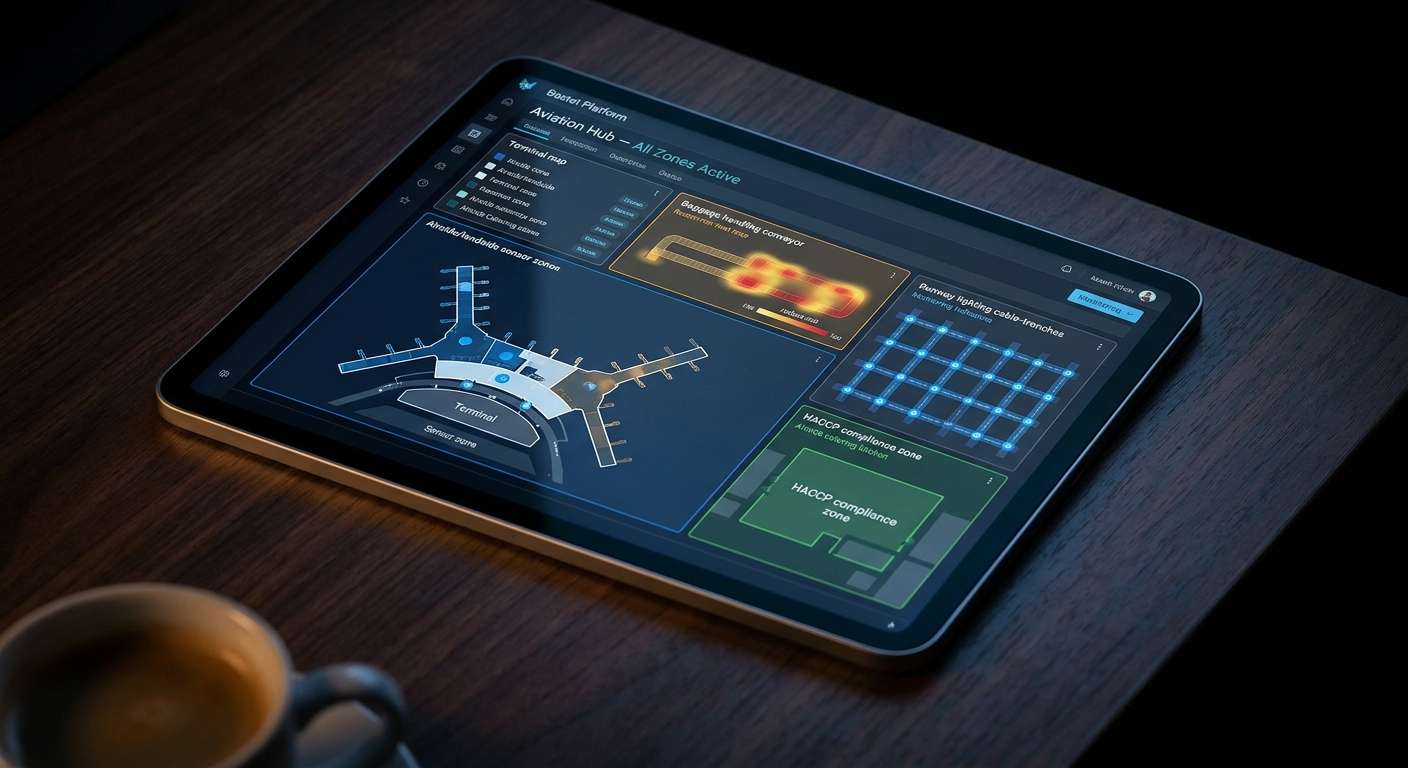
Protecting Critical Airport Infrastructure: How the Bastet Platform's Dashboard Intelligence and IoT Sensor Networks Secure Aviation Gateways Against Rodent-Induced Risks
Airport pest control is critical for aviation infrastructure because rodents pose a direct and severe threat to the operational integrity, safety, and financial stability of airports. These pests are not merely a nuisance; they are a significant risk factor capable of causing catastrophic failures. By gnawing through essential data cables, power lines, and fiber optics housed within cable trenches and terminal walls, a single rodent can trigger widespread system outages, flight delays, and crippling downtime. The U.S. Federal Aviation Administration (FAA) has documented numerous incidents where wildlife, including rodents, has compromised airport safety and operations (Federal Aviation Administration [FAA], 2024). This damage extends to baggage handling systems, airside catering facilities, and even aircraft themselves, leading to costly repairs, regulatory fines for non-compliance with health standards, and irreversible damage to an airport's public reputation. Therefore, a proactive, technology-driven approach to airport pest control is not an operational expense but a fundamental investment in aviation infrastructure protection.
Key Takeaways
- High Financial Stakes: Rodent-induced damage to critical airport systems like data cables and power lines can lead to operational downtime costing an estimated $9,000 per minute, according to the Uptime Institute.
- Technological Superiority: Bastet AI's Smart Rodent IoT network utilizes sub-giga 920MHz LoRa wireless technology to penetrate dense concrete and steel structures, ensuring 100% sensor connectivity in challenging environments like baggage tunnels and utility conduits where traditional Wi-Fi and cellular signals fail.
- Proactive Perimeter Defense: The 'AI in a Box' edge computing solution, paired with Bastet Sensing Cameras, provides real-time ingress detection at terminal boundaries with sub-3 second latency and an industry-leading 98% false-alarm filtering rate, stopping threats before they escalate.
- Automated Compliance: The Bastet Platform automates data logging and generates audit-ready reports, streamlining compliance with stringent food safety standards like BRCGS and HACCP for airside catering, reducing audit preparation time by up to 85%.
- Resilient and Sustainable: The system employs IP67-rated, wide-temperature sensors (-40°C to +85°C) and focuses on non-chemical pest monitoring, aligning with international biosecurity standards from the WTO and IPPC for a sustainable and effective aviation infrastructure protection strategy.
Table of Contents
- The Unseen Threat: Rodent Vulnerabilities in Modern Airport Infrastructure
- The Staggering Financial Impact of Rodent-Induced Downtime
- Overcoming Physical Barriers: The Power of Sub-Giga 920MHz LoRaWAN
- Deploying Resilient Hardware: IP67 Sensors for Extreme Airport Environments
- Proactive Ingress Protection with Edge AI and Computer Vision
- Automating Compliance for BRCGS, HACCP, and Aviation Audits
- Frequently Asked Questions (FAQ)
- Secure Your Airport's Future with Bastet AI
The Unseen Threat: Rodent Vulnerabilities in Modern Airport Infrastructure
Modern airports are marvels of engineering, but their complexity creates a labyrinth of vulnerabilities perfect for exploitation by rodents. These pests require minimal entry points—a mouse can squeeze through a gap as small as 6mm—to access the most sensitive areas of an aviation hub. Traditional, reactive pest control methods are insufficient to protect these sprawling, interconnected environments. A proactive, data-driven strategy is essential to safeguard the hidden infrastructure that powers global travel.
Cable Trenches and Conduits: The Arteries of Operation
Beneath the polished floors of terminals and the vast tarmacs lie miles of cable trenches, conduits, and utility tunnels. These are the central nervous system of any airport, housing critical power lines, fiber-optic data cables for flight information displays (FIDS), and communication wiring for air traffic control. For rodents, these protected, undisturbed channels are ideal nesting sites. Their incessant need to gnaw can strip insulation from high-voltage cables, causing short circuits, power outages, and even fires. A single severed fiber-optic line can disrupt ticketing, baggage screening, and gate operations, leading to a cascade of delays and cancellations that ripple through the global aviation network.
Baggage Handling Systems: A Conveyor Belt for Contamination
Automated baggage handling systems are vast, subterranean networks of conveyors, sorters, and carousels that are notoriously difficult to inspect and clean. These dark, complex environments provide rodents with shelter, warmth, and a hidden transportation network to move throughout the airport. The risk here is twofold. First, physical damage to sensors, wiring, and belts can bring the entire system to a halt, creating a logistical nightmare. Second, and more insidiously, rodents can contaminate luggage with pathogens, posing a significant biosecurity risk and potentially facilitating the intercontinental spread of disease, a concern highlighted by organizations like the World Health Organization (WHO, 2024).
Airside Catering and Lounges: High-Stakes Food Safety Zones
Airside catering facilities, which prepare thousands of meals daily, and exclusive passenger lounges are high-value targets for pests. A rodent infestation in these areas represents a direct threat to public health and an immediate compliance failure under food safety regulations like HACCP (Hazard Analysis and Critical Control Points). The discovery of a single pest can lead to the immediate shutdown of a kitchen, the disposal of thousands of dollars worth of inventory, and severe penalties from health authorities. The reputational damage from such an incident can be catastrophic, eroding passenger trust and airline partnerships.
The Staggering Financial Impact of Rodent-Induced Downtime
The cost of inadequate airport pest control extends far beyond the price of traps and extermination services. The true financial impact lies in the colossal cost of operational downtime and the secondary consequences of system failures. In the high-stakes environment of aviation, every minute of disruption has a quantifiable and often exorbitant price tag.
Quantifying the Cost: Beyond Physical Damage
When a rodent gnaws through a critical data cable, the airport doesn't just face a repair bill. It faces a complete operational standstill. According to research from the Uptime Institute, the average cost of data center downtime is an astonishing $9,000 per minute (Uptime Institute, 2025). For a major airport, where data flows are as critical as aircraft movements, this figure is a conservative estimate. A one-hour outage in the baggage handling system or check-in counters can easily translate into over half a million dollars in direct losses, not including compensation to airlines, passenger re-booking fees, and overtime for staff.
Reputational Damage and Regulatory Fines
The indirect costs can be even more damaging. Airports are highly regulated environments, and a pest-related incident can trigger investigations and hefty fines from bodies like the FAA or international counterparts. A food safety violation in an airside kitchen can lead to sanctions and a loss of certification under standards like BRCGS. Furthermore, in an age of social media, news of delays or unsanitary conditions spreads instantly. The long-term damage to an airport's brand and passenger confidence can take years and millions of dollars in marketing to repair, making proactive aviation infrastructure protection a critical business imperative.
Overcoming Physical Barriers: The Power of Sub-Giga 920MHz LoRaWAN
One of the greatest challenges in deploying a comprehensive IoT monitoring system across an airport is the physical environment itself. Airports are constructed from vast amounts of steel-reinforced concrete, metal cladding, and dense machinery, creating a hostile environment for conventional wireless signals like Wi-Fi or cellular.
The Signal Attenuation Challenge in Aviation Hubs
Standard wireless technologies operate in crowded frequency bands (e.g., 2.4GHz for Wi-Fi) that suffer from severe signal attenuation—the weakening of a signal as it passes through physical objects. This makes them unreliable for monitoring critical, hard-to-reach areas like subterranean service tunnels, concrete-encased utility vaults, and the inner workings of baggage handling systems. A sensor that cannot reliably transmit its data is worse than no sensor at all, as it creates a false sense of security. The Airport Cooperative Research Program (ACRP) has noted the increasing need for reliable sensor networks to maintain modern airport facilities (Airport Cooperative Research Program [ACRP], 2024).
Achieving Total Coverage with Long-Range, Low-Power IoT
Bastet AI's Smart Rodent IoT platform overcomes this fundamental obstacle by utilizing LoRa (Long Range) wireless technology operating in the sub-giga 920MHz frequency band. This lower frequency provides two decisive advantages:
- Superior Penetration: Lower-frequency radio waves are significantly better at penetrating dense materials like concrete and steel, ensuring that sensor data from the deepest parts of the infrastructure reaches the central gateway.
- Extended Range: LoRaWAN networks can achieve a communication range of up to 10km in open environments, meaning a single gateway can cover a vast area of an airport, from the terminal to remote hangars, drastically reducing infrastructure complexity and cost.
This technological choice ensures a robust, reliable, and complete data picture of pest activity across the entire airport estate.
Deploying Resilient Hardware: IP67 Sensors for Extreme Airport Environments
Airport infrastructure is exposed to a wide range of extreme environmental conditions, from freezing outdoor temperatures on the tarmac to high heat and humidity in mechanical rooms. The sensors deployed for pest monitoring must be engineered to not only survive but operate flawlessly under these demanding conditions.
From Freezing Tarmacs to Heated Mechanical Rooms
Bastet AI's IoT sensors are built to a rigorous standard, designed to function across an exceptionally wide temperature range of -40°C to +85°C. This ensures that a sensor placed on an outdoor perimeter fence during a winter storm will report with the same reliability as one placed near HVAC equipment in a boiler room. This operational resilience is non-negotiable for a mission-critical system tasked with protecting vital infrastructure year-round, in any climate.
Ensuring Data Integrity with Certified Durability
Beyond temperature, sensors in an airport environment face exposure to moisture, dust, and vibration. To guarantee longevity and data integrity, Bastet sensors are rated IP67. This Ingress Protection rating certifies that the device is completely dust-tight and can withstand immersion in up to one meter of water for 30 minutes. This level of durability ensures that jet fuel spray, high-pressure cleaning, or dust accumulation in a service tunnel will not compromise the sensor's ability to detect and report pest activity, providing airport managers with a truly dependable and low-maintenance monitoring network.
Proactive Ingress Protection with Edge AI and Computer Vision
True aviation infrastructure protection is not about reacting to an infestation; it's about preventing it from ever taking hold. The most effective strategy is to secure the perimeter and detect ingress attempts in real-time. Bastet AI's 'AI in a Box' and Bastet Sensing Cameras provide a powerful, intelligent layer of defense at the airport's boundaries.
Introducing 'AI in a Box': Real-Time Perimeter Defense
Traditional security cameras generate a constant stream of alerts for any motion, overwhelming security staff with false positives from birds, blowing debris, or weather changes. Bastet's 'AI in a Box' is a revolutionary edge computing device that connects to existing IP cameras. It processes video feeds locally, using a sophisticated AI model trained specifically to identify rodents. This on-site processing allows for instantaneous analysis and alerting with a sub-3 second latency from detection to notification, enabling a rapid response before a pest can establish a foothold inside a terminal or hangar.
Bastet Sensing Cameras: Filtering Noise, Focusing on Threats
When paired with Bastet Sensing Cameras, the system achieves an industry-leading 98% false-alarm filtering rate. The AI is finely tuned to distinguish the unique size, shape, and movement patterns of rats and mice from all other environmental "noise." This incredible accuracy means that when an alert is generated, it is a high-confidence event that warrants immediate attention. This transforms perimeter security from a passive, reactive system into a proactive, intelligent shield, allowing maintenance and biosecurity teams to focus their resources on genuine threats.
Automating Compliance for BRCGS, HACCP, and Aviation Audits
For airside catering companies and airport authorities, maintaining compliance with stringent food safety and operational standards is a constant, labor-intensive challenge. Audits for standards like BRCGS (Brand Reputation Compliance Global Standards) Storage and Distribution and HACCP require meticulous record-keeping and demonstrable proof of an effective pest management program. The International Civil Aviation Organization (ICAO) also emphasizes sanitation and disease vector control as part of airport operations (International Civil Aviation Organization [ICAO], 2025).
Digitalizing Pest Management for Food Safety Excellence
The Bastet Platform replaces manual, paper-based logbooks with a fully automated, digital system. Every event—from a sensor activation to a trap check or a visual inspection—is automatically logged in a centralized, cloud-based dashboard with a precise timestamp and location. This creates an immutable, audit-proof digital trail of all pest management activities. The system generates trend reports, heat maps of activity, and detailed service records on demand, providing auditors with clear, comprehensive evidence of a proactive and compliant program.
Slashing Audit Preparation Time by up to 85%
The traditional process of preparing for a BRCGS or HACCP audit involves manually collating months of paperwork, checking for missing entries, and organizing binders of data. This can take days or even weeks of valuable staff time. With the Bastet Platform, this entire process is automated. Audit-ready reports can be generated with a few clicks, reducing the administrative burden and preparation time by up to 85%. This frees up quality assurance and facility staff to focus on their core responsibilities, while ensuring the airport and its tenants pass audits with confidence and ease.
Frequently Asked Questions (FAQ)
1. How does the Bastet AI system differ from traditional pest control services?
Traditional pest control is often reactive, relying on scheduled manual inspections and toxic baits. Bastet AI provides a proactive, 24/7 monitoring solution using a network of IoT sensors and AI-powered cameras. It delivers real-time data on pest activity, enabling a targeted, non-chemical, and preventative approach. This shifts the paradigm from pest elimination to comprehensive aviation infrastructure protection, focusing on early detection and prevention rather than reaction to an established infestation.
2. Is the 920MHz LoRaWAN network secure and will it interfere with airport communications?
The LoRaWAN protocol used by Bastet AI features multiple layers of security, including end-to-end AES-128 encryption for all data transmissions, ensuring network integrity and data privacy. The 920MHz frequency is an unlicensed ISM (Industrial, Scientific, and Medical) band that operates at very low power. It is specifically designed to coexist with other wireless technologies and will not interfere with critical airport communication systems, such as air traffic control, Wi-Fi, or cellular networks.
3. Can the 'AI in a Box' system integrate with our existing security cameras?
Yes, one of the key design features of the 'AI in a Box' is its versatility. The edge computing device is engineered to be compatible with a wide range of existing ONVIF-compliant IP cameras. This allows airports to leverage their current security infrastructure investments, enhancing their perimeter defense with advanced AI rodent detection capabilities without the need for a complete hardware overhaul. Our technical team works with you to ensure seamless integration during deployment.
4. How does the system support non-chemical and sustainable pest management goals?
The Bastet Platform is fundamentally aligned with sustainable and non-chemical pest management principles, supporting international standards like the WTO Agreement on the Application of Sanitary and Phytosanitary Measures (SPS). By providing precise, real-time data on pest ingress points and activity hotspots, the system enables highly targeted interventions using physical traps only where and when needed. This data-driven approach dramatically reduces or eliminates the need for widespread, preventative use of toxic rodenticides, creating a safer and more environmentally responsible airport.
Secure Your Airport's Future with Bastet AI
The operational integrity of your airport is too critical to be left to chance. Traditional pest control methods are no longer sufficient to protect the complex, technology-driven infrastructure of a modern aviation hub. The Bastet Platform offers a comprehensive, intelligent, and proactive solution that transforms airport pest control into a data-driven science. From our resilient IoT sensor network to our powerful AI-driven perimeter defense, we provide the visibility and control you need to mitigate risk, ensure compliance, and protect your bottom line.
Don't wait for a rodent-induced outage to reveal the vulnerabilities in your infrastructure. Take proactive control and secure your operations against unseen threats. Visit Bastet AI today to request a personalized demo and discover how our platform can safeguard your aviation gateway.
References
Airport Cooperative Research Program (ACRP). (2024). Innovations in Airport Facility Management. Transportation Research Board.
Federal Aviation Administration (FAA). (2024). Advisory Circular 150/5200-33C: Hazardous Wildlife Attractants on or Near Airports. U.S. Department of Transportation.
International Civil Aviation Organization (ICAO). (2025). Annex 14: Aerodromes, Volume I - Aerodrome Design and Operations. ICAO Publications.
Uptime Institute. (2025). Annual Data Center Survey Report. Uptime Institute Research.
World Health Organization (WHO). (2024). Guide to Hygiene and Sanitation in Aviation. WHO Press.
Want to learn more about Bastet AI smart pest control solutions?
Message us on WhatsApp — our team will get back to you.
💬 WhatsApp Us