
AI Pest Control for Vertical Farms | Bastet AI
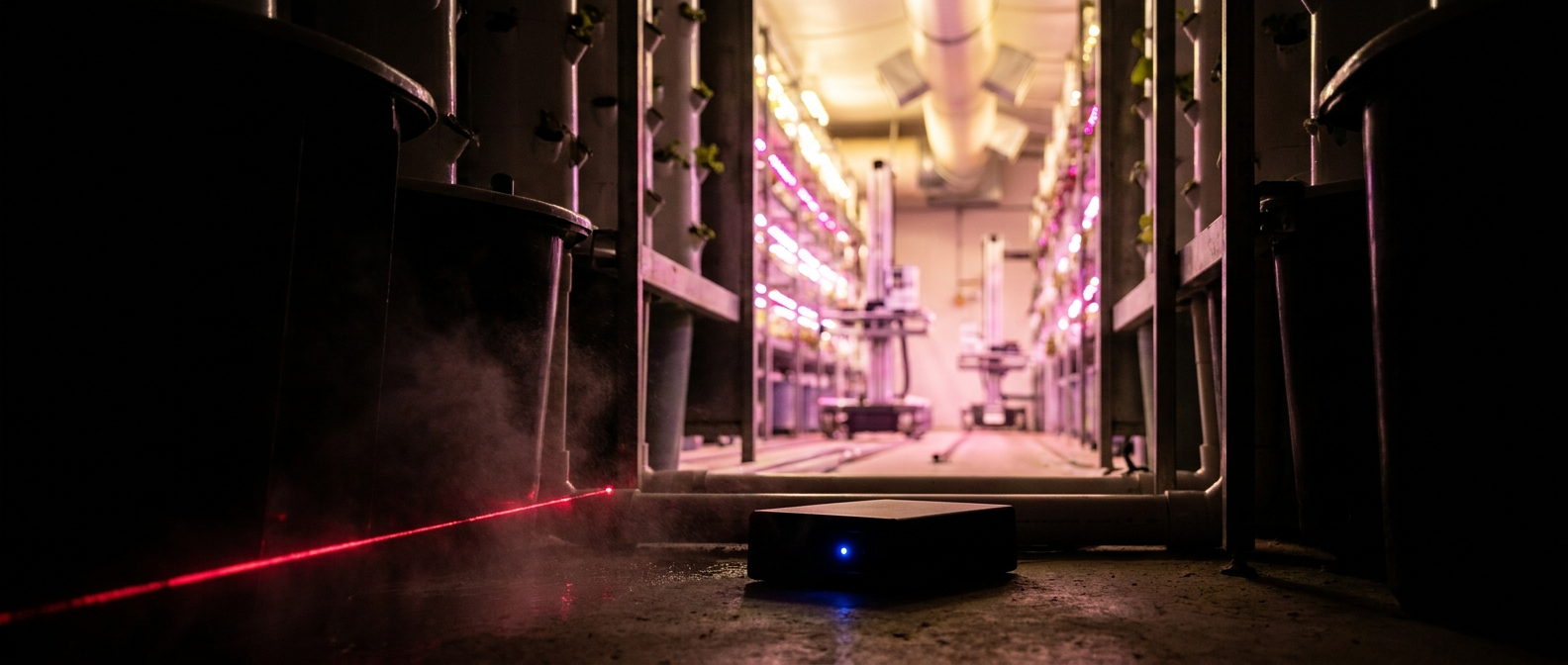
Key Takeaways
- Pesticide-Free Facilities Management: Continuous IoT monitoring and AI edge vision enable pesticide-free facilities management in vertical farms by replacing scheduled chemical applications with real-time, targeted ingress detection. This allows operators to isolate and eliminate pests at the exact point of entry before they can colonize grow zones.
- Uncompromising Connectivity: Bastet AI's sub-gigahertz 920MHz LoRa technology bypasses the physical limitations of 2.4GHz Wi-Fi, penetrating dense steel grow racks and high-humidity microclimates across a 10km range.
- Instantaneous Edge Intelligence: The Bastet Sensing Camera processes visual data locally, delivering sub-3 second latency for pest verification while maintaining 100% worker privacy and reducing false positives by 98%.
- Audit-Ready Compliance: The Bastet Platform automates data logging to meet USDA (2026) and GFSI (2025) food safety standards, reducing administrative audit preparation time by 85%.
Table of Contents
- 1. Introduction: The New Paradigm of Agricultural Biosecurity
- 2. Biosecurity in Vertical Farming: The Nanoscale Risk and USDA/GFSI Standards
- 3. The Silent Ingress: Why Manual Pest Inspections Fail Modern CEA Facilities
- 4. Wireless Sub-gigahertz LoRa: Penetrating Dense Hydroponic Structural Shelvings
- 5. AI in a Box: Real-Time Edge Vision for Ingress Detection and Alerting
- 6. From Grow Towers to Dashboard: The Bastet Platform's Compliance Management
- 7. Unlocking Financial ROI: Direct Savings, Asset Protection, and ESG-led AgTech Yield
- 8. Frequently Asked Questions (FAQ)
- 9. Conclusion: Securing the Future of Controlled Environment Agriculture
1. Introduction: The New Paradigm of Agricultural Biosecurity
Controlled Environment Agriculture (CEA) has revolutionized global food production by shifting cultivation from unpredictable outdoor fields into highly engineered, indoor vertical farms. However, the very characteristics that make vertical farming highly productive—dense multi-tier grow racks, closed-loop hydroponic systems, and precise climate controls—also make them highly vulnerable to biosecurity breaches. In these sealed environments, a single pest ingress can rapidly escalate into a catastrophic crop failure.
To maintain absolute biosecurity, modern facility managers are transitioning to pesticide-free facilities management. Achieving this without compromising yield requires a fundamental shift from reactive chemical treatments to proactive, technology-driven prevention. As highlighted by the Association for Vertical Farming (AVF, 2026), true biosecurity in controlled environment agriculture demands continuous, automated surveillance that can detect, verify, and isolate biological threats the moment they cross the facility's perimeter. This article explores how Bastet AI integrates sub-gigahertz LoRa connectivity with local edge-AI vision to build an impenetrable digital shield around commercial vertical farms.
2. Biosecurity in Vertical Farming: The Nanoscale Risk and USDA/GFSI Standards
Commercial vertical farms operate under a strict zero-tolerance policy for chemical contaminants. While traditional open-field agriculture relies heavily on synthetic pesticides, indoor vertical farming positions itself as a clean, sustainable alternative. Introducing chemical pesticides into a closed-loop hydroponic system carries immense risk; recirculating water lines can rapidly distribute chemical residues throughout the entire crop portfolio, leading to total harvest condemnation and severe brand damage.
| Regulatory Framework | Key Compliance Mandate | Bastet AI Technological Solution |
|---|---|---|
| USDA (2026) Organic & Food Safety Standards | Strict limitation of synthetic chemical applications; mandatory preventative pest management protocols. | Non-toxic, continuous monitoring via the Bastet LoRa Trap Sensor and Bastet LoRa PIR Sensor. |
| GFSI (2025) Harmonized Guidelines | Verifiable, data-backed pest exclusion logs and rapid corrective action validation. | Automated, audit-ready digital logs and real-time alerts generated by the Bastet Platform. |
To meet the rigorous standards set by the Global Food Safety Initiative (GFSI, 2025) and the U.S. Department of Agriculture (USDA, 2026), operators must prove they have active, non-chemical preventative measures in place. This regulatory landscape makes manual, paper-based pest tracking obsolete. Modern compliance requires continuous, digital verification that proves pests are excluded before they ever reach the sensitive grow zones.
3. The Silent Ingress: Why Manual Pest Inspections Fail Modern CEA Facilities
Traditional pest control relies on third-party technicians performing manual inspections on a bi-weekly or monthly schedule. In a high-throughput vertical farm, this 14-to-30-day blind spot is a operational liability. Rodents and insects do not wait for scheduled inspections. A single pregnant rodent can breach an opening as small as under 6mm—the width of a standard pencil—and establish a nesting colony within days.
The consequences of such an ingress are severe. Rodents are vectors for dangerous pathogens, including Salmonella and E. coli, which can easily contaminate hydroponic reservoirs and trigger widespread foodborne illness outbreaks (World Health Organization [WHO], 2025). Beyond biological contamination, rodents pose a severe threat to the physical infrastructure of AgTech facilities. Their continuous need to gnaw leads them to chew through critical electrical wiring and fiber-optic cables. According to data from the Uptime Institute (2025), critical infrastructure failures and network outages caused by physical cable damage can cost operators upwards of $9,000 per minute in downtime and lost environmental control. Relying on manual inspections to protect these high-value assets is no longer a viable strategy.
The Anatomy of an Ingress Blind Spot
Manual inspections only capture a single snapshot in time. If a rodent enters a facility on day two of a 30-day inspection cycle, it has 28 days to chew through control cables, contaminate nutrient tanks, and reproduce. By the time a human inspector discovers the physical trap has been sprung, the damage to both the crops and the facility's infrastructure is already done.
4. Wireless Sub-gigahertz LoRa: Penetrating Dense Hydroponic Structural Shelvings
To achieve continuous monitoring, facilities must deploy IoT sensors directly into the growing heart of the farm. However, vertical farms present an incredibly hostile environment for standard wireless communications. Multi-tier steel grow racks, massive LED lighting arrays, aluminum nutrient trays, and high-density plant canopies act as physical barriers that block and degrade high-frequency wireless signals like 2.4GHz Wi-Fi, Zigbee, and Bluetooth.
To overcome these physical limitations, Bastet AI utilizes sub-gigahertz 920MHz LoRa (Long Range) technology. Operating at a lower frequency allows the Bastet LoRa Gateway to easily penetrate heavy steel frames, dense foliage, and high-humidity microclimates, maintaining a stable connection across distances of up to 10km.
This industrial-grade connectivity powers a specialized suite of hardware designed to operate reliably in harsh, high-humidity grow zones:
- Bastet LoRa Trap Sensor: Retrofits existing mechanical traps to instantly transmit a signal the millisecond a trap is triggered, eliminating the need for manual physical checks.
- Bastet LoRa PIR Sensor: Uses passive infrared technology to detect motion along perimeter walls and dark, narrow utility corridors, catching pests before they reach the grow racks.
By operating on ultra-low-power LoRa protocols, these sensors run continuously on standard batteries for years, ensuring uninterrupted protection without adding to the facility's maintenance overhead.
5. AI in a Box: Real-Time Edge Vision for Ingress Detection and Alerting
While motion sensors are highly effective, commercial operators require visual verification before dispatching rapid-response teams. This is where the Bastet Sensing Camera delivers unparalleled precision. Equipped with local "AI in a Box" edge processing capabilities, the camera does not rely on continuous cloud streaming, which would consume massive network bandwidth and raise serious privacy concerns for facility staff.
Instead, the Bastet Sensing Camera runs advanced computer vision models directly on the device. When motion is detected, the local AI instantly analyzes the frame to identify the specific pest. This edge-processing architecture delivers several critical advantages:
- Sub-3 Second Latency: The system detects, classifies, and sends an alert with visual proof to facility managers in under 3 seconds, enabling immediate containment actions.
- 98% Reduction in False Alarms: The local AI easily distinguishes between actual pest movement and environmental noise, such as falling leaves, shifting shadows, or drafts from HVAC systems.
- 100% Worker Privacy: Because all video processing occurs locally on the edge device and only verified pest alerts are transmitted, employee privacy is fully protected, complying with strict corporate governance standards.
6. From Grow Towers to Dashboard: The Bastet Platform's Compliance Management
Data is only valuable if it is actionable. The Bastet Platform consolidates real-time data from all deployed LoRa sensors and edge cameras into a single, intuitive, cloud-based dashboard. This centralized hub provides facility managers, property directors, and ESG officers with complete, portfolio-wide oversight of their biosecurity posture.
The Bastet Platform Ecosystem
Continuous, multi-layered biosecurity monitoring from edge to cloud.
Edge Sensors
LoRa PIR & Traps➔Bastet Gateway
920MHz Sub-GHz➔Bastet Platform
AI Dashboard
Key features of the Bastet Platform include:
- Interactive Facility Maps: Visualizes the exact layout of your grow zones, highlighting the real-time status of every sensor node.
- Predictive Heat Maps: Analyzes historical ingress data to identify recurring pest pathways and structural vulnerabilities, allowing managers to reinforce perimeters proactively.
- Automated Compliance Reporting: Generates detailed, timestamped logs of all pest activity and corrective actions taken. These digital records are instantly exportable and fully aligned with USDA and GFSI auditing standards, reducing administrative audit preparation time by 85%.
7. Unlocking Financial ROI: Direct Savings, Asset Protection, and ESG-led AgTech Yield
Implementing Bastet AI is not just a regulatory compliance measure; it is a high-yield financial investment. By replacing manual pest control contracts with automated, continuous monitoring, facility operators unlock significant, measurable cost savings across their entire operation.
Financial analysis of commercial vertical farms utilizing the Bastet Platform demonstrates a 287% ROI achieved within an 11-month payback period. This rapid return on investment is driven by three primary factors:
- Operational Efficiency: Automating trap checks and monitoring routines yields a 31% reduction in operational cleaning and maintenance costs, freeing up facilities engineers to focus on crop health and system optimization.
- Pesticide Elimination: Real-time, targeted exclusion leads to a 40% reduction in chemical pesticide usage, helping facilities meet strict ESG mandates and qualify for premium organic pricing.
- Asset and Yield Protection: Preventing a single rodent-induced electrical short saves operators from catastrophic crop failures and avoids the devastating $9,000 per minute network downtime costs associated with critical infrastructure failures (Uptime Institute, 2025).
8. Frequently Asked Questions (FAQ)
Q1: How does continuous IoT pest monitoring and AI edge vision enable pesticide-free facilities management in vertical farms?
Continuous IoT monitoring and AI edge vision allow vertical farms to shift from reactive chemical treatments to proactive, targeted exclusion. By detecting and verifying pest ingress at the exact point of entry in real time, operators can isolate and eliminate threats immediately, completely removing the need for broad-spectrum chemical pesticide applications within the facility.
Q2: Why is sub-gigahertz LoRa superior to standard Wi-Fi or Bluetooth in vertical farming environments?
Standard 2.4GHz wireless signals are easily blocked by the dense steel grow racks, aluminum trays, and high-humidity environments typical of vertical farms. Bastet AI's sub-gigahertz 920MHz LoRa technology operates at a lower frequency, allowing it to easily penetrate these physical barriers and maintain stable, long-range connections up to 10km.
Q3: How does the Bastet Sensing Camera protect worker privacy while maintaining high security?
The Bastet Sensing Camera features local "AI in a Box" edge processing. It analyzes video feeds locally on the device and only transmits data when a pest is verified. No continuous video streams are uploaded to the cloud, ensuring 100% worker privacy while delivering rapid, sub-3 second alerts.
Q4: How does the Bastet Platform simplify USDA and GFSI food safety audits?
The Bastet Platform automatically logs all sensor activity, pest detections, and corrective actions in a secure, digital ledger. This eliminates manual paperwork and generates audit-ready compliance reports at the click of a button, reducing administrative audit preparation time by 85%.
9. Conclusion: Securing the Future of Controlled Environment Agriculture
As the global demand for clean, sustainable, and locally sourced food continues to rise, the vertical farming industry must adopt biosecurity measures that match its technological sophistication. Relying on manual, paper-based pest control methods is a critical vulnerability that exposes facilities to crop contamination, regulatory non-compliance, and expensive infrastructure downtime.
The Bastet Platform offers a modern, fully automated solution to these challenges. By combining the physical penetration of sub-gigahertz LoRa wireless connectivity with the rapid intelligence of local edge-AI vision, Bastet AI empowers commercial facility managers to secure their perimeters, eliminate chemical pesticides, and protect their yields with absolute confidence.
Don't let manual blind spots put your facility at risk. Contact our team of AgTech biosecurity experts today to schedule a custom demo and see how Bastet AI can transform your pest management strategy.
Ready to secure your facility? Visit Bastet AI to learn more.
References
- Association for Vertical Farming (AVF). (2026). The State of Indoor Biosecurity and Pest Exclusion in Global CEA Facilities.
- Global Food Safety Initiative (GFSI). (2025). Harmonized Food Safety Standards for Indoor Agriculture and Hydroponic Production.
- U.S. Department of Agriculture (USDA). (2026). Organic Certification and Preventative Pest Management Guidelines for Controlled Environment Agriculture.
- Uptime Institute. (2025). Annual Outage Analysis: The Financial and Operational Impact of Physical Infrastructure Failures.
- World Health Organization (WHO). (2025). Zoonotic Pathogens and Foodborne Illness Transmission Risks in Urban Agriculture.
Want to learn more about Bastet AI smart pest control solutions?
Message us on WhatsApp — our team will get back to you.
💬 WhatsApp Us