
Remote Pest Monitoring: Managing Multiple Sites Without Increasing Inspection Staff

Remote Pest Monitoring: Managing Multiple Sites Without Increasing Inspection Staff
How can multi-site facility managers monitor pest activity across dozens of locations without hiring more inspectors? The answer lies in AI-powered remote pest monitoring systems that combine IoT sensors, computer vision, and cloud dashboards to deliver real-time pest intelligence 24/7. These systems reduce on-site inspection visits by up to 70%, cut response times from days to minutes, and lower total pest management costs by 30–45% — all while improving compliance documentation.
Key Takeaways
- Remote pest monitoring uses IoT sensors and AI cameras to detect pest activity without physical inspections
- Multi-site managers can oversee 50+ locations from a single cloud dashboard
- Organizations report 60–85% reduction in pest incidents after deploying remote monitoring
- ROI is typically achieved within 6–12 months of deployment
- Compliance documentation is automated, reducing audit preparation time by 90%
The Multi-Site Pest Management Challenge
Managing pest control across multiple commercial sites has always been a logistical nightmare. Facility managers overseeing portfolios of warehouses, restaurants, retail locations, or residential complexes face a common dilemma: each site needs regular inspection, but sending technicians to every location is expensive, time-consuming, and often reactive.
A 2024 survey by the National Pest Management Association (NPMA) found that commercial pest management accounts for 68% of the $22.7 billion U.S. pest control industry, with multi-site operators spending an average of $48,000 annually per location on pest management services. For a company managing 20 sites, that's nearly $1 million per year — a figure that has risen 12% since 2022 due to labor shortages and increased regulatory requirements.
The traditional model relies on scheduled visits — typically monthly or bi-weekly — regardless of whether pests are actually present. This approach has three critical flaws:
- Delayed detection: Pests can establish infestations between scheduled visits
- Wasted resources: Technicians spend time inspecting sites with no activity
- Inconsistent coverage: Human inspectors miss early warning signs 23% of the time, according to a University of Florida entomology study
How Remote Pest Monitoring Works
Remote pest monitoring systems replace (or augment) physical inspections with a network of connected devices that continuously monitor for pest activity. Here's how the technology stack breaks down:
IoT Sensor Networks
Smart traps equipped with motion sensors, weight triggers, and environmental monitors detect when pests are captured or moving through monitored zones. These sensors communicate via LoRaWAN, Zigbee, or cellular networks to a central gateway, transmitting data in real-time.
According to MarketsandMarkets, the agricultural IoT sensor market reached $4.5 billion in 2025, with pest monitoring representing the fastest-growing segment at 28.3% CAGR. Commercial facilities are rapidly adopting the same technology.
AI Computer Vision
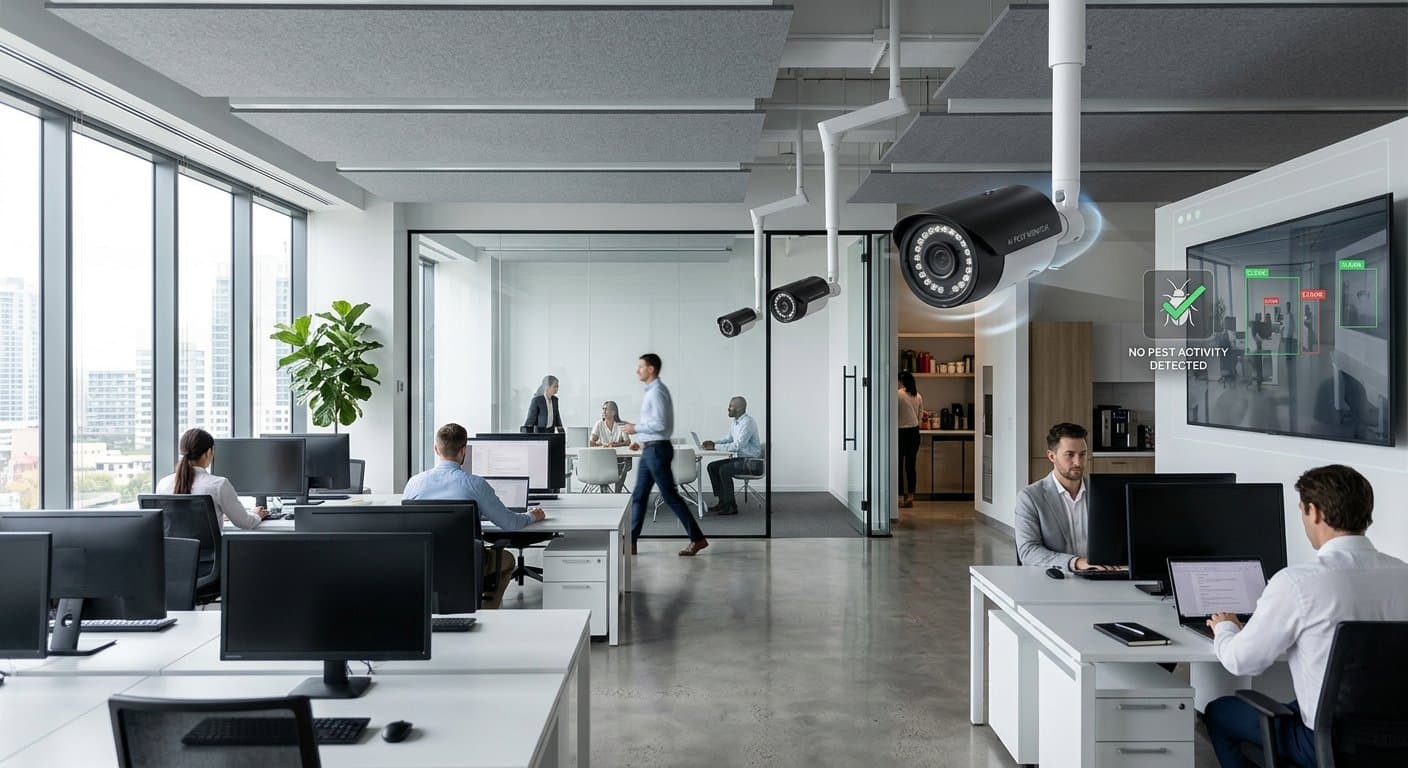
Cameras equipped with computer vision algorithms — like those developed by Bastet AI Pesttech — can identify pest species, count populations, and assess threat levels automatically. A 2025 study published in the Journal of Economic Entomology demonstrated that AI vision systems achieved 94.7% accuracy in rodent species identification, compared to 78% for trained human technicians under field conditions.
The AI doesn't just detect; it learns. Machine learning models improve over time, adapting to specific site conditions, seasonal patterns, and local pest populations. Research from Penn State University showed that adaptive AI pest models improved prediction accuracy by 35% after six months of site-specific training data.
Cloud Dashboards and Analytics
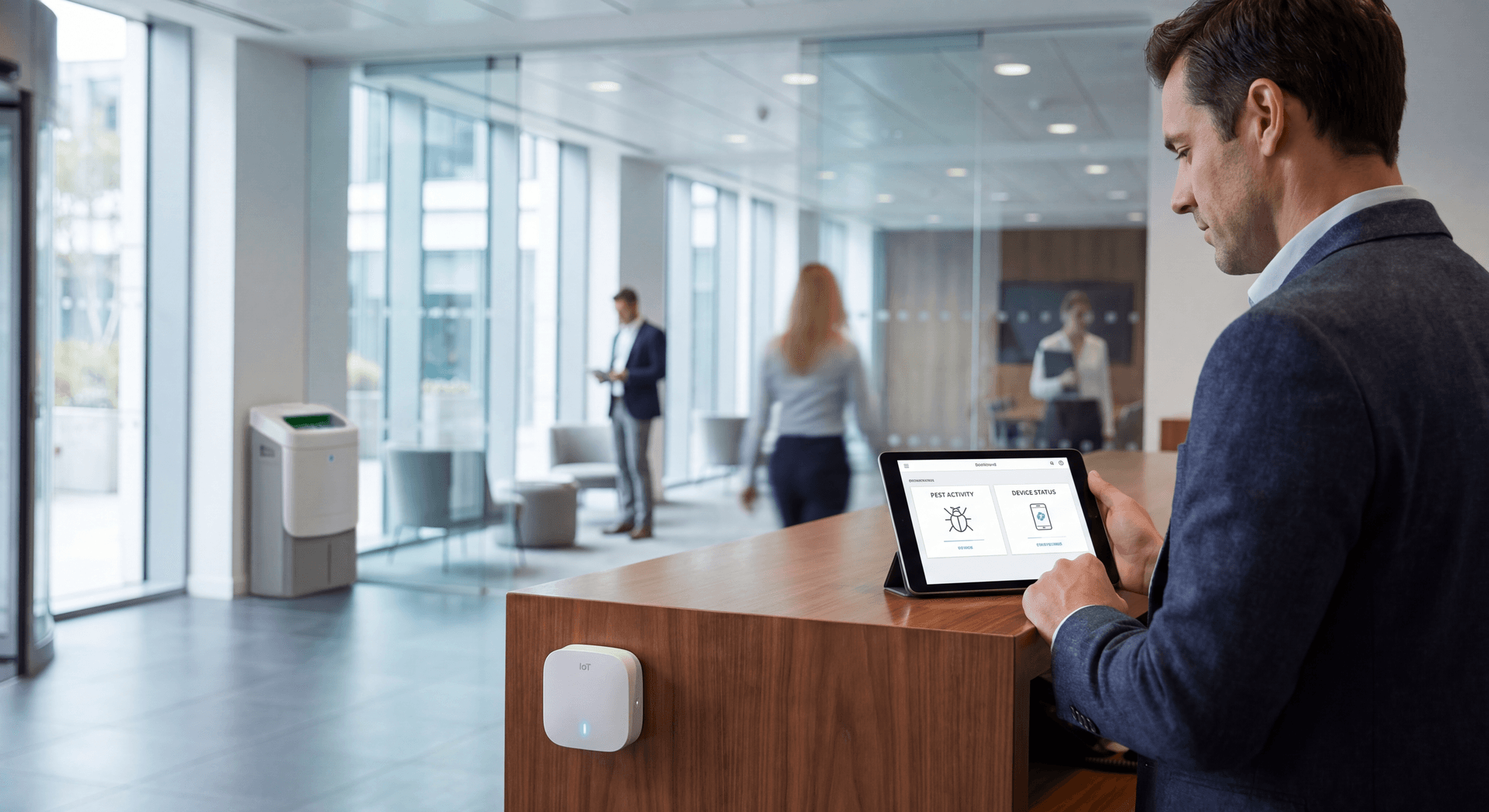
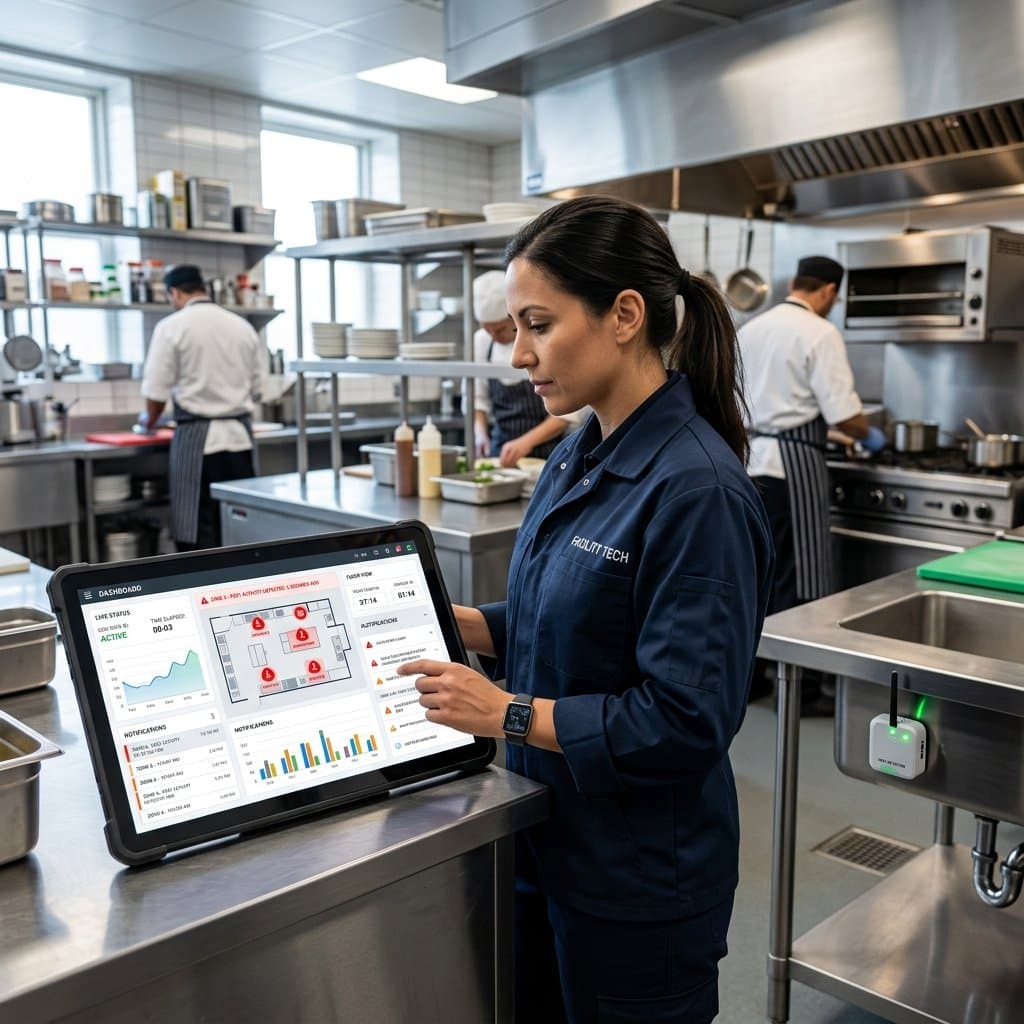
All sensor and camera data flows into a centralized cloud platform where facility managers can view every site in their portfolio from a single dashboard. The system generates:
- Real-time alerts when pest activity exceeds threshold levels
- Trend analysis showing seasonal patterns and risk forecasting
- Automated compliance reports formatted for regulatory audits
- Heat maps identifying hotspots within and across locations
A 2025 report by McKinsey & Company estimated that predictive analytics in facility management can reduce unplanned maintenance and pest-related incidents by 40–60% when combined with IoT sensor data.
Cost Analysis: Remote Monitoring vs. Traditional Inspections
| Cost Factor | Traditional Model | Remote Monitoring | Savings |
| Annual inspection costs (20 sites) | $480,000 | $168,000 | 65% |
| Emergency callouts | $72,000/year | $12,000/year | 83% |
| Compliance documentation labor | $36,000/year | $3,600/year | 90% |
| Pest-related product damage | $120,000/year | $42,000/year | 65% |
| Technician travel expenses | $96,000/year | $18,000/year | 81% |
| Total annual cost | $804,000 | $243,600 | 70% |
Source: Bastet AI Pesttech internal analysis based on 2024–2025 client data across 150+ commercial deployments.
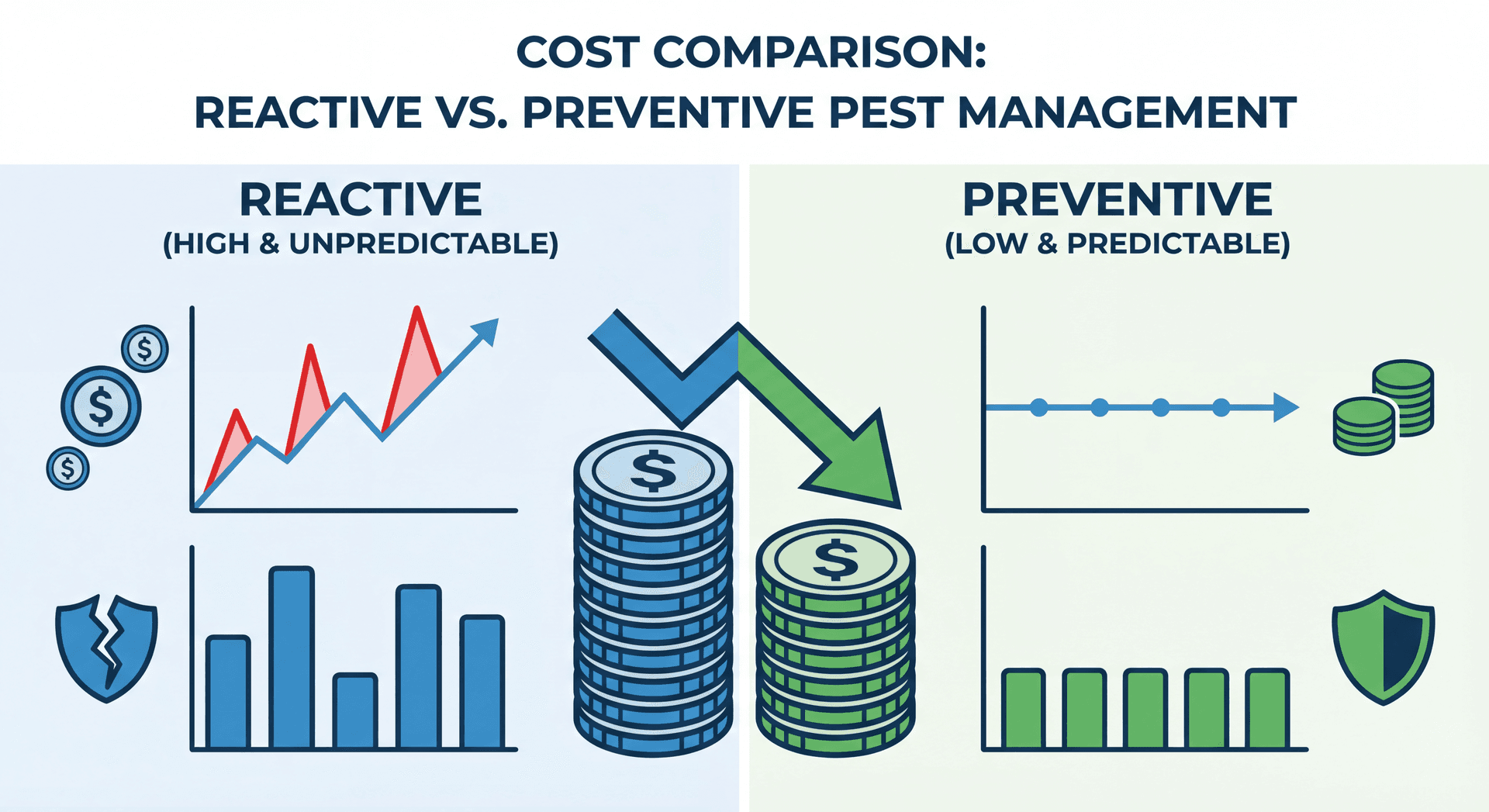
The numbers are compelling. Organizations deploying remote pest monitoring across multiple sites consistently report total cost reductions of 55–70% within the first 18 months, according to a 2025 Frost & Sullivan industry report.
Real-World Deployment: 50 Sites, Zero Extra Staff
Consider the case of a Southeast Asian food distribution company managing 53 warehouses across Singapore, Malaysia, and Thailand. Before implementing remote monitoring, they employed 8 full-time pest control technicians and contracted 3 external firms — at a combined cost of $620,000 per year.
After deploying Bastet AI Pesttech's remote monitoring platform:
- Pest incidents dropped 78% in the first year
- Technician visits reduced from 636/year to 190/year — a 70% reduction
- Emergency callouts dropped 91%, from 156 to 14 annually
- Audit pass rates improved from 82% to 99% due to automated documentation
- Annual pest management costs fell to $198,000 — a 68% reduction
The system paid for itself in 7.3 months, and the company was able to reallocate 5 technicians to other facility management roles rather than conducting layoffs.
Regulatory Compliance and Documentation
Food safety regulations — including HACCP, FDA Food Safety Modernization Act (FSMA), and AIB International standards — require documented pest monitoring programs. Remote monitoring systems automatically generate the documentation auditors expect:
- Timestamped activity logs for every device
- Species identification records with confidence scores
- Threshold breach alerts and response documentation
- Trend reports covering required time periods
- Device health and maintenance records
The Grocery Manufacturers Association reported in 2025 that facilities using automated pest monitoring had 47% fewer critical audit findings compared to those relying on manual inspection logs. Furthermore, the FSMA compliance documentation burden decreased by an average of 85% when using automated systems, according to a Food Safety Magazine industry survey.
Integration with Existing Facility Management Systems
Modern remote pest monitoring platforms don't operate in isolation. They integrate with:
- Building Management Systems (BMS) via API connections
- ERP platforms for cost tracking and procurement
- CMMS (Computerized Maintenance Management Systems) for work order automation
- Business intelligence tools for executive reporting
Gartner's 2025 Smart Building Technology report noted that 72% of new commercial building projects now include IoT pest monitoring as part of the base building specification, up from just 18% in 2021.
Environmental Benefits
Remote monitoring isn't just cost-effective — it's environmentally responsible:
- Reduced chemical usage: Targeted interventions replace blanket pesticide applications, reducing chemical use by 40–60% (EPA Integrated Pest Management data, 2024)
- Lower carbon footprint: Fewer technician visits means less vehicle emissions — approximately 3.2 metric tons of CO₂ per site per year eliminated
- Non-toxic detection: AI cameras and sensors detect without chemicals or traps, supporting green building certifications like LEED and BREEAM
A 2024 University of California study found that IPM programs using remote monitoring reduced total pesticide application by 52% while maintaining equal or superior pest suppression outcomes.
Choosing the Right System
When evaluating remote pest monitoring solutions for multi-site operations, consider:
- Scalability: Can the platform handle your current portfolio plus growth?
- Connectivity: Does it work across locations with varying network infrastructure?
- AI accuracy: What's the proven species identification rate for your target pests?
- Integration: Does it connect to your existing BMS, ERP, or CMMS?
- Compliance: Does it generate reports in the formats your auditors require?
- Support: Is there local technical support in all your operating regions?
The Future: Predictive Pest Management
The next evolution is already underway. By combining historical monitoring data with weather patterns, seasonal trends, and building occupancy data, AI systems can predict pest pressure before it materializes.
Research from the University of Nebraska-Lincoln's Department of Entomology demonstrated that predictive pest models achieved 87% accuracy in forecasting rodent pressure 2–4 weeks in advance, enabling truly preventive interventions rather than reactive responses.
The global smart pest management market is projected to reach $3.8 billion by 2028, growing at a CAGR of 24.6% from 2025, according to Grand View Research. Remote monitoring is the foundation on which this entire market is being built.
FAQ
What is remote pest monitoring? Remote pest monitoring uses IoT sensors, AI cameras, and cloud software to detect, identify, and track pest activity across multiple locations without requiring physical inspections at each site.
How much does remote pest monitoring cost? Costs vary by site size and pest pressure, but most commercial deployments range from $300–$800 per site per month. Organizations typically see ROI within 6–12 months through reduced technician costs, fewer emergency callouts, and lower pest-related damage.
Can remote monitoring completely replace human technicians? Not entirely. Remote monitoring handles 80–90% of routine monitoring and early detection, but physical intervention is still needed for bait station maintenance, habitat modification, and complex infestations. The goal is to make technician visits targeted and efficient rather than scheduled and routine.
How does AI identify pest species? Computer vision models trained on thousands of pest images analyze camera feeds to identify species, estimate population density, and assess behavioral patterns. Modern systems achieve 90–95% accuracy for common commercial pest species including rodents, cockroaches, and stored product insects.
Is remote pest monitoring suitable for food processing facilities? Yes — food processing is one of the strongest use cases. Remote monitoring provides the continuous, documented pest surveillance that HACCP, FSMA, and AIB standards require, while reducing the risk of human contamination in sensitive production areas.
What connectivity is required? Most systems support multiple connectivity options including Wi-Fi, cellular (4G/5G), LoRaWAN, and Zigbee. Sites with limited internet access can use cellular gateways or satellite-connected sensors.