AI Pest Control for Air Cargo Terminals | Bastet AI

Key Takeaways
- High-Stakes Ingress Vulnerability: Modern air cargo terminals process millions of tons of freight annually, where rodent ingress through loading docks and roll-up doors threatens sensitive aviation avionics, high-value electronics, and temperature-controlled pharmaceutical shipments.
- Aviation Safety & Grounding Hazards: A single rodent entering an air freight Unit Load Device (ULD) can chew aircraft avionics or cabin wiring upon loading, triggering emergency flight groundings that exceed $150,000 to $300,000 per incident in FAA and IATA carrier inspection delays.
- Sub-GHz LoRa Physics: Massive steel multi-tier racking, aluminum ULD stacks, and insulated refrigerated cold rooms create severe 2.4GHz Wi-Fi attenuation. Bastet's sub-GHz 920MHz LoRa signals penetrate heavy metal structures with a line-of-sight range up to 10 kilometers.
- Edge Computer Vision Verification: Bastet AI in a Box paired with Sensing Cameras provides edge-computed object classification with sub-3 second alert latency and 98% false-alarm filtering, ensuring immediate isolation of biosecurity threats before cargo is manifested for flight.
- Automated Compliance & Chemical Reduction: 24/7 automated digital telemetry eliminates 14-day manual trap inspection blind spots, cuts toxic rodenticide use by over 40%, and reduces IATA Cargo, BRCGS Storage & Distribution Issue 4, and WHO port health audit preparation time by 85%.
Table of Contents
- The Vulnerability of Global Air Cargo Hubs to Rodent Infiltration
- Anatomy of Pest Threats in Modern Air Cargo Infrastructure
- Limitations of Traditional Pest Control in High-Velocity Terminals
- Bastet AI's Multi-Tiered Architecture for Air Freight Biosecurity
- Technical & Physical Deployment Blueprint Across Cargo Zones
- Operational ROI, Risk Mitigation, and Insurance Dividends
- Frequently Asked Questions (FAQ)
- Authoritative References & Regulatory Standards
1. The Vulnerability of Global Air Cargo Hubs to Rodent Infiltration
International air cargo terminals represent the most velocity-sensitive node in global supply chains. Facilities such as Hong Kong International Airport's cargo precinct, Frankfurt CargoCity, and Memphis SuperHub operate on 24/7 turnaround cycles where millions of tons of perishables, active pharmaceutical ingredients (APIs), aerospace components, and consumer electronics are consolidated, sorted, and loaded onto widebody freighters. However, the physical reality of an air cargo facility—hundreds of wide-aperture landside loading bays open to ambient tarmac air, sprawling high-bay automated storage systems, multi-temperature cold storage zones, and continuous pallet movements—creates prime conditions for rodent entry and harborage.
Rodents (primarily Rattus norvegicus and Rattus rattus) require an opening of only 6 millimeters (0.24 inches) to infiltrate an industrial building. In an air cargo hub spanning over 100,000 square meters, entry opportunities are ubiquitous: dock leveler brush seals warped from heavy truck traffic, exterior drainage channels, ground-level trash compactors, and incoming wooden pallets carrying pre-existing agricultural infestations. Once inside, the abundance of warm machinery motor compartments, fiber-optic cable plenums, and accessible food waste creates an ideal nesting habitat.
According to the International Air Transport Association (IATA) Cargo Operations Standards (2026), biosecurity breaches within freight consolidation terminals jeopardize not only the cargo itself but also aviation safety. If a rodent burrows into a packed Unit Load Device (ULD) or wooden skid and is subsequently hoisted into the cargo hold of a commercial freighter or passenger aircraft belly, the potential for catastrophic wire chewing, avionics failure, and in-flight fire hazards increases exponentially. Mitigating this risk requires transitioning from historical monthly exterminator walk-throughs to continuous, autonomous AI-powered IoT biosecurity surveillance.
2. Anatomy of Pest Threats in Modern Air Cargo Infrastructure
To understand why air cargo hubs demand an intelligent pest monitoring paradigm, facility and operations directors must evaluate the specific points of failure where rodent activity induces acute financial and regulatory damage.
Critical Attack Vectors: Cable Chewing, Pallet Infiltration, and Aircraft Grounding
Rats and mice have open-rooted incisors that grow between 10 and 14 centimeters per year, compelling them to gnaw continuously on hard materials to grind down their teeth. Industrial cargo hubs present an extensive array of targets:
- Automated Material Handling Systems (AMHS): Modern hubs rely on high-speed automated guided vehicles (AGVs), automated storage and retrieval systems (ASRS), and roller bed conveyors spanning kilometers. Rodents chewing control harnesses, optical proximity sensors, and power cables cause sudden line halts. According to the Uptime Institute (2025), mission-critical industrial downtime averages $9,000 per minute, meaning a single chewed communication cable in a high-speed sorter can induce tens of thousands of dollars in delayed freight throughput.
- Avionics and In-Hold Cargo Contamination: When rodents infiltrate ULD containers (such as LD3 or PMC pallets) wrapped in polyethylene netting and plastic film, they nest within packaging cushions and cardboard corrugation. If discovered during pre-flight weight-and-balance inspections or cargo security screenings, the entire ULD must be grounded, disassembled, and decontaminated, incurring demurrage costs and flight delays.
- Ground Support Equipment (GSE): Electric tugs, high-lift loaders, and belt loaders parked in airside staging corridors frequently experience rodent wire-stripping within warm motor housings, leading to electrical shorts and operational unreliability during critical turnaround windows.
Regulatory Compliance and Port Health Mandates
Air cargo terminal operators operate under a rigorous web of cross-border statutory compliance. The World Health Organization (WHO) International Health Regulations (IHR 2005) mandate strict vector control measures at all international designated points of entry (airports and sea ports) to prevent the cross-border transmission of zoonotic pathogens. Additionally, logistics operators certified under BRCGS Storage and Distribution Issue 4, Good Distribution Practice (GDP) for pharmaceuticals, and Hazard Analysis Critical Control Points (HACCP) for food-grade cargo must demonstrate verifiable, audit-proof pest surveillance.
Under conventional pest management, paper logbooks signed bi-weekly by visiting technicians fail regulatory scrutiny when contamination incidents occur. Modern audits demand continuous digital data trails documenting temperature, catch timestamps, sensor battery health, and real-time response actions. Without automated telemetry, terminals risk audit non-conformances, suspension of pharmaceutical handling licenses, and crippling reputational degradation.
3. Limitations of Traditional Pest Control in High-Velocity Terminals
Despite managing millions of dollars in capital assets, many cargo terminals still rely on century-old pest control methodologies: mechanical snap traps, bait stations with anticoagulants, and periodic human visual inspections. In a fast-moving logistics environment, this approach exhibits systemic failure modes.
The Inspection Lag and Toxic Rodenticide Hazards
The standard industry interval for external pest service contractor visits is 14 to 30 days. If a rodent enters a perishable cargo storage hall on Day 2 of a 30-day inspection cycle, it can feed, multiply, and contaminate hundreds of cargo packages for 28 days before a technician identifies the compromised trap. Furthermore, relying on chemical rodenticides near food-grade or pharmaceutical shipments is increasingly banned under international food safety legislation due to secondary poisoning and chemical vapor contamination risks.
When rodents ingest slow-acting anticoagulants, they frequently crawl into inaccessible structural cavities—such as overhead cable trays, ventilation ducts, or deep beneath roller beds—to die. Decomposing carcasses release putrid odors, attract secondary insect infestations (flies, carpet beetles), and create biological contamination hazards that require emergency facility shutdowns to remediate.
Radio Frequency Challenges Across Steel Racks and ULD Enclosures
Early attempts to digitize pest control using standard commercial Wi-Fi (2.4GHz / 5GHz) or Bluetooth Low Energy (BLE) routinely collapse in air cargo terminals. Air freight facilities are essentially massive Faraday cages filled with thousands of metric tons of structural steel, aluminum ULD containers, corrugated steel freight shipping bins, and heavy insulated polyurethane walls surrounding cold-storage freezers.
High-frequency radio signals suffer severe attenuation when attempting to pass through metal structures (multipath fading and RF absorption). Furthermore, congested 2.4GHz spectrum channels used by terminal barcodes, RFID tag scanners, and automated tow tractors interfere with sensor beacons. Consequently, high-frequency IoT devices experience constant packet loss, rapid battery drain from signal retransmissions, and dead zones throughout critical high-bay racking aisles.
4. Bastet AI's Multi-Tiered Architecture for Air Freight Biosecurity
Bastet AI overcomes these operational and environmental barriers through an integrated ecosystem combining physical-layer IoT telemetry, resilient sub-GHz radio physics, edge computer vision, and cloud analytics designed specifically for mission-critical logistics facilities.
Sub-GHz 920MHz LoRa Mesh: Penetrating Dense Metallic Cargo Environments
Bastet utilizes sub-gigahertz wireless transmission protocols operating on localized industrial frequencies (868MHz in Europe, 915MHz in North America, and 920–925MHz across Asia-Pacific). The physical characteristics of sub-GHz radio waves provide substantial advantages over Wi-Fi and Bluetooth:
- Superior Structural Penetration: Sub-GHz waves diffract efficiently around massive aluminum ULD containers and steel I-beams, delivering deep propagation through complex indoor logistics environments without requiring dense repeater networks.
- 10-Kilometer Range: A single Bastet LoRa Gateway strategically mounted at high-bay ceiling level can communicate with thousands of end-node sensors across an expansive 100,000+ square meter terminal footprint, extending coverage even into outdoor airside apron staging bays.
- Extreme Energy Efficiency: Operating on ultra-narrowband transmissions with intelligent sleep cycles, Bastet LoRa sensors achieve 3 to 5 years of autonomous battery life powered by industrial lithium-thionyl chloride (Li-SOCl2) power cells.
AI in a Box & Sensing Cameras: Computer Vision at High-Risk Thresholds
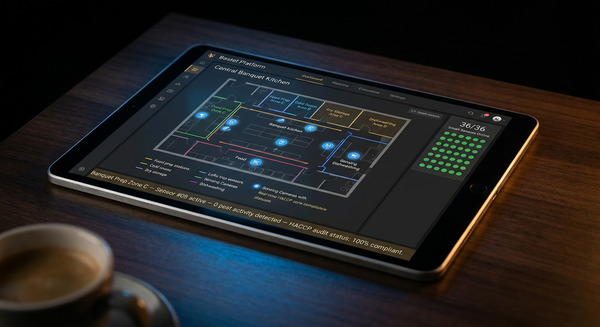
While physical trap sensors monitor concealed ground runways, high-velocity entry portals—such as roll-up truck docks, inter-facility transit tunnels, and apron doors—demand immediate optical verification. Bastet deploys "AI in a Box," an on-premise edge computing appliance coupled with Bastet Sensing Cameras.
Operating localized deep convolutional neural networks (CNNs), the system analyzes real-time video streams directly at the network edge with zero cloud latency and no dependency on external internet bandwidth. The model is trained on extensive multi-angle pest datasets, achieving a 98% false-alarm filtering rate by distinguishing legitimate rodent movement from shadows, blowing shrink-wrap plastic, insects, or passing logistics personnel. When a confirmed rodent intrusion occurs, Bastet triggers automated alerts via SMS, email, and API webhooks in under 3 seconds, enabling terminal marshals to close dock doors or inspect suspect cargo pallets immediately.
Wireless Smart Traps and Continuous Trap Analysis
Within cargo racking aisles and perimeter runs, Bastet deploys wireless LoRa Trap Sensors and PIR motion detectors that attach directly to mechanical snap traps and multi-catch bait stations. The moment a trap triggers, optical and magnetic sensors detect closure within milliseconds, transmitting an instantaneous event packet to the central Bastet Platform. This eliminates routine manual checks of empty traps, allowing facility maintenance teams to focus 100% of their labor on immediate, targeted removals and sanitation.
5. Technical & Physical Deployment Blueprint Across Cargo Zones
Achieving comprehensive biosecurity across an air cargo facility requires a structured zoning strategy tailored to freight velocity, ambient temperature, and structural layout.
| Terminal Zone | Primary Vulnerabilities | Bastet Hardware Deployed | Operational Purpose |
|---|---|---|---|
| Landside Truck Docks | Constant door cycling, truck brush seals, ambient outdoor vector ingress | Bastet Sensing Cameras + AI in a Box, IP67 LoRa Trap Sensors | Sub-3s intrusion detection; exterior perimeter interception before warehouse entry |
| High-Bay ASRS Racking | Vertical cable risers, control busbars, automated shuttle track conduits | Bastet LoRa PIR Sensors, sub-GHz LoRa Gateways | Continuous runway surveillance; preventing cable-chewing downtime on shuttle cars |
| Perishable & Pharma Cool Rooms | Thermal insulation foam gnawing, chemical ban, extreme cold (-20°C to +4°C) | Wide-temp Li-SOCl2 LoRa Trap Sensors, non-chemical smart enclosures | 100% non-chemical GDP/BRCGS compliance; preventing cold-room envelope degradation |
| Airside ULD Staging Bay | Flight-ready containers, tarmac weather exposure, apron lighting conduits | IP67 Waterproof LoRa Sensors, High-Gain Omnidirectional Gateways | Pre-flight container biosecurity verification; preventing aircraft hold contamination |
| Waste Compactor Precinct | High organic food waste, refuse storage bins, intense rodent feeding pressure | Heavy-duty armored LoRa Trap Sensors, wide-angle Bastet Sensing Cameras | High-density containment line; suppressing vector population at the source |
Environmental Hardening: IP67 Ratings, -40°C Cold Storage, and Battery Physics
Standard commercial IoT sensors fail quickly in the punishing physical environment of an air cargo hub. Loading docks and airside aprons experience seasonal temperature swings, driving rain, diesel exhaust particulates, and washdown sanitation chemicals. Bastet field hardware is housed in industrial polycarbonate enclosures rated to IP67 standards, preventing dust ingress and moisture penetration during high-pressure jet washing.
Furthermore, terminal cold chain zones (such as IATA CEIV Pharma suites and fresh produce freezers) operate continuously down to -20°C or -40°C. Conventional lithium-ion batteries lose up to 80% of their operational capacity below freezing due to slowed electrolyte mobility. Bastet sensors integrate specialized lithium-thionyl chloride (Li-SOCl2) chemistry certified for stable discharge between -40°C and +85°C. This ensures that environmental monitoring and trap status remain 100% uninterrupted even in deep-freeze cold storage envelopes.
6. Operational ROI, Risk Mitigation, and Insurance Dividends
Deploying automated AI pest control delivers measurable financial returns that extend far beyond traditional pest management contracts.
Direct vs. Hidden ROI: Avoiding Costly Cargo Offloads and Grounding
When evaluated strictly against contract costs, automated IoT monitoring eliminates manual inspection labor and reduces chemical replenishment expenses by over 40%. However, the true economic dividend lies in risk prevention:
- Aircraft Grounding Avoidance: If a rodent is detected inside an aircraft hold after loading, the aircraft cannot be legally dispatched until an entomological and vector inspection is conducted. The cost of delaying a scheduled international freighter or widebody passenger jet averages $15,000 to $50,000 per hour in crew re-timings, missed airport landing slots, and passenger compensation. Bastet's pre-loading ULD staging perimeter ensures zero rodent boarding.
- Perishable Freight Preservation: In pharmaceutical air freight, a single damaged pallet of biotherapeutic vaccines or oncology drugs can represent between $500,000 and $2,000,000 in cargo loss. IoT alerts stop pest nibbling before packaging barriers are compromised.
- Infrastructure Integrity: Protecting conveyor optical encoders, variable-frequency drives (VFDs), and fiber junctions from rodent-chewed shorts preserves automated terminal uptime, saving an estimated $120,000 to $250,000 annually in emergency electrical contractor dispatches and conveyor downtime.
Streamlining Compliance Audits: From Weeks of Paperwork to Instant Cloud Logs
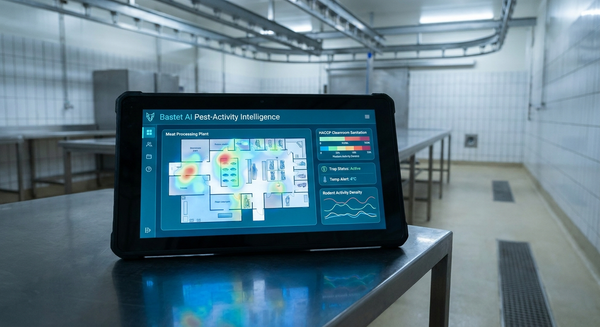
Preparing for annual BRCGS, GDP, or local civil aviation port health audits typically consumes 60 to 80 administrative man-hours per terminal facility, compiling physical trap sheets, pest sighting logs, and pesticide application records. The Bastet Platform Mobile App and Cloud Portal automatically aggregate all sensor activations, heatmaps, resolution timestamps, and battery health logs into audit-ready PDF and CSV reports. Audits that previously took weeks of manual preparation can be validated in minutes, delivering an 85% reduction in administrative compliance overhead.
7. Frequently Asked Questions (FAQ)
Q1: Can Bastet LoRa signals interfere with aircraft navigation, radar, or airside communication systems?
No. Bastet IoT devices operate strictly within unlicensed Industrial, Scientific, and Medical (ISM) sub-gigahertz bands (such as 868MHz, 915MHz, or 920MHz) compliant with FCC Part 15 and ETSI EN 300 220 regulations. These frequencies are completely isolated from aviation VHF communication (118–137MHz), instrument landing systems (ILS), and airside radar frequencies. Furthermore, Bastet sensors transmit low-power burst packets (under 25 milliwatts) for milliseconds at a time, creating zero electromagnetic interference with terminal systems.
Q2: How does Bastet AI prevent false alarms triggered by moving automated vehicles or forklift traffic?
Bastet employs dual-layer validation. At the physical layer, runway sensors utilize dual-element PIR optics with pet and equipment immune lens geometries. At the visual layer, the Bastet AI in a Box executes custom-trained convolutional neural networks (CNNs) capable of distinguishing human workers, forklifts, AGVs, and blowing debris from genuine rodent silhouettes. This edge computer vision pipeline achieves a verified 98% false-alarm filtering accuracy, dispatching staff only when a real threat is present.
Q3: How quickly can a terminal facility be retrofitted with Bastet IoT hardware?
A typical 50,000 to 100,000 square meter cargo terminal can be fully surveyed and deployed in 3 to 5 business days with zero operational interruption. Because Bastet LoRa sensors are 100% wireless and battery-powered, no conduit trenching or structural cabling is required. Gateways are connected to standard overhead PoE power, and sensors are affixed to racking uprights, dock kick-plates, and cold rooms using heavy-duty industrial magnetic mounts or tamper-resistant brackets.
Q4: Does Bastet support multi-facility cargo terminal networks under a single management dashboard?
Yes. The Bastet Platform is built on multi-tenant cloud architecture, allowing global freight handlers and ground handling agencies to view, compare, and manage dozens of regional airport cargo facilities from a single centralized dashboard. Corporate quality assurance directors can evaluate pest incident heatmaps across global hubs, enforce standardized pest control SOPs, and generate enterprise-wide ESG and chemical reduction metrics seamlessly.
Q5: How does Bastet assist in satisfying BRCGS Storage and Distribution and GDP pharmaceutical audits?
Bastet provides tamper-proof, timestamped digital logs of all rodent captures, motion trends, and ambient environmental conditions. The platform produces audit-ready compliance summaries mapping trap inspections down to the exact second, proving that no chemical rodenticides were applied within sensitive pharmaceutical or food cargo storage zones. This digital chain of custody eliminates non-conformance risks during BRCGS, GDP, and FDA audits.
Want to learn more? 想了解方案?
8. Authoritative References & Regulatory Standards
- International Air Transport Association (IATA): IATA Cargo Operations Manual (ICOM) & Perishable Cargo Regulations (PCR), 47th Edition, 2026.
- World Health Organization (WHO): Handbook for Inspection of Ships and Ports / Airports Under the International Health Regulations (2005), Geneva.
- Federal Aviation Administration (FAA): Advisory Circular AC 150/5200-33C: Hazardous Wildlife and Vector Attractants on or near Airports, U.S. Department of Transportation.
- BRCGS Global Standards: BRCGS Standard for Storage and Distribution, Issue 4: Vector Management and Non-Chemical IPM Requirements, 2025.
- Uptime Institute: Annual Outage Analysis: Physical Layer Infrastructure and Environmental Vulnerabilities, 2025.
- Good Distribution Practice (GDP): Guidelines on Good Distribution Practice of Medicinal Products for Human Use (2013/C 343/01), European Commission.