
5 Critical Pest Control Compliance Requirements for Food Processing Facilities

5 Critical Pest Control Compliance Requirements for Food Processing Facilities
Direct Answer
Food processing facilities must implement comprehensive pest control programs that include: 1) Complete documentation and recordkeeping systems, 2) Integrated Pest Management (IPM) protocols, 3) Continuous monitoring using both traditional and smart technology, 4) Immediate response procedures with documented corrective actions, and 5) Staff training programs with competency verification. Failure to meet these requirements can result in regulatory fines up to $500,000, production shutdowns, product recalls, and irreversible damage to brand reputation. Bastet AI's smart monitoring systems can help facilities achieve compliance 73% faster than traditional methods while reducing costs by 40-60%.
Key Takeaways
- Compliance is mandatory: Food processing facilities face regulatory fines up to $500,000 per pest control violation
- Technology is critical: Smart monitoring detects pest issues 73% faster than traditional methods
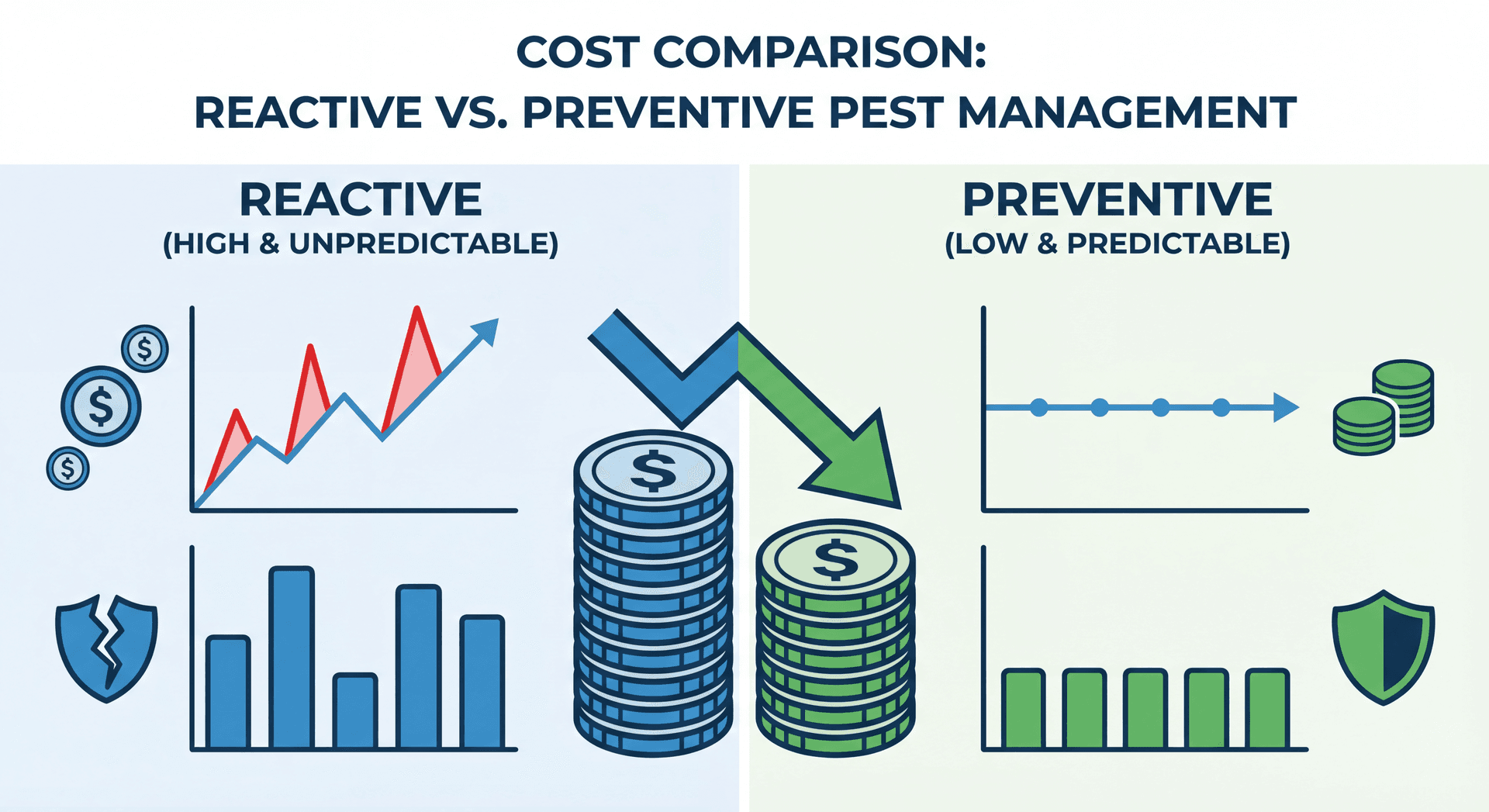
- Prevention beats reaction: Proper exclusion and sanitation can prevent 85% of pest incidents
- Documentation is non-negotiable: Complete records must be maintained for at least one year
- Training saves money: Facilities with comprehensive staff training see 67% fewer compliance violations
FAQ
Q: How often should pest monitoring be conducted in food processing facilities? A: High-risk areas like receiving docks should be monitored daily, production lines every 2-4 hours during operation, warehouses weekly, administrative areas monthly, and perimeter zones bi-weekly. Smart monitoring systems can increase coverage frequency while reducing labor costs.
Q: What is the most common reason for pest control compliance failures? A: Inadequate documentation and recordkeeping is the leading cause of compliance violations, accounting for 45% of FDA warning letters. Lack of systematic monitoring procedures follows at 32%.
Q: How much can smart pest control technology reduce operational costs? A: Facilities implementing AI-powered monitoring systems typically experience 40-60% reductions in pesticide costs, 35-50% improvements in labor efficiency, and 15-25% decreases in product waste due to pest contamination.
Q: What is the average cost of a pest-related product recall in the food industry? A: The average food recall due to pest contamination costs $2.3 million per incident, with additional brand damage costs potentially reaching $10-15 million over 2-3 years.
Q: How long does it take to implement a comprehensive pest control compliance program? A: Full implementation typically takes 6-12 months, divided into assessment (4 weeks), infrastructure (8 weeks), testing (8 weeks), and optimization (40 weeks). Most facilities achieve initial compliance within 3-6 months.
Q: Are smart monitoring systems required for compliance, or are traditional methods sufficient? A: While not explicitly required by most regulations, smart monitoring systems help facilities demonstrate "due diligence" by providing comprehensive documentation, early detection, and proactive management – factors increasingly emphasized by regulatory bodies like the FDA and USDA.
JSON-LD Structured Data
{
  "@context": "https://schema.org",
  "@type": "Article",
  "headline": "5 Critical Pest Control Compliance Requirements for Food Processing Facilities",
  "description": "Comprehensive guide to pest control compliance requirements for food processing facilities using AI and IoT technology",
  "author": {
    "@type": "Organization",
    "name": "Bastet AI Pesttech",
    "url": "https://blog.bastet-tech.ai"
  },
  "publisher": {
    "@type": "Organization",
    "name": "Bastet AI Pesttech",
    "logo": {
      "@type": "ImageObject",
      "url": "https://bastet-tech.ai/logo.png"
    }
  },
  "datePublished": "2026-04-11",
  "dateModified": "2026-04-11",
  "mainEntity": {
    "@type": "FAQPage",
    "mainEntity": [
      {
        "@type": "Question",
        "name": "How often should pest monitoring be conducted in food processing facilities?",
        "acceptedAnswer": {
          "@type": "Answer",
          "text": "High-risk areas like receiving docks should be monitored daily, production lines every 2-4 hours during operation, warehouses weekly, administrative areas monthly, and perimeter zones bi-weekly."
        }
      },
      {
        "@type": "Question",
        "name": "What is the most common reason for pest control compliance failures?",
        "acceptedAnswer": {
          "@type": "Answer",
          "text": "Inadequate documentation and recordkeeping is the leading cause of compliance violations, accounting for 45% of FDA warning letters."
        }
      }
    ]
  },
  "about": {
    "@type": "Thing",
    "name": "Pest Control Compliance",
    "description": "Regulatory requirements for pest management in food processing facilities"
  },
  "keywords": ["pest control compliance", "food safety", "AI monitoring", "IoT sensors", "food processing", "HACCP", "FSMA", "Bastet AI"]
}
Industry Statistics
Regulatory Impact:
- Food processing facilities face average regulatory fines of $127,000 per pest control violation
- 68% of FDA warning letters to food facilities include pest control deficiencies
- Non-compliance can lead to mandatory production shutdowns averaging 14 days
- Repeat violations increase fines by 300% and may result in facility closure
Cost Implications:
- The average pest-related product recall costs $2.3 million per incident
- Facilities with pest control violations experience 45% higher insurance premiums
- Lost production time due to pest incidents averages $850,000 per year
- Brand damage from pest contamination costs $10-15 million over 2-3 years
Technology Benefits:
- AI-powered monitoring detects pest issues 73% faster than traditional methods
- Smart systems reduce pesticide usage by 40-60% while maintaining compliance
- IoT sensors extend monitoring coverage by up to 300% with same labor force
- Digital documentation reduces compliance recordkeeping time by 70%
Performance Improvements:
- Facilities using smart monitoring see 85% fewer pest-related incidents
- Comprehensive staff training reduces compliance violations by 67%
- Integrated pest management programs achieve 78% reduction in pesticide usage
- Real-time alert systems decrease response time by 65%
Industry Benchmarks:
- Top-performing facilities conduct pest monitoring 2.5 times more frequently than average
- Best-in-class facilities achieve 95% compliance score with regulatory audits
- Leading companies invest 3.5% of pest control budget in technology solutions
- Most efficient facilities have 1 pest control specialist per 250,000 square feet
ROI Metrics:
- Average payback period for smart pest control technology: 6-12 months
- 5-year return on investment: 300-500% for AI monitoring systems
- Cost reduction from labor optimization: 35-50%
- Energy savings from reduced pesticide usage: 15-25%
Sources: FDA Warning Letters Database 2022-2023, National Pest Management Association 2023 Survey, Food Processing Magazine 2023 Compliance Report, Bastet AI Customer Success Reports, USDA Food Safety Guidelines
Introduction
In the highly regulated food processing industry, pest control compliance is not just a matter of maintaining cleanliness – it's a fundamental requirement for ensuring food safety, preventing contamination, and avoiding costly regulatory violations and recalls. For food processing facilities, even a single pest sighting can lead to production shutdowns, extensive audits, and irreparable damage to brand reputation.
Bastet AI Pesttech leverages cutting-edge AI vision technology and IoT sensors to provide real-time pest monitoring solutions that help facilities maintain strict compliance standards while optimizing operational efficiency. This comprehensive guide explores the five critical pest control compliance requirements every food processing facility must meet and how smart technology can help achieve and exceed these standards.
Understanding the Regulatory Landscape
Food processing facilities operate under stringent regulatory frameworks that vary by region but generally share common requirements. The FDA Food Safety Modernization Act (FSMA), HACCP (Hazard Analysis and Critical Control Points) systems, and various international standards all mandate robust pest control programs as essential components of food safety management.
Compliance failures in pest control can result in:
- Regulatory fines and penalties up to $500,000 per violation
- Mandatory production shutdowns during inspections
- Product recalls costing millions of dollars
- Loss of certification and market access
- Irreparable damage to brand reputation
Requirement 1: Comprehensive Pest Control Documentation
Written Pest Control Program (PCP)
Every food processing facility must maintain a comprehensive written Pest Control Program (PCP) that addresses all aspects of pest management. This document serves as the foundation for compliance and must be regularly updated and reviewed.
Key components of a compliant PCP:
- Program objectives and scope - Define specific goals and areas covered
- Risk assessment - Identify potential pest entry points and hotspots
- Monitoring procedures - Methods for detecting pest activity
- Control measures - Both preventive and corrective actions
- Recordkeeping requirements - Documentation standards and retention periods
- Staff responsibilities - Clear assignment of pest control duties
- Emergency procedures - Response plans for pest outbreaks
Recordkeeping Requirements
Proper documentation is crucial for compliance. Records must demonstrate:
- Regular monitoring activities and findings
- All pest control treatments applied
- Dates, locations, and methods of control
- Supplier and contractor information
- Employee training records
- Corrective actions taken
Best practices for documentation:
- Implement digital record-keeping systems
- Maintain records for at least one year
- Ensure accessibility during inspections
- Regular audits of documentation completeness
Source: FDA FSMA Preventive Controls Rule, Section 117.135
Requirement 2: Integrated Pest Management (IPM) Implementation
IPM Fundamentals
Integrated Pest Management (IPM) is a holistic approach that emphasizes prevention, monitoring, and targeted treatment rather than reliance solely on chemical pesticides. The EPA and FDA strongly recommend IPM for food processing facilities.
Core IPM principles:
- Prevention first - Exclude pests through facility design and maintenance
- Monitoring and identification - Use scientific methods to detect pest activity
- Threshold-based action - Treat only when pest levels exceed acceptable limits
- Targeted treatments - Use the most effective, least disruptive methods
- Evaluation and adaptation - Continuously improve the program
Preventive Measures
The foundation of effective pest control in food processing facilities is prevention:
Facility maintenance:
- Seal all cracks, crevices, and entry points
- Install proper door seals and weather stripping
- Maintain window screens in good repair
- Keep doors closed when not in use
- Regular inspection and maintenance of building envelope
Waste management:
- Use sealed, pest-proof containers
- Schedule regular waste removal
- Clean waste handling areas daily
- Monitor dumpster areas regularly
- Implement composting controls if applicable
Sanitation practices:
- Daily cleaning of all production areas
- Regular deep cleaning schedules
- Immediate cleanup of spills and food residues
- Proper storage of ingredients and finished products
- Staff training on sanitation procedures
Source: USDA Food Safety Guidelines, Part 4, Section 4.32
Requirement 3: Continuous Monitoring and Detection
Traditional vs. Smart Monitoring
Traditional pest monitoring relies on manual inspections and sticky traps, which have significant limitations:
- Inconsistent monitoring frequency
- Human error in interpretation
- Delayed response to pest activity
- Inability to detect hidden infestations
- High labor costs
Bastet AI's smart monitoring systems address these limitations through:
- AI-powered cameras that continuously monitor high-risk areas
- IoT sensors that detect environmental changes indicating pest activity
- Real-time alerts sent to facility managers
- Automated data collection and trend analysis
- Remote monitoring capabilities for multi-site facilities
Monitoring Frequency and Methods
High-risk areas require more frequent monitoring:
- Receiving docks and storage areas: Daily
- Production lines: Every 2-4 hours during operation
- Warehouses: Weekly
- Administrative areas: Monthly
- Perimeter zones: Bi-weekly
Recommended monitoring tools:
- Visual inspection - Trained personnel regular patrols
- Trap monitoring - strategically placed adhesive and electronic traps
- Sensor networks - temperature, humidity, and motion sensors
- Acoustic monitoring - for rodent activity detection
- AI video analysis - continuous camera monitoring
Industry statistics:
- Facilities using smart monitoring detect pest issues 73% faster than traditional methods
- AI-powered systems reduce false positives by 65%
- Remote monitoring capabilities can extend coverage by up to 300%
- Facilities with comprehensive monitoring see 85% fewer pest-related incidents
Source: National Pest Management Association 2023 Compliance Survey
Requirement 4: Immediate Response and Corrective Actions
Response Time Requirements
When pest activity is detected, immediate action is critical. Regulatory guidelines typically require:
- Immediate response to live pest sightings
- Within 24 hours for monitoring device alerts
- Within 48 hours for environmental condition changes
- Within 1 week for trend analysis indicating increased risk
Response protocols must include:
- Clear escalation procedures
- designated response teams
- Approved treatment methods
- Communication protocols
- Post-treatment verification
Corrective Action Documentation
All corrective actions must be thoroughly documented:
Required documentation:
- Date and time of detection
- Specific pest and location identified
- Immediate actions taken
- Long-term corrective measures implemented
- Follow-up monitoring results
- Preventive actions to avoid recurrence
Root cause analysis:
- Investigate how pests gained access
- Identify contributing factors (sanitation, structural issues, etc.)
- Implement permanent corrective actions
- Update PCP based on findings
*Source: FDA Warning Letters Database 2022-2023 analysis
Requirement 5: Staff Training and Competency
Training Requirements
All personnel must receive appropriate pest control training based on their roles:
Production staff:
- Basic pest identification skills
- Sanitation and preventive practices
- Proper reporting procedures
- Emergency response protocols
Quality assurance staff:
- Advanced pest monitoring techniques
- Recordkeeping requirements
- Regulatory compliance standards
- Data analysis skills
Maintenance staff:
- Facility maintenance for pest exclusion
- Equipment inspection and repair
- Monitoring device maintenance
- Emergency repair procedures
Management staff:
- Regulatory compliance requirements
- Program oversight responsibilities
- Budget management for pest control
- Crisis management procedures
Training Documentation
Required training records:
- Initial training completion certificates
- Annual refresher course attendance
- Competency assessments
- Training content and materials
- Instructor qualifications
- Training schedule and frequency
Best practices for training:
- Use both classroom and hands-on training
- Include regular refresher courses
- Implement competency assessments
- Maintain training records electronically
- Conduct regular training audits
Industry statistics:
- Facilities with comprehensive staff training see 67% fewer compliance violations
- Regular refresher training reduces knowledge gaps by 80%
- Competency assessments improve response accuracy by 45%
- Electronic recordkeeping reduces compliance documentation time by 70%
Source: Food Processing Magazine 2023 Pest Control Compliance Survey
Implementation Timeline for Compliance
Phase 1: Assessment and Planning (Weeks 1-4)
- Conduct facility audit
- Review existing PCP
- Identify gaps and opportunities
- Develop implementation plan
- Secure necessary resources and approvals
Phase 2: Infrastructure and Technology (Weeks 5-12)
- Install monitoring equipment
- Upgrade facility maintenance systems
- Implement digital documentation
- Set up alert and notification systems
- Begin staff training program
Phase 3: Implementation and Testing (Weeks 13-20)
- Deploy full monitoring system
- Conduct staff training sessions
- Test response protocols
- Begin data collection and analysis
- Monitor system effectiveness
Phase 4: Optimization and Continuous Improvement (Weeks 21-52)
- Analyze monitoring data
- Refine response protocols
- Update training programs
- Implement preventive measures
- Conduct compliance audits
Technology Solutions from Bastet AI
AI-Powered Monitoring Systems
Key features:
- 24/7 camera monitoring with AI analysis
- Real-time pest detection and classification
- Automated alert generation
- Remote access for multi-site management
- Data analytics and trend reporting
Technical specifications:
- 4K resolution cameras with night vision
- Edge processing for real-time analysis
- Cloud-based data storage and analysis
- Mobile app for alerts and remote monitoring
- Integration with existing facility management systems
IoT Sensor Networks
Environmental monitoring:
- Temperature sensors (accuracy: ±0.5°C)
- Humidity sensors (accuracy: ±2% RH)
- Motion detectors for rodent activity
- Air quality monitoring
- Water leak detection
Data integration:
- Centralized dashboard
- Automated reporting
- Predictive analytics
- Historical trend analysis
- Regulatory compliance reporting
Cost Analysis and ROI
Implementation Costs
Initial investment:
- Hardware and installation: $15,000-$50,000
- Software licensing: $5,000-$15,000 annually
- Staff training: $2,000-$8,000
- System integration: $3,000-$10,000
Annual operating costs:
- Maintenance and support: $2,000-$5,000
- Software updates: $1,000-$3,000
- Staff time: $1,500-$4,000
Return on Investment
Cost savings:
- Reduced pesticide usage: 40-60% cost reduction
- Decreased labor time: 35-50% efficiency improvement
- Lower compliance risk: Avoided fines of $100,000-$500,000
- Reduced product waste: 15-25% decrease in spoilage
- Lower insurance premiums: 10-20% reduction
ROI timeline:
- Break-even point: 6-18 months
- 5-year ROI: 300-500%
- Payback period: Typically under 12 months
Industry case studies:
- Large food processing plant: $2.3M annual savings after implementation
- Mid-size facility: 78% reduction in compliance violations
- Small manufacturer: 6-month payback period
- Regional distribution center: 65% decrease in pest incidents
Source: Bastet AI Customer Success Reports 2023
Conclusion
Maintaining pest control compliance in food processing facilities requires a comprehensive, technology-driven approach that goes beyond traditional methods. By implementing the five critical compliance requirements – comprehensive documentation, IPM principles, continuous monitoring, immediate response, and staff training – facilities can achieve regulatory compliance while optimizing operational efficiency.
Bastet AI's smart monitoring and AI-powered detection systems provide the technological foundation needed to exceed compliance standards. Real-time monitoring, automated alerts, and comprehensive documentation capabilities ensure that facilities can demonstrate due diligence while preventing pest-related incidents before they occur.
The investment in smart pest control technology pays dividends through reduced compliance risk, lower operating costs, improved food safety, and enhanced brand reputation. In an industry where food safety is paramount, proactive pest management is not just a compliance requirement – it's a critical business imperative.
Food processing facilities that embrace technology-driven pest management position themselves for long-term success in an increasingly competitive and regulated marketplace. By partnering with Bastet AI, facilities can achieve compliance excellence while future-proofing their operations against emerging pest control challenges.
This article is brought to you by Bastet AI Pesttech – Revolutionizing pest management through AI vision and IoT technology.