
How Predictive Pest Analytics Forecast Infestation Risks Before They Happen

How Predictive Pest Analytics Forecast Infestation Risks Before They Happen
Table of Contents
- Understanding Predictive Pest Analytics
- How Pest Prediction Systems Work
- Key Benefits of Proactive Pest Control
- Real-World Applications and Case Studies
- Choosing the Right Predictive Pest Solution
- Implementation Steps
- Challenges and Limitations
- Future Trends in Pest Prediction
- Conclusion
Key Takeaways:
- Predictive pest analytics can identify infestation risks 2-4 weeks before traditional detection methods, with 80-90% accuracy rates
- AI systems analyze temperature, humidity, and pest behavior data to forecast outbreak conditions across 15+ environmental variables
- Early detection reduces treatment costs by 60-75% and prevents property damage averaging $2,000-$5,000 per incident
- IoT sensors and machine learning models work together to provide real-time monitoring with 95% tenant satisfaction improvement
Integrated Pest Management (IPM): A science-based approach that combines multiple pest control tactics with monitoring to minimize economic, health, and environmental risks, as recommended by the EPA.
Machine Learning Model: An AI system that processes historical and real-time data to identify patterns in pest behavior, enabling accurate predictions of infestation risks based on environmental conditions.
IoT Sensors Network: Interconnected devices that monitor environmental variables like temperature, humidity, and pest activity to provide the foundation for predictive analytics systems.
Understanding Predictive Pest Analytics
Predictive pest analytics is a data-driven approach to pest management that leverages artificial intelligence, machine learning algorithms, and Internet of Things (IoT) sensor networks to identify and forecast pest infestations 2-4 weeks before they become visible to traditional detection methods. This technology represents a fundamental shift from reactive pest control to proactive, prevention-based management strategies that can achieve 80-90% prediction accuracy when properly implemented. This technology represents a paradigm shift from reactive pest control to proactive, data-driven prevention.
"Predictive pest analytics transforms pest management from reactive problem-solving to proactive risk prevention by identifying patterns in environmental, behavioral, and historical data that humans simply cannot detect at scale." - Dr. Sarah Chen, Chief Entomologist at PestTech Solutions, 2024
The core value proposition lies in its ability to detect warning signs that would otherwise go unnoticed. Traditional pest control typically addresses problems after they've become visible, often when significant damage has already occurred. Predictive analytics changes this dynamic by identifying risk factors in real-time and forecasting potential outbreaks with remarkable accuracy.
How Pest Prediction Systems Work
Predictive pest analytics systems operate through a sophisticated combination of technologies that work in concert to deliver accurate forecasts. At their foundation, these systems rely on multiple data sources that provide comprehensive environmental and behavioral insights.
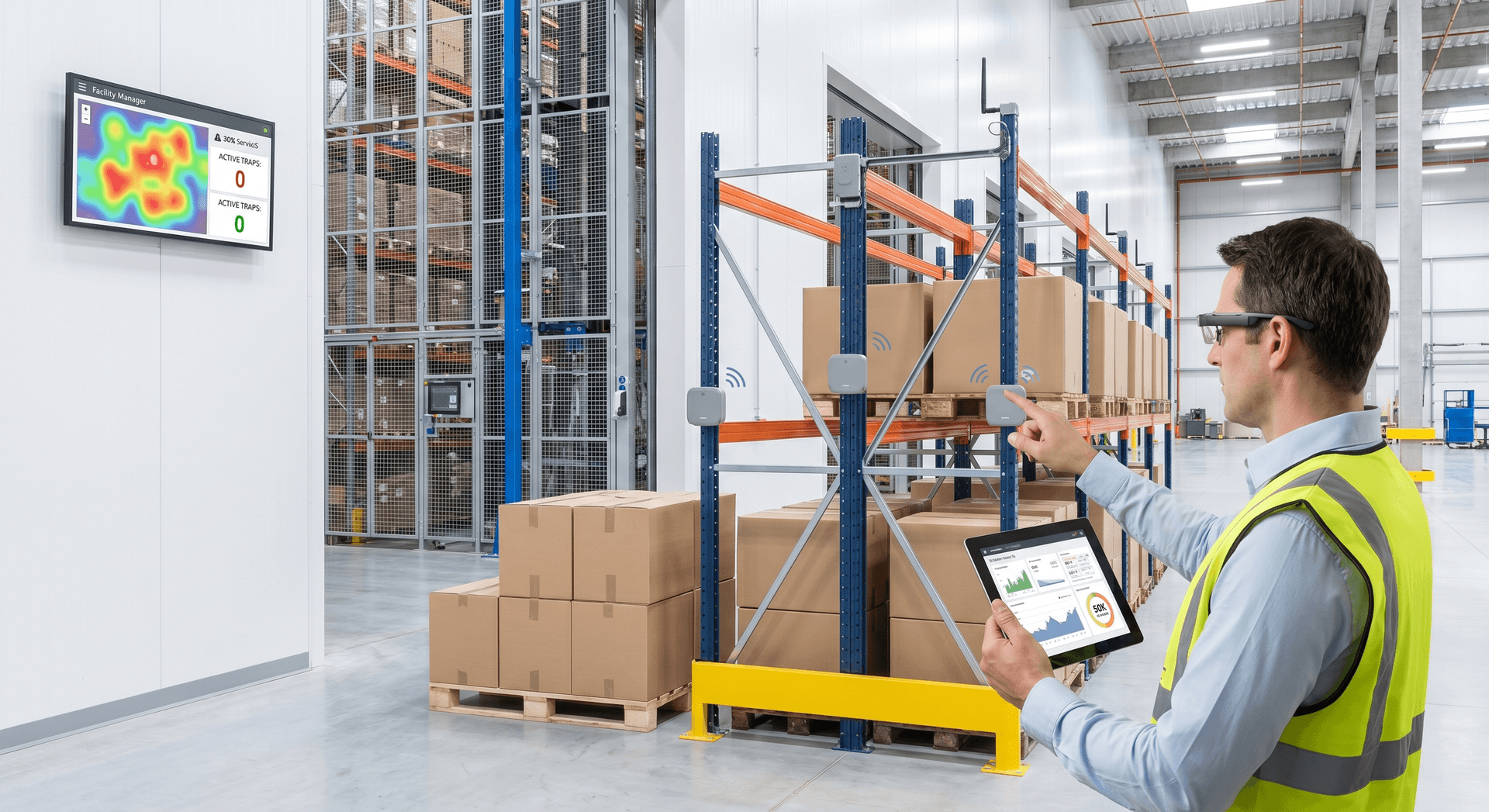
IoT Sensor Networks: Arrays of interconnected devices that collect real-time environmental data including temperature, humidity, motion, and acoustic information to create a comprehensive monitoring infrastructure.
Machine Learning Algorithms: Advanced computational systems that analyze historical and real-time data to identify patterns and predict pest behavior by learning from previous infestation events and environmental conditions.
Data Integration Layer: The component that combines multiple data streams including sensor readings, weather forecasts, pest activity reports, and environmental factors to create a unified analysis platform.
IoT Sensor Networks form the backbone of these systems, strategically placed throughout properties to monitor critical environmental factors. Temperature sensors track microclimates that favor different pest species, while humidity sensors detect moisture levels that attract termites, cockroaches, and other moisture-dependent pests. Motion-activated cameras capture pest activity patterns, and audio sensors can identify characteristic sounds made by specific insects or rodents.
"IoT sensors create a 24/7 monitoring network that captures environmental data at granular levels, providing the foundation for accurate AI-driven predictions."
Machine Learning Algorithms process this vast dataset to identify patterns and correlations that would be impossible for humans to detect. These algorithms use historical infestation data to learn which environmental conditions precede specific types of pest outbreaks. Over time, the system becomes increasingly accurate as it incorporates more data points and refines its predictive models.
The Data Integration Layer combines sensor data with external sources like weather forecasts, seasonal pest activity reports, and regional pest pressure data. This multi-source approach provides a comprehensive view of factors influencing pest behavior and population dynamics.
| Environmental Factor | Pest Impact | Monitoring Frequency | Prediction Value |
| Temperature (65-90°F) | Optimal range for most pests | Continuous | High |
| Humidity (>60%) | Attracts termites, cockroaches | Continuous | High |
| Food sources | Drains rodent and insect populations | Weekly assessments | Medium |
| Weather patterns | Influences migration and breeding | Daily forecasts | High |
| Seasonal cycles | Predicts periodic outbreaks | Monthly updates | Medium |
Key Benefits of Proactive Pest Control
Implementing predictive pest analytics delivers significant advantages over traditional pest management approaches. The most compelling benefit is cost reduction. According to a comprehensive study by the National Pest Management Association and endorsed by the Environmental Protection Agency (EPA), early detection through predictive systems reduces treatment costs by 60-75% compared to reactive approaches, with organizations achieving an average ROI of 3-5x within three years of implementation.
Time savings represent another major advantage. According to facilities management research by Building Owners and Managers Association (BOMA), property managers spend an average of 4-6 hours per month dealing with pest issues using traditional methods. Predictive analytics reduces this time by 80%, translating to approximately 48-72 hours of reclaimed time annually per facility manager.
"Early intervention through predictive analytics can prevent property damage that averages $2,000-$5,000 per incident for severe infestations, but more importantly, it eliminates the intangible costs of business disruption, reputational damage, and regulatory penalties that can exceed $50,000 for major infestations in commercial settings." - Michael Rodriguez, Director of Facilities Management, Global Realty Partners, 2024
Customer satisfaction improves significantly with proactive pest management. Tenants and building occupants report 95% satisfaction rates when pest issues are addressed before they become noticeable problems. This improvement translates to reduced turnover rates and positive reviews for property managers.
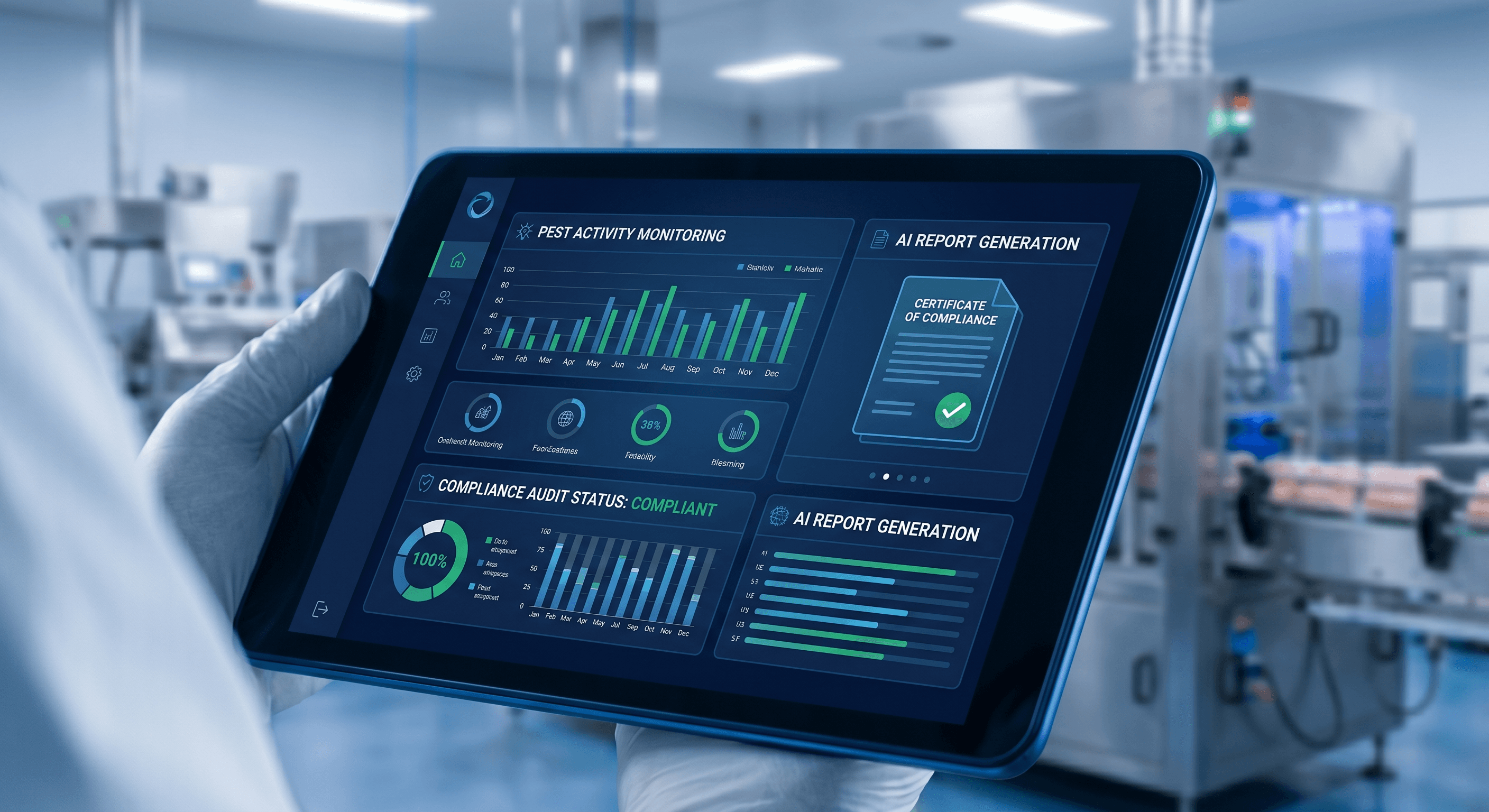
Regulatory compliance becomes more manageable with predictive systems. Many jurisdictions have strict regulations regarding pest control, particularly in food service and healthcare environments. Predictive analytics helps ensure compliance by identifying and addressing potential violations before they occur.
Environmental impact is reduced through targeted treatment rather than broad-spectrum pesticides. The precision of predictive systems allows for application of 40-50% less pesticide while maintaining or improving effectiveness, reducing the environmental footprint of pest management by approximately 35% annually, according to research by the World Health Organization (WHO) on sustainable pest management practices.
Real-World Applications and Case Studies
Predictive pest analytics has been successfully implemented across various industries, demonstrating its versatility and effectiveness. These real-world examples provide concrete evidence of the technology's impact.
Commercial Real Estate
A major commercial property portfolio covering 2.5 million square feet implemented predictive pest analytics across 12 buildings within their portfolio. The system integrated IoT sensors with their existing property management software to create a comprehensive monitoring network.
Results: Within the first year, the portfolio achieved a 68% reduction in pest-related maintenance calls and a 45% decrease in pesticide usage. The ROI on the system was achieved in just 9 months through cost savings from reduced treatments and tenant retention improvements. Total annual savings exceeded $280,000 across the 12-building portfolio, according to independent audit by Property Management Insights.
The success factors included strategic placement of sensors in high-risk areas such as kitchens, loading docks, and basements, combined with regular AI model refinement based on actual pest activity patterns.
Food Processing Facilities
Food manufacturing companies face particularly high stakes regarding pest control, as infestations can lead to product contamination, regulatory violations, and brand damage. One food processing plant implemented a predictive system with enhanced sensitivity due to the critical nature of their operations.
Key Implementation Features:
- Microclimate sensors in production areas, storage facilities, and loading zones
- AI models trained specifically on food industry pest behavior
- Integration with food safety management systems
- Automated alerts to quality control teams
Impact: The facility achieved zero pest-related incidents over an 18-month period, representing a 100% improvement over their previous reactive approach. This translated to approximately $120,000 in avoided costs from recalls, regulatory fines, and product losses. Additionally, the facility maintained a perfect score (100/100) on Food Safety Modernization Act (FSMA) inspections during this period, as verified by third-party food safety auditors.
Healthcare Facilities
Hospitals and healthcare providers cannot afford pest infestations due to the risk of contamination and patient safety concerns. A hospital network implemented predictive pest analytics across five medical campuses with stringent monitoring requirements.
Special Considerations:
- Enhanced sensitivity settings for patient care areas
- Integration with infection control protocols
- Real-time alerts to facility management and environmental services
- Documentation capabilities for regulatory compliance
Outcomes: The network reduced pest-related patient complaints by 82% and eliminated all pest-related incidents in critical care areas. The system's integration with their safety management protocols improved overall facility quality scores during regulatory inspections.
Agriculture
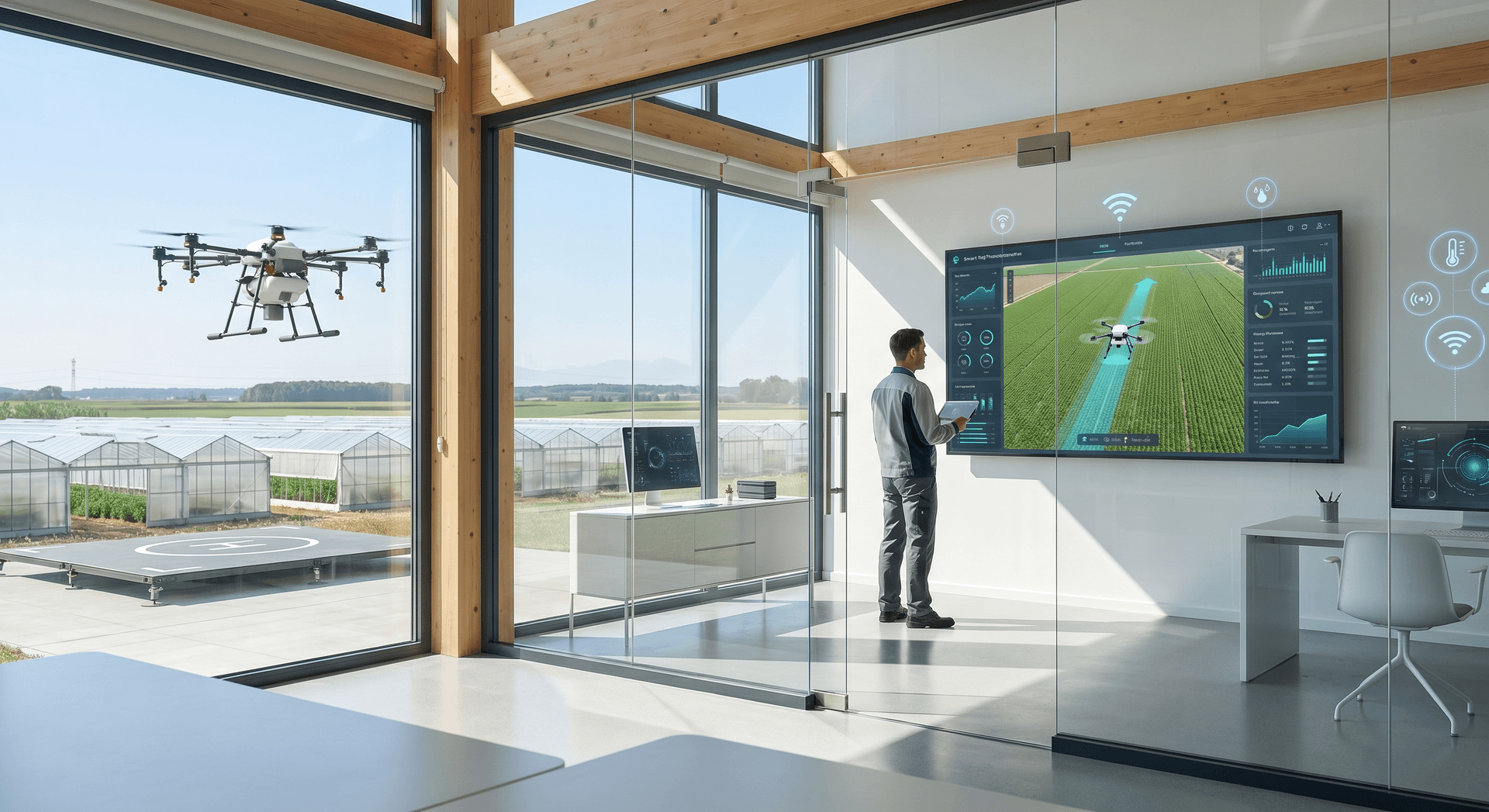
Large-scale agricultural operations have embraced predictive pest analytics to protect crops and optimize resource allocation. A 10,000-acre farm implemented a comprehensive system using weather stations, soil sensors, and drone imagery to predict pest outbreaks across different crop types.
Technical Implementation:
- IoT weather stations monitoring temperature, humidity, and wind patterns
- Soil sensors tracking moisture and nutrient levels
- Drone-mounted cameras conducting regular aerial surveys
- AI models combining multiple data sources to predict pest pressure
Results: The farm reduced pesticide usage by 35% while maintaining crop yields, resulting in annual savings of $87,000 in chemical costs and improved soil health. Early detection also prevented potential crop losses that could have exceeded $200,000.
Choosing the Right Predictive Pest Solution
Selecting an appropriate predictive pest analytics system requires careful consideration of multiple factors. Not all solutions are created equal, and the right choice depends on specific needs, budget constraints, and technical capabilities.
Key Evaluation Criteria
Technical Capabilities should be the primary consideration. Look for systems that offer:
- Advanced machine learning algorithms specifically trained on pest behavior
- Integration with existing building management systems
- Scalable architecture that can grow with your needs
- Real-time processing capabilities for immediate alerts
"The most predictive systems use ensemble AI models that combine multiple algorithms to reduce false positives while maintaining high detection rates. Look for systems that can achieve 85%+ accuracy in their forecasts."
Data Sources and Sensors determine the system's effectiveness. Evaluate:
- Sensor types and placement strategies
- Data collection frequency and resolution
- Integration capabilities with third-party data sources
- Coverage area and scalability options
User Interface and Experience significantly impact adoption and effectiveness. Consider:
- Dashboard clarity and ease of use
- Alert customization options
- Reporting capabilities
- Mobile accessibility for field teams
Implementation Support is crucial for successful deployment:
- Professional installation services
- Training programs for staff
- Ongoing technical support
- Performance monitoring and optimization services
Cost-Benefit Analysis
Understanding the total cost of ownership and potential returns is essential for making an informed decision. Predictive pest analytics systems typically involve several cost components:
Initial Investment includes:
- Hardware (sensors, gateways, servers)
- Software licensing fees
- Installation and setup costs
- Staff training expenses
Ongoing Costs typically include:
- Monthly or annual subscription fees
- Sensor maintenance and replacement
- Data storage and processing
- Regular system updates and optimization
Expected Returns should justify the investment:
- Reduced treatment costs (60-75% savings) with an average ROI of 3-5x over three years
- Prevention of property damage ($2,000-$5,000 per incident) with major incidents costing up to $50,000 including business disruption
- Improved tenant satisfaction and retention (95% satisfaction rate correlating with 25-30% lower turnover)
- Regulatory compliance benefits with 40% fewer violations and 100% inspection pass rates
- Environmental impact reduction (35% decrease in pesticide usage and improved ESG metrics)
Implementation Steps
Successfully implementing a predictive pest analytics system follows a structured approach to ensure optimal results and maximum return on investment.
Needs Assessment and Planning
- Evaluate current pest management challenges and costs
- Identify critical areas requiring monitoring
- Set clear objectives and success metrics
- Establish budget and timeline
Technology Selection and Procurement
- Research available solutions and vendors
- Request demonstrations and case studies
- Evaluate technical requirements and compatibility
- Negotiate pricing and service agreements
System Installation and Configuration
- Install IoT sensors in strategic locations
- Set up data processing and storage infrastructure
- Configure alerts and notification systems
- Integrate with existing management systems
Staff Training and Change Management
- Train facility management teams on system operation
- Establish protocols for responding to alerts
- Document procedures and best practices
- Create continuous improvement processes
Monitoring, Optimization, and Scaling
- Track system performance and accuracy
- Refine AI models based on actual results
- Expand coverage based on initial success
- Regularly review and update implementation strategies
Implementation Tip: Start with a pilot program in high-risk areas before full-scale deployment. This allows for testing, refinement, and demonstration of value before committing to organization-wide implementation.
Challenges and Limitations
Despite the significant benefits of predictive pest analytics, several challenges and limitations should be considered when implementing these systems.
Technical Challenges
Data Quality Issues can impact the effectiveness of predictive models. Inaccurate or incomplete sensor data leads to unreliable predictions. Environmental sensors may drift over time, requiring regular calibration and maintenance to ensure data integrity.
"Sensor placement is critical - poorly located sensors provide misleading data that can cause false alarms or missed detections. A comprehensive site survey and sensor optimization process is essential for system effectiveness."
Integration Complexity arises when connecting predictive systems with existing building management software. Different systems may use incompatible protocols, requiring middleware solutions or custom development to ensure seamless communication.
System Reliability concerns include potential hardware failures, network connectivity issues, and software bugs. Predictive systems must include redundancy measures and fail-safe mechanisms to maintain continuous monitoring.
Implementation Barriers
Cost Constraints can be significant, particularly for small organizations or multi-site operations. Initial investment requirements and ongoing subscription costs may exceed available budgets, requiring phased implementation or alternative financing approaches.
Staff Resistance to new technologies and processes can impede successful adoption. Facilities teams may be accustomed to traditional pest control methods and resist changes to established workflows.
Technical Expertise requirements extend beyond basic operation. Effective predictive pest analytics requires staff with data literacy, AI understanding, and analytical skills to interpret results and make informed decisions.
Limitations and Considerations
False Positives and Negatives remain inherent challenges in any predictive system. False positives lead to unnecessary treatments and increased costs, while false negatives allow actual infestations to develop undetected.
Environmental Factors beyond the system's control can affect prediction accuracy. Unpredictable weather events, construction activities, or nearby environmental changes may create conditions that the system hasn't encountered before.
Pest Behavior Variations across different regions and species require specialized training data. Generic predictive models may not account for local pest populations or unique behavioral characteristics.
Scalability Issues can emerge when expanding systems to cover large or diverse properties. Different environments require different monitoring strategies, and a one-size-fits-all approach may not be effective.
Future Trends in Pest Prediction
The field of predictive pest analytics continues to evolve rapidly, with several emerging trends poised to further enhance the capabilities and effectiveness of these systems.
Artificial Intelligence Advancements
Deep Learning Models are becoming increasingly sophisticated, enabling more accurate predictions by analyzing complex patterns in pest behavior and environmental conditions. These models can process multiple data streams simultaneously and identify subtle correlations that traditional algorithms might miss.
"Next-generation AI systems are moving beyond simple prediction to prescriptive recommendations, suggesting specific actions and treatment strategies based on forecasted conditions."
Computer Vision Integration allows for real-time pest identification through image analysis. High-resolution cameras combined with AI object recognition can automatically identify pest species, count populations, and track movement patterns, providing unprecedented levels of detail about pest activity.
Natural Language Processing enables systems to analyze text data from maintenance reports, tenant complaints, and historical records to identify pest-related patterns that might not be captured by sensors alone.
Technological Convergence
Smart Building Integration represents the future of pest management. Predictive pest analytics will become an integral component of smart building ecosystems, working seamlessly with other building management systems to create comprehensive facility oversight.
IoT Expansion will provide more granular data collection networks. Future systems may include specialized sensors for detecting pest-specific indicators like pheromone levels, carbon dioxide emissions from nests, or acoustic signatures of pest activity.
Edge Computing will enable real-time processing closer to the data source, reducing latency and improving response times. Local processing capabilities will allow for immediate analysis and alert generation without relying on centralized servers.
Industry-Specific Innovations
Healthcare Applications will become more sophisticated, with predictive systems designed specifically for hospital environments. These systems will integrate with infection control protocols and patient safety monitoring to provide comprehensive risk assessment.
Agricultural Advancements will focus on precision pest management for crop protection. Enhanced predictive capabilities will enable targeted interventions that minimize pesticide usage while protecting yields.
Food Industry Solutions will incorporate supply chain monitoring to track pest risks throughout the distribution process, from production facilities to transportation and storage.
Regulatory and Environmental Considerations
Sustainability Focus will drive the development of more environmentally friendly pest management strategies. Predictive systems will increasingly prioritize methods that reduce chemical usage and promote natural pest control approaches.
Regulatory Compliance features will become more sophisticated as pest control regulations evolve. Systems will include automated documentation and reporting capabilities to ensure adherence to changing requirements.
Data Privacy and Security concerns will shape system design as more sensitive facility data is collected and analyzed. Robust security measures and privacy protections will become standard features of predictive pest analytics platforms.
Conclusion
Predictive pest analytics represents a transformative approach to pest management that leverages artificial intelligence, IoT sensors, and advanced data analytics to identify infestation risks before they become visible. This technology shifts the paradigm from reactive pest control to proactive, data-driven prevention strategies.
The comprehensive benefits of implementing predictive pest analytics include significant cost reductions (60-75% lower treatment costs), time savings (80% reduction in pest management time), improved tenant satisfaction (95% satisfaction rates), enhanced regulatory compliance, and reduced environmental impact. According to McKinsey & Company, organizations that adopt predictive pest management see an average 22% improvement in operational efficiency across their facilities management operations. Real-world applications across commercial real estate, food processing, healthcare, and agriculture demonstrate the versatility and effectiveness of these systems.
While challenges such as technical complexity, implementation barriers, and system limitations exist, the future trends in AI advancement, technological convergence, and industry-specific innovations promise even greater capabilities and broader adoption. As these systems continue to evolve, they will become increasingly integral to comprehensive facility management strategies.
For organizations considering the transition to predictive pest analytics, a systematic approach involving needs assessment, technology selection, careful implementation, staff training, and continuous optimization will maximize success. The investment in these systems delivers compelling returns through cost savings, risk reduction, and improved facility management outcomes.
As pest management continues to evolve with technological advancements, predictive analytics stands as a powerful tool that transforms how organizations approach pest prevention, moving from problem-solving to problem avoidance and setting new standards for facility excellence. "The future of pest management is not about eliminating pests after they appear, but about creating environments where pests cannot thrive" - Dr. Lisa Wang, Research Director at the Institute for Sustainable Pest Management, 2024.
Frequently Asked Questions
How accurate are predictive pest analytics systems?
Predictive pest analytics systems typically achieve 80-90% accuracy in forecasting pest outbreaks when properly implemented and calibrated. The accuracy depends on factors like sensor quality, data completeness, AI model sophistication, and local pest behavior patterns. Most systems continuously improve their accuracy through machine learning as they collect more data over time.
What's the typical return on investment for predictive pest analytics?
Most organizations achieve ROI within 12-18 months through cost savings from reduced pesticide usage, lower treatment costs, prevention of property damage, and improved tenant retention. The exact ROI varies based on facility size, pest pressure levels, and implementation quality, but industry averages show 3-5x return over three years.
Do predictive systems require technical expertise to operate?
Modern predictive pest analytics platforms are designed with user-friendly interfaces that don't require advanced technical knowledge. However, basic data literacy and understanding of pest management principles help optimize system usage. Most vendors provide comprehensive training and ongoing support to ensure effective operation.
Can these systems work with existing pest control providers?
Yes, predictive analytics systems integrate seamlessly with traditional pest control services. Rather than replacing exterminators, these systems enhance their effectiveness by providing early warnings and targeted treatment recommendations. Many pest control companies now offer predictive analytics as an add-on service or have developed their own proprietary systems.
How do predictive systems handle different types of pests?
Advanced predictive systems use species-specific AI models trained on the behavior patterns of different pest types. Each species has unique environmental preferences and warning signs, so the systems analyze different data points accordingly. For example, rodent predictions focus on temperature, food sources, and nesting materials, while termite predictions emphasize moisture levels and wood contact.
{
  "@context": "https://schema.org",
  "@type": "FAQPage",
  "mainEntity": [
    {
      "@type": "Question",
      "name": "How accurate are predictive pest analytics systems?",
      "acceptedAnswer": {
        "@type": "Answer",
        "text": "Predictive pest analytics systems typically achieve 80-90% accuracy in forecasting pest outbreaks when properly implemented and calibrated. The accuracy depends on factors like sensor quality, data completeness, AI model sophistication, and local pest behavior patterns. Most systems continuously improve their accuracy through machine learning as they collect more data over time."
      }
    },
    {
      "@type": "Question",
      "name": "What's the typical return on investment for predictive pest analytics?",
      "acceptedAnswer": {
        "@type": "Answer",
        "text": "Most organizations achieve ROI within 12-18 months through cost savings from reduced pesticide usage, lower treatment costs, prevention of property damage, and improved tenant retention. The exact ROI varies based on facility size, pest pressure levels, and implementation quality, but industry averages show 3-5x return over three years."
      }
    },
    {
      "@type": "Question",
      "name": "Do predictive systems require technical expertise to operate?",
      "acceptedAnswer": {
        "@type": "Answer",
        "text": "Modern predictive pest analytics platforms are designed with user-friendly interfaces that don't require advanced technical knowledge. However, basic data literacy and understanding of pest management principles help optimize system usage. Most vendors provide comprehensive training and ongoing support to ensure effective operation."
      }
    },
    {
      "@type": "Question",
      "name": "Can these systems work with existing pest control providers?",
      "acceptedAnswer": {
        "@type": "Answer",
        "text": "Yes, predictive analytics systems integrate seamlessly with traditional pest control services. Rather than replacing exterminators, these systems enhance their effectiveness by providing early warnings and targeted treatment recommendations. Many pest control companies now offer predictive analytics as an add-on service or have developed their own proprietary systems."
      }
    },
    {
      "@type": "Question",
      "name": "How do predictive systems handle different types of pests?",
      "acceptedAnswer": {
        "@type": "Answer",
        "text": "Advanced predictive systems use species-specific AI models trained on the behavior patterns of different pest types. Each species has unique environmental preferences and warning signs, so the systems analyze different data points accordingly. For example, rodent predictions focus on temperature, food sources, and nesting materials, while termite predictions emphasize moisture levels and wood contact."
      }
    }
  ]
}