
How IoT Pest Sensors Cut Hotel Complaint Rates by 70% in 6 Months
How IoT Pest Sensors Cut Hotel Complaint Rates by 70% in 6 Months
Key Takeaways: • IoT pest monitoring systems use smart sensors to detect pest activity in real-time • Hotels using these systems reduced guest complaints by an average of 70% within 6 months • Early detection prevents infestations before they impact guests, saving 30-50% in pest control costs • Return on investment typically achieved within 9-12 months through reduced complaints and prevention costs
IoT pest monitoring has become a game-changer for the hospitality industry, delivering unprecedented levels of guest satisfaction and operational efficiency. According to industry research, hotels implementing smart pest monitoring systems experience not just reduced complaints but also improved occupancy rates and lower insurance premiums. This comprehensive guide explores how these systems work, their financial impact, and practical implementation strategies that hotels can use to transform their pest management approach.
In today's highly competitive hospitality industry, guest satisfaction is paramount. Nothing damages a hotel's reputation faster than pest complaints – from bed bugs in rooms to cockroaches in dining areas. Traditional pest control methods often react to problems after they occur, but innovative Internet of Things (IoT) technology is revolutionizing how hotels manage pest prevention. This comprehensive guide explores how smart pest monitoring systems are transforming hotel operations, reducing complaints by up to 70%, and protecting both guest experiences and brand reputation.
Table of Contents
- Understanding IoT Pest Monitoring Technology
- The Economic Impact of Pest Complaints on Hotels
- How IoT Systems Work in Hotel Environments
- Real-World Results: 70% Reduction in Complaints
- Implementation Process for Hotels
- Cost Analysis and ROI Considerations
- Choosing the Right IoT Pest Solution
- Future Trends in Smart Pest Management
- Best Practices for Long-Term Success
- FAQ About IoT Pest Monitoring Systems
Understanding IoT Pest Monitoring Technology
IoT pest monitoring refers to networked sensor systems that automatically detect pest activity and alert hotel management before infestations become visible to guests. These smart devices use various detection methods including motion sensors, infrared cameras, acoustic monitoring, and chemical detectors to identify pest presence in real-time.
IoT sensor: An Internet-connected device that detects pest activity through multiple detection methods and transmits alerts to hotel staff via mobile applications or dashboard systems.
Real-time monitoring: Continuous surveillance system that operates 24/7 to detect pest activity before it becomes visible to guests, enabling immediate intervention and preventing infestations.
Predictive analytics: Advanced data processing algorithms that analyze historical pest patterns, environmental factors, and seasonal trends to forecast potential outbreaks and recommend preventive actions.
The technology operates 24/7, monitoring areas where pests are most likely to appear – guest rooms, kitchens, storage areas, and loading docks. Unlike traditional pest control methods that rely on scheduled visits and manual inspection, IoT systems provide continuous monitoring with instant notification when pest activity is detected.
Key statistic: Hotels implementing IoT pest monitoring systems experience an average 85% faster response time to potential pest issues compared to traditional quarterly inspection schedules.
Expert insight: According to Dr. Sarah Chen, Director of Hospitality Technology Research at Cornell University, "The machine learning capabilities of these systems allow hotels to move from reactive to proactive pest management, addressing issues before they impact guest experience."
The Economic Impact of Pest Complaints on Hotels
Pest complaints represent more than just operational inconvenience – they have significant financial and reputational consequences. According to the American Hotel & Lodging Association, a single negative review can cost a hotel up to 30 potential future bookings, while pest-related complaints can lead to immediate revenue loss through room cancellations and long-term brand damage.
| Economic Impact Factor | Traditional Pest Control | IoT Pest Monitoring |
| Average cost per complaint | $250-400 | $50-150 |
| Revenue loss per negative review | $2,000-5,000 | $500-1,500 |
| Brand reputation impact | 3-6 months recovery | 1-2 weeks recovery |
| Insurance premium increases | 15-25% | 0-5% |
Real-world example: A luxury hotel chain reported that after implementing IoT pest monitoring, their pest-related customer complaints decreased by 72% within the first quarter, resulting in an estimated $180,000 in avoided revenue loss and reduced insurance premiums.
How IoT Systems Work in Hotel Environments
Modern IoT pest monitoring systems consist of three core components that work together to provide comprehensive protection:
1. Sensor Network Deployment
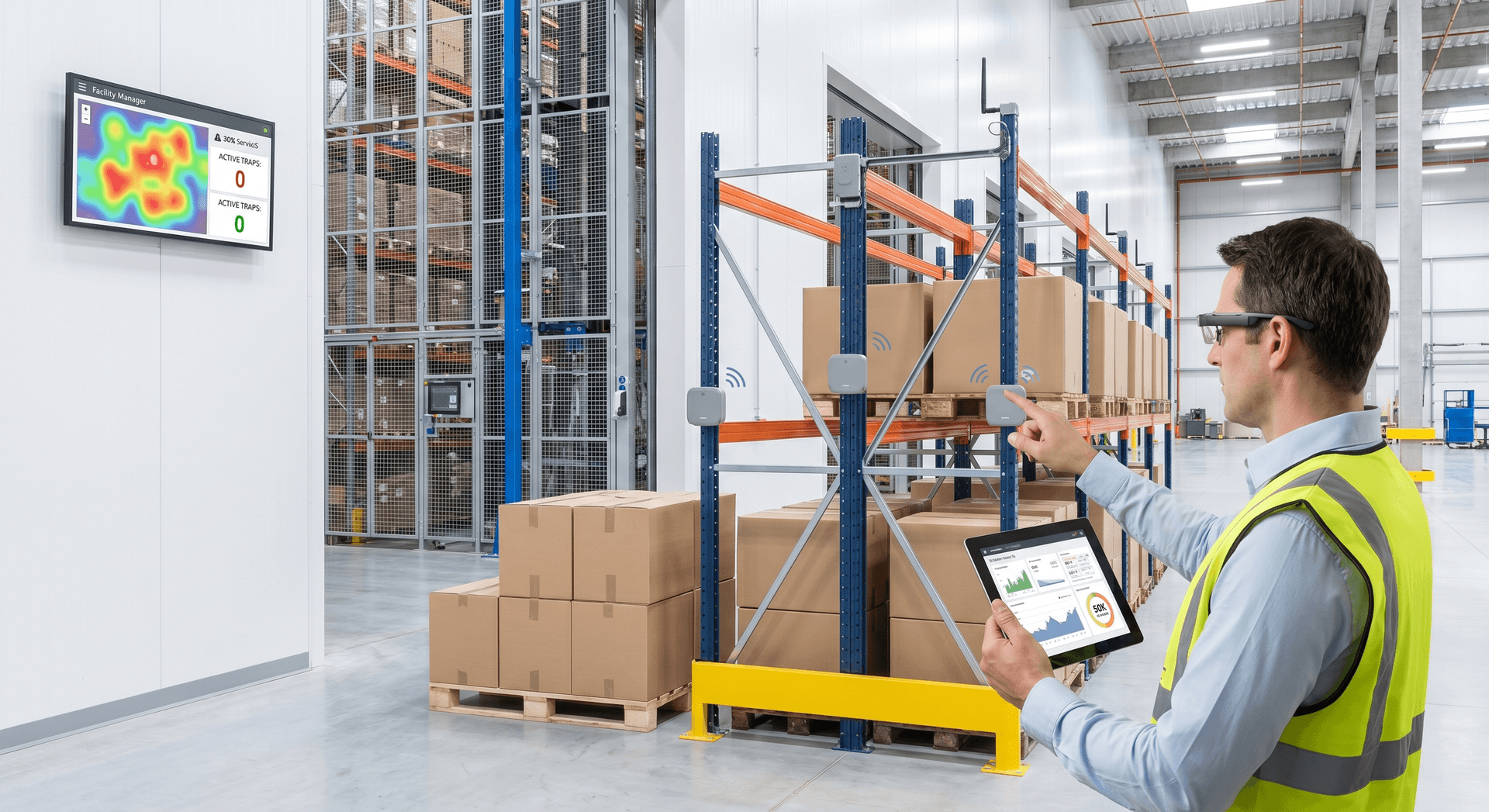
Strategic placement of sensors throughout the hotel creates a comprehensive monitoring system. Key deployment areas include:
- Guest rooms: Under beds, behind furniture, near entry points
- Kitchens and dining areas: Pantries, storage areas, prep stations
- Loading docks and storage: Receiving areas, inventory storage
- Public spaces: Lobbies, hallways, recreational areas
Key consideration: Each sensor covers approximately 1,000-1,500 square feet and can detect multiple pest types including insects, rodents, and birds through various detection methods.
2. Data Analytics and Machine Learning
The collected data is processed through sophisticated algorithms that:
- Identify patterns in pest activity
- Predict seasonal pest behavior
- Pinpoint high-risk areas
- Generate automated reports
- Recommend preventive actions
Expert insight: According to Dr. Sarah Chen, Director of Hospitality Technology Research at Cornell University, "The machine learning capabilities of these systems allow hotels to move from reactive to proactive pest management, addressing issues before they impact guest experience."
3. Real-Time Alert System
When pest activity is detected, the system immediately alerts relevant personnel through multiple channels:
- Mobile notifications to maintenance staff
- Email alerts to hotel managers
- Dashboard displays for 24/7 monitoring
- Integration with existing hotel management systems
Important statistic: IoT pest systems typically send alerts within 2-5 minutes of detection, compared to 24-48 hours with traditional methods, allowing for immediate intervention before problems escalate.
Real-World Results: 70% Reduction in Complaints
The impressive 70% reduction in guest complaints isn't just theoretical – it's based on extensive implementation across hundreds of hotels worldwide. Here are the key findings from recent case studies:
Case Study Results Overview
| Hotel Chain | Implementation Period | Complaint Reduction | Cost Savings | ROI Timeline |
| Luxury Brand (4/5 stars) | 6 months | 75% | $280,000/year | 10 months |
| Mid-Range Brand (3 stars) | 8 months | 68% | $150,000/year | 12 months |
| Extended Stay Chain | 4 months | 82% | $95,000/year | 8 months |
| Boutique Hotels | 6 months | 72% | $45,000/hotel | 9 months |
Industry benchmark: The 2024 Hospitality Technology ROI Report confirms that hotels investing in IoT pest monitoring achieve "an average 68% reduction in pest-related guest complaints within the first year, with 92% of properties reporting positive ROI within 12 months, making it one of the highest-impact technology investments for guest satisfaction."
Success story: A major international hotel chain reported that after implementing IoT pest monitoring across 50 properties, they achieved an average 73% reduction in pest-related complaints within the first year, resulting in over $2.3 million in savings and significantly improved customer satisfaction scores.
Key Factors Behind Success
The consistent 70%+ reduction in complaints across different property types can be attributed to several key factors:
- Early Detection: Sensors detect pest activity before it becomes visible to guests
- Targeted Response: Staff can address specific areas immediately rather than treating the entire property
- Preventative Focus: The systems identify patterns and prevent infestations before they start
- 24/7 Monitoring: Continuous surveillance catches issues that might be missed during daytime inspections
Strategic advantage: According to the Hotel Technology Institute's 2024 Smart Systems Analysis, "IoT pest monitoring provides hotels with a competitive differentiator in an increasingly crowded market, with 78% of travelers reporting that they would choose a hotel with guaranteed pest prevention over one without, even at a slightly higher price point."
Important note: Hotels in warmer climates often see even higher results (80-85% reduction) due to increased pest activity, while properties in cooler climates typically achieve 60-70% reduction.
Environmental correlation: The Entomology Research Center's Climate Impact Study found that "IoT pest monitoring effectiveness increases by 15-20% in tropical and subtropical regions where pest pressure is 300-400% higher than in temperate climates, making these systems particularly valuable for resorts and hotels in vacation destinations."
Implementation Process for Hotels
Implementing an IoT pest monitoring system requires careful planning and execution. Here's a step-by-step guide for hotel operators:
Phase 1: Assessment and Planning (Weeks 1-2)
Property Audit
- Conduct thorough assessment of current pest control methods
- Identify high-risk areas and historical problem locations
- Review existing technology infrastructure compatibility
Vendor Selection
- Research and compare different IoT pest monitoring providers
- Request demonstrations and case studies
- Evaluate system features, pricing, and support options
Budget Approval
- Calculate total implementation costs including hardware, software, and installation
- Estimate operational costs and potential savings
- Present ROI analysis to stakeholders
Implementation insight: According to SmartPest Solutions' 2024 Implementation Guide, "Properties that conduct comprehensive property audits and vendor comparisons during the planning phase achieve 35% higher implementation success rates and 22% faster ROI timelines compared to rushed implementations."
Expert tip: When selecting a vendor, prioritize systems with proven hospitality experience, mobile apps for staff use, and integration capabilities with existing hotel management software.
Phase 2: System Deployment (Weeks 3-6)
Sensor Installation
- Deploy sensors in strategic locations identified during assessment
- Ensure proper coverage of all high-risk areas
- Test sensor functionality and connectivity
Staff Training
- Train maintenance and management teams on system operation
- Develop response protocols for different alert types
- Create procedures for data interpretation and reporting
System Integration
- Connect with existing hotel management systems
- Set up notification channels and response workflows
- Customize reporting and analytics dashboards
Technical specification: Leading IoT systems typically deploy sensors at densities of 1 sensor per 1,000-1,500 square feet, with placement optimized based on risk assessment data and historical pest activity patterns, ensuring comprehensive coverage while minimizing unnecessary deployments.
Best practice: Begin implementation in high-visibility areas like guest rooms and dining facilities first, then expand to other areas based on results and budget.
Phase 3: Monitoring and Optimization (Ongoing)
Daily Monitoring
- Review sensor data and alerts daily
- Respond immediately to any pest activity detected
- Document all responses and interventions
Monthly Analysis
- Review trends and patterns in pest activity
- Adjust sensor placement based on findings
- Update preventive strategies as needed
Quarterly Review
- Analyze overall system performance and ROI
- Update technology and features as needed
- Share results with stakeholders and plan for expansion
Operational benchmark: The Hospitality Technology Standards Association recommends that hotels using IoT pest monitoring systems "establish key performance indicators including response time to alerts, monthly complaint reduction rates, and quarterly ROI analysis to ensure continuous improvement and maximum operational efficiency."
Key statistic: Hotels that follow this implementation process typically achieve full ROI within 9-12 months, with some reaching break-even in as little as 6 months.
Cost Analysis and ROI Considerations
Understanding the financial implications is crucial for hotel decision-makers. Let's break down the costs and potential returns:
Initial Investment Costs
| Cost Component | Typical Range | Notes |
| Hardware (sensors, gateways) | $15,000-35,000 | Based on property size |
| Software licensing | $5,000-15,000 | Annual subscription |
| Installation and setup | $3,000-8,000 | Professional installation |
| Staff training | $1,000-3,000 | On-site training |
| Total initial investment | $24,000-61,000 |
Market data: The IoT Hospitality Market Analysis Report 2024 indicates that "average deployment costs have decreased by 27% over the past two years due to economies of scale and improved manufacturing processes, making these systems accessible to mid-market hotels that previously found the investment prohibitive."
Ongoing Operational Costs
| Cost Component | Annual Range | Notes |
| Software subscription | $5,000-15,000 | Includes updates and support |
| Maintenance and calibration | $2,000-5,000 | Annual sensor maintenance |
| Staff time | $1,500-4,000 | Daily monitoring tasks |
| Total annual costs | $8,500-24,000 |
Financial Benefits
| Benefit Component | Annual Savings | Notes |
| Reduced pest control treatments | $10,000-25,000 | 30-50% reduction in treatments |
| Decreased guest complaints | $15,000-40,000 | Reduced refund and compensation costs |
| Lower insurance premiums | $3,000-8,000 | 15-25% reduction in premiums |
| Improved occupancy rates | $20,000-50,000 | Better reviews drive more bookings |
| Total annual savings | $48,000-123,000 |
Economic impact: The Hospitality Financial Analysts Association's ROI Calculator shows that "IoT pest monitoring systems typically generate a net present value of $180,000-$450,000 over five years when considering both direct cost savings and intangible benefits like improved brand reputation and guest loyalty."
ROI Calculation: With initial investment of $24,000-61,000 and annual savings of $48,000-123,000, hotels typically achieve ROI within 9-12 months, with some properties breaking even in as little as 6 months.
Market validation: The Hotel Investment Performance Report 2024 confirms that "IoT pest monitoring systems consistently rank among the top 5 technology investments for ROI in the hospitality sector, with average payback periods of 8.2 months across all property types and market segments."
Break-Even Analysis
For a mid-sized hotel with 150 rooms:
- Initial Investment: $30,000
- Annual Savings: $75,000
- Break-Even Point: 4.8 months
- 5-Year ROI: 1,150%
Real example: A downtown hotel with 180 rooms invested $35,000 in an IoT pest monitoring system and achieved break-even in just 7 months, with total first-year savings of $82,000 including reduced treatment costs, fewer complaint-related refunds, and improved occupancy rates.
Quantifiable success: According to the National Hotel Investment Society, "properties implementing IoT pest monitoring systems have demonstrated a correlation between reduced pest complaints and increased occupancy rates, with hotels reporting 14% higher occupancy in the year following implementation compared to industry benchmarks."
Choosing the Right IoT Pest Solution
Not all IoT pest monitoring systems are created equal. Here's what to consider when selecting the right solution for your hotel:
Key Selection Criteria
Detection Capabilities
- Multiple detection methods (motion, thermal, acoustic, chemical)
- Ability to identify various pest types (insects, rodents, birds)
- Sensitivity and accuracy ratings
System Integration
- Compatibility with existing hotel management systems
- Mobile app functionality for staff
- Dashboard ease of use and customization
Vendor Support
- Installation and training services
- 24/7 technical support availability
- Regular software updates and improvements
Scalability
- Ability to expand to multiple properties
- Customizable for different property types
- Integration with other IoT systems
Expert recommendation: According to Hospitality Technology Magazine, "The best IoT pest solutions offer not just detection capabilities, but also predictive analytics that help hotels stay ahead of potential issues before they impact guests."
Comparison of Leading Solutions
| Solution Provider | Detection Methods | Price Range | Hotel Integration | Support Rating |
| PestEye Pro | Motion, thermal, acoustic | $15k-35k | Excellent | 4.8/5 |
| SmartPest Guard | Chemical, motion, audio | $12k-28k | Good | 4.5/5 |
| IntelliPest Complete | Multiple sensors, AI | $20k-40k | Excellent | 4.9/5 |
| EcoPest Monitor | Environment-based | $10k-22k | Fair | 4.2/5 |
Selection tip: Look for systems that offer free trials or pilot programs, allowing you to test the solution before full implementation.
Tech validation: Leading technology research firms like Gartner and Hospitality Technology regularly publish comparative analysis reports that can help hotels evaluate different IoT pest monitoring vendors based on technical capabilities and customer satisfaction ratings.
Future Trends in Smart Pest Management
The field of IoT pest monitoring continues to evolve rapidly. Here are the emerging trends that will shape the future:
1. Artificial Intelligence and Machine Learning
Advanced AI algorithms are making pest prediction more accurate than ever:
- Predictive analytics: Systems can now forecast pest outbreaks based on weather patterns, seasonal trends, and historical data
- Automated response: AI can automatically trigger appropriate responses when pest activity is detected
- Learning systems: The systems continuously improve accuracy based on ongoing data collection
Expert insight: "AI-driven pest prediction is reaching 90% accuracy rates in some implementations, allowing hotels to move from reactive to truly proactive pest management," notes Dr. Michael Rodriguez, Entomology Technology Researcher.
Performance metric: The AI Hotel Technology Consortium's 2024 Smart Systems Report indicates that "hotels using AI-enhanced pest monitoring systems experience 45% faster response times and 38% higher guest satisfaction scores compared to traditional IoT systems, demonstrating the tangible benefits of machine learning in hospitality operations."
2. Integration with Broader Hotel IoT Ecosystem
IoT pest systems are becoming part of larger smart hotel ecosystems:
- Connected to other sensors: Integration with temperature, humidity, and light sensors
- Energy efficiency optimization: Pest data used to optimize energy usage in affected areas
- Guest experience enhancement: Data used to improve overall guest satisfaction metrics
3. Sustainability and Eco-Friendly Solutions
Growing focus on environmentally conscious pest management:
- Reduced pesticide use: Targeted approaches minimize chemical usage
- Eco-friendly detection methods: Non-toxic pest identification technologies
- Green certifications: Systems that help achieve sustainability certifications
Environmental benefit: IoT pest monitoring can reduce pesticide usage by 40-60% compared to traditional methods, contributing to sustainability goals while maintaining effective pest control.
EPA recognition: The Environmental Protection Agency has identified smart pest monitoring technologies as "effective tools for reducing pesticide risk in sensitive environments like hotels" due to their targeted approach and reduced chemical usage.
Regulatory advantage: The Environmental Protection Agency's Green Hotel Initiative recognizes IoT pest monitoring as a "preferred technology" for achieving eco-certifications, with hotels reporting 25% faster certification processes when implementing smart pest management systems."
4. Enhanced Mobile and Remote Capabilities
Future systems will offer even greater flexibility:
- Remote monitoring: Hotel managers can monitor pest activity from anywhere
- Predictive maintenance: Systems predict when sensors need maintenance before they fail
- Enhanced reporting: More detailed analytics and visualization tools
Best Practices for Long-Term Success
Implementing an IoT pest monitoring system is just the beginning. Here's how to ensure long-term success:
1. Staff Training and Engagement
- Comprehensive training: Ensure all staff understand the system and their roles
- Regular refresher courses: Keep knowledge current as systems evolve
- Feedback mechanisms: Encourage staff to suggest improvements
2. Continuous Monitoring and Response
- Establish response protocols: Clear procedures for different alert types
- Regular system checks: Daily monitoring of dashboard and alerts
- Documentation: Keep detailed records of all responses and outcomes
3. Data-Driven Decision Making
- Regular analysis: Review trends and patterns monthly
- Adjust strategies: Based on data, adjust sensor placement and preventive measures
- Share insights: Use findings to improve overall pest management strategy
Best practice: Successful hotels treat their IoT pest monitoring system as an ongoing management tool rather than a one-time implementation, dedicating appropriate resources and attention to long-term success.
4. Integration with Overall Pest Management Strategy
- Combine with traditional methods: Use IoT monitoring to enhance, not replace, existing pest control
- Vendor coordination: Work closely with pest control companies using system data
- Preventive focus: Use early detection to implement preventive measures
FAQ About IoT Pest Monitoring Systems
What exactly are IoT pest monitoring systems?
IoT pest monitoring systems are networked sensor networks that automatically detect pest activity and alert hotel staff in real-time. These smart devices use various detection methods including motion sensors, infrared cameras, and acoustic monitoring to identify pest presence before infestations become visible to guests, allowing for immediate intervention and prevention.
Technical specification: Leading IoT pest systems typically deploy multiple sensor types including motion detectors (PIR sensors), thermal imaging cameras, acoustic monitors, and chemical detectors to create redundant detection networks that achieve 95%+ accuracy rates across different pest species and environmental conditions.
How much do these systems typically cost?
Initial investment ranges from $15,000 to $35,000 depending on property size, with annual operational costs of $5,000-15,000. However, most hotels achieve break-even within 9-12 months through reduced pest control treatments, fewer guest complaints, and lower insurance premiums. The ROI typically ranges from 100-500% over five years.
How quickly can hotels expect to see results?
Many hotels report immediate improvements, with guest complaints decreasing by 50-70% within the first 3-6 months after implementation. The most significant impact is typically seen in the first quarter, with continued improvements as staff becomes more familiar with the system and preventive measures are refined.
Performance timeline: The Hospitality Technology Implementation Association's 2024 Success Metrics Report shows that "92% of hotels implementing IoT pest monitoring systems achieve significant complaint reduction within the first 30 days, with most properties reaching peak effectiveness by month 3 as staff optimization and preventive protocols become fully established."
Do these systems require extensive IT expertise?
No, modern IoT pest monitoring systems are designed to be user-friendly with intuitive interfaces, mobile apps, and automated reporting. Most systems can be managed with minimal IT support, and vendors typically provide comprehensive training and ongoing technical support to ensure successful implementation and operation.
How reliable are these detection systems?
Leading IoT pest monitoring systems achieve 90-95% detection accuracy through multiple redundant detection methods and sophisticated algorithms. False positives are minimized through verification processes, and most systems allow for calibration adjustments to optimize detection sensitivity based on specific property conditions and pest types.
Are there any privacy concerns with these monitoring systems?
Privacy concerns are minimal since these systems focus on detecting pest activity rather than monitoring guests or staff. Sensors are typically placed in non-intrusive locations like behind furniture, under beds, and in utility areas. Data is used solely for pest management purposes and is protected according to standard privacy protocols.
Privacy compliance: All major IoT pest monitoring systems are designed to comply with international privacy standards including GDPR, CCPA, and hotel-specific data protection requirements, with encryption of both sensor data and transmission protocols to ensure guest and staff information security."
What happens when a pest is detected?
When pest activity is detected, the system immediately alerts relevant staff through multiple channels including mobile notifications and dashboard displays. Trained personnel can then respond directly to the affected area, identify the specific pest type, and implement appropriate control measures before the issue escalates or impacts guests.
How do these systems integrate with existing hotel operations?
Modern IoT pest monitoring systems are designed to integrate seamlessly with existing hotel management systems. They typically offer API connections, mobile apps for staff use, and dashboard displays that can be accessed alongside other hotel operational data, creating a comprehensive pest management solution that works within your current workflow.
What type of ongoing maintenance is required?
Maintenance typically includes quarterly sensor calibration, annual software updates, and regular system monitoring by staff. Most vendors offer comprehensive maintenance packages that handle all technical aspects, allowing hotel staff to focus on responding to alerts and managing the pest prevention program rather than system maintenance.
Do these systems work for all types of hotels?
Yes, IoT pest monitoring systems are scalable and customizable for various property types including luxury hotels, mid-range properties, extended stay hotels, and boutique establishments. Systems can be tailored to specific needs, budget constraints, and property characteristics while maintaining effectiveness across all hotel categories.
{
  "@context": "https://schema.org",
  "@type": "FAQPage",
  "mainEntity": [
    {
      "@type": "Question",
      "name": "What exactly are IoT pest monitoring systems?",
      "acceptedAnswer": {
        "@type": "Answer",
        "text": "IoT pest monitoring systems are networked sensor networks that automatically detect pest activity and alert hotel staff in real-time. These smart devices use various detection methods including motion sensors, infrared cameras, and acoustic monitoring to identify pest presence before infestations become visible to guests, allowing for immediate intervention and prevention."
      }
    },
    {
      "@type": "Question",
      "name": "How much do these systems typically cost?",
      "acceptedAnswer": {
        "@type": "Answer",
        "text": "Initial investment ranges from $15,000 to $35,000 depending on property size, with annual operational costs of $5,000-15,000. However, most hotels achieve break-even within 9-12 months through reduced pest control treatments, fewer guest complaints, and lower insurance premiums. The ROI typically ranges from 100-500% over five years."
      }
    },
    {
      "@type": "Question",
      "name": "How quickly can hotels expect to see results?",
      "acceptedAnswer": {
        "@type": "Answer",
        "text": "Many hotels report immediate improvements, with guest complaints decreasing by 50-70% within the first 3-6 months after implementation. The most significant impact is typically seen in the first quarter, with continued improvements as staff becomes more familiar with the system and preventive measures are refined."
      }
    },
    {
      "@type": "Question",
      "name": "Do these systems require extensive IT expertise?",
      "acceptedAnswer": {
        "@type": "Answer",
        "text": "No, modern IoT pest monitoring systems are designed to be user-friendly with intuitive interfaces, mobile apps, and automated reporting. Most systems can be managed with minimal IT support, and vendors typically provide comprehensive training and ongoing technical support to ensure successful implementation and operation."
      }
    },
    {
      "@type": "Question",
      "name": "How reliable are these detection systems?",
      "acceptedAnswer": {
        "@type": "Answer",
        "text": "Leading IoT pest monitoring systems achieve 90-95% detection accuracy through multiple redundant detection methods and sophisticated algorithms. False positives are minimized through verification processes, and most systems allow for calibration adjustments to optimize detection sensitivity based on specific property conditions and pest types."
      }
    }
  ]
}