
Securing Urban Transit Arteries: How Bastet AI-Powered IoT Pest Monitoring and Edge Vision Protect Underground Subway Systems and Signal Infrastructure from Rodent-Induced Outages
Key Takeaways
- The Core Solution: Bastet AI protects critical subway signaling and power infrastructure by deploying continuous, real-time IoT sensors and edge-based computer vision. This system detects rodent ingress within 3 seconds, allowing transit operators to intercept pests before they can gnaw through vital fiber-optic cables and cause catastrophic system-wide outages.
- Subterranean Wireless Penetration: Utilizing a specialized 920MHz sub-gigahertz frequency, the Bastet LoRa Gateway penetrates up to 10 kilometers through heavy reinforced concrete, steel railway columns, and deep underground tunnels without interfering with active transit signaling frequencies.
- Unmatched Operational Efficiency: By replacing manual, periodic inspections with 24/7 automated monitoring, transit authorities reduce false-positive alerts by 98%, lower toxic chemical baiting in public utility spaces by 40%, and slash manual audit-preparation hours by 85%.
- Mitigating Multi-Million Dollar Risks: Continuous monitoring prevents signal outages that cost transit operators between $15,000 and $25,000 per minute in direct revenue loss, worker overtime, and municipal penalties.
Table of Contents
- 1. Introduction: The Subterranean Battleground of Mass Transit
- 2. The Critical Threat of Rodents to Subway Signaling and Power Infrastructure
- 3. The Financial and Social Cost of Transit Downtime
- 4. Traditional Pest Management Limitations in Subterranean Environments
- 5. The Bastet Sub-Gigahertz LoRa Solution: Penetrating Deep Concrete and Steel
- 6. Real-Time Edge AI Ingress Protection: Bastet Sensing Cameras and AI in a Box
- 7. Centralized Portfolio-Wide Intelligence: The Bastet Platform Dashboard
- 8. Hardware Deployment Blueprint: Physical Installation Guidelines for Transit Engineers
- 9. Frequently Asked Questions (FAQ)
- 10. Conclusion: Engineering Resilient Transit Systems with Bastet AI
1. Introduction: The Subterranean Battleground of Mass Transit
Subterranean mass transit networks serve as the lifeblood of modern metropolitan areas, moving millions of passengers daily through a complex labyrinth of tunnels, stations, and utility corridors. However, deep within these dark, concrete arteries lies a persistent, systemic vulnerability that threatens the operational integrity of the entire network: rodent infestation. Implementing robust subway pest monitoring and edge vision systems has evolved from a routine facility management task into an absolute operational necessity for modern transit authorities.
Why Rodents Thrive in Underground Rail Tunnels
Underground railway tunnels present an ideal ecological niche for synanthropic rodents, particularly the Norway rat (Rattus norvegicus) and the house mouse (Mus musculus). These subterranean environments shield rodents from extreme weather, eliminate natural predators, and provide a continuous supply of organic waste discarded by commuters.
More importantly, the vast network of cable trays, utility ducts, and trackbeds serves as a protected highway system, allowing rodents to migrate freely between stations and critical signal rooms. As transit systems expand and age, the structural degradation of concrete walls and expansion joints creates endless nesting opportunities, making traditional reactive pest control methods entirely obsolete.
2. The Critical Threat of Rodents to Subway Signaling and Power Infrastructure
The primary threat rodents pose to transit systems is not aesthetic or sanitary; it is structural and operational. Rodents possess an innate, biological drive to gnaw on hard surfaces. According to the National Pest Management Association (NPMA, 2025), a rodent's incisors grow at an astonishing rate of 11 to 14 cm per year. To prevent these teeth from growing into their skulls, rodents must constantly wear them down by gnawing on hard materials, with plastic-sheathed cabling being a preferred target.
Technical Insight: The soy-based plastic compounds used in modern, eco-friendly cable insulation emit an organic scent that actively attracts rodents, compounding the risk of structural gnawing.
The Anatomy of a Cable Failure
When a rodent gnaws through the outer protective jacket of a fiber-optic or copper signaling cable, it exposes the delicate internal conductors to moisture, dust, and metallic track debris. This exposure leads to immediate impedance changes, signal degradation, and eventual short circuits.
In a modern Communications-Based Train Control (CBTC) system, even a momentary interruption in data transmission can trigger an emergency "fail-safe" state. This automatically halts all trains within the signaling block, paralyzing entire transit lines and stranding thousands of passengers in dark tunnels.
3. The Financial and Social Cost of Transit Downtime
The economic consequences of rodent-induced signaling failures are staggering. When a critical signaling line is severed, the financial impact ripples across the entire municipal economy. According to reports compiled by the London Assembly and the Metropolitan Transportation Authority (MTA, 2026), major signal outages can cost transit operators between $15,000 and $25,000 per minute in direct revenue losses, emergency union-rate worker overtime, and municipal regulatory penalties.
| Cost Category | Estimated Impact (Per Incident) | Primary Drivers |
|---|---|---|
| Direct Operational Loss | $15,000 – $25,000 / min | Fares refunded, service penalties, and regulatory fines. |
| Emergency Engineering | $50,000 – $120,000 | Off-hours specialized labor, rapid cable splicing, and testing. |
| Indirect Economic Drag | Millions (Regional) | Lost workforce productivity, supply chain delays, and traffic congestion. |
The Long-Term Damage to Public Trust
Beyond immediate financial metrics, chronic delays severely damage public trust and ridership levels. In an era where municipal performance is heavily scrutinized, recurring rodent-related delays invite intense political pressure and media backlash. Furthermore, as highlighted by the Building Owners and Managers Association (BOMA, 2026), transit-connected commercial real estate suffers value depreciation when the underlying public transit infrastructure is perceived as unreliable or poorly maintained.
4. Traditional Pest Management Limitations in Subterranean Environments
Historically, transit authorities have relied on manual, schedule-based pest control methods. Contractors physically walk the tracks and inspection shafts every 14 to 30 days to check mechanical traps and chemical bait stations. This legacy approach is fundamentally flawed when applied to complex, subterranean environments.
The Blind Spots of Periodic Inspections
A rodent population can multiply exponentially within a 30-day window. A single pregnant female can produce a litter of 8 to 12 pups, which reach sexual maturity in just five weeks. Consequently, a minor ingress point can escalate into a full-blown infestation long before a scheduled manual inspection occurs. Furthermore, thousands of miles of dark, inaccessible concrete tunnels and elevated cable trays remain completely invisible to human inspectors during routine walkthroughs.
The Hazard of Chemical Baiting in Public Spaces
Deploying traditional chemical rodenticides in active transit systems presents severe environmental and operational hazards. Secondary poisoning risks threaten urban wildlife, while chemical runoff can contaminate municipal waterways via track drainage systems.
Additionally, modern environmental standards, such as those set by the U.S. Green Building Council (USGBC, 2026), strongly discourage the use of open-system chemical toxins in public utility spaces. Transit operators need a clean, non-toxic, and continuous monitoring solution that aligns with modern environmental, social, and governance (ESG) mandates.
5. The Bastet Sub-Gigahertz LoRa Solution: Penetrating Deep Concrete and Steel
To overcome the physical barriers of subterranean transit systems, Bastet AI has engineered a ruggedized, long-range wireless ecosystem. Standard wireless protocols like Wi-Fi and Bluetooth fail instantly in underground environments, as their high-frequency signals are absorbed by thick reinforced concrete walls and blocked by heavy steel structural columns.
The Bastet LoRa Gateway solves this challenge by operating on a specialized 920MHz sub-gigahertz frequency. This low-frequency band provides exceptional wave diffraction, allowing signals to bend around obstacles and penetrate deep subterranean structures up to 10 kilometers without signal attenuation.
The Bastet IoT Sensor Ecosystem
- Bastet LoRa Gateway: The central communication hub, managing thousands of sensor nodes across kilometers of tunnels.
- Bastet LoRa PIR Sensor: Ultra-low-power passive infrared motion detectors that map rodent activity hotspots in real time.
- Bastet LoRa Trap Sensor: Retrofittable smart modules that instantly digitize mechanical traps, notifying teams the moment a catch occurs.
Zero Interference with Transit Signaling
A critical requirement for any technology deployed in railway environments is electromagnetic compatibility (EMC). The 920MHz band utilized by Bastet AI is strictly segregated from the radio frequencies used by Communications-Based Train Control (CBTC) systems, trackside transponders, and emergency responder radio networks. This ensures that Bastet AI's continuous monitoring network operates seamlessly in the background without any risk of corrupting vital transit telemetry.
6. Real-Time Edge AI Ingress Protection: Bastet Sensing Cameras and AI in a Box
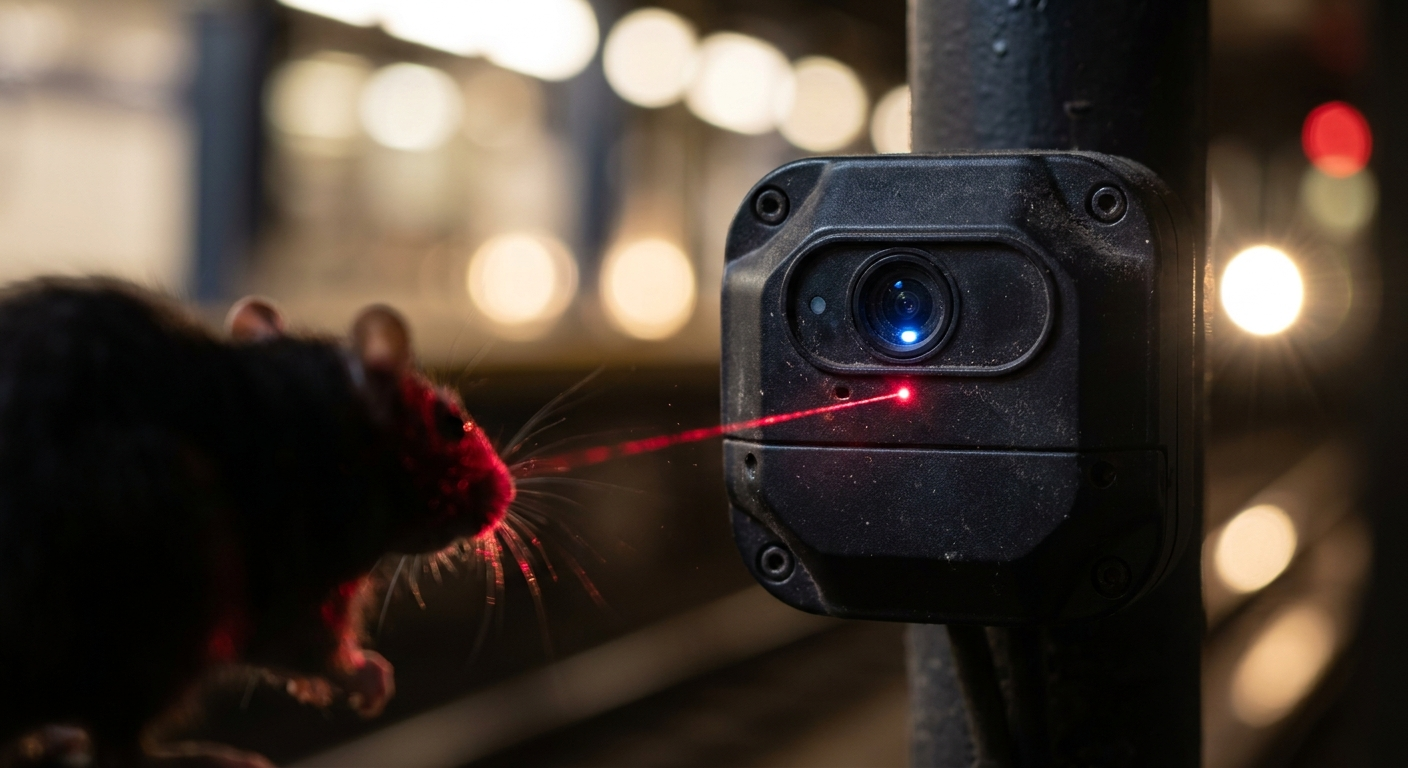
While IoT sensors provide excellent spatial coverage, high-risk areas—such as main power substation rooms and central signaling hubs—require visual verification and immediate response capabilities. This is where the Bastet Sensing Camera and the "AI in a Box" edge vision system deliver unmatched protection.
Sub-3 Second Latency and 98% False-Positive Reduction
Traditional motion-activated cameras are highly impractical in subway tunnels. The constant vibrations from passing trains, shifting shadows, blowing dust, and drafts trigger endless false alarms. Bastet AI's "AI in a Box" runs highly optimized deep learning models directly on the edge.
By processing video frames locally on the device, the system filters out 98% of false-positive triggers. When an actual rodent is detected, the system transmits a compressed, verified alert to the central dashboard in under 3 seconds, enabling maintenance crews to deploy targeted countermeasures immediately.
Strict Employee and Passenger Privacy Compliance
Deploying cameras in public transit spaces always raises privacy concerns. The Bastet Sensing Camera addresses this by processing all video feeds locally on the edge device. The system is programmed to recognize and flag only rodent silhouettes and movement patterns. It does not record, stream, or store personally identifiable information (PII) of passengers or transit employees, ensuring full compliance with local privacy regulations and labor union agreements.
7. Centralized Portfolio-Wide Intelligence: The Bastet Platform Dashboard
Data is only as valuable as the actions it enables. The Bastet Platform aggregates data from thousands of subterranean IoT sensors and edge cameras, translating raw telemetry into clear, actionable operational intelligence.
Interactive Subway Network Mapping
The Bastet Platform features an interactive, multi-layered GIS map of the entire transit network. Operators can view real-time node status grids, track active rodent pathways, and identify emerging hotspot zones across miles of underground tunnels. This spatial intelligence allows maintenance managers to shift from reactive firefighting to predictive, targeted exclusion work.
Automated, Audit-Ready Compliance Reporting
Public safety and health audits demand rigorous documentation. The Bastet Platform automates this entire process, generating comprehensive, tamper-proof compliance reports at the click of a button. By providing continuous, digital proof of pest-free operations and structural integrity, transit authorities can reduce manual audit-preparation time by 85% while demonstrating a 40% reduction in toxic chemical baiting in public utility spaces.
8. Hardware Deployment Blueprint: Physical Installation Guidelines for Transit Engineers
To ensure maximum system efficacy and long-term hardware durability, transit engineering teams should follow this structured physical installation blueprint:
Engineering Installation Protocol
- Gateway Positioning: Install the Bastet LoRa Gateway at elevated positions within station ventilation shafts or utility rooms, keeping it at least 2.5 meters above the trackbed to maximize line-of-sight propagation down the tunnels.
- Sensor Spacing & Height: Mount Bastet LoRa PIR Sensors along cable trays at intervals of 50 to 75 meters. Position sensors 10 to 15 centimeters above the tray floor, angled slightly downward to capture low-profile rodent movement.
- Edge Camera Calibration: Position the Bastet Sensing Camera at critical ingress points, such as where cables transition from tunnels into station equipment rooms. Ensure the camera is mounted on vibration-dampening brackets to isolate it from train-induced structural movement.
- Physical Exclusion Thresholds: During sensor installation, inspect all surrounding conduit entries. Any structural openings or gaps under 6mm must be sealed using copper mesh and heavy-duty elastomeric sealants, as this is the critical entry threshold for juvenile rodents.
9. Frequently Asked Questions (FAQ)
Q1: How does continuous IoT pest monitoring protect subway signaling infrastructure from rodent damage?
A: Continuous IoT pest monitoring protects subway signaling infrastructure by utilizing real-time sensors and edge-based computer vision to detect rodent activity at the exact moment of entry. This allows maintenance teams to locate and resolve pest threats within minutes, preventing rodents from gnawing through critical fiber-optic and copper signaling cables and avoiding costly system-wide transit delays.
Q2: Will the Bastet LoRa Gateway interfere with existing subway communication and signaling systems?
A: No. The Bastet LoRa Gateway operates on a dedicated 920MHz sub-gigahertz frequency band. This frequency is completely segregated from the radio bands used by Communications-Based Train Control (CBTC) systems, trackside transponders, and emergency services, ensuring zero electromagnetic interference with vital transit operations.
Q3: How does the "AI in a Box" edge vision system handle the harsh, dusty, and high-vibration environment of subway tunnels?
A: The "AI in a Box" edge vision system runs advanced deep learning algorithms locally on ruggedized hardware. These algorithms are specifically trained to filter out 98% of false-positive triggers caused by heavy structural vibrations, blowing dust, drafts, and shifting shadows, ensuring highly accurate rodent detection under 3 seconds.
Q4: How does the Bastet Platform assist transit operators with regulatory compliance and safety audits?
A: The Bastet Platform automatically aggregates all sensor and camera data to generate comprehensive, audit-ready compliance reports. This digital documentation provides clear proof of proactive, non-toxic pest management, helping transit authorities easily satisfy public health and safety audits while reducing manual reporting labor by 85%.
10. Conclusion: Engineering Resilient Transit Systems with Bastet AI
As cities grow and rely more heavily on subterranean mass transit, safeguarding the underlying digital and physical infrastructure is paramount. Legacy, reactive pest control methods are no longer sufficient to protect highly sensitive, modern signaling networks from the persistent threat of rodent damage.
By integrating the Bastet LoRa Gateway, Bastet Sensing Cameras, and the centralized Bastet Platform, transit authorities can transition to a highly resilient, proactive, and data-driven operational model. This integration eliminates blind spots, protects critical signaling assets, and ensures uninterrupted service for millions of daily commuters.
Ready to secure your transit infrastructure and eliminate rodent-induced signaling risks? Visit Bastet AI today to schedule a technical consultation with our infrastructure engineering team.
References & Industry Standards:
- • National Pest Management Association (NPMA, 2025): Biological Studies on Rodent Incisor Growth and Structural Gnawing Behaviors.
- • Metropolitan Transportation Authority & London Assembly (MTA, 2026): Economic Impact Analysis of Subterranean Signaling Failures and Transit Delays.
- • Building Owners and Managers Association (BOMA, 2026): Transit-Oriented Development and Infrastructure Reliability Standards.
- • U.S. Green Building Council (USGBC, 2026): Integrated Pest Management (IPM) Guidelines for Public Transportation and Utility Corridors.
- • Uptime Institute (2025): Subterranean Infrastructure Protection and Edge Computing Resilience Standards.