
Securing Global Supply Chains: Implementing AI-Powered IoT Pest Monitoring and Edge Vision to Protect Critical Infrastructure in Maritime Ports and Container Terminals
Key Takeaways
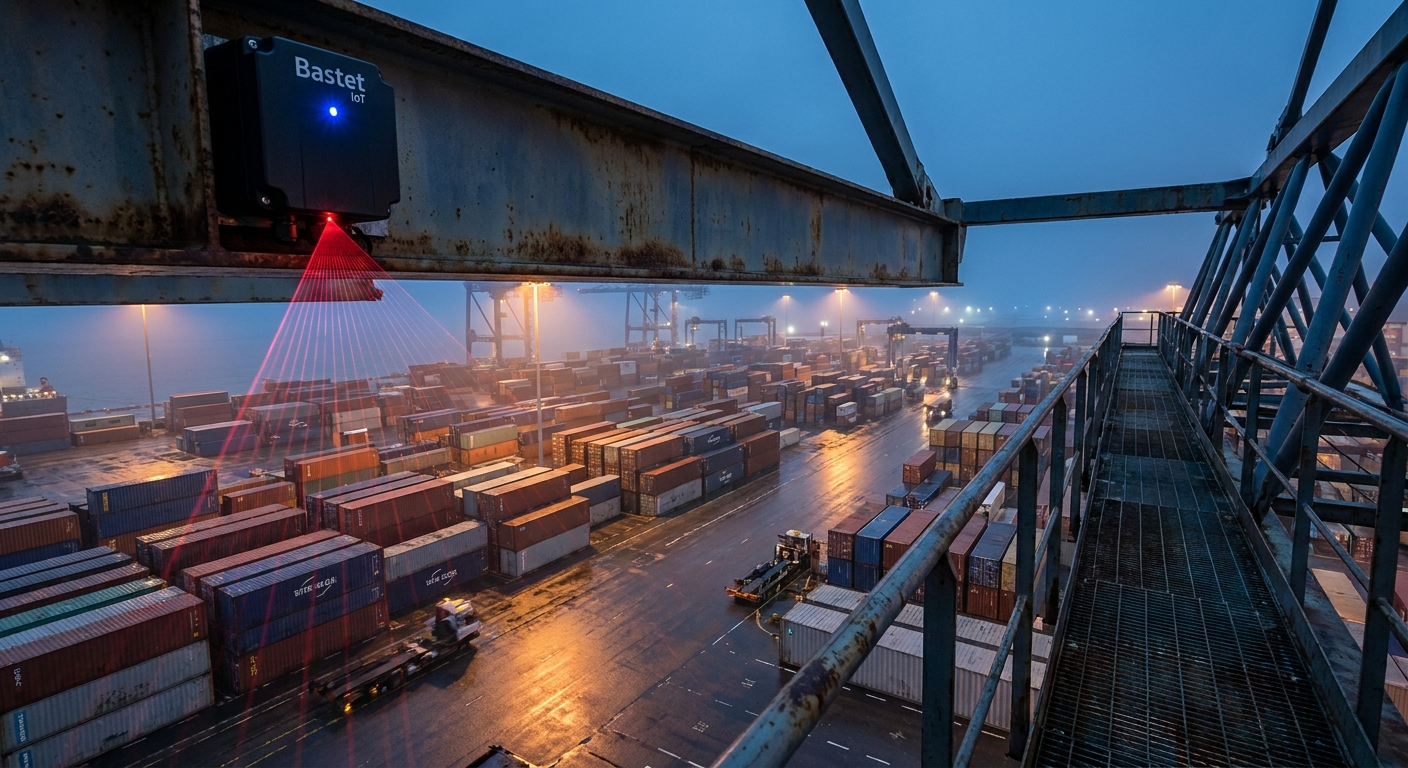
- Continuous IoT Pest Monitoring: Enables pesticide-free facilities management in maritime ports by utilizing real-time, sub-gigahertz LoRaWAN sensors and edge-AI computer vision to detect, locate, and intercept pests at terminal boundaries before they can establish harborage, eliminating the need for broad-spectrum chemical treatments.
- Critical Infrastructure Protection: Mitigates the risk of rodent-induced electrical failures, protecting high-value refrigerated containers (reefers) and preventing port IT infrastructure downtime that can cost up to $9,000 per minute.
- Automated Biosecurity Compliance: Replaces manual, error-prone 14-to-30-day inspection cycles with 24/7 automated audit trails, reducing administrative hours spent on audit preparation by 85% while satisfying strict WTO SPS, IMO, and IPPC standards.
- High-Performance Hardware & Edge AI: Leverages IP67-certified, sub-gigahertz (920MHz) RF technology to penetrate dense steel container stacks over a 10km range, delivering sub-3 second edge-AI detection latency with a 98% reduction in false-positive alerts.
Table of Contents
- 1. Introduction: Securing Global Supply Chains at Maritime Gateways
- 2. Physical Infrastructure Risks: Rodents, Cable Damage, and Reefer Failure
- 3. The Imperative of Port Biosecurity and Regulatory Audits
- 4. Hardware and RF Physics: IP67-Certified, Sub-Gigahertz LoRa IoT Sensors
- 5. Computer Vision and Edge AI: Real-Time Ingress Protection
- 6. Translating Data into Operational Value: The Bastet Platform Intelligence
- 7. Concrete Financial ROI: Reallocating Labor and Protecting Asset Value
- 8. Frequently Asked Questions (FAQ)
- 9. Conclusion & Call to Action
1. Introduction: Securing Global Supply Chains at Maritime Gateways
Maritime ports and container terminals serve as the primary conduits of global trade, handling over 80% of international cargo volume. However, these massive, open-air hubs are highly vulnerable to biological threats and pest infestations that threaten global supply chains. Implementing pesticide-free facilities management through continuous IoT pest monitoring is no longer just an environmental preference; it is a operational necessity for modern, resilient port infrastructure. Traditional pest control methods—reliant on periodic manual inspections and reactive chemical applications—fail to address the scale, speed, and complexity of modern logistics hubs.
As global trade volumes surge, ports face unprecedented pressure to maintain uninterrupted operations while adhering to stringent international biosecurity standards. Rodents, insects, and other invasive species utilize shipping containers, dunnage, and bulk cargo as vectors to cross international borders. Once inside a terminal, these pests threaten critical port infrastructure, high-value perishable goods, and digital systems. According to guidelines established by the Building Owners and Managers Association (BOMA, 2026), proactive, technology-driven facility management is essential to mitigating operational risks and preserving asset value in high-throughput industrial environments.
By integrating advanced Internet of Things (IoT) sensors with edge-computed artificial intelligence, maritime operators can transition from reactive pest control to proactive, real-time exclusion. The Bastet Platform delivers this paradigm shift, offering continuous, automated surveillance that secures terminal boundaries, protects critical assets, and ensures seamless regulatory compliance without relying on hazardous chemical interventions.

2. Physical Infrastructure Risks: Rodents, Cable Damage, and Reefer Failure
The physical environment of a container terminal is a complex network of high-voltage electrical grids, fiber-optic communication lines, and specialized storage areas. Among these, refrigerated container (reefer) yards are highly vulnerable. Reefers carry high-value, temperature-sensitive cargo such as pharmaceuticals, fresh produce, and proteins. These containers rely on continuous electrical power supplied through heavy-duty cables and terminal receptacles. Rodents, driven by an instinctual need to gnaw on hard surfaces to trim their continuously growing incisors, frequently target these electrical cables.
When rodents chew through reefer power lines or control cables, they cause immediate electrical short circuits, ground faults, and localized power outages. This damage leads to thermal bridging and rapid temperature deviations within the container, resulting in catastrophic food spoilage and pharmaceutical degradation. Beyond cargo loss, rodent damage to terminal power grids can trigger broader electrical fires, disabling entire blocks of reefer plugs and halting terminal operations. Research by the Harvard T.H. Chan School of Public Health (2025) emphasizes that pest-induced damage to critical infrastructure not only presents immediate financial risks but also introduces severe occupational safety hazards and environmental health concerns for terminal workforces.
Furthermore, rodents can exploit incredibly small structural vulnerabilities. Any opening under 6mm serves as an entry threshold for rodents, allowing them to infiltrate electrical substations, server rooms, and crane control cabins. Once inside, they chew through fiber-optic lines, disabling the Programmable Logic Controllers (PLCs) and industrial control systems that manage automated stacking cranes (ASCs) and ship-to-shore (STS) gantry cranes. The physical damage caused by these pests directly translates into operational downtime, expensive emergency repairs, and compromised terminal safety.
3. The Imperative of Port Biosecurity and Regulatory Audits
Maritime ports operate under strict regulatory oversight. International frameworks, including the World Trade Organization (WTO) Agreement on the Application of Sanitary and Phytosanitary Measures (SPS Agreement), the International Maritime Organization (IMO) guidelines, and the International Plant Protection Convention (IPPC), mandate rigorous biosecurity protocols to prevent the transboundary movement of invasive species and agricultural pests. Port operators must demonstrate that their facilities are free from quarantine pests to avoid costly cargo detentions, vessel diversions, and severe financial penalties.
Traditional pest control contracts rely on manual inspections conducted at 14-to-30-day intervals. This manual approach creates dangerous operational blind spots. A rodent or insect infestation can establish itself, cause structural damage, and contaminate cargo within days of a manual inspection, leaving the port vulnerable to regulatory non-compliance between service visits. When customs or quarantine inspectors discover pests during a random audit, the consequences are severe: entire shipments are quarantined, vessels are delayed, and the port's reputation is compromised.
To meet modern biosecurity standards, ports must adopt continuous, verifiable monitoring systems. The U.S. Green Building Council (USGBC, 2026) highlights that automated, data-driven monitoring is a cornerstone of modern Integrated Pest Management (IPM) protocols, aligning with international green port initiatives and sustainable infrastructure certifications. Continuous digital surveillance provides terminal operators with an uninterrupted, audit-ready data stream, proving to regulatory authorities that biosecurity measures are active, effective, and verified in real time.
| Feature / Capability | Traditional Pest Control | Bastet AI Platform |
|---|---|---|
| Monitoring Frequency | Manual checks every 14 to 30 days | Continuous 24/7/365 real-time monitoring |
| Detection Latency | Weeks to identify an active infestation | Sub-3 second edge-AI notification latency |
| Chemical Reliance | Heavy use of rodenticides and toxic sprays | Pesticide-free, targeted physical exclusion |
| Data & Audit Trail | Paper logs, prone to human error | Automated, cloud-based, audit-ready reports |
| Signal Penetration | None (manual visual inspection only) | Sub-GHz LoRaWAN (penetrates steel over 10km) |
4. Hardware and RF Physics: IP67-Certified, Sub-Gigahertz LoRa IoT Sensors
The physical environment of a maritime terminal is a challenging landscape for wireless communications. Thousands of solid steel shipping containers stacked up to six high create a dense grid of electromagnetic barriers, causing severe signal attenuation, multipath interference, and dead zones for standard wireless protocols like Wi-Fi, Bluetooth, or Zigbee. To overcome these physical obstacles, the Bastet AI ecosystem utilizes industrial-grade hardware engineered specifically for high-interference, rugged industrial environments.
The foundation of this hardware architecture is the Bastet LoRa Gateway, which utilizes sub-gigahertz LoRaWAN technology operating at 920MHz (and other region-specific ISM bands). The physics of sub-gigahertz radio frequency (RF) waves allow them to bend around obstacles and penetrate dense steel shipping containers, providing reliable communication ranges exceeding 10km in open port environments. This long-range capability ensures that sensors deployed deep within container stacks, along remote perimeter fences, or inside subterranean utility vaults maintain constant connectivity with the central gateway.
To withstand the harsh marine environment—characterized by salt spray, high humidity, extreme UV exposure, and heavy rain—all field devices are IP67-certified. This ruggedized construction protects the internal electronics from dust ingress and water immersion. The hardware suite deployed across the terminal includes:
- Bastet LoRa PIR Sensor: Utilizes passive infrared technology to detect the thermal signatures of moving pests in dark, confined spaces, such as cable trays and utility ducts.
- Bastet LoRa Trap Sensor: Retrofits to mechanical traps, instantly transmitting a signal the moment a trap is triggered, eliminating the need for manual inspections of empty traps.
- Bastet Sensing Camera: An ultra-low-power, high-resolution imaging node that captures visual evidence of pest activity upon sensor trigger, transmitting compressed image data over LoRaWAN for AI verification.
These field devices are powered by specialized, wide-temperature industrial lithium-thionyl chloride (Li-SOCl2) batteries. These batteries are engineered to operate reliably in extreme temperatures ranging from -40°C in cold-chain reefer yards to +85°C on sun-exposed asphalt terminal decks, ensuring a maintenance-free operational lifespan of up to 5 to 7 years.
5. Computer Vision and Edge AI: Real-Time Ingress Protection
While IoT sensors provide critical spatial data, integrating computer vision and edge artificial intelligence elevates port biosecurity to an enterprise-grade level. The Bastet AI platform utilizes "AI in a Box" edge processing units deployed at key terminal ingress points, loading docks, and perimeter boundaries. By processing visual data directly at the edge, the system achieves a sub-3 second latency for pest detection and automated notification, allowing security and facilities teams to respond immediately to biosecurity breaches.
A major challenge with standard outdoor motion-activated cameras is the high volume of false alarms triggered by wind, shifting shadows, debris, or non-target wildlife. The Bastet AI edge-vision algorithms are trained on extensive datasets of pest morphology and movement patterns, achieving a 98% reduction in false-positive alerts. The system ignores environmental noise and only alerts operators when a verified target—such as a rodent or specific insect vector—is identified.
Importantly, this edge-AI processing is designed with strict privacy and data security compliance in mind. The Bastet Sensing Camera and edge units process video streams locally, extracting metadata and pest-related imagery while automatically blurring human faces and vehicle license plates. This ensures full compliance with international data privacy regulations and port security standards, such as the Maritime Transportation Security Act (MTSA) and GDPR, without compromising biosecurity capabilities.
6. Translating Data into Operational Value: The Bastet Platform Intelligence
The raw data generated by thousands of LoRaWAN sensors and edge-AI cameras is consolidated, analyzed, and visualized within the Bastet Platform. This cloud-based dashboard serves as the central command center for port facilities managers, biosecurity officers, and operations directors, translating complex environmental data into actionable operational intelligence.
The Bastet Platform provides a comprehensive view of the port's entire pest defense infrastructure. Key features of the dashboard include:
- Real-Time Node Grids: An interactive, GIS-mapped layout of the terminal showing the exact location, battery status, signal strength, and operational state of every Bastet LoRa PIR Sensor, Trap Sensor, and Sensing Camera.
- Biosecurity Heatmaps: Dynamic visual overlays that highlight areas of high pest activity, migration corridors, and structural vulnerabilities across the terminal, allowing operators to deploy preventative measures where they are needed most.
- Automated Audit-Ready Reports: With a single click, the platform generates comprehensive, timestamped documentation of all monitoring activities, sensor triggers, and mitigation actions. These reports are designed to satisfy the strict audit requirements of customs, quarantine, and international health inspectors.
By centralizing this data, the Bastet Platform enables port operators to transition from a reactive "catch-and-dispose" model to a predictive, data-driven exclusion strategy. Facilities teams can identify structural gaps, damaged seals, or standing water that attract pests, addressing these root causes before an infestation can establish itself.
7. Concrete Financial ROI: Reallocating Labor and Protecting Asset Value
Deploying the Bastet AI platform delivers clear, measurable financial returns by optimizing labor allocation, reducing operational costs, and protecting high-value port assets. Traditional pest control relies heavily on manual labor, with technicians spending hours walking vast terminal yards to check empty traps. The Bastet Platform automates this process, allowing maintenance teams to focus only on devices that have sent a verified alert.
The financial impact of this operational shift is supported by clear performance metrics:
- 40% reduction in chemical pesticide usage: Aligns port operations with BRCGS standards and environmental regulations, reducing chemical procurement costs and liability risks.
- 31% reduction in operational cleaning and maintenance costs: Achieved by preventing pest-induced damage to infrastructure and optimizing waste management.
- 85% reduction in administrative hours spent on audit preparation: Automated data logging eliminates manual record-keeping and simplifies regulatory compliance.
- 287% ROI achieved within an 11-month payback period: Driven by labor savings, reduced chemical use, and the prevention of cargo damage.
Crucially, the system protects ports from the catastrophic costs of unplanned downtime. According to research by the Uptime Institute (2025), the average cost of critical IT and power infrastructure downtime is $9,000 per minute. By preventing rodents from chewing through critical fiber-optic lines, control cables, and reefer power grids, the Bastet AI platform protects terminal operators from devastating operational stoppages, cargo insurance claims, and contractual penalties.
Furthermore, adopting sustainable, technology-driven facilities management practices helps ports secure higher ratings under leading green building and wellness frameworks. The WELL Building Institute (IWBI, 2026) emphasizes that reducing chemical pesticide exposure while maintaining rigorous pest exclusion directly improves indoor air quality and occupational health for terminal workers, supporting corporate ESG goals and attracting premium shipping lines.
8. Frequently Asked Questions (FAQ)
Q1: How does continuous IoT pest monitoring enable pesticide-free facilities management in maritime ports?
A1: Continuous IoT monitoring utilizes real-time sensors and edge-AI cameras to detect pest activity at the earliest stage. This allows facilities managers to implement targeted physical exclusions, structural repairs, and mechanical interventions immediately, eliminating the need for broad-spectrum chemical pesticides and rodenticides across the port terminal.
Q2: Can the Bastet LoRa Gateway signal penetrate dense steel shipping containers and cranes?
A2: Yes. The Bastet LoRa Gateway operates on sub-gigahertz (920MHz) radio frequencies. The physics of these longer wavelengths allow them to bend around obstacles and penetrate dense steel structures, providing reliable, long-range communication over 10km in highly congested industrial port environments.
Q3: How does the Bastet Platform reduce the time and cost of international biosecurity audits?
A3: The Bastet Platform automatically logs all sensor events, AI verifications, and physical interventions in a secure, cloud-based database. This continuous, tamper-proof data stream generates comprehensive, audit-ready reports instantly, reducing the administrative hours spent preparing for customs and quarantine inspections by 85%.
Q4: What is the battery life of Bastet IoT sensors in extreme cold-chain or high-heat environments?
A4: Bastet IoT sensors are powered by industrial-grade lithium-thionyl chloride (Li-SOCl2) batteries. Engineered to withstand extreme temperatures ranging from -40°C in refrigerated reefer yards to +85°C on sun-exposed terminal decks, these batteries deliver a maintenance-free operational lifespan of 5 to 7 years.
9. Conclusion & Call to Action
Securing global supply chains requires a modern, proactive approach to biosecurity and infrastructure protection. Traditional, reactive pest control methods are no longer sufficient to protect high-throughput maritime ports from the operational, financial, and regulatory risks of pest infestations. By deploying the Bastet AI platform—powered by rugged IP67-certified hardware, sub-gigahertz LoRaWAN connectivity, and edge-computed artificial intelligence—terminal operators can establish a continuous, automated shield across their facilities.
This digital transformation protects critical electrical and IT infrastructure from costly downtime, secures high-value refrigerated cargo, and ensures continuous compliance with international biosecurity standards. At the same time, it delivers a measurable 287% ROI within 11 months and reduces chemical pesticide reliance by 40%, aligning port operations with modern ESG and green port initiatives.
Do not let undetected pests disrupt your terminal operations or compromise your biosecurity compliance. Contact our engineering team today to schedule a comprehensive site assessment and technical demonstration of the Bastet AI platform.
References
- Building Owners and Managers Association (BOMA). (2026). Industrial Facility Management and Asset Protection Standards. BOMA International.
- Harvard T.H. Chan School of Public Health. (2025). Environmental Health and Safety in Global Logistics Hubs. Harvard University Press.
- U.S. Green Building Council (USGBC). (2026). LEED v5 for Cities and Communities: Sustainable Port Infrastructure and Integrated Pest Management. USGBC.
- Uptime Institute. (2025). Annual Outage Analysis: Evaluating the Cost and Causes of Critical Infrastructure Downtime. Uptime Institute Research.
- WELL Building Institute (IWBI). (2026). The WELL Building Standard: Materials and Pest Management Protocols for Industrial Facilities. IWBI.