
AI Pest Control for Pharmaceutical Plants | Bastet AI
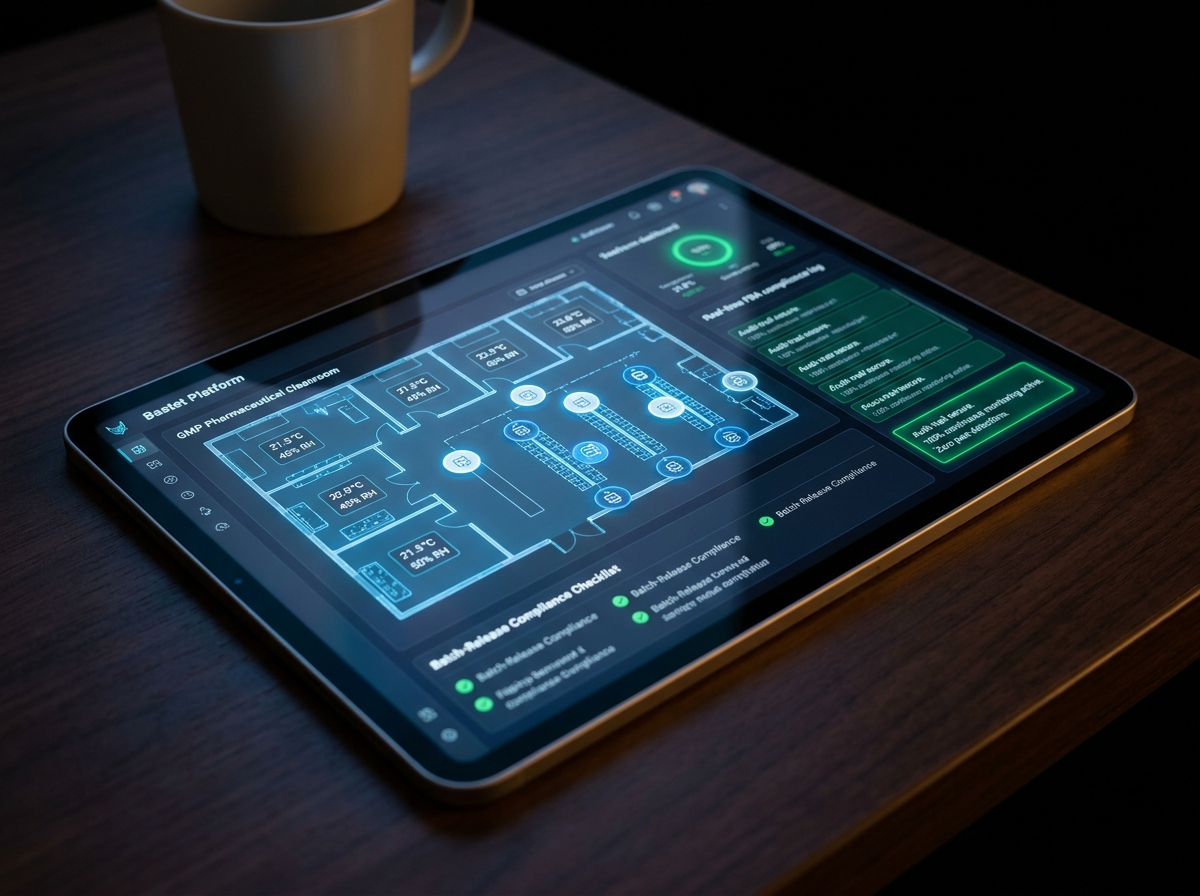
Securing Pharmaceutical Manufacturing: How AI-Powered IoT Pest Monitoring Ensures GMP/FDA Compliance
Key Takeaways:Zero-Tolerance Compliance: Traditional reactive pest control fails to meet strict FDA 21 CFR Part 211 and GMP standards. Automated IoT monitoring provides the continuous, non-toxic validation required for sterile cleanrooms.Preventing Catastrophic Downtime: Undetected rodent intrusion can cause facility shutdowns costing up to $300,000 per hour. Bastet AI's real-time edge intelligence mitigates this risk instantly.Audit-Ready Automation: Transitioning from manual logbooks to automated digital reporting reduces regulatory audit preparation time by up to 85%, ensuring flawless data integrity.
Table of Contents
- 1. The Regulatory Landscape: FDA, GMP, and Zero-Tolerance Pest Policies
- 2. Cleanroom Vulnerabilities: The High Cost of Contamination and Downtime
- 3. Bastet AI Hardware Architecture: Engineered for Sterile Environments
- 4. Edge AI and Software: 98% False-Alarm Reduction and Real-Time Alerts
- 5. Achieving Audit Readiness: Digital Logbooks and 21 CFR Part 11 Compliance
- 6. Integration Strategy: Deploying Bastet AI in Active Pharmaceutical Facilities
1. The Regulatory Landscape: FDA, GMP, and Zero-Tolerance Pest Policies
FDA 21 CFR Part 211 and EudraLex Volume 4
Pharmaceutical manufacturing demands an absolute, uncompromising approach to environmental control. Under the United States Food and Drug Administration (FDA) regulations, specifically 21 CFR Part 211.56, facilities must maintain written procedures for sanitation and pest control. This regulation mandates that cleanrooms and packaging areas remain entirely free of rodents, insects, and other vermin. Similarly, European Union GMP guidelines (EudraLex Volume 4, Chapter 3) dictate that manufacturing premises must be designed and equipped to prevent the entry of insects or other animals. Traditional pest control methodologies—relying on monthly manual inspections of mechanical traps—leave critical blind spots. If a pest enters a sterile corridor, waiting 30 days for a manual check violates the core tenets of proactive contamination control.
The Shift to Continuous Validation
Modern regulatory inspectors no longer accept passive, reactive pest management logs. Regulatory bodies expect continuous validation of environmental controls. This shift has forced pharmaceutical quality assurance (QA) teams to adopt automated, data-driven solutions. By deploying continuous IoT monitoring, facilities transition from a state of "untracked risk" to "verifiable compliance." Every trap, sensor, and camera acts as an active data point, proving to auditors that the facility maintains a continuous, 24/7 barrier against biological contaminants. This level of oversight is no longer a luxury; it is a fundamental requirement for maintaining a facility's license to operate.
2. Cleanroom Vulnerabilities: The High Cost of Contamination and Downtime
Physical Ingress Vectors in Sterile Environments
Despite advanced HVAC systems and positive air pressure, pharmaceutical facilities remain vulnerable to pest ingress. Rodents possess an extraordinary ability to exploit structural weaknesses, capable of gaining entry through gaps as small as 6 mm (0.24 inches) (World Health Organization, 2025). Common ingress vectors include utility penetrations, loading docks, and expansion joints. Once inside, a single rodent can compromise the integrity of an entire batch of life-saving therapeutics. Furthermore, strict cleanroom air purity compliance under ISO 14644-1 (Class 1 to Class 8) standards dictates that chemical pest treatments, such as rodenticides or aerosol insecticides, are 100% prohibited due to the risk of Volatile Organic Compound (VOC) outgassing. Consequently, physical exclusion and non-toxic, continuous monitoring are the only viable defense mechanisms.
The Financial Impact of Contamination and Downtime
The financial consequences of a pest-induced breach in a pharmaceutical facility are catastrophic. In high-end semiconductor and pharmaceutical fabs, unplanned downtime costs range from $50,000 to $300,000 per hour (AlphaCIS, 2026). If a rodent breaches a sterile packaging line, the entire production run must be quarantined and discarded. When critical IT infrastructure, server rooms, or automated storage and retrieval systems (ASRS) within the facility are compromised by pests chewing through fiber-optic cabling, the costs escalate further. Unplanned downtime in critical server room and IT environments can cost up to $9,000 per minute (Uptime Institute, 2026). When factoring in the loss of high-value raw materials and active pharmaceutical ingredients (APIs)—comparable to high-end wafer values of up to $17,000 per leading-edge wafer in the semiconductor space (Edwards Vacuum, 2026)—the necessity of early-detection IoT systems becomes clear.
| Risk Factor | Traditional Pest Control | Bastet AI IoT Monitoring |
|---|---|---|
| Detection Latency | Up to 30 days (scheduled manual checks) | Sub-3 seconds (instant alert) |
| Chemical Usage | High risk of VOC outgassing from rodenticides | 100% non-toxic, physical-only monitoring |
| Audit Trail | Manual paper logs prone to human error | Automated, tamper-proof digital records |
| Downtime Risk Mitigation | Reactive (after contamination occurs) | Proactive (interception at perimeter) |
3. Bastet AI Hardware Architecture: Engineered for Sterile Environments
Sub-Gigahertz LoRa Connectivity and Penetration
Pharmaceutical facilities are constructed with dense, heavily metallic cleanroom walls, stainless steel equipment, and thick concrete floors. Standard Wi-Fi and Bluetooth signals fail to penetrate these environments, leading to dropped connections and data gaps. To overcome this physical barrier, Bastet AI utilizes a proprietary sub-gigahertz 920MHz LoRa Gateway. This advanced wireless technology is engineered to penetrate up to 10 kilometers of dense, heavily metallic cleanroom structures, ensuring uninterrupted data transmission from the deepest sterile cores to the central monitoring server. This robust wireless backbone guarantees that no sensor goes offline, maintaining a continuous chain of custody for environmental data.
Industrial-Grade Durability and Battery Life
Sensors deployed in pharmaceutical manufacturing must withstand extreme environmental conditions, from high-temperature sterilization cycles to ultra-low temperature storage units. Bastet AI's hardware is equipped with industrial wide-temperature lithium-thionyl chloride batteries certified to operate in ultra-low storage environments down to -40°C. These specialized power cells ensure a maintenance-free operational lifespan of up to 5 years, minimizing the need for technicians to enter sterile zones to replace batteries. By reducing physical human entry into cleanrooms, Bastet AI directly lowers the risk of human-introduced microbiological contamination.
4. Edge AI and Software: 98% False-Alarm Reduction and Real-Time Alerts
Edge Computer Vision and False-Alarm Mitigation
In a highly regulated environment, false alarms are more than just an annoyance; they trigger costly, unnecessary investigation protocols and QA resource allocation. Standard motion-activated cameras frequently trigger on dust particles, shadows, or shifting airflow from HVAC systems. Bastet AI solves this operational bottleneck through its "AI in a Box" edge computer vision technology. By processing visual data directly on the edge device, the system filters out environmental noise, providing a 98% false-alarm reduction. This high-fidelity filtering ensures that quality control teams only respond to genuine, verified threats.
Sub-3 Second Alert Latency and Actionable Intelligence
When a pest breach occurs, every second counts. A rodent moving through a packaging facility can contaminate multiple production lines within minutes. Bastet AI's edge intelligence delivers sub-3 second alert latency, transmitting instant notifications to facility managers via SMS, email, and the Bastet Platform Mobile App. These alerts do not simply state that a sensor was triggered; they provide actionable intelligence, including the exact location of the breach, the species identified, and the recommended containment protocol. This rapid response capability allows facility teams to intercept pests at the perimeter before they can access critical cleanroom environments.
5. Achieving Audit Readiness: Digital Logbooks and 21 CFR Part 11 Compliance
Eliminating Manual Errors with Automated Reporting
Manual pest control logbooks are notoriously prone to errors, omissions, and illegible handwriting—vulnerabilities that regulatory auditors quickly exploit during inspections. Bastet AI eliminates these risks by automating the entire data collection and reporting process. Every trap status change, sensor reading, and maintenance action is automatically logged in a centralized, tamper-proof database. The Bastet Platform Mobile App reduces manual regulatory audit preparation time (for FDA 21 CFR Part 11 or HACCP/BRCGS) by up to 85%. Quality assurance managers can generate comprehensive, audit-ready compliance reports with a single click, demonstrating absolute control over the facility's pest management program.
Data Integrity and 21 CFR Part 11 Compliance
For pharmaceutical manufacturers, data integrity is a critical component of regulatory compliance. Bastet AI's software platform is designed from the ground up to comply with FDA 21 CFR Part 11 requirements. The system features secure, user-specific access controls, electronic signatures, and a complete, unalterable audit trail. Any modification to system settings, alert thresholds, or user permissions is permanently recorded with a timestamp and user ID. This ensures that the pest monitoring data presented to FDA, EMA, or local regulatory inspectors is fully traceable, verifiable, and compliant with global data integrity standards.
6. Integration Strategy: Deploying Bastet AI in Active Pharmaceutical Facilities
Non-Disruptive Installation and Validation
Deploying new technology in an active pharmaceutical facility requires careful planning to avoid disrupting ongoing production cycles. Bastet AI's non-intrusive hardware is designed for rapid, tool-free installation. The wireless, battery-powered sensors can be mounted using cleanroom-grade adhesives, eliminating the need for drilling or running conduit. Bastet AI provides a comprehensive Installation Qualification and Operational Qualification (IQ/OQ) protocol package. This pre-validated documentation streamlines the system integration process, allowing quality teams to validate the IoT monitoring network quickly and bring it online without interrupting manufacturing schedules.
Predictive Maintenance and Long-Term Reliability
Beyond immediate pest detection, the Bastet AI platform leverages predictive analytics to optimize long-term facility maintenance. By analyzing historical sensor data, the system identifies trends and predicts potential structural vulnerabilities before they lead to a pest breach. For example, if sensor activity increases near a specific loading dock door, the system alerts maintenance teams to inspect the door seals. This proactive approach transforms pest control from a reactive emergency response into a scheduled, predictive maintenance workflow, safeguarding the facility's sterile integrity and ensuring continuous GMP compliance.
Frequently Asked Questions
Q: How does Bastet AI ensure its devices do not contaminate sterile cleanrooms?
A: Bastet AI devices are constructed using cleanroom-compatible, non-outgassing materials that comply with ISO 14644-1 standards. They are completely sealed, easy to sanitize, and operate without the use of any chemical attractants or rodenticides, preventing any risk of chemical or particulate contamination in sterile environments.
Q: Can the sub-gigahertz LoRa signal interfere with sensitive pharmaceutical manufacturing equipment?
A: No. Bastet AI's sub-gigahertz 920MHz LoRa technology operates on low-power, non-interfering radio frequencies. It is fully compliant with electromagnetic compatibility (EMC) standards and is designed to operate safely alongside sensitive laboratory instruments, analytical balances, and automated manufacturing systems without causing signal interference.
Q: How does the system achieve an 85% reduction in audit preparation time?
A: Traditional audit preparation requires manually collecting, verifying, and organizing paper logbooks from various facility zones. Bastet AI automates this process by continuously logging all sensor activity, trap triggers, and maintenance actions into a secure, digital database. Quality managers can instantly generate comprehensive, compliant reports that are ready for FDA or GMP inspectors, reducing preparation time by up to 85%.
Q: What happens if the facility loses power or internet connectivity?
A: The Bastet AI gateway and edge devices are equipped with internal battery backups and local storage capabilities. In the event of a power or network outage, the sensors continue to monitor and log data locally. Once connectivity is restored, the system automatically synchronizes the data with the cloud, ensuring no gaps in the regulatory audit trail.
Secure Your Facility with Bastet AI
Protecting your pharmaceutical manufacturing facility from biological contamination and regulatory non-compliance requires a modern, automated approach. Bastet AI's intelligent, IoT-powered pest monitoring platform delivers the continuous validation, rapid response, and tamper-proof documentation necessary to satisfy the strictest FDA and GMP standards. Do not let a preventable pest breach compromise your production quality or lead to costly operational downtime. Contact our engineering team today at info@bastet-tech.ai, download our comprehensive system datasheet, or request a live product demonstration at bastet-tech.ai.
References
- AlphaCIS (2026): The Financial Impact of Unplanned Downtime in High-Tech Manufacturing and Pharmaceutical Fabs. Industry Analysis Report, published February 2026.
- Uptime Institute (2026): Annual Outage Analysis: Cost, Frequency, and Mitigation Strategies for Critical IT Infrastructure. Global Data Center and Server Room Survey, published January 2026.
- Edwards Vacuum (2026): Yield Protection and Contamination Control in Leading-Edge Cleanroom Environments. Technical Whitepaper, published March 2026.
- World Health Organization (2025): Environmental Health and Vector Control in Sterile Manufacturing Facilities. WHO Guidelines, published September 2025.
- FDA GMP Guidelines: Title 21 Code of Federal Regulations (21 CFR Part 211) - Current Good Manufacturing Practice for Finished Pharmaceuticals.
Want to learn more about Bastet AI smart pest control solutions?
Message us on WhatsApp — our team will get back to you.
💬 WhatsApp Us