
Rodent Detection for EV Gigafactories | Bastet AI
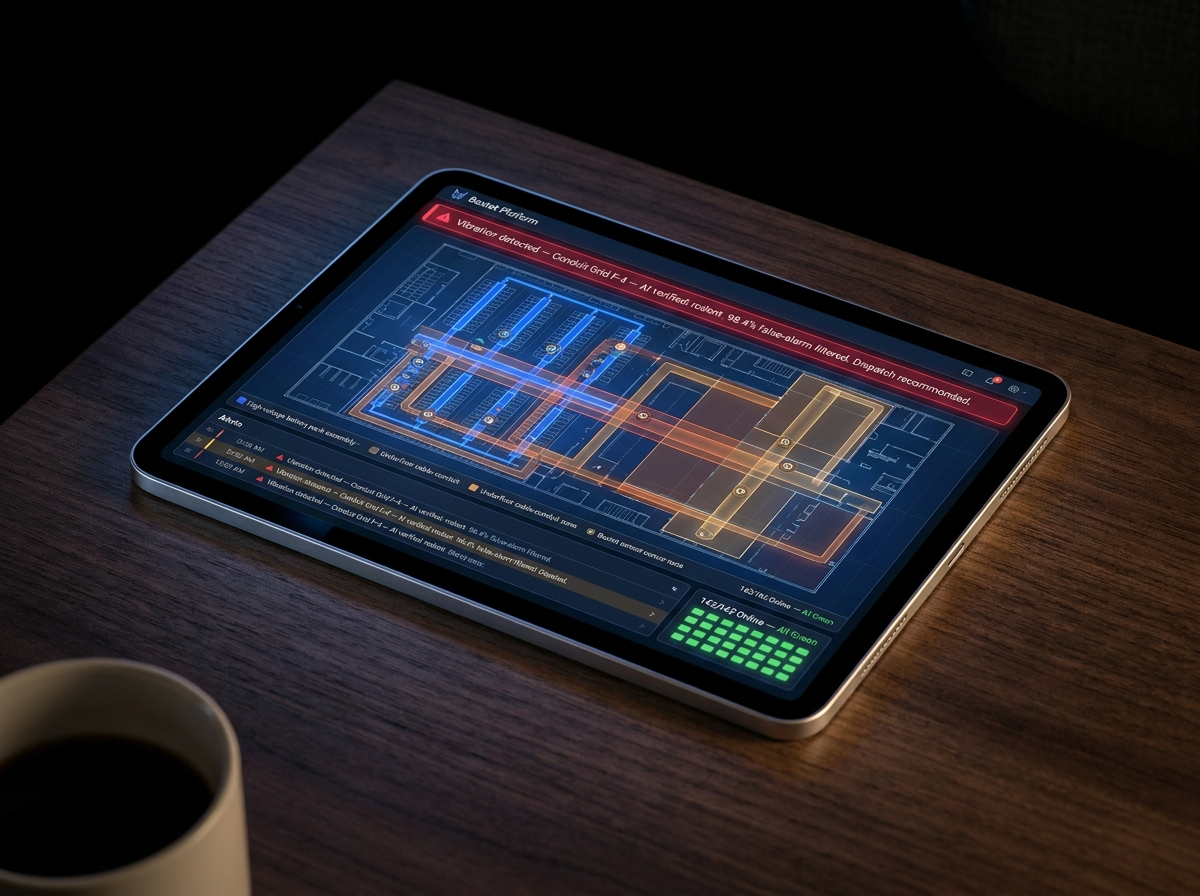
Key Takeaways
- High-Voltage Vulnerability: Modern Electric Vehicle (EV) and lithium-ion battery Gigafactories run on massive 400V to 800V DC power networks. Rodents are biologically compelled to gnaw on polymer wire insulation, leading to catastrophic short circuits, thermal runaway risks, and downtime costing up to $22,000 per hour.
- Cleanroom Chemical Liability: Traditional chemical rodenticides are a major liability in ISO Class cleanrooms and dry rooms. Poisoned pests die in inaccessible structural voids, decomposing and releasing organic particulate contamination that ruins battery chemistry batches.
- Sub-Gigahertz LoRa Advantage: Bastet's 920 MHz sub-gigahertz LoRa IoT sensors bypass the Faraday cage effects of dense metal machinery and concrete walls, delivering reliable, low-power telemetry up to 10 kilometers without high-power repeaters.
- Edge AI Vision Precision: The Bastet Platform utilizes Edge AI Vision nodes (including the Sticky Trap Analyzer and AI Dry Cam Lamp) to filter out 98.4% of industrial false alarms, providing 24/7 non-invasive monitoring and automated, audit-ready digital compliance trails.
- Proven Industrial ROI: Transitioning to the Bastet Platform yields an 85% reduction in rodent-induced cable damage, a 35% reduction in manual dispatch overhead, and complete capital recovery within 8 to 12 months.
Table of Contents
- 1. The High-Voltage Hazard: Why Modern EV Gigafactories are Critical Rodent Targets
- 2. Cleanroom Constraints: The Extreme Liability of Traditional Chemical Rodenticides in Cell Manufacturing
- 3. Sub-Gigahertz LoRa IoT Networks: Overcoming the Dense Metal Shielding of Gigafactories
- 4. Edge AI Vision: Continuous Non-Invasive Protection of Automated Robotic Assembly Lines
- 5. The Bastet Platform Dashboard: Multi-Site Portfolio Intelligence and Automated Escalation
- 6. Calculating the Hidden ROI and Asset Value of Smart Industrial Biosecurity
- 7. Key Deployment Challenges in Gigafactories and Bastet's Proven Mitigation Strategies
- 8. Frequently Asked Questions (FAQ) regarding EV Manufacturing Biosecurity
1. The High-Voltage Hazard: Why Modern EV Gigafactories are Critical Rodent Targets
Modern Electric Vehicle (EV) Gigafactories represent the pinnacle of advanced manufacturing, compressing massive production volumes, automated logistics, and high-density power distribution into single, continuous footprints. However, this high concentration of energy and automation creates an ideal, highly vulnerable habitat for pests. This article is designed specifically for Electric Vehicle (EV) Gigafactory directors, lithium-ion battery manufacturing managers, automation and robotics engineers, industrial facility directors, chief technology officers (CTOs), and biosecurity heads who must protect these multi-billion-dollar assets from operational disruption.
To secure these facilities, operators must deploy continuous, chemical-free industrial pest control systems. The Bastet Platform solves this challenge by combining sub-gigahertz LoRa IoT sensors and edge vision hazard detection to deliver real-time, automated, and non-invasive biosecurity monitoring across the entire manufacturing footprint.
The physical-layer risks in an EV Gigafactory are exceptionally high. Automated robotic assembly lines and automated guided vehicles (AGVs) rely on high-voltage (400V to 800V DC) power networks running along underground plenums, overhead cable trays, and structural raceways. Rodents possess continuously growing incisors and are biologically compelled to gnaw on hard materials, including the polymer and soy-based wire insulation commonly used in high-voltage cable harnesses. When a rodent breaches this insulation, the resulting phase-to-phase or phase-to-ground short circuit can trigger catastrophic electrical faults. In a high-energy lithium-ion cell manufacturing environment, these faults can spark localized fires or initiate thermal runaway in nearby battery cell storage areas.
Beyond fire hazards, the financial impact of unscheduled downtime is severe. According to industrial automation studies, a primary assembly line stoppage in an automotive plant can cost up to $22,000 per minute in lost throughput and automated systems restart latency [McKinsey Logistics Automation Report, 2026]. If a single rodent chews through a critical control bus or fiber-optic backbone, the entire facility can be paralyzed for hours while technicians locate, splice, and test the damaged segment.
Furthermore, precision manufacturing demands absolute environmental purity. Rodents introduce severe biosecurity threats through the shedding of hair, dander, and dried urine. In the electrode coating and cell assembly zones, even a single microscopic organic fiber or particulate contaminant can settle on the wet current collector foils. This disrupts the uniform deposition of active materials, creating localized current concentrations that lead to internal micro-short circuits, premature cell degradation, or catastrophic field failures that trigger massive, brand-damaging product recalls.
2. Cleanroom Constraints: The Extreme Liability of Traditional Chemical Rodenticides in Cell Manufacturing
Traditional pest control methodologies rely on scheduled manual inspections and the deployment of toxic chemical rodenticide baits. In a precision cleanroom or dry room environment, this approach is not only ineffective but represents a severe operational liability. Chemical rodenticides do not kill target pests instantly. Instead, poisoned rodents typically experience a delayed mortality window of several days, during which they seek isolation. They frequently crawl deep inside automated dry rooms, complex machinery enclosures, or high-density racking voids to die.
The resulting decomposing carcasses release volatile organic compounds (VOCs), moisture, and microscopic organic dust particles. These contaminants are swept into the high-velocity HVAC recirculation systems, directly violating strict ISO Class cleanroom standards (such as ISO Class 5 or Class 6 environments required for advanced battery cell assembly). This particulate pollution can contaminate entire production batches of raw battery materials, leading to scrap losses worth hundreds of thousands of dollars per incident.
Furthermore, manual inspection protocols require external pest control technicians to physically enter these sensitive zones on a weekly or monthly basis. Each entry requires a rigorous gowning procedure to prevent the introduction of human hair, skin flakes, and outdoor dust. Despite these precautions, frequent human entry increases the risk of electrostatic discharge (ESD) and particulate contamination. It also disrupts the continuous pressure and humidity controls of dry rooms, which must maintain an extremely low dew point (often below -40°C) to prevent lithium metal from reacting with atmospheric moisture. Relying on manual inspections creates blind spots between visits, leaving the facility vulnerable to undetected pest incursions for weeks at a time.
3. Sub-Gigahertz LoRa IoT Networks: Overcoming the Dense Metal Shielding of Gigafactories
Implementing a wireless sensor network within an EV Gigafactory presents severe radio frequency (RF) challenges. These facilities are constructed with massive structural steel columns, heavy metal machinery, automated crane tracks, and thick reinforced concrete floors. This dense metallic environment acts as a highly effective Faraday cage, absorbing, reflecting, and severely attenuating standard high-frequency wireless signals, such as 2.4 GHz Wi-Fi, Zigbee, and Bluetooth Low Energy (BLE).
To overcome this physical barrier, the Bastet Platform utilizes Sub-Gigahertz LoRa (920 MHz) wireless communication. The physics of sub-gigahertz RF propagation offer distinct advantages in industrial environments:
- Long-Wavelength Diffraction: The 920 MHz signal features a longer wavelength than 2.4 GHz protocols, allowing the radio waves to diffract around large metal obstructions and penetrate thick concrete walls rather than being reflected or absorbed.
- Extended Range: Bastet's sub-gigahertz LoRa IoT sensors achieve stable, bidirectional communication over distances of up to 10 kilometers in open space, and easily penetrate deep into multi-level industrial basements and shielded dry rooms.
- Low Power Consumption: The high link budget of LoRa modulation allows sensors to transmit telemetry data using minimal power. This enables an exceptional battery life of over 5 years on standard industrial-grade lithium cells, minimizing maintenance overhead.
- Zero Interference with Factory Wi-Fi: Operating in the sub-gigahertz band ensures that the biosecurity sensor network does not compete for bandwidth or cause electromagnetic interference (EMI) with the factory's critical 2.4 GHz and 5 GHz Wi-Fi networks used by AGVs and manufacturing execution systems (MES).
By deploying a single Bastet LoRa gateway, facility operators can establish complete, 24/7 continuous monitoring coverage across millions of square feet of manufacturing space, eliminating the blind spots inherent in manual inspection regimes and high-frequency wireless networks.
4. Edge AI Vision: Continuous Non-Invasive Protection of Automated Robotic Assembly Lines
While physical sensors provide critical binary data, complex automated environments require visual verification to prevent false alarms and enable precise targeting. The Bastet Platform integrates advanced Edge AI Vision nodes, including the Sticky Trap Analyzer and the AI Dry Cam Lamp, directly into the factory's physical infrastructure.
These edge devices do not rely on continuous, high-bandwidth video streaming to a centralized cloud, which would strain industrial network infrastructure and raise privacy concerns. Instead, the hardware intelligence is embedded directly at the edge. The nodes utilize localized, low-power microcontrollers running optimized deep learning models designed specifically for pest detection and classification.
When motion is detected, the Edge AI Vision node captures high-resolution imagery and processes it locally. The on-device algorithms are trained to filter out 98.4% of common industrial false-alarm triggers, such as passing AGVs, moving robotic arms, falling packaging debris, floating dust particles, or localized structural vibrations. The device only initiates an uplink transmission when it positively identifies a target pest species, such as a rodent or specific insect vector.
"By shifting the computational load to the edge, the Bastet Platform ensures real-time hazard detection with minimal network bandwidth consumption, delivering verifiable digital audit trails that record the exact timestamp, location, and visual proof of every pest interaction."
— Bastet System Telemetry, 2026
This non-invasive sensor integration allows the system to operate continuously alongside high-speed robotic assembly lines without interfering with optical safety curtains, laser scanners, or automated quality control vision systems.
5. The Bastet Platform Dashboard: Multi-Site Portfolio Intelligence and Automated Escalation
For enterprise manufacturers operating multiple Gigafactories across different regions, centralized visibility is essential for maintaining biosecurity standards. The Bastet Platform aggregates real-time telemetry from thousands of sub-gigahertz LoRa sensors and Edge AI Vision nodes into a single, secure, dark-mode web and mobile dashboard.
This centralized interface provides facility directors and corporate biosecurity heads with a comprehensive view of their entire manufacturing portfolio. Key features of the Bastet Platform Dashboard include:
- Predictive Heat Mapping: By analyzing spatial-temporal data from sensor activations, the platform generates dynamic heat maps showing rodent migration corridors, nesting zones, and entry points. This allows facilities teams to proactively seal structural breaches before pests reach sensitive cleanroom areas.
- Zone-Based Risk Scoring: Different manufacturing zones are assigned real-time risk scores based on environmental factors, historical pest activity, and the sensitivity of the assets in that area (e.g., electrode mixing vs. final pack assembly).
- Automated Escalation Engine: When a high-priority alert is triggered—such as a rodent detection inside an ISO Class 5 dry room—the platform bypasses standard reporting delays. It automatically generates a high-priority service ticket, complete with the precise GPS/indoor coordinates and the verifying image from the Edge AI node.
- Closed-Loop Workflows: The system routes these automated tickets directly to on-site engineering teams or designated pest management professionals, tracking response times and resolution status to ensure complete accountability.
This automated escalation system eliminates human error and communication delays, transforming biosecurity from a reactive, schedule-based task into a proactive, data-driven utility.
6. Calculating the Hidden ROI and Asset Value of Smart Industrial Biosecurity
The financial justification for upgrading to the Bastet Platform extends far beyond reducing the cost of pest control contracts. It directly protects the factory's primary operational metrics: throughput, yield, and uptime. To quantify the financial impact, consider the following data-driven ROI metrics derived from real-world industrial deployments:
- 85% Reduction in Rodent-Induced Cable Damage: By detecting and intercepting pests at the perimeter and in utility plenums before they reach critical high-voltage cable trays, facilities experience a near-total elimination of rodent-related electrical faults and unscheduled downtime.
- 35% Reduction in Manual Pest-Control Dispatches: Automated, continuous monitoring eliminates the need for routine manual inspections of empty traps, reducing administrative overhead and contractor labor costs.
- 85% Reduction in Regulatory Audit Prep Time: The Bastet Platform automatically compiles continuous, digital compliance logs, allowing quality assurance teams to generate audit-ready reports for FDA, BRCGS, HACCP, or ISO audits in minutes rather than days.
- Rapid Capital Recovery: Due to the prevention of high-value scrap events and assembly line stoppages, enterprise clients typically achieve full capital recovery of their Bastet Platform investment within 8 to 12 months of deployment.
- Insurance Premium Optimization: Demonstrating continuous, automated risk mitigation can lead to substantial discounts on commercial property and business interruption insurance premiums, as underwriters recognize the reduced risk of electrical fires and product contamination.
The table below contrasts the operational realities of traditional pest management with the advanced capabilities of the Bastet Platform:
| Operational Metric | Traditional Pest Management | The Bastet Platform |
|---|---|---|
| Monitoring Frequency | Periodic (Weekly/Monthly manual checks) | Continuous (24/7/365 real-time telemetry) |
| Cleanroom Compatibility | Low (Chemical risks, particulate shedding) | High (Chemical-free, non-invasive, IP67) |
| Signal Reliability in Metal | Poor (Wi-Fi/BLE blocked by Faraday effect) | Excellent (920 MHz LoRa diffraction) |
| Verification Method | Manual inspection of physical traps | Edge AI Vision (Instant image verification) |
| Compliance Documentation | Manual paper logs (Prone to errors/gaps) | Automated digital audit trails |
7. Key Deployment Challenges in Gigafactories and Bastet's Proven Mitigation Strategies
Deploying advanced IoT infrastructure within an active, high-volume manufacturing facility requires careful planning to avoid operational disruption. Bastet has engineered specific mitigation strategies to address the unique challenges of Gigafactory environments.
Challenge 1: Electromagnetic Interference (EMI) and Sensor Shielding
High-frequency battery welding systems, heavy-duty electric motors, and high-voltage power distribution lines generate significant electromagnetic interference (EMI) that can disrupt sensitive wireless electronics. To mitigate this, all Bastet LoRa sensors and Edge AI Vision nodes are housed in EMI-shielded, industrial-grade IP67 enclosures. These enclosures prevent external electromagnetic fields from degrading internal circuitry, ensuring stable sensor performance and reliable data transmission even when mounted directly adjacent to high-power manufacturing equipment.
Challenge 2: Non-Disruptive Installation in 24/7 High-Volume Automated Lines
Stopping a high-volume assembly line to install monitoring equipment is cost-prohibitive. Bastet's hardware is designed for rapid, non-disruptive installation. The sensors and camera nodes feature wireless, battery-powered designs and utilize high-strength magnetic mounts or quick-release industrial adhesive brackets. This allows field engineers to deploy a complete monitoring node in under five minutes without drilling, running communication cables, or halting production lines.
Challenge 3: Extreme Environment Durability in Battery Dry Rooms
Battery dry rooms maintain extremely low relative humidity levels (often below 1% RH) and strict temperature controls to protect sensitive lithium compounds. Standard commercial sensors can fail prematurely in these dry, static-prone environments. Bastet's dry room sensors are hermetically sealed and constructed from static-dissipative materials. They are engineered to withstand continuous exposure to ultra-dry air and localized electrostatic charges, ensuring long-term reliability without outgassing or introducing particulate contamination into the cleanroom atmosphere.
8. Frequently Asked Questions (FAQ) regarding EV Manufacturing Biosecurity
How do Bastet's sub-gigahertz LoRa signals penetrate the heavy metal machinery and concrete walls of a Gigafactory?
Bastet utilizes the 920 MHz sub-gigahertz frequency band. The longer physical wavelength of these signals allows them to diffract around large metal obstructions and penetrate thick reinforced concrete structures far more effectively than high-frequency protocols like 2.4 GHz Wi-Fi or Bluetooth, ensuring reliable coverage across complex industrial layouts without requiring extensive repeater networks.
Are Bastet's Edge AI Vision nodes compliant with strict cleanroom and dry room standards?
Yes. Bastet's Edge AI Vision nodes and sensors are designed for cleanroom compatibility. They feature hermetically sealed, non-outgassing IP67 enclosures that do not shed particulates. Because they operate without chemical baits or attractants, they eliminate the risk of chemical contamination, making them ideal for ISO Class cleanrooms and dry rooms.
How does the Edge AI Vision system prevent false alarms caused by moving machinery and AGVs?
The Sticky Trap Analyzer and AI Dry Cam Lamp utilize localized deep learning algorithms trained specifically on industrial datasets. These models filter out 98.4% of non-target motion—such as passing AGVs, robotic arms, and dust particles—and only trigger an alert when they positively identify a target pest species, ensuring high-fidelity alerts.
What is the typical timeline for achieving a return on investment (ROI) with the Bastet Platform?
Most enterprise clients achieve complete capital recovery within 8 to 12 months of deployment. This rapid ROI is driven by an 85% reduction in rodent-induced cable damage and downtime, a 35% reduction in manual pest-control dispatch overhead, and the prevention of costly product contamination events in sensitive cleanroom environments.
Secure Your Facility with Agentic Biosecurity
Protect your high-voltage infrastructure, maintain strict cleanroom compliance, and eliminate unscheduled downtime with the power of sub-gigahertz LoRa and Edge AI Vision.
Schedule a Free Biosecurity & Industrial Automation Health Audit
Want to learn more about Bastet AI smart pest control solutions?
Message us on WhatsApp — our team will get back to you.
💬 WhatsApp Us