
AI Pest Monitoring for University Campuses | Bastet AI
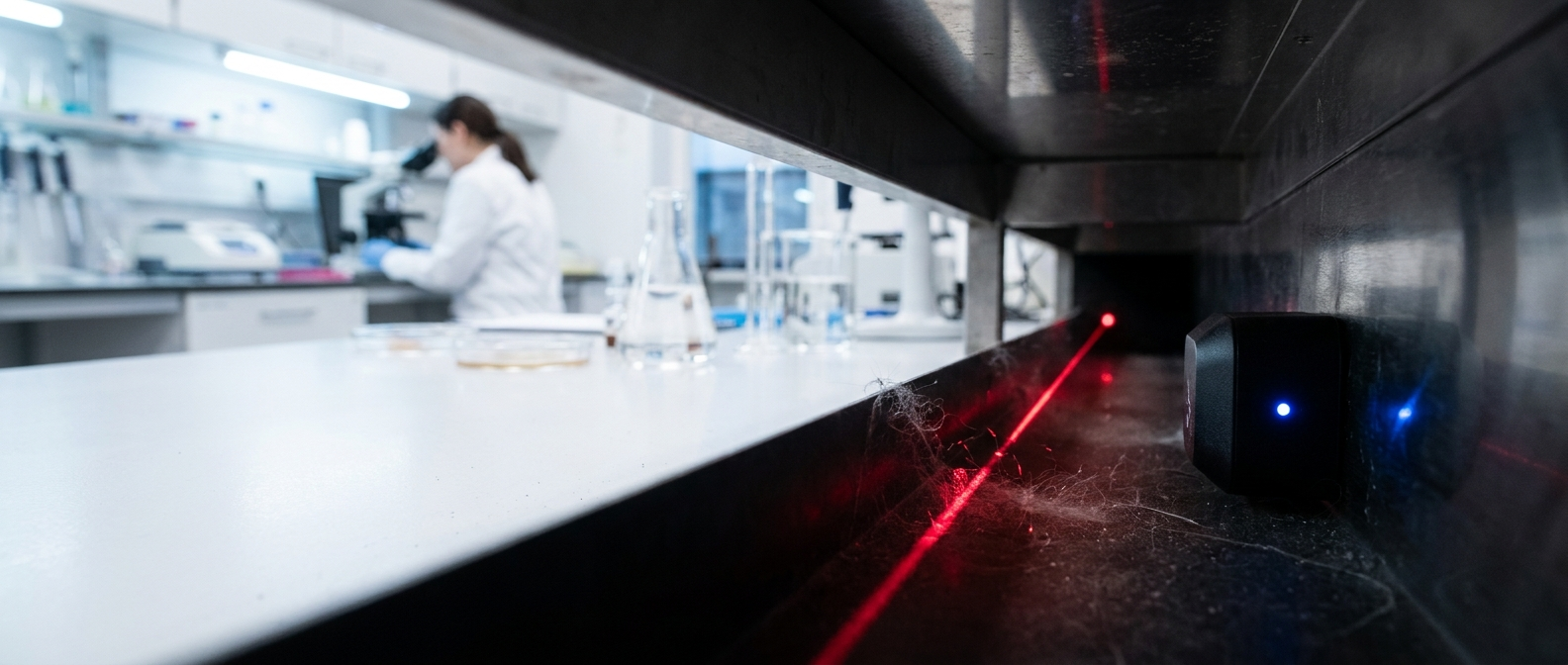
Key Takeaways: Academic research facilities and modern university campuses house invaluable scientific intellectual property, sensitive biological materials, and high-precision laboratory equipment. Traditional, manual pest control methods are no longer sufficient to meet stringent biosecurity standards and protect multi-million dollar research assets. Bastet AI delivers an enterprise-grade, AI-powered IoT pest monitoring ecosystem that combines sub-gigahertz LoRa and Zigbee wireless sensors with edge AI computer vision. This solution ensures continuous, 24/7 automated surveillance, prevents biological cross-contamination, eliminates costly research downtime, and guarantees compliance with global biosafety regulations.
Table of Contents
- 1. The High Stakes of Campus Biosecurity and Academic Research
- 2. Why Traditional Pest Control Fails Modern Research Infrastructure
- 3. The Bastet AI IoT Hardware Ecosystem: Built for Complex Campus Environments
- 4. AI in a Box and Sticky Trap Image Analysis: Next-Gen Computer Vision
- 5. Meeting Biosafety Levels (BSL) and Cleanroom Compliance Standards
- 6. Quantifying the ROI: Financial and Intellectual Property Protection
- 7. Frequently Asked Questions (FAQ)
- 8. References and Citations
1. The High Stakes of Campus Biosecurity and Academic Research
Modern university campuses are complex, high-density ecosystems where academic learning, residential life, and cutting-edge scientific research coexist. Within these institutions, research laboratories represent the pinnacle of intellectual and financial investment. These facilities house highly sensitive experiments, genetically modified organisms (GMOs), SPF (Specific Pathogen-Free) animal vivariums, and state-of-the-art analytical instrumentation. Maintaining strict biosecurity is not merely an operational preference; it is a fundamental requirement to preserve scientific integrity and public safety (World Health Organization, 2025).
Pest incursions within these specialized environments present catastrophic risks. Rodents, insects, and other pests act as biological vectors, capable of introducing pathogens that can decimate laboratory animal populations, contaminate sterile cultures, and compromise years of longitudinal research. For instance, in Biosafety Level 1 to 3 (BSL-1 to BSL-3) laboratories, an undetected pest can breach physical containment barriers, leading to potential regulatory shutdowns, loss of federal grant funding, and severe reputational damage (Centers for Disease Control and Prevention, 2026).
Furthermore, advanced nanotechnology and physics laboratories operating under ISO 14644-1 Class 1 to Class 8 cleanroom standards require absolute control over airborne and surface particulate matter. A single rodent hair, dander, or fecal micro-particle can disrupt nanolithography processes, ruin semiconductor fabrication, or skew high-resolution microscopy results. To mitigate these risks, next-generation educational institutions are transitioning away from reactive pest management to proactive, continuous, and automated monitoring solutions.
2. Why Traditional Pest Control Fails Modern Research Infrastructure
Historically, university campus pest control has relied on scheduled manual inspections conducted by external pest control operators (PCOs) on a weekly, bi-weekly, or monthly basis. This intermittent methodology possesses inherent vulnerabilities that fail to meet the rigorous demands of modern academic research facilities:
- The Visibility Gap: Pests are highly elusive, nocturnal, and naturally avoid human interaction. A trap checked once every 30 days provides zero real-time visibility. A rodent can enter a sensitive vivarium, chew through critical electrical cabling, contaminate feed, and exit long before a technician discovers the triggered trap.
- Human Error and Labor Inefficiencies: Manual inspection requires technicians to physically access highly restricted, bio-secure, or cleanroom environments. This frequent human entry increases the risk of external contamination, disrupts sensitive thermal or pressure balances, and wastes valuable administrative hours managing security clearances.
- Lack of Actionable Data: Traditional pest logs rely on subjective, handwritten, or basic digital entries that lack precise timestamps, spatial mapping, or species identification. Without granular data, facilities managers cannot perform predictive analysis or identify localized pest pathways.
- Inhumane and Hazardous Methods: The use of chemical rodenticides and open snap traps poses severe chemical contamination risks to research subjects and violates modern animal welfare guidelines.
To bridge these operational gaps, Bastet AI has engineered an integrated hardware and software paradigm under the tagline "Make the Pest Visible". By replacing manual guesswork with continuous, automated IoT telemetry and edge-computed artificial intelligence, Bastet AI transforms pest management from a reactive chore into a precise, data-driven biosecurity asset.
3. The Bastet AI IoT Hardware Ecosystem: Built for Complex Campus Environments
Academic campuses feature highly challenging RF (Radio Frequency) environments. Thick reinforced concrete walls, subterranean utility tunnels, electromagnetic interference from high-voltage laboratory equipment, and sprawling multi-building layouts present significant wireless communication barriers. To overcome these obstacles, the Bastet AI Smart Rodent IoT Solution utilizes a dual-protocol wireless architecture leveraging both LoRa (Long Range) and Zigbee technologies.
| Bastet AI Hardware Component | Wireless Protocol | Technical Specifications & Key Features | Ideal Campus Deployment Area |
|---|---|---|---|
| Bastet LoRa Gateway | LoRaWAN | Supports 920MHz sub-gigahertz bands; high-penetration receiver sensitivity; connects up to 500+ end-nodes. | Central facility rooftops, utility shafts, multi-story structural cores. |
| Bastet LoRa Trap Sensor | LoRaWAN | Retrofits to mechanical snap traps; instant trigger detection; multi-year battery life; IP67 waterproof rating. | Subterranean crawlspaces, HVAC plenums, perimeter external bait stations. |
| Bastet LoRa PIR Sensor | LoRaWAN | High-precision passive infrared motion detection; optimized calibration to filter out environmental micro-movements. | Dark storage corridors, ceiling voids, cable risers. |
| Bastet Zigbee Gateway | Zigbee 3.0 | Local mesh networking capability; low-latency communication; seamless integration with localized smart building systems. | Individual laboratory suites, cleanrooms, office clusters. |
| Bastet Zigbee Trap Sensor | Zigbee 3.0 | Ultra-compact form factor; sub-3 second notification alerts; mesh-routing capability to extend indoor coverage. | Under-bench cabinets, server racks, biological safety cabinets. |
| Bastet Zigbee Smart Plug | Zigbee 3.0 | Over-the-air power control; real-time energy monitoring; acts as a Zigbee signal repeater to strengthen local mesh. | Break rooms, administrative offices, equipment rooms. |
The core advantage of using 920MHz sub-gigahertz LoRa wireless signals lies in their physics-based ability to diffract around obstacles and penetrate deep structural barriers, such as solid concrete floors and steel-reinforced laboratory walls, which typically block standard 2.4GHz Wi-Fi or Bluetooth signals. When a rodent triggers a Bastet LoRa Trap Sensor or a Bastet Zigbee Trap Sensor, a signal is transmitted through the respective gateway to the cloud-based Bastet Platform Mobile App in less than 3 seconds. This rapid communication allows facility operators to respond immediately, removing captured pests before they decompose, emit odors, or attract secondary insect infestations.
4. AI in a Box and Sticky Trap Image Analysis: Next-Gen Computer Vision
While physical IoT sensors excel at detecting mechanical trap triggers and movement, advanced biosecurity demands visual verification and species identification. To solve this, Bastet AI integrates edge-computed computer vision into the campus security matrix.
Bastet Sensing Camera & AI in a Box
The Bastet Sensing Camera paired with the AI in a Box edge computer vision appliance offers unmatched visual surveillance capabilities. Unlike standard motion-activated cameras that generate hundreds of false alerts due to shifting shadows, dust, or HVAC airflow, the Bastet AI in a Box runs localized deep learning models optimized for pest detection.
By processing video frames directly at the edge, the system achieves a 98% reduction in false alarms. The convolutional neural networks (CNNs) running on the AI in a Box can instantly distinguish between a human researcher, a piece of blowing debris, and a target pest (such as a Rattus norvegicus or Mus musculus). When a pest is verified, the system generates a rich metadata alert containing the exact time, location, and species classification, enabling targeted, species-specific remediation strategies.
Sticky Trap Image Analyze Tool
In addition to rodent monitoring, insect control is vital for maintaining laboratory cleanliness. Traditional sticky boards are placed throughout facilities to capture crawling and flying insects. However, manually counting and identifying these insects is a tedious, error-prone task.
The Sticky Trap Image Analyze Tool simplifies this process. Using the Bastet Platform Mobile App, technicians or lab staff take a photo of any standard sticky trap. The image is analyzed by Bastet AI's cloud-based computer vision engine, which automatically counts, categorizes, and logs the captured insects (e.g., phorid flies, cockroaches, beetles). This automated analysis helps identify pest population trends and pinpoint potential entry points or sanitation failures before they escalate into widespread infestations.
5. Meeting Biosafety Levels (BSL) and Cleanroom Compliance Standards
Academic institutions conducting biological research must adhere to strict regulatory guidelines established by national and international health bodies, such as the Centers for Disease Control and Prevention (CDC), the National Institutes of Health (NIH), and the World Health Organization (WHO). Non-compliance can result in the immediate suspension of research activities and significant financial penalties.
The deployment of the Bastet AI ecosystem directly supports compliance across several key regulatory frameworks:
- BSL-1 to BSL-3 Containment (CDC/NIH Guidelines): In high-containment laboratories, maintaining the physical integrity of the facility envelope is critical. Pests can compromise containment by chewing through seals, filters, or structural conduits. Bastet AI's continuous monitoring provides an automated, non-invasive early warning system that detects breaches without requiring human inspectors to enter high-containment zones, thereby minimizing exposure risks (Centers for Disease Control, 2026).
- AAALAC International Accreditation: Vivariums housing research animals must maintain strict environmental controls to secure Association for Assessment and Accreditation of Laboratory Animal Care (AAALAC) accreditation. Undetected wild rodents can introduce pathogens like Sendai virus or Mycoplasma, which can ruin research data and compromise animal welfare. Automated monitoring with the Bastet LoRa Trap Sensor ensures that any invading rodent is detected and removed immediately, protecting animal health and maintaining compliance.
- ISO 14644-1 Cleanroom Standards: To comply with Class 1 through Class 8 cleanroom standards, facilities must minimize human entry, as personnel are the primary source of particulate contamination. By replacing manual trap inspections with Bastet AI's remote monitoring, cleanroom operators can significantly reduce the frequency of physical technician entries, thereby preserving air purity and reducing operational overhead.
6. Quantifying the ROI: Financial and Intellectual Property Protection
The financial case for deploying Bastet AI on university campuses extends far beyond reducing pest control labor costs. The true return on investment (ROI) lies in protecting invaluable scientific assets and preventing costly operational disruptions.
According to research from the Uptime Institute, the average cost of downtime for critical infrastructure can exceed $9,000 per minute depending on the scale of the facility (Uptime Institute, 2026). In an academic context, a pest-induced electrical short in a server room housing supercomputers or high-throughput genomic sequencers can result in:
- The loss of irreplaceable, long-term experimental data.
- The spoilage of temperature-sensitive biological samples stored in ultra-low temperature (ULT) freezers if power is disrupted.
- The contamination of transgenic animal lines, which can take years and hundreds of thousands of dollars to re-establish.
- The invalidation of clinical trial phases, resulting in severe contract penalties and legal liabilities.
By implementing the Bastet AI Smart Rodent IoT Solution and AI in a Box, universities transition from a reactive, crisis-driven model to a predictive, continuous biosecurity posture. The system's sub-3 second notification alerts enable facilities teams to intercept threats before they cause damage, safeguarding research continuity and protecting institutional funding.
7. Frequently Asked Questions (FAQ)
Q1: How does the Bastet LoRa Gateway handle wireless interference in concrete-heavy campus environments?
A1: The Bastet LoRa Gateway operates on sub-gigahertz 920MHz radio frequencies. These longer wavelengths provide exceptional signal propagation and diffraction capabilities, allowing them to easily penetrate thick reinforced concrete walls, metallic shielding, and underground utility tunnels that typically block standard Wi-Fi or Bluetooth signals.
Q2: Can the Bastet AI platform integrate with existing university building management systems (BMS)?
A2: Yes. The Bastet AI platform features robust API integration capabilities, allowing it to share real-time telemetry, alert states, and sensor health data directly with major enterprise Building Management Systems (BMS) and computer-aided facility management (CAFM) software.
Q3: How does the Sticky Trap Image Analyze Tool improve compliance in cleanrooms?
A3: The tool automates the identification and counting of insects from photos taken via the Bastet Platform Mobile App. This digital documentation provides an audit-ready trail for ISO 14644-1 compliance, eliminating manual error and reducing the need for external technicians to enter sensitive areas.
Q4: What is the average battery life of Bastet LoRa and Zigbee sensors?
A4: Bastet LoRa and Zigbee sensors are engineered with ultra-low-power microcontrollers and optimized sleep cycles. Under normal operating conditions, the sensors deliver an impressive battery life of 3 to 5 years, minimizing maintenance requirements and operational disruption.
Protect Your Institution's Research and Biosecurity Today
Don't let manual pest control methods put your multi-million dollar research, animal welfare, or academic reputation at risk. Partner with Bastet AI to deploy next-generation, automated, and intelligent biosecurity monitoring across your campus.
Make the Pest Visible.
Request a Custom Campus Assessment
Or email our enterprise solutions team directly at: info@bastet-tech.ai
8. References and Citations
- Centers for Disease Control and Prevention. (2026). Biosafety in Microbiological and Biomedical Laboratories (BMBL) (7th ed.). U.S. Department of Health and Human Services.
- Uptime Institute. (2026). Annual Outage Analysis: Financial Impact and Mitigating Downtime in Mission-Critical Facilities. Uptime Institute Research.
- World Health Organization. (2025). Laboratory Biosafety Manual (5th ed.). World Health Organization.
Want to learn more about Bastet AI smart pest control solutions?
Message us on WhatsApp — our team will get back to you.
💬 WhatsApp Us