
Zero-Chemical Pest Control for Cleanrooms | Bastet AI
Traditional chemical pest control is strictly prohibited in semiconductor cleanrooms due to Volatile Organic Comp...
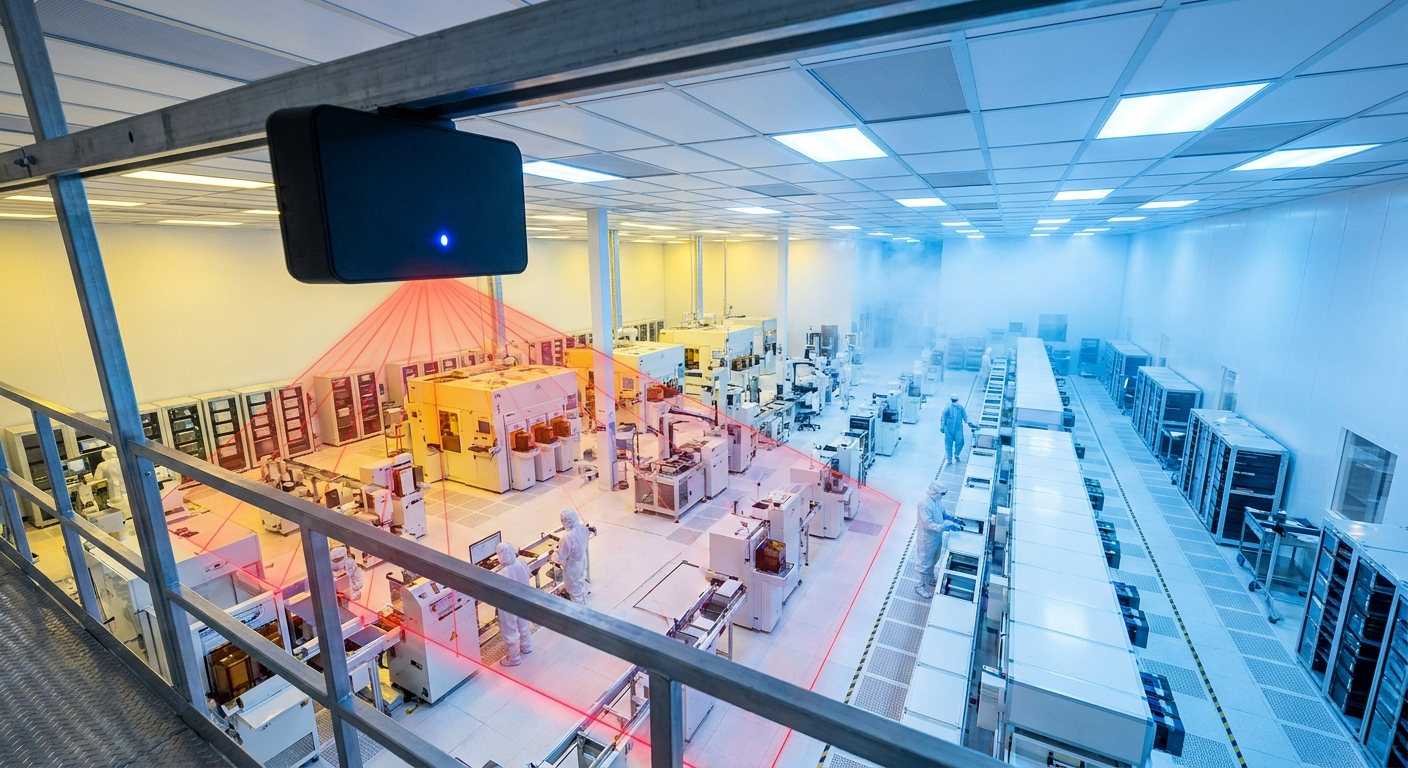
Key Takeaways
- Zero-Chemical Mandate: Traditional chemical pest control is strictly prohibited in semiconductor cleanrooms due to Volatile Organic Compound (VOC) outgassing, which permanently damages extreme ultraviolet (EUV) lithography optics and ruins silicon wafers.
- Continuous IoT Pest Monitoring: Implementing continuous IoT pest monitoring enables pesticide-free facilities management in microelectronics cleanrooms by replacing periodic chemical treatments with real-time, non-chemical detection, utilizing physical traps and edge-AI vision to isolate and intercept pests before they breach critical zones.
- The Bastet AI Ecosystem: Combining the Bastet LoRa Gateway, Bastet LoRa PIR Sensor, Bastet LoRa Trap Sensor, and Bastet Sensing Camera delivers 24/7 automated monitoring across concrete-and-steel fab structures without compromising data privacy.
- Measurable ROI & ESG Impact: High-tech fabs achieve a 287% ROI within an 11-month payback period, a 31% reduction in operational monitoring costs, and an 85% reduction in administrative hours spent on audit preparation.
Table of Contents
- 1. Introduction: The Nanoscale Battleground
- 2. Why Chemicals are Banned: The Threat of Volatile Organic Compounds (VOCs) in Cleanrooms
- 3. Rodent Hazards in Fabs: Cable-Chewing and Micro-Vibrations
- 4. The High Financial Cost of Cleanroom Downtime
- 5. The Bastet AI Solution: Continuous, Non-Chemical IoT Pest Monitoring
- 6. Edge Intelligence: "AI in a Box" Visual Verification Without Privacy Infringement
- 7. Operational ROI and ESG Compliance for High-Tech Fabs
- 8. Frequently Asked Questions (FAQ)
1. Introduction: The Nanoscale Battleground
In the world of semiconductor manufacturing, the margin for error is measured in fractions of a nanometer. Modern fabrication facilities (fabs) operate at the absolute limit of physics, where even a single microscopic airborne particle can ruin an entire batch of silicon wafers. To maintain these ultra-pure environments, facilities managers must enforce absolute control over every environmental variable. However, one of the most persistent threats to these high-tech facilities is not microscopic dust, but biological pests.
Implementing continuous IoT pest monitoring enables pesticide-free facilities management in microelectronics cleanrooms by replacing hazardous, reactive chemical treatments with real-time, non-chemical detection systems. This proactive approach ensures that pests are intercepted before they can breach the cleanroom envelope. Traditional pest control methods, which rely heavily on periodic manual inspections and chemical applications, are completely incompatible with the strict operational requirements of advanced microelectronics manufacturing.
As high-tech manufacturing scales to meet global demand, the integration of artificial intelligence (AI) and the Internet of Things (IoT) has emerged as the only viable path forward. By deploying intelligent, non-chemical monitoring networks, semiconductor fabs can achieve 100% elimination of chemical pesticide usage in cleanroom environments. This transition not only protects delicate manufacturing equipment but also aligns with the rigorous sustainability and safety standards demanded by modern industrial operations.
2. Why Chemicals are Banned: The Threat of Volatile Organic Compounds (VOCs) in Cleanrooms
The primary reason traditional pest control is strictly banned in semiconductor cleanrooms is the chemical composition of the pesticides themselves. Chemical pest control agents rely on active organic compounds that inevitably release Volatile Organic Compounds (VOCs) into the air. In a standard commercial building, these trace gasses are harmless. In a semiconductor cleanroom, they are catastrophic.
Cleanrooms are classified under the ISO 14644-1 Standard, which defines the maximum allowable concentration of airborne particles per cubic meter of air. While ISO Class 1 through Class 8 cleanrooms utilize advanced High-Efficiency Particulate Air (HEPA) and Ultra-Low Penetration Air (ULPA) filtration systems to capture physical particles, standard filtration cannot easily extract molecular-level gaseous chemical contaminants.
"Chemical outgassing from traditional pesticides introduces airborne molecular contamination (AMC) that deposits directly onto extreme ultraviolet (EUV) photolithography mirrors and lenses. This creates a microscopic film that scatters laser light, distorts circuit patterns, and permanently ruins millions of dollars in optical equipment."
Because of this risk, cleanroom standard operating procedures strictly prohibit any substance capable of outgassing. This ban includes aerosol sprays, liquid pesticides, and even chemical-based rodent baits that can degrade and release airborne particulates. Consequently, facilities managers must rely on non-chemical, physical containment and monitoring strategies to keep their production lines free of biological threats.
3. Rodent Hazards in Fabs: Cable-Chewing and Micro-Vibrations
While insects present a contamination risk, rodents represent a direct threat to the physical infrastructure of a semiconductor fab. Mice and rats possess an instinctual need to gnaw on hard surfaces to wear down their continuously growing incisors. In a modern fab, the thousands of miles of fiber-optic data lines, high-voltage power cables, and pneumatic control tubes running through sub-fab areas and utility plenums are prime targets.
Rodents can easily exploit under 6mm openings as their entry threshold into cleanrooms and utility spaces. Once inside, their gnawing behavior can lead to severe operational issues:
- Data Cable Disruption: Chewed fiber-optic lines sever critical communication links between automated material handling systems (AMHS) and the central manufacturing execution system (MES).
- Electrostatic Discharge (ESD) Risks: Damaged insulation on high-voltage lines can cause electrical short circuits, disrupting static-safe grounding systems and exposing sensitive silicon wafers to destructive ESD events.
- Micro-Vibrations: The physical movement of rodents within structural voids, raised floors, or ceiling plenums can generate micro-vibrations. For photolithography equipment operating at sub-nanometer tolerances, even minor structural vibrations can cause alignment errors during the wafer exposure process.
The physical presence of a single rodent in a sub-fab can trigger a cascade of automated safety shutdowns, halting production across multiple cleanroom bays.
4. The High Financial Cost of Cleanroom Downtime
In the semiconductor industry, time is measured in hundreds of thousands of dollars. The capital-intensive nature of fab operations means that any unscheduled stoppage of the production line results in immediate, compounding financial losses.
According to data from AlphaCIS (2026), unplanned cleanroom downtime costs semiconductor manufacturers between $50,000 to $300,000+ per hour depending on the node size and production volume of the facility. When a pest breach occurs, the entire cleanroom must be shut down, isolated, and subjected to a rigorous decontamination and recertification process under ISO standards before production can resume. This process often takes days, pushing the total cost of a single incident into millions of dollars.
| Cost Component | Estimated Impact (USD) | Source / Reference |
|---|---|---|
| Unplanned Downtime (per hour) | $50,000 to $300,000+ | AlphaCIS (2026) |
| Single Leading-Edge Wafer Value | $17,000 | Edwards Vacuum (2026) |
| Typical Wafer Lot Value (25 Wafers) | $425,000 | Industry Standard Estimate |
Furthermore, as documented by Edwards Vacuum (2026), a single leading-edge silicon wafer is valued at up to $17,000. Because wafers travel through the fab in lots of 25, a single contamination event that ruins a single lot represents an immediate loss of $425,000 in raw material and processing time. When factoring in the labor required for manual inspection, recalibration of photolithography equipment, and cleanroom validation, the financial risk of inadequate pest management is a major vulnerability for semiconductor operations.
5. The Bastet AI Solution: Continuous, Non-Chemical IoT Pest Monitoring
To address the unique challenges of high-tech manufacturing, Bastet AI has developed a fully integrated, non-chemical pest monitoring ecosystem. By combining advanced IoT sensors with edge-computed artificial intelligence, the Bastet AI platform provides continuous, real-time protection without relying on chemical agents.
The core architecture of the Bastet AI solution consists of four hardware and software components:
- Bastet LoRa Gateway: The communications hub of the system. Operating on sub-gigahertz 920MHz frequency, this gateway provides deep signal penetration through concrete walls, heavy machinery, and electromagnetic shielding, maintaining a stable wireless link up to 10 kilometers.
- Bastet LoRa PIR Sensor: Ultra-low-power passive infrared sensors placed in critical access paths, utility plenums, and sub-fab areas to detect the thermal signatures of moving pests.
- Bastet LoRa Trap Sensor: Retrofittable digital sensors that attach to mechanical, non-chemical traps. These sensors instantly transmit a signal the moment a trap is triggered, eliminating the need for manual inspections.
- Bastet Sensing Camera: High-definition optical sensors equipped with onboard edge processors that capture, analyze, and verify pest activity at the point of detection.
All data from these edge devices is consolidated into the centralized Bastet Platform, giving facilities managers a single, unified view of their entire pest defense perimeter. This continuous monitoring system allows fabs to transition from reactive pest control to a proactive, data-driven defense strategy.
6. Edge Intelligence: "AI in a Box" Visual Verification Without Privacy Infringement
One of the primary hurdles when deploying cameras in a semiconductor fab is data security and intellectual property protection. Fabs are highly secure environments; corporate espionage and proprietary process leaks are constant concerns. Standard cloud-connected security cameras are often banned because they stream raw video footage off-site.
Bastet AI solves this security challenge through its "AI in a Box" edge processing architecture. The Bastet Sensing Camera does not stream raw video to the cloud. Instead, all visual processing, object detection, and pest classification occur locally on the device's edge processor.
Edge-AI Performance Metrics
- Detection Latency: Achieves sub-3 second latency for edge-AI detection and notification, sending instant alerts to facilities teams before a pest can move deep into cleanroom zones.
- Accuracy: Delivers a 98% reduction in false-positive alerts caused by moving shadows, dust particles, or changing light conditions, ensuring maintenance teams only respond to actual threats.
- Data Privacy: No video or images of human personnel or proprietary machinery are ever stored or transmitted. The edge model only processes and extracts bounding-box metadata of verified pests, ensuring complete compliance with corporate security protocols.
By processing data at the edge, Bastet AI provides the speed of real-time visual verification while maintaining the strict air-gapped security standards required by high-tech manufacturing facilities.
7. Operational ROI and ESG Compliance for High-Tech Fabs
Transitioning to an automated, non-chemical pest monitoring system is not just a technical upgrade; it is a highly profitable operational investment. For global semiconductor enterprises, the financial and compliance benefits of the Bastet Platform are clear and measurable.
According to financial models validated across high-tech manufacturing facilities, deploying the Bastet AI ecosystem yields a 287% ROI achieved within an 11-month payback period. This rapid return on investment is driven by several key factors:
- Reduced Labor Costs: Traditional pest control requires manual inspections of hundreds of physical traps scattered across massive facilities. Bastet AI automates this process, resulting in a 31% reduction in operational monitoring costs.
- Automated Audit Compliance: High-tech fabs must maintain detailed records of pest activity and facility maintenance to comply with international quality standards. The Bastet Platform automatically logs every detection, trap trigger, and maintenance action, leading to an 85% reduction in administrative hours spent on audit preparation.
- ESG and Green Building Standards: Modern corporations operate under strict Environmental, Social, and Governance (ESG) mandates. By completely eliminating chemical pesticides, facilities managers can secure valuable points toward green building certifications. This alignment is highly supported by organizations such as the Building Owners and Managers Association (BOMA, 2026) and the U.S. Green Building Council (USGBC, 2026), both of which advocate for integrated, pesticide-free pest management in sustainable industrial facilities.
By integrating Bastet AI into their operations, semiconductor fabs can protect their production lines, lower operational overhead, and advance their corporate sustainability goals.
8. Frequently Asked Questions (FAQ)
Q1: How does continuous IoT pest monitoring enable pesticide-free facilities management in microelectronics cleanrooms?
Continuous IoT pest monitoring replaces periodic chemical pesticide applications with real-time, non-chemical detection systems. By utilizing physical traps integrated with digital sensors and edge-AI cameras, facilities can instantly detect, locate, and intercept pests before they breach cleanroom boundaries, eliminating the need for hazardous chemical treatments.
Q2: Why are chemical pesticides prohibited under ISO 14644-1 cleanroom standards?
Chemical pesticides release Volatile Organic Compounds (VOCs) and airborne molecular contaminants (AMCs). These gaseous compounds can deposit onto sensitive extreme ultraviolet (EUV) photolithography lenses and silicon wafers, causing permanent optical damage and wafer contamination, which violates the strict particulate limits of ISO 14644-1 cleanrooms.
Q3: How does the Bastet AI system transmit data through heavy concrete and steel fab structures?
The system uses the Bastet LoRa Gateway operating on a sub-gigahertz 920MHz frequency. This long-range, low-power wireless protocol is designed to penetrate thick concrete walls, heavy machinery, and electromagnetic shielding, maintaining a stable connection with sensors up to 10 kilometers away.
Q4: Does the Bastet Sensing Camera compromise cleanroom data security or intellectual property?
No. The Bastet Sensing Camera utilizes "AI in a Box" edge processing, meaning all visual analysis is performed locally on the device. It does not stream raw video or images to the cloud, and only transmits non-sensitive, text-based metadata alerts, ensuring complete data privacy and IP security.
Conclusion: The Future of Cleanroom Biosecurity
As semiconductor manufacturing continues to scale down to sub-nanometer nodes, the tolerance for environmental contamination will only decrease. Traditional, chemical-heavy pest control methods are no longer viable in these highly sensitive environments. The future of cleanroom biosecurity lies in automated, non-chemical, and highly secure IoT monitoring systems.
By deploying the Bastet AI ecosystem—including the Bastet LoRa Gateway, Bastet LoRa PIR Sensor, Bastet LoRa Trap Sensor, and Bastet Sensing Camera—semiconductor manufacturers can protect their facilities from the physical and financial threats of pest intrusions. This approach delivers a 287% ROI, ensures compliance with ISO 14644-1 standards, and supports corporate ESG goals.
Ready to secure your cleanroom facility with next-generation edge intelligence? Visit Bastet AI today to schedule a technical consultation and make the pest visible.
References
- • AlphaCIS (2026). The Economics of Cleanroom Downtime in Semiconductor Fabrication.
- • Edwards Vacuum (2026). Wafer Yield Protection and Airborne Molecular Contamination Control.
- • ISO 14644-1 Standard. Cleanrooms and associated controlled environments — Part 1: Classification of air cleanliness by particle concentration.
- • Building Owners and Managers Association (BOMA, 2026). Industrial Facility Management and Sustainable Pest Control Guidelines.
- • U.S. Green Building Council (USGBC, 2026). LEED v4.1: Integrated Pest Management Standards for High-Tech Industrial Buildings.
Want to learn more about Bastet AI smart pest control solutions?
Message us on WhatsApp — our team will get back to you.
💬 WhatsApp Us