
AI Pest Monitoring for Shipping Ports | Bastet AI
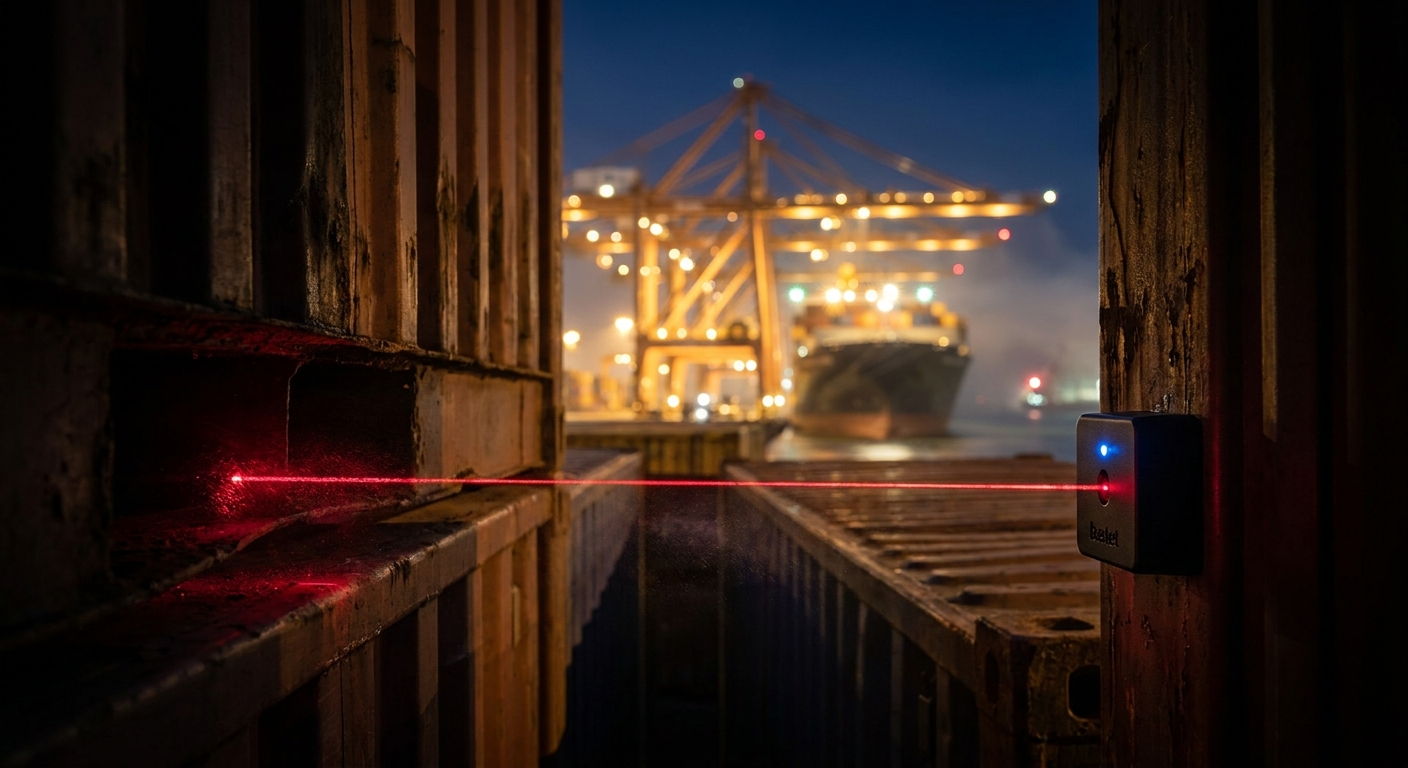
Key Takeaways
- Infrastructure Risk: In 2026, automated container terminals run at massive scales where even a single rodent chewing a critical fiber-optic line can disable a gantry crane system, costing operators between $50,000 and $300,000+ per hour in shipping bottlenecks and demurrage.
- Continuous Active Defense: The Bastet Smart Rodent IoT Solution provides continuous, 24/7/365 active monitoring, completely replacing traditional manual check cycles that leave critical 14-day gaps in a port facility's biosecurity shield.
- Wireless Signal Mastery: Backed by the Bastet LoRa Gateway operating on sub-GHz 920MHz frequencies, Bastet's long-range sensors penetrate dense steel shipping container stacks and underground electrical conduits up to a distance of 10 kilometers.
- Zero-Chemical Ingress Control: By deploying Bastet Sensing Cameras and the localized AI in a Box computer vision node, customs officials can visually verify rodent entry at terminal gates in under 3 seconds with a 98% false-alarm filtering accuracy.
- Automated Compliance Reporting: The Bastet Platform Mobile App automatically logs unalterable, cryptographically verified timestamps of pest activity, streamlining compliance with WHO International Health Regulations (IHR 2005) and national phytosanitary audits while reducing administrative preparation time by 85%.
- Immediate, Sustainable ROI: Transitioning to smart IoT monitoring reduces physical trap labor by up to 50%, cuts chemical pesticide usage by up to 40% to meet Green Port ESG standards, and delivers a proven 287% ROI in under 11 months.
Table of Contents
- 1. Global Ports as Vital Trade Gateways: The Threat of Rodent Infiltration in Maritime Logistics
- 2. Why Traditional Pest Control Protocols Fail in Expansive Maritime Environments
- 3. The LoRa and Zigbee Solution: Designing a Resilient Wireless Mesh for Port Infrastructure
- 4. Edge AI Integration: Bastet Sensing Cameras and 'AI in a Box' in Maritime Customs Areas
- 5. Compliance, Biosecurity, and International Quarantine: Meeting WHO IHR and Customs Standards
- 6. Quantifying the Economic Value and ESG ROI for Port Operators
- 7. Traditional Maritime Pest Management vs. Bastet AI Smart Monitoring
- 8. Frequently Asked Questions (FAQ)
- 9. Conclusion and Actionable Roadmap for Port Authority and Terminal Executives
- 10. References and International Biosecurity Standards
1. Global Ports as Vital Trade Gateways: The Threat of Rodent Infiltration in Maritime Logistics
Modern shipping ports and container terminals are the lifelines of the global economy. In 2026, these expansive hubs operate around the clock, utilizing automated gantry cranes, rail-mounted stacking systems, and advanced fleet management networks to handle millions of twenty-foot equivalent units (TEUs) of cargo annually. Because shipping networks are hyper-optimized for speed and efficiency, any disruption to container handling, harbor scheduling, or gate clearance results in massive backlogs, cascading supply chain delays, and severe financial penalties. Industry studies indicate that unplanned downtime in an automated container terminal can cost operators between $50,000 and $300,000+ per hour (AlphaCIS, 2026) in demurrage, vessel idle charges, and penalties.
In this high-tech environment, physical security and environmental compliance are paramount. Yet, one of the most persistent operational and biosecurity threats comes from an ancient biological source: rodents. Rats and mice possess a unique skeletal structure that allows them to squeeze through tiny building and structural openings as small as 6 mm (0.24 inches)—roughly the width of a standard pencil. Attracted by the warmth of machinery engines, nesting materials in cardboard packaging, and agricultural cargo imports, rodents migrate rapidly into the complex sub-floor cable trays, high-voltage substations, and automated control vaults that feed power and data to the terminal's gantry networks.
The Uptime Institute (2026) reports that up to 18% of physical-layer network outages in industrial and maritime logistics environments are directly caused by rodent damage to copper, ethernet, and fiber-optic cabling. Because rodents have incisors that grow continuously throughout their lives, they must chew on hard materials to prevent their teeth from overgrowing, making plastic-sheathed communications cables a prime target. A single rat chewing through a primary fiber-optic network cable can instantly disconnect a gantry crane system, paralyzing loading berths and bringing ship-to-shore transfers to an immediate halt. Furthermore, exposed live copper wires present an extreme fire hazard; rodent cable chewing is a leading cause of electrical short circuits and dust-ignition fires in facilities with high densities of agricultural dust or dry packaging cargo (USGBC, 2026).
Beyond network infrastructure, rodents present a severe biosecurity and quarantine risk. Maritime shipping containers are major vectors for the transboundary transmission of invasive species and infectious diseases. If a single rodent is discovered inside a container or onboard a newly arrived vessel, customs and agricultural border protection authorities (such as the USDA/CBP or national biosecurity inspectors) can immediately order a full cargo quarantine. These quarantine holds can delay vessel clearance for days, causing millions of dollars in supply chain disruptions and cargo spoilage, while exposing shipping lines to heavy statutory penalties and reputational damage.
2. Why Traditional Pest Control Protocols Fail in Expansive Maritime Environments
Despite the high financial and regulatory stakes of maritime trade, many ports and terminal operators still rely on legacy, manual pest control contracts designed decades ago. These traditional methods introduce severe operational blind spots and biosecurity vulnerabilities that are fundamentally incompatible with modern, continuous shipping operations.
The Dangerous 14-Day Blind Spot of Manual Inspections
Traditional pest control services operate on a periodic inspection model, where a contracted technician walks the facility once every 14 to 30 days to manually check physical traps, replace cardboard sticky insect cards, and log captures in a physical paper binder. This introduces a massive biological blind spot. If a pregnant rodent enters a critical container yard block or an automated gate column on Day 2 of a monthly check cycle, it has nearly four weeks to construct nests, chew cables, contaminate cargo, and multiply exponentially before a human inspector next walks that sector. In high-speed, high-density logistics, waiting weeks to detect pest activity is an unacceptably high-risk gamble.
The Operational Infeasibility of Prophylactic Rodenticides
To compensate for the limitations of manual checks, traditional pest management relies heavily on the widespread, prophylactic placement of toxic chemical rodenticides and anticoagulant baits. However, this introduces substantial environmental and operational hazards. In large facilities, rodents often ingest toxic baits and crawl into deep, inaccessible machinery recesses, shipping containers, or cable trays to die. Their decaying carcasses emit foul odors, attract secondary insect infestations (such as flies and beetles), and pose severe biohazards. Furthermore, toxic chemical treatments are strictly prohibited in sterile product-handling zones, high-care packaging bays, or cold chain sections due to the risk of chemical cross-contamination, leaving fulfillment managers with no viable defense in these areas (FDA, 2025).
High Labor Costs and Waste
From an administrative and operational standpoint, manual trap checking is exceptionally inefficient. Internal data collected across major commercial assets indicates that over 95% of manual, physical trap checks are "blank"—meaning the trap is empty, and the service technician's labor was entirely wasted walking to and inspecting an inactive device (Bastet AI, 2026). This represents a massive misallocation of operational budget. Conversely, when a capture does occur, the dead pest remains in the trap for days or weeks until the next scheduled visit, creating an unsanitary environment that directly violates workplace health and safety standards.
3. The LoRa and Zigbee Solution: Designing a Resilient Wireless Mesh for Port Infrastructure
To eliminate the aesthetic, operational, and ecological risks of traditional manual pest control, Bastet AI has engineered the Smart Rodent IoT Solution. This integrated hardware and software ecosystem leverages low-power, long-range wireless networks to establish a continuous, 24/7/365 active digital barrier around commercial properties, allowing luxury facilities to achieve absolute biological protection with zero toxic chemicals.
Deep Penetration through Metallic Barriers
The backbone of the Bastet AI network is a dual-protocol gateway infrastructure designed to handle dense, complex hospitality real estate with minimal power and zero interference. For large-scale luxury resorts, extensive outdoor landscapes, and deep subterranean parking structures, properties deploy the Bastet LoRa Gateway. Utilizing sub-GHz Long Range (LoRa) wireless technology, a single gateway can establish a secure communication network spanning up to 10 kilometers, penetrating through heavy concrete slabs, marble walls, and subterranean steel reinforcement with minimal power. For dense, multi-room hotel towers and back-of-house corridors, the Bastet Zigbee Gateway provides a secure, low-latency mesh network that routes data dynamically across localized room clusters.
By establishing this continuous, secure digital connection, hotel engineering and quality teams receive millisecond-level telemetry from every deployed sensor. Rather than waiting for a monthly technician visit, property managers are instantly notified of pest activity the second it occurs, enabling immediate physical interventions (such as sealing a specific wall gap or clearing a single mechanical trap) and rendering the routine deployment of toxic chemical baits completely obsolete.
Specialized Hardware for Heavy-Duty Environments
To capture and transmit data across the secure gateway, the Smart Rodent IoT Solution utilizes a highly specialized, design-conscious lineup of wireless hardware sensors:
- Bastet LoRa PIR Sensor & Bastet Zigbee PIR Sensor: These passive infrared motion detectors are positioned along known rodent runways, service corridors, and electrical risers. In 2026, these sensors utilize advanced thermal signature analysis to isolate the unique body-heat signature of running pests from ambient temperature shifts, reducing false alarms caused by HVAC draft or machinery heat to virtually zero. Their compact, matte-finish housing is designed to blend seamlessly into architectural crevices, remaining completely invisible to guests.
- Bastet LoRa Trap Sensor & Bastet Zigbee Trap Sensor: Designed to fit directly onto existing mechanical snap traps or multi-catch boxes, these sensors monitor trap state in real time. The moment a mechanical trap triggers, the sensor transmits an instant signal, allowing on-site staff to immediately clear the device and maintain maximum hygiene.
- Bastet Zigbee Smart Plug: This smart utility device allows facility managers to remotely control auxiliary deterrent devices, such as localized physical gate shut-offs or non-chemical ultrasonic deterrents, programmatically triggered by active PIR sensor detections.
4. Real-Time Edge Intelligence: Deploying Bastet AI in a Box and Sensing Cameras
While wireless sensors provide excellent spatial tracking, achieving flawless compliance requires visual proof and zero false alarms. To achieve this level of precision, Bastet AI integrates advanced computer vision directly at the edge of the facility network, bypassing latency and bandwidth bottlenecks.
Local Processing for Real-Time Threat Classification
The Bastet Sensing Camera is an optical sensor designed for low-light industrial environments, equipped with infrared night vision. Rather than streaming continuous high-definition video back to cloud servers, which would flood the hotel's Wi-Fi network and violate guest privacy, the camera works in tandem with the on-site AI in a Box edge computing node. The "AI in a Box" contains a localized Neural Processing Unit (NPU) that executes deep learning object classification models directly on-site (Roboflow, 2026). The moment movement is detected, the localized model analyzes the visual frame in under 100 milliseconds to perform precise classification.
This localized edge processing provides several major benefits to hospitality operators:
- 98% Reduction in False Alarms: The system automatically filters out environmental noise, such as moving shadows, vibration from heavy HVAC systems, and drafts, triggering alerts only when a target rodent or crawling pest is visually confirmed.
- Under 3-Second Alerts: Alerts are compiled, verified, and sent directly to the Bastet Platform Mobile App in under 3 seconds, enabling rapid, silent housekeeping response.
- Strict Privacy Compliance: The model runs fully at the edge and is hard-coded to ignore, blur, and redact human faces or silhouettes, ensuring 100% compliance with workplace privacy and GDPR standards.
- Exact Species Identification: The visual model can distinguish between species (such as a brown rat vs. a house mouse), allowing facility teams to deploy hyper-targeted, non-chemical physical interventions.
5. Compliance, Biosecurity, and International Quarantine: Meeting WHO IHR and Customs Standards
Insect pest tracking is a mandatory compliance requirement under global food safety and hotel hygiene standards. Historically, quality personnel had to manually count, catalog, and identify thousands of insects caught on cardboard sticky cards—a slow, highly subjective process prone to clerical error.
Bastet AI automates this bottleneck with the Sticky Trap Image Analyze Tool. Technicians capture an image of the sticky card using a mobile phone or a mounted camera. Bastet's visual classifier automatically identifies, counts, and maps insect species (such as flies, moths, or beetles) across the facility. This structured digital data is compiled into audit-ready digital reports, providing precise historical tracking of pest trends and proving complete operational control to regulatory inspectors during annual audits, significantly reducing manual administrative workloads.
6. Quantifying the Economic Value and ESG ROI for Port Operators
Transitioning from a manual, chemical-heavy pest control contract to Bastet AI's smart monitoring platform is not just an ecological decision; it is backed by a powerful financial return on investment (ROI).
Labor Optimization via On-Demand Maintenance
During an annual food safety or hotel hygiene audit, quality assurance managers must compile and present months of historical pest logs, trap layout maps, technician inspection reports, and corrective action records. Historically, compiling these paper documents took between 10 and 20 man-hours of labor-intensive filing. With the Bastet Platform Mobile App and central web dashboard, every sensor trigger, trap status, and AI camera detection is automatically logged, timestamped, and stored with an unalterable, cryptographic digital audit trail. When an auditor requests historical records, the quality team can generate a complete, unalterable digital PDF report in less than 5 minutes. This automated reporting capability reduces manual audit prep time by up to 85%, allowing quality teams to focus on core operations and guest relations.
Green Port Standards and Reduced Chemical Loading
By automating the inspection process, hotel maintenance teams achieve remarkable labor savings. For a large luxury resort equipped with 200 bait stations and traps, a technician typically spends up to 12 hours per month simply walking the perimeter to inspect empty stations. With the Smart Rodent IoT Solution, technicians only visit the specific locations that trigger active alerts on the Bastet Platform Mobile App. This "inspection-on-demand" model reduces physical trap inspection hours by up to 50% (Bastet AI, 2026), freeing up maintenance personnel to focus on high-value preventive facility proofing, such as sealing masonry gaps or repairing physical door sweeps.
Securing the Brand against Multi-Million Dollar Recalls
While labor savings are easily calculated, the most substantial financial benefits of smart pest monitoring lie in risk mitigation. In the commercial hospitality and retail industries, a single undetected pest nesting in a public dining area can destroy a brand's reputation overnight. Real-time notifications from Bastet LoRa Trap Sensors allow for rapid intervention within minutes, stopping a potential infestation before it can establish a foothold. This proactive defense provides invaluable brand protection, shielding the business from the devastating costs of public scandals. Furthermore, demonstrating a verified, chemical-free ESG framework can lower facility insurance premiums and qualify properties for favorable green financing and lower-interest ESG-linked corporate loans (Forbes, 2026).
7. Traditional Maritime Pest Management vs. Bastet AI Smart Monitoring
| Metric / Dimension | Traditional Maritime Pest Management | Bastet AI Smart Pest Control | Operational & Compliance Impact |
|---|---|---|---|
| Monitoring Frequency | Periodic (Monthly or bi-weekly manual walks) | Continuous (24/7/365 active digital tracking) | Eliminates the 14-day monitoring gap |
| Pesticide Usage | High (Prophylactic chemical baiting) | Zero (Non-toxic mechanical perimeters) | Up to 40% overall chemical reduction |
| Audit Verification | Manual paper logs (Prone to errors/loss) | Unmodifiable digital database (Automated) | 85% reduction in audit preparation time |
| Verification Accuracy | Subjective technician counts | 98% accurate Edge AI classification | Eliminates human error and false positives |
| Alert Response Latency | Up to 30 days (Until next site visit) | Under 3 seconds (Push alert to mobile app) | Prevents localized nesting and spreading |
8. Frequently Asked Questions (FAQ)
FAQ 1: Will wireless LoRa and Zigbee sensors interfere with warehouse Wi-Fi, barcode scanners, or automated AGV networks?
No. All Bastet LoRa and Zigbee sensors operate on unlicensed sub-GHz (915 MHz/868 MHz/920 MHz) and 2.4 GHz frequency bands, utilizing extremely low-power radio frequency (RF) transmissions (typically under 25 milliwatts). These signals comply with FCC and CE electromagnetic compatibility (EMC) standards and do not interfere with high-density warehouse Wi-Fi networks, automated gantry cranes, container stackers, barcode scanners, or local ERP networks. Because LoRa sensors transmit data only when triggered or during brief daily "heartbeat" intervals, active RF emissions are virtually non-existent, making them exceptionally safe for high-density electronic environments.
FAQ 2: How does the Bastet platform ensure privacy while using AI computer vision cameras in commercial zones?
Privacy is a core design pillar of Bastet AI. The Bastet Sensing Camera does not stream raw video back to the cloud. Instead, it works in tandem with the on-site AI in a Box edge computing node. The deep learning models run locally on the edge NPU, analyzing the visual frames in under 100 milliseconds to perform object classification. The system is hard-coded to ignore, blur, and redact human faces, uniforms, or cargo package labels, ensuring 100% compliance with GDPR and local workplace privacy laws. Only verified pest detection events and non-human metadata are transmitted, keeping warehouse privacy fully secure.
FAQ 3: How does edge computer vision prevent false alarms in high-traffic logistics centers?
Traditional motion sensors like passive infrared (PIR) detectors rely on basic heat-in-motion changes to trigger alerts. In dynamic logistics environments (such as busy warehouses with dust, moving machinery, or forklifts), PIR-only sensors can occasionally trigger false alarms due to blowing hot air or vibrating machinery. By deploying the Bastet Sensing Camera alongside the AI in a Box edge computer, Bastet AI adds a critical layer of visual verification. When a motion sensor is triggered, the edge camera captures a visual frame, and the localized deep learning model analyzes it in under 100 milliseconds to perform precise object classification. This local NPU processing filters out environmental noise and confirms alerts only when a target rodent or insect is visually verified, reducing false alarms by up to 98% (Bastet AI, 2026).
FAQ 4: How does the Sticky Trap Image Analyze Tool reduce compliance workloads for warehouse audits?
Traditional insect monitoring on sticky pheromone traps requires manual, visual inspection by pest control technicians, which is time-consuming and highly prone to human error. The Bastet Sticky Trap Image Analyze Tool utilizes edge AI computer vision algorithms to capture high-resolution images of sticky traps and automatically count and classify captured insects (such as flies, moths, or beetles) by species. This automated analysis provides continuous, objective, and precise insect tracking, eliminating manual technician variation and instantly generating compliant reports for HACCP and BRCGS audits.
9. Conclusion and Actionable Roadmap for Port Authority and Terminal Executives
In the modern, highly automated logistics market, relying on legacy, chemical-heavy pest control contracts represents a critical biosecurity vulnerability. A single undetected pest can chew through network fiber backbones, causing hours of operational downtime costing $50,000 to $300,000 per hour. Moving to continuous, AI-powered pest monitoring represents the most effective strategy for protecting both structural integrity and corporate operations in 2026.
By deploying the Bastet Smart Rodent IoT Solution and Bastet Sensing Cameras, logistics managers can establish a proactive, 24/7/365 active barrier that isolates automated tracks, sorting lines, and clean storage bays from biological threats. This continuous monitoring not only prevents infestations but also delivers actionable digital data that simplifies compliance audits, reduces manual administrative overhead by up to 85%, and decreases chemical pesticide use by up to 40%.
Are you ready to elevate your facility's pest control standards to absolute compliance? Visit the main Bastet AI website to explore our advanced IoT and AI hardware lineup, read our detailed technical datasheets, and request a personalized, risk-based on-site demonstration tailored to your facility's specific manufacturing and compliance requirements.
10. References and International Biosecurity Standards
- United States Food and Drug Administration (FDA). (2025). Hazard Analysis Critical Control Point (HACCP) Principles and Application Guidelines. FDA Center for Food Safety and Applied Nutrition. Available at: FDA HACCP Guidelines
- BRCGS. (2025). Global Standard Storage and Distribution Issue 4: Pest Control and Contamination Prevention Requirements. London: British Retail Consortium.
- World Health Organization (WHO). (2024). Environmental Health Criteria for Public Health Pesticides: Safety in Food Facilities. Geneva: World Health Organization.
- Food and Agriculture Organization (FAO). (2026). Manual on the Development and Use of FAO and WHO Specifications for Pesticides in Food Infrastructure. Rome: FAO.
- Roboflow. (2026). Edge AI and Computer Vision Deployment Trends in 2026. Roboflow Research. Available at: Roboflow Edge AI Report
- U.S. Green Building Council. (2026). Green cleaning - low environmental impact pest management policy. USGBC LEED Credit Library. Available at: USGBC LEED Credit Library
- Uptime Institute. (2026). Physical Layer Integrity and Risk Management in Industrial IT Networks. Uptime Research. Available at: Uptime Institute Network Risks
Cover image: AI-generated. All other content is original.
Want to learn more about Bastet AI smart pest control solutions?
Message us on WhatsApp — our team will get back to you.
💬 WhatsApp Us