
AI Pest Monitoring for Cannabis Facilities | Bastet AI
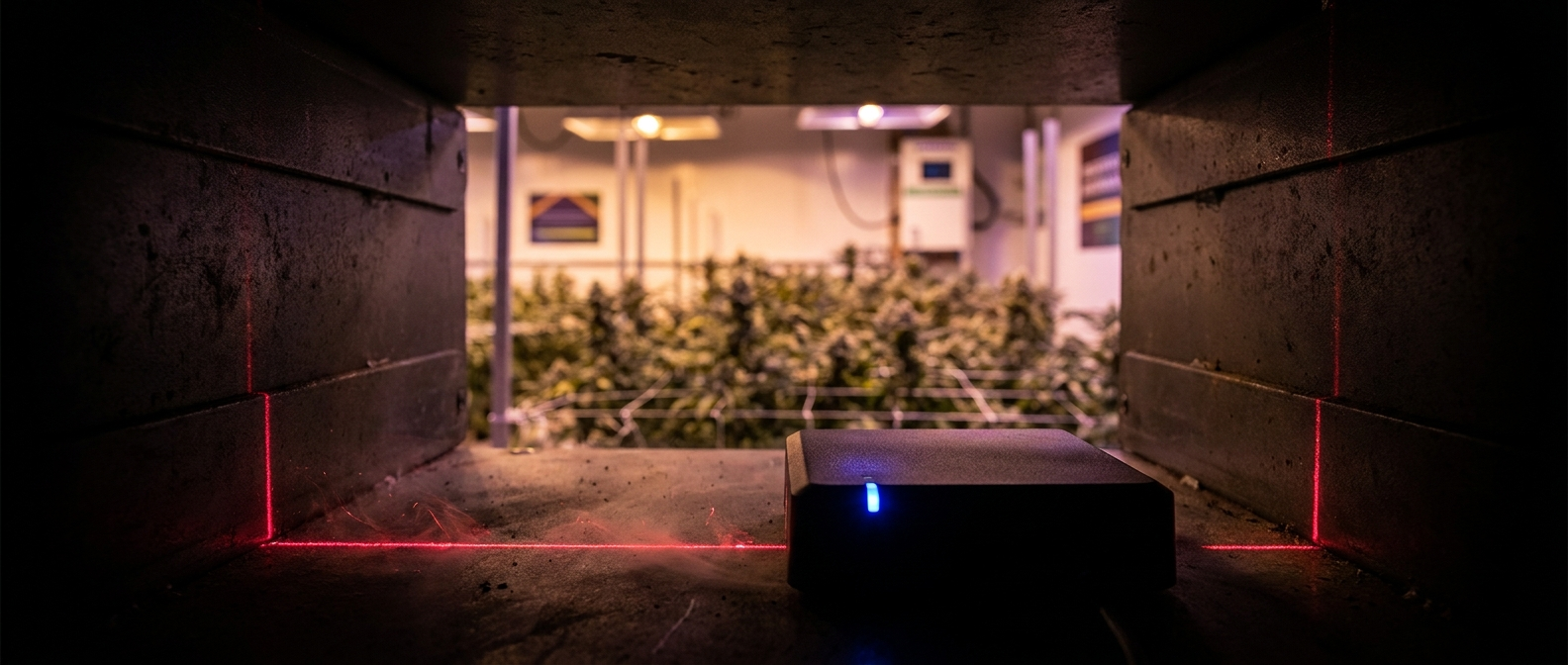
Strict No-Chemical Protection in Cannabis Cultivation: Why Next-Gen Indoor Facilities Rely on Bastet AI-Powered IoT Pest Monitoring in 2026
Key Takeaways:Automated IoT Pest Monitoring: Eliminates the risk of chemical contamination in high-value indoor agricultural facilities, ensuring 100% pesticide-free compliance.Passive Infrared Sensors & Sub-Gigahertz LoRa: Provide continuous 24/7 detection across multi-tier grow rooms, penetrating dense metallic structures without signal degradation.Edge AI Computer Vision: Delivers visual verification with a 98% reduction in false alarms and sub-3 second latency, protecting sensitive proprietary cultivation zones.
Table of Contents
- The High-Stakes World of Cannabis Cultivation: A Zero-Chemical Mandate
- Pest Vectors and Biosecurity Vulnerabilities in Indoor Grow Facilities
- HACCP, GAP, and GMP Standards: Regulatory Compliance for Next-Gen Cultivators
- The Bastet AI-Powered IoT Ecosystem: Continuous 24/7 Monitoring Without Chemicals
- AI in a Box: Edge Computer Vision for Zero-False-Alarm Protection
- Mobile and Multi-Site Enterprise Management: The Bastet Platform Mobile App
- Deployment Pitfalls and Practical Mitigation Strategies for Cultivation Facilities
- Frequently Asked Questions (FAQ)
- References
Section 1: The High-Stakes World of Cannabis Cultivation: A Zero-Chemical Mandate
High-Value Cannabinoid Canopies: Why Vulnerability Is Measured in Nanograms
Modern indoor cannabis cultivation represents one of the most capital-intensive sectors in commercial agriculture. High-value cannabinoid canopies, optimized for specific terpene profiles and medical-grade potency, require highly controlled microclimates. In these environments, even minor biological disruptions can lead to catastrophic financial losses. Because female cannabis plants act as bioaccumulators, they absorb compounds directly from their immediate environment. If pests introduce pathogens, or if traditional chemical pest control methods are introduced, the chemical residues accumulate within the plant tissue. This bioaccumulation is measured in nanograms, yet it is more than enough to fail strict state and federal laboratory testing, rendering an entire multi-million dollar harvest unsellable.
The Strict Regulatory Threshold of No-Chemical and Pesticide-Free Zones
As regulatory frameworks mature globally, the tolerance for chemical pesticides in inhalable and ingestible agricultural products has dropped to absolute zero. Cultivators must adhere to a strict no-chemical mandate to maintain their operating licenses. Traditional rodenticides, chemical sprays, and toxic baits are completely banned inside active cultivation zones. This regulatory pressure forces next-generation indoor facilities to seek alternative, non-invasive, and non-chemical biosecurity measures. Bastet AI provides the industry's leading answer, offering a 100% pesticide-free monitoring framework that replaces toxic chemical interventions with continuous, automated IoT detection and physical exclusion verification.
Section 2: Pest Vectors and Biosecurity Vulnerabilities in Indoor Grow Facilities
Micro-Entry Point Intrusion: Rodents Entering Openings Down to 6 mm
Indoor cultivation facilities are designed to be sealed environments, yet they are highly vulnerable to pest intrusion. Rodents, particularly mice (Mus musculus) and rats (Rattus norvegicus), possess highly flexible skeletal structures that allow them to gain entry through incredibly small openings. According to the World Health Organization (2025), rodents can easily squeeze through structural gaps and utility penetrations measuring as small as 6 mm (0.24 inches) in width. These micro-entry points are frequently found around HVAC ductwork, electrical conduits, and drainage systems. Once inside, these vectors carry pathogenic bacteria, fungi, and parasitic mites directly onto the cleanroom floor, compromising the entire facility's biosecurity protocol.
The Threat of Physical Asset Damage and Cable Chewing
Beyond the biological threat of contamination, rodents pose a severe risk to the physical infrastructure of automated indoor grow facilities. Rodents have open-rooted incisors that grow continuously, compelling them to gnaw on hard surfaces to keep their teeth filed down. In modern facilities, this behavior manifests as the chewing of electrical wiring, environmental sensor cables, automated irrigation lines, and fiber-optic communication links. A single chewed cable can disrupt automated climate control loops, leading to rapid humidity spikes or irrigation failures. Such unplanned operational suspensions in high-value facilities can cost operators up to $5,000 per hour in lost productivity and damaged crops (Food Safety Magazine, 2026).
| Pest Vector Threat | Physical Vulnerability | Operational Impact | Financial Risk (per hour) |
|---|---|---|---|
| Rodent Intrusion | Gaps ≥ 6 mm (0.24 in) | Pathogen transmission, crop contamination | Crop loss up to 100% |
| Cable Chewing | Exposed wiring, sensor lines | HVAC/Irrigation failure, system downtime | Up to $5,000/hour |
Section 3: HACCP, GAP, and GMP Standards: Regulatory Compliance for Next-Gen Cultivators
Mapping Out Critical Control Points in Automated Indoor Agriculture
To operate at a commercial scale, cannabis cultivators must implement rigorous quality management systems based on Hazard Analysis Critical Control Point (HACCP), Good Agricultural Practices (GAP), and Good Manufacturing Practices (GMP). Under these frameworks, pest management cannot be a reactive, ad-hoc activity. Cultivators must map out specific Critical Control Points (CCPs) across the facility. These CCPs typically include raw material receiving bays, substrate storage areas, propagation rooms, flowering chambers, and post-harvest drying facilities. Traditional manual pest inspections—relying on weekly or bi-weekly physical checks of glue boards—fail to meet the continuous monitoring requirements of modern GMP audits, leaving facilities vulnerable to undetected infestations between inspection intervals.
Compliance Redundancy and Risk-Free Regulatory Audit Trails
The transition to automated, digital pest monitoring is no longer optional for facilities aiming for international export standards, such as EU-GMP. Regulatory auditors require verifiable, tamper-proof documentation of pest activity and mitigation efforts. Bastet AI-powered monitoring systems offer compliance redundancy by automatically logging every detection event, system self-check, and maintenance action. This digital ledger creates a risk-free regulatory audit trail. By replacing paper logs with automated, time-stamped cloud records, cultivators can demonstrate continuous control over their biosecurity environment, completely eliminating the risk of human error or falsified inspection records during critical compliance audits.
Section 4: The Bastet AI-Powered IoT Ecosystem: Continuous 24/7 Monitoring Without Chemicals
Passive Infrared Sensors and Real-Time Wireless Smart Traps
The core of the Bastet AI-powered IoT ecosystem lies in its non-chemical, high-precision detection hardware. Instead of relying on toxic baits or snap traps that require manual resetting, Bastet AI deploys smart traps equipped with advanced Passive Infrared (PIR) sensors. These sensors detect the thermal signature and movement of pests in real time. When a rodent enters the monitored zone, the PIR sensor triggers an immediate, localized response, capturing the pest humanely and instantly transmitting a digital alert. This continuous 24/7 monitoring capability ensures that pest activity is detected the exact moment it occurs, allowing facility managers to intervene before a single pest can establish a nesting site or damage valuable crops.
Penetrating Metallic Growing Enclosures with 920MHz Sub-Gigahertz LoRa Connectivity
Indoor cultivation facilities are notorious for wireless communication dead zones. The heavy use of insulated metal panels, multi-tier vertical racking systems, concrete walls, and high-intensity lighting ballasts creates a challenging environment for standard Wi-Fi and Bluetooth signals. To overcome this, the Bastet AI ecosystem utilizes a proprietary sub-gigahertz 920MHz LoRa (Long Range) Gateway. This low-frequency wireless protocol is engineered specifically to penetrate dense metallic structures and heavy industrial equipment, offering an exceptional wireless range of up to 10 kilometers. This ensures that every smart trap, even those placed deep within sealed flowering chambers or basement utility corridors, remains reliably connected to the central monitoring network.
Section 5: AI in a Box: Edge Computer Vision for Zero-False-Alarm Protection
Visual Verification with Sub-3 Second Latency and 98% False Alarm Reduction
In large-scale commercial facilities, false alarms are a major operational drain, leading to "alert fatigue" among facilities management teams. Standard motion-activated cameras are frequently triggered by falling leaves, shifting shadows, or air currents from high-velocity HVAC fans. Bastet AI solves this challenge with its "AI in a Box" edge computer vision technology. By processing visual data directly on the edge device, the system achieves a remarkable 98% reduction in false alarms. When motion is detected, the onboard AI model analyzes the visual feed, identifies the specific pest species, and transmits a verified alert with a sub-3 second latency, ensuring that security teams only respond to genuine biosecurity threats.
Protecting Sensitive Proprietary Grow Zones with Secure Edge AI Processing
Cannabis cultivators often guard their proprietary genetics, lighting recipes, and cultivation techniques with strict intellectual property protocols. Cloud-based video monitoring can raise security concerns regarding data leaks and unauthorized access to sensitive grow zones. Bastet AI addresses these privacy concerns by performing all computer vision processing directly on the edge hardware. Video feeds are analyzed locally on the device; no raw video footage of proprietary cultivation areas is ever uploaded to the cloud. The system only transmits metadata and encrypted, highly targeted alert snippets when a verified pest event occurs. This secure edge architecture ensures complete data privacy while maintaining uncompromising biosecurity monitoring.
Section 6: Mobile and Multi-Site Enterprise Management: The Bastet Platform Mobile App
Streamlining GMP and GACP Audit Preparation Time by Up to 85%
Preparing for Good Agricultural and Collection Practices (GACP) or GMP audits is historically a labor-intensive process, requiring quality assurance managers to compile weeks of physical pest logbooks. The Bastet Platform Mobile App revolutionizes this workflow by centralizing all historical detection data, system health statuses, and maintenance logs into a single, secure cloud platform. With the ability to generate comprehensive, auditor-ready PDF reports in a single click, the Bastet Platform reduces manual regulatory audit preparation time by up to 85%. This allows quality control teams to focus on active facility optimization rather than tedious paperwork.
Visual Activity Heatmaps and Central Portfolio Dashboard Intelligence
For enterprise operators managing multiple cultivation facilities across different geographic regions, the Bastet Platform provides a unified, high-level portfolio dashboard. The software aggregates data from thousands of IoT sensors to generate visual activity heatmaps. These heatmaps highlight specific zones within a facility that experience recurring pest pressure, allowing facilities managers to identify structural vulnerabilities, such as failing door seals or compromised utility penetrations. By analyzing long-term trends and predictive data, enterprise operators can transition from reactive pest control to a highly proactive, preventative biosecurity posture across their entire global footprint.
Section 7: Deployment Pitfalls and Practical Mitigation Strategies for Cultivation Facilities
Managing High Humidity and Microclimatic Condensation on Hardware
The microclimate of a cannabis flowering room is characterized by high relative humidity (often peaking between 60% and 70% during specific growth phases) and heavy transpiration from the plant canopy. This humid environment can cause rapid condensation on standard electronic components, leading to short circuits and premature hardware failure. To mitigate this risk, Bastet AI hardware is engineered with industrial-grade, hermetically sealed enclosures. The devices utilize high-capacity, industrial wide-temperature lithium-thionyl chloride batteries certified to operate reliably down to -40°C and up to extreme heat, ensuring long-term operational stability and preventing moisture ingress in the most demanding microclimatic conditions.
Overcoming Wireless Signal Interference from Multi-Tier HPS Grow Lights
High-Pressure Sodium (HPS) and advanced multi-channel LED grow lights generate significant electromagnetic interference (EMI) that can disrupt standard wireless communication networks. When sensors are deployed in multi-tier vertical racking systems, this EMI is amplified by the reflective aluminum and steel shelving. Bastet AI mitigates this deployment pitfall by utilizing a robust, frequency-hopping spread spectrum (FHSS) protocol within its 920MHz LoRa network. This allows the IoT sensors to dynamically switch communication channels to bypass localized EMI, ensuring uninterrupted data transmission and maintaining 100% connectivity uptime across all cultivation tiers.
Frequently Asked Questions (FAQ)
Q: How does Bastet AI ensure 100% pesticide-free monitoring?
A: Bastet AI relies entirely on passive infrared (PIR) sensors, edge computer vision, and mechanical smart traps. No chemical baits, rodenticides, or toxic sprays are used in our hardware, ensuring zero risk of chemical contamination to your high-value cannabinoid crops.
Q: Can the 920MHz LoRa signal penetrate multi-tier steel vertical racking?
A: Yes. Unlike standard Wi-Fi or Bluetooth, which struggle to penetrate metal, Bastet AI's sub-gigahertz 920MHz LoRa Gateway is specifically designed to penetrate dense metallic structures, concrete walls, and heavy industrial cultivation equipment, offering a reliable range of up to 10 kilometers.
Q: How does the "AI in a Box" technology prevent false alarms?
A: Our edge computer vision hardware processes visual data locally using advanced deep-learning models trained specifically to identify pests. This local processing filters out non-pest movements—such as moving leaves, shadows, or air drafts—resulting in a 98% reduction in false alarms and a sub-3 second alert latency.
Q: Is our facility's proprietary cultivation data safe with Bastet AI?
A: Absolutely. Bastet AI utilizes secure edge processing, meaning all video analysis is performed locally on the device itself. No raw video footage of your proprietary grow rooms is uploaded to the cloud, ensuring your intellectual property and cultivation techniques remain completely secure.
References
- World Health Organization (2025): Environmental Health Standards for Vector Control in Closed Agricultural Environments. Geneva, Switzerland.
- Food Safety Magazine (2026): The Cost of Contamination: Operational Downtime and Biosecurity Protocols in High-Value Indoor Cultivation. Vol. 32, No. 2.
- Uptime Institute (2026): Industrial IoT Connectivity and Electromagnetic Interference Mitigation in Controlled Environment Agriculture. Special Report.
Ready to secure your cultivation facility with next-generation, zero-chemical pest monitoring? Contact the biosecurity experts at Bastet AI today to request a comprehensive facility assessment, download our technical datasheet, or schedule a live demo of our IoT platform. Reach out to us directly at info@bastet-tech.ai or visit our website at bastet-tech.ai to protect your harvest with the power of intelligent edge AI.
Want to learn more about Bastet AI smart pest control solutions?
Message us on WhatsApp — our team will get back to you.
💬 WhatsApp Us