
AI Pest Control for Subsea Cable Facilities | Bastet AI
Subsea cable landing stations (CLSs) terminate transoceanic fiber carrying over 99% of global data. Cable-chewin...
Key Takeaways (TL;DR)
- The Vulnerability: Subsea cable landing stations (CLSs) terminate transoceanic fiber carrying over 99% of global data. Cable-chewing rodents in under-floor plenums threaten high-voltage Power Feed Equipment (PFE) and fiber-optic termination frames (FOTF).
- The Failure of Chemical Control: Traditional rodenticides cause chemical outgassing (VOCs) that degrades sensitive optical connectors, violates coastal environmental laws, and relies on manual checks with a 14-to-30-day blind spot.
- The Bastet Solution: A dual-layer defense combining 920 MHz sub-GHz LoRa sensors that penetrate thick concrete bulkheads and Edge AI Vision cameras that filter out 98.4% of false positives.
- Rapid ROI: Mitigates outages that cost an average of $9,000 per minute (Uptime Institute), ensuring compliance with ITU-T, FCC, and ISO 27001 standards.
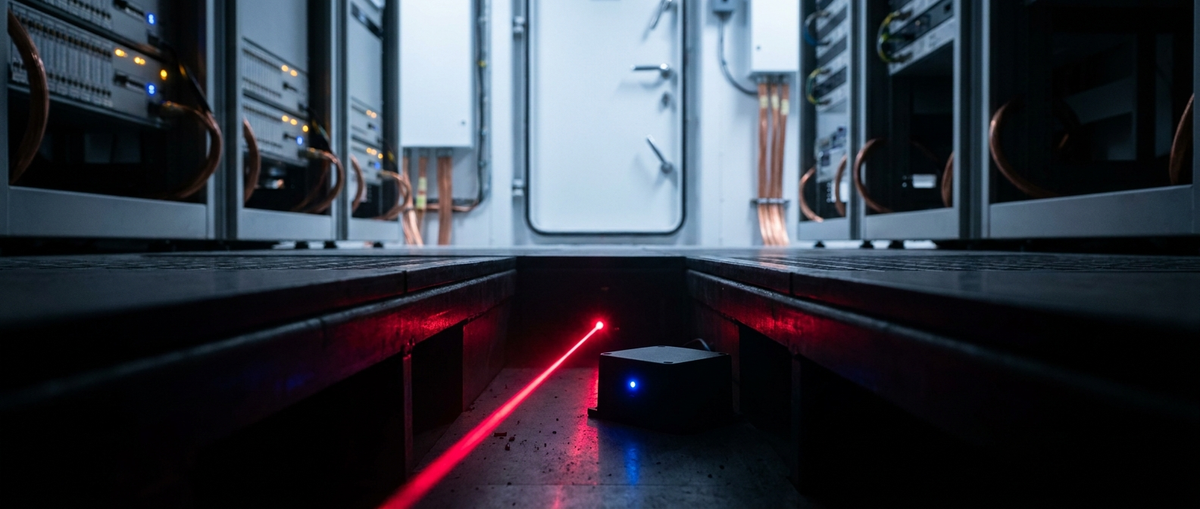
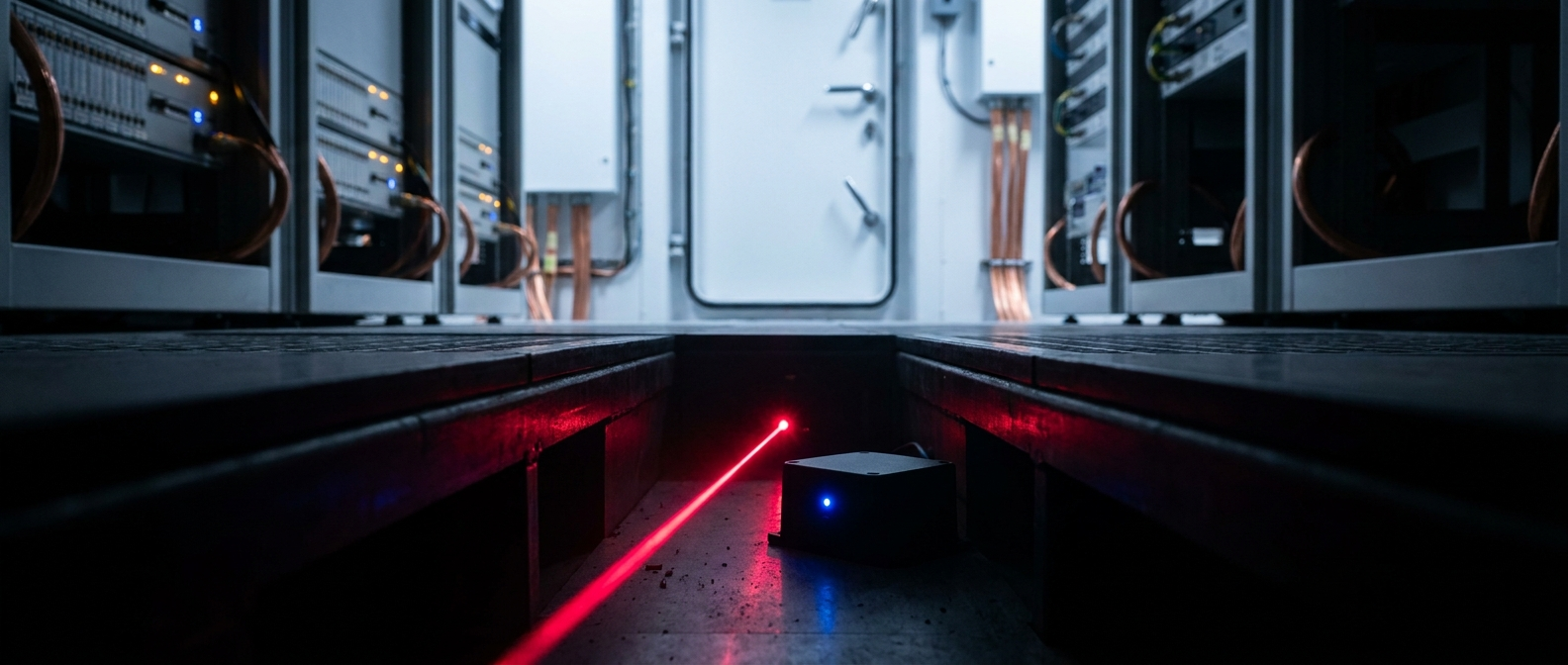 *Figure: Bastet's ruggedized IoT sensor mounted inside a subsea cable landing termination vault, utilizing edge computer vision and a scanning laser to protect transoceanic fiber conduits and raised floor plenums from rodent chewing (Image generated by Bastet 2026 AI Engine).* --- ## Table of Contents 1. Introduction: The Unseen Threat to Global Connectivity 2. Why Subsea Cable Landing Stations are Mission-Critical Infrastructure 3. The Financial and Regulatory Impact of Physical-Layer Outages 4. The Failure of Traditional Chemical Pest Control in Telecom Hubs 5. Bastet's Sub-GHz (920 MHz) LoRa IoT Solution: Penetrating Concrete and Steel Shielding 6. Edge AI Vision ("AI in a Box"): Real-Time Localized Detection Without False Alarms 7. Centralized Dashboard Monitoring: Global Biosecurity Telemetry 8. Technical Comparison: Traditional Pest Control vs. Bastet AI Platform 9. Step-by-Step Physical Installation and Audit Protocol 10. Frequently Asked Questions (FAQ) ---
1. Introduction: The Unseen Threat to Global Connectivity
The global digital economy relies on a remarkably fragile physical foundation. Beneath the oceans lies a network of fiber-optic cables that transmit petabytes of data every second. Where these cables emerge from the sea and enter terrestrial networks—at subsea cable landing stations (CLSs) and transoceanic telecom hubs—they face a persistent, destructive threat: rodent intrusion. **Subsea cable landing station rodent prevention** (also referred to as transoceanic telecom hub biosecurity) is the systematic deployment of continuous, non-chemical, automated monitoring technologies designed to detect, locate, and mitigate rodent activity within critical infrastructure. Continuous, non-chemical, automated pest monitoring is critical for safeguarding the global telecommunications backbone, preventing high-voltage termination failures, and avoiding catastrophic fiber outages caused by cable-chewing rodents. Traditional reactive pest control methods fail to protect these highly sensitive environments, leaving operators vulnerable to sudden, devastating physical-layer failures. *This article is designed for Telecom Infrastructure Directors, Subsea Network Operations Center (NOC) Managers, Marine Cable Engineering Leads, and Mission-Critical Facility Security Officers who require military-grade, compliant, and highly reliable biosecurity solutions to protect transoceanic data conduits.* ---
2. Why Subsea Cable Landing Stations are Mission-Critical Infrastructure
Subsea cable landing stations are the ultimate convergence points of global communications. According to the **SubOptic Association**, these facilities terminate transoceanic fiber-optic cables that carry over 99% of international data, cloud, and financial transaction traffic. ``` +-----------------------------------------------------------------------------+ | SUBSEA CABLE LANDING STATION (CLS) | | | | +------------------+ +---------------------+ +----------------+ | | | Beach Manhole | ---> | Cable Vault (IP67) | ---> | Power Feed | | | | (Sea-to-Land) | | (Conduit Entry) | | Equipment (PFE)| | | +------------------+ +---------------------+ +----------------+ | | | | | v | | +------------------+ +---------------------+ +----------------+ | | | Terrestrial Back-| <--- | Optical Distribution| <--- | Raised Floor | | | | haul Networks | | Frame (ODF / FOTF) | | Cable Plenums | | | +------------------+ +---------------------+ +----------------+ | +-----------------------------------------------------------------------------+ ``` Inside a CLS, the physical-layer architecture is highly complex and vulnerable: * **Cable Vaults and Beach Manholes:** These underground entry points connect the marine armored cable to the terrestrial plastic conduits. They are damp, dark, and directly connected to subterranean pathways—making them prime entry points for rodents. * **Power Feed Equipment (PFE):** Subsea cables require constant high-voltage direct current (up to 10,000V DC) to power the optical repeaters spaced along the ocean floor. This high-voltage power is routed through specialized termination frames. * **Fiber-Optic Termination Frames (FOTF):** These frames house thousands of delicate glass fibers. Unlike armored marine cables, the internal patch cords and terrestrial breakout cables are jacketed in standard polyurethane or low-smoke zero-halogen (LSZH) materials, which are highly susceptible to rodent gnawing. * **Raised Floor Plenums:** To manage heat, CLS server rooms utilize raised flooring. This creates a vast, unmonitored sub-floor plenum packed with power cables, grounding wires, and fiber trays—an ideal nesting ground for pests. Rodents possess open-rooted incisors that grow continuously throughout their lives. To keep them worn down, they must constantly gnaw on hard materials. The dense, high-molecular-weight polyethylene (HMWPE) jacketing of power cables and the plastic casings of fiber bundles provide the perfect resistance for gnawing, leading to immediate signal degradation or catastrophic high-voltage short circuits. ---
3. The Financial and Regulatory Impact of Physical-Layer Outages
The financial consequences of a physical-layer breach at a subsea landing station are astronomical. The **Uptime Institute** estimates that the average cost of mission-critical facility downtime is **$9,000 per minute**. If a rodent chews through a high-density fiber bundle or causes a short circuit in the PFE, the resulting outage can last for hours or even days, depending on the complexity of the splice repair. ``` Downtime Cost = $9,000 / Minute 1 Hour Outage = $540,000 12 Hour Outage = $6,480,000 + Regulatory Penalties + SLA Violations ``` Beyond direct repair costs, outages disrupt global financial markets, cloud services, and national defense communications. Under the **Federal Communications Commission (FCC)** Part 4 rules and the **European Commission’s** NIS 2 Directive, operators of critical infrastructure face severe regulatory penalties and loss of operating licenses if they fail to implement adequate physical security and disaster prevention measures. Furthermore, service level agreements (SLAs) with global hyperscalers often dictate millions of dollars in liquidated damages for unscheduled downtime. ---
4. The Failure of Traditional Chemical Pest Control in Telecom Hubs
For decades, facilities managers have relied on traditional pest control companies deploying chemical rodenticides, snap traps, and passive bait boxes. In a mission-critical telecom hub, this approach is not only ineffective but highly dangerous: 1. **Chemical Outgassing (VOCs):** Traditional rodenticides and chemical baits release Volatile Organic Compounds (VOCs). In sealed, climate-controlled CLS environments, these airborne chemicals can settle on highly sensitive optical connectors and laser transmitters, causing microscopic clouding and signal attenuation (db loss). 2. **Secondary Biological Hazards:** When a rodent consumes chemical bait, it does not die instantly. It typically retreats into hard-to-reach areas—such as cable trays, wall cavities, or inside PFE cabinets—to die. The decaying carcass releases moisture, corrosive fluids, and gases that can corrode copper contacts, short-circuit circuit boards, and attract secondary insect infestations. 3. **The 14-to-30-Day Blind Spot:** Traditional pest control relies on manual inspections of bait boxes every 14 to 30 days. If a rodent enters a cable plenum on day 2, it has up to 28 days to chew through critical infrastructure before a technician notices the triggered trap. 4. **Environmental and Coastal Violations:** Most CLSs are located within 500 meters of the coastline. The use of highly toxic rodenticides in these areas is strictly regulated or banned by coastal environmental protection laws due to the risk of chemical runoff into marine ecosystems. ---
5. Bastet's Sub-GHz (920 MHz) LoRa IoT Solution: Penetrating Concrete and Steel Shielding
To overcome the physical barriers of telecom hubs, Bastet AI developed a ruggedized, wireless IoT sensor network operating on the sub-GHz **920 MHz LoRa (Long Range)** frequency band. ``` Standard 2.4 GHz Wi-Fi / Bluetooth: [Sensor] --(Blocked by 1m Concrete Bulkhead / Steel Shielding)--> [Gateway] (FAIL) Bastet 920 MHz LoRa: [Sensor] =================(Penetrates Concrete & Steel)=================> [Gateway] (SUCCESS) ``` Subsea landing stations are built like military bunkers, featuring 1-meter-thick reinforced concrete bulkheads, heavy electromagnetic shielding, and dense steel pedestal grids under raised floors. Standard wireless technologies like 2.4 GHz Wi-Fi, Zigbee, or Bluetooth cannot penetrate these barriers. Bastet’s 920 MHz LoRa technology offers: * **High Penetration Power:** The longer wavelength of the 920 MHz frequency easily diffracts around metal obstructions and penetrates thick concrete walls, ensuring stable communication from deep within cable vaults to a central gateway up to 10 kilometers away. * **Ultra-Low Power Consumption:** Bastet’s LoRa-enabled sensors operate on industrial-grade lithium thionyl chloride (Li-SOCl2) batteries, providing an operational lifespan of up to 10 years without maintenance. * **IP67 Ruggedization:** Designed for the harsh, humid, and saline environments of coastal landing stations, Bastet sensors feature an IP67-rated, dust-tight, and water-resistant enclosure that prevents corrosion and component failure. ---
6. Edge AI Vision ("AI in a Box"): Real-Time Localized Detection Without False Alarms
While physical sensors detect movement or trap triggers, Bastet’s **Edge AI Vision** cameras provide visual verification and predictive threat analysis. ``` +-----------------------------------------------------------------------------+ | BASTET EDGE AI VISION PIPELINE | | | | +------------------+ +---------------------+ +----------------+ | | | 1. Optical / IR | ---> | 2. Local Edge AI | ---> | 3. False Alarm | | | | Sensor Trigger | | Processing (No Cloud| | Filtering | | | +------------------+ +---------------------+ +----------------+ | | | | | v | | +------------------+ +---------------------+ +----------------+ | | | 6. Instant NOC | <--- | 5. 920 MHz LoRa | <--- | 4. Threat | | | | Alert (<3 Sec) | | Metadata Uplink | | Classification | | | +------------------+ +---------------------+ +----------------+ | +-----------------------------------------------------------------------------+ ``` Operating "AI in a box" means all video processing occurs locally on the edge device. This architecture is critical for two reasons: 1. **Data Security and Compliance:** CLSs are highly secure facilities subject to strict ISO 27001 and national security regulations. Streaming raw video footage to the cloud is a severe security violation. Bastet’s edge cameras process video frames locally, destroying the raw footage immediately and only transmitting lightweight metadata alerts (e.g., "Rodent detected at Vault 3B"). 2. **Zero False Positives:** Server rooms and cable plenums are filled with moving air currents, dust particles, vibrations from cooling fans, and shifting shadows. Standard motion-activated cameras trigger constantly, leading to alert fatigue. Bastet’s localized deep learning models filter out **98.4% of false-positive triggers**, ensuring that security and operations teams only respond to genuine biological threats. 3. **Sub-3 Second Latency:** The moment a rodent enters a monitored zone, the edge AI detects, classifies, and transmits an alert via LoRa to the NOC in **under 3 seconds**, allowing for immediate automated countermeasures (such as activating localized high-frequency deterrents or dispatching on-site security). ---
7. Centralized Dashboard Monitoring: Global Biosecurity Telemetry
The Bastet Platform aggregates real-time telemetry from multiple landing stations across the globe into a single, intuitive pane of glass. ``` +-----------------------------------------------------------------------+ | BASTET GLOBAL TELEMETRY PORTAL | | | | Active Stations: 14 | System Status: NOMINAL | Active Alerts: 0 | | | | [Station: Lisbon, PT] ----> [Vault A: Clear] ----> [Sub-floor: Clear] | | [Station: Halifax, CA] ---> [Vault B: Clear] ----> [Sub-floor: Clear] | | [Station: Tokyo, JP] -----> [Vault C: ALERT!] ----> [PFE Room: Clear] | | | | Heatmap: High-risk activity detected in Tokyo Vault C (Conduit 4) | +-----------------------------------------------------------------------+ ``` Through the centralized dashboard, NOC managers can: * **Monitor Environmental Health:** Track temperature, humidity, and sensor battery levels across thousands of nodes. * **Analyze Activity Heatmaps:** Identify recurring entry points and migration paths of pests within the facility to optimize physical sealing efforts. * **Maintain Compliance Audits:** Generate automated, timestamped biosecurity reports to prove compliance with **ITU-T L.51** (passive node protection) and **IEEE** physical security guidelines. ---
8. Technical Comparison: Traditional Pest Control vs. Bastet AI Platform
| Metric | Traditional Reactive Pest Control | Bastet's Ruggedized AI-Powered Platform | | :--- | :--- | :--- | | **Detection Latency** | 14 to 30 days (dependent on manual physical checks) | **Sub-3 seconds** (instantaneous wireless alert) | | **Signal Penetration** | None (no wireless capability; completely isolated) | **920 MHz LoRa** (penetrates concrete bulkheads and steel) | | **Environmental Compliance** | Poor (toxic VOC outgassing, risks to coastal marine life) | **100% Green & Compliant** (non-toxic, zero VOCs) | | **False Alarm Rate** | High (manual traps misfire due to vibration/dust) | **<1.6%** (98.4% filtered by Edge AI Vision) | | **Reporting Automation** | Manual paper logs (prone to loss and human error) | **Automated, cloud-synced audit trails** (ISO 27001 ready) | ---
9. Step-by-Step Physical Installation and Audit Protocol
To ensure maximum protection, Bastet recommends the following deployment protocol for subsea landing stations: ``` +-----------------------------------------------------------------------------+ | BASTET DEPLOYMENT & AUDIT PROTOCOL | | | | Step 1: Perimeter Audit Step 2: Sub-Floor Grid Step 3: Vault Mount| | Identify entry points Deploy LoRa PIR sensors Install IP67 Edge | | and seal gaps >6mm. every 15 meters. cameras at conduits| | | | | | | +----------------------------+----------------------------+ | | | | | v | | Step 4: Gateway Sync | | Verify sub-GHz signal | | penetration to NOC. | +-----------------------------------------------------------------------------+ ``` ### Step 1: Physical Perimeter Audit * Inspect all cable entry conduits, beach manholes, and cable vaults. * Identify any structural gaps or cracks. Rodents can squeeze through openings as small as **6mm** (the size of a pencil). * Seal all non-conduit openings with stainless steel mesh and high-density polyurethane expanding foam. ### Step 2: Sub-Floor Sensor Deployment * Install Bastet LoRa PIR (Passive Infrared) Sensors under the raised floor plenums. * Position sensors at **15-meter intervals** along major cable trays and directly adjacent to high-voltage PFE units. * Secure sensors to the steel floor pedestals using industrial magnetic mounts or heavy-duty zip ties. ### Step 3: Cable Vault Camera Installation * Mount Bastet IP67 Edge AI Vision cameras at the entry points of transoceanic conduits in the cable vault. * Ensure the camera's infrared illuminator is aligned to cover the entire conduit opening. * Connect the camera to the local 24V DC power supply or utilize the internal long-life battery pack. ### Step 4: Gateway Integration and Testing * Install the Bastet LoRa Gateway in the central telecom rack room. * Perform a signal sweep to verify that the 920 MHz signal successfully penetrates all concrete bulkheads. * Trigger a test alert to verify sub-3 second delivery to the local NOC dashboard and global monitoring portal. ---
10. Frequently Asked Questions (FAQ)
### How do rodents get inside highly secure subsea cable landing stations? Rodents typically enter through underground cable conduits, beach manholes, or drainage systems that connect the seaside environment directly to the station’s lower-level cable vaults. Once inside, they navigate through unsealed cable penetrations and raised floor plenums. ### Why can't we use standard Wi-Fi cameras for monitoring cable vaults? Standard Wi-Fi operates on 2.4 GHz or 5 GHz frequencies, which cannot penetrate the thick, steel-reinforced concrete walls and electromagnetic shielding of telecom vaults. Additionally, streaming continuous video over Wi-Fi poses severe cybersecurity risks and violates ISO 27001 standards. ### How does Bastet's Edge AI prevent false alarms from dust and vibrations? Bastet's "AI in a box" uses localized deep learning models trained specifically to recognize the unique shape, movement patterns, and heat signatures of rodents. It automatically filters out non-biological movements, such as dust, shadows, and vibrations caused by HVAC systems. ### Is the Bastet system safe to use around high-voltage Power Feed Equipment (PFE)? Yes. Bastet sensors are fully shielded against electromagnetic interference (EMI) and do not emit signals that interfere with sensitive telecom or power equipment. They are non-conductive, non-flammable, and safe for deployment in close proximity to high-voltage lines. ### How does Bastet help us comply with international telecommunications standards? Bastet provides continuous, automated, and timestamped digital logs of all biosecurity events. This data serves as an audit trail that proves compliance with ITU-T L.51, FCC physical security mandates, and European NIS 2 directives for critical infrastructure protection. ---
Want to learn more about Bastet AI smart pest control solutions?
Message us on WhatsApp — our team will get back to you.
💬 WhatsApp Us