AI Pest Monitoring for Data Centers | Bastet AI
Mission-Critical Infrastructure Risk: In modern hyperscale and colocation data centers, unplanned downtime costs an average of $9,000 per minute ($540

Key Takeaways
- Mission-Critical Infrastructure Risk: In modern hyperscale and colocation data centers, unplanned downtime costs an average of $9,000 per minute ($540,000 per hour) according to the Uptime Institute. Rodents gnawing on optical fiber, high-voltage busways, and sensor conduits represent an under-reported yet catastrophic physical-layer vulnerability.
- The Cable-Chewing Mechanism: Rodent incisors grow 10 to 14 cm per year, requiring continuous gnawing on dense materials. Modern low-smoke zero-halogen (LSZH) cable jackets contain organic plasticizers that chemically attract rats and mice into underfloor plenums and cable raceways.
- Sub-GHz 920MHz Wireless Superiority: High-density server halls act as electromagnetic Faraday cages where 2.4 GHz Wi-Fi and Bluetooth suffer catastrophic signal attenuation and RF interference. Bastet's sub-GHz 920MHz LoRa sensors penetrate heavy steel cabinets, concrete partitions, and raised access floors across distances up to 10 kilometers without tapping into IT network switches.
- Edge Computer Vision at Ingress Points: Bastet Sensing Cameras powered by AI in a Box provide real-time perimeter defense at loading docks and utility penetrations. Localized edge inference delivers 98% false-alarm filtering against flashing server LEDs, hot aisle heat shimmer, and human engineers, broadcasting verified alerts in sub-3 second latency.
- Zero-Chemical Compliance & SLA Defense: Toxic rodenticide baits are strictly incompatible with data center airflow standards due to the risk of rodent carcass decomposition inside recirculating HVAC systems. Bastet delivers 100% non-chemical, 24/7 digital monitoring, safeguarding Tier III and Tier IV uptime SLAs and reducing audit documentation labor by 85%.
Table of Contents
- 1. The Physical-Layer Blind Spot: Data Center Downtime & Rodent Hazards
- 2. Anatomy of the Vulnerability: Raised Floors, Cable Trays, and Airflow Plenums
- 3. Why Legacy Pest Control Fails in Tier III & Tier IV Environments
- 4. RF Physics in the Server Hall: Why Sub-GHz LoRa Outperforms Wi-Fi
- 5. Edge AI Computer Vision: Precision Ingress Defense with AI in a Box
- 6. Technology Comparison: Traditional PCO vs. Bastet AI IoT Solution
- 7. Engineering Blueprint: Multi-Zone Data Center Deployment Architecture
- 8. Financial Model & Hidden ROI: Calculating the Uptime Business Case
- 9. Frequently Asked Questions (FAQ)
- 10. Authoritative References & Technical Standards
1. The Physical-Layer Blind Spot: Data Center Downtime & Rodent Hazards
Modern hyperscale, colocation, and enterprise edge data centers are marvels of redundant engineering. Facilities invest hundreds of millions of dollars into N+1 and 2N redundant electrical switchgear, uninterruptible power supply (UPS) battery topologies, dual-fed diesel backup generators, and micro-zoned fire suppression systems. Network engineers design automated BGP failover protocols, redundant multi-carrier fiber entrances, and sophisticated zero-trust cybersecurity firewalls. Yet, behind this formidable defensive perimeter lies a vulnerable physical blind spot: biological pest incursions.
According to the Uptime Institute 2025 Annual Outage Analysis, unplanned data center downtime carries an average financial penalty exceeding $9,000 per minute, with severe Tier III and Tier IV facility outages routinely escalating beyond $1.5 million in direct remediation expenses, customer service level agreement (SLA) penalty payouts, and brand degradation. While power distribution and cooling system failures receive primary operational attention, physical-layer cable damage caused by rodents represents a persistent, severe threat that traditional monitoring infrastructure cannot see.
The threat is far from theoretical. In high-density metropolitan telecommunications and data center hubs, physical cable severed by rodents has repeatedly caused catastrophic network blackouts. A widely reported incident in the United Kingdom involved network provider G.Network, where thousands of fiber optic customer connections were simultaneously severed when Norway rats chewed through fiber trunk cabling in subterranean utility ducts, delaying major corporate infrastructure rollouts. Similar incidents across global financial hubs have triggered emergency failovers when rodents entered electrical busducts, causing explosive short circuits and phase-to-ground faults that tripped main electrical breakers.
The biological driver behind this destructive behavior is rooted in rodent physiology. Rodents, including the brown rat (Rattus norvegicus), black roof rat (Rattus rattus), and house mouse (Mus musculus), possess open-rooted incisors that grow continuously at an astounding rate of 10 to 14 centimeters per year. To prevent their teeth from overgrowing and piercing their own skulls, rodents must perpetually gnaw on dense, durable materials. Electrical cabling, fiber optic patch cords, plastic conduit, and rubber weather seals provide the exact mechanical resistance rodents require to hone their teeth. Furthermore, the synthetic plasticizers, soybean-based bio-resins, and vulcanized rubber compounds utilized in modern low-smoke zero-halogen (LSZH) cabling emit subtle chemical odors that rodents actively perceive as nesting or food-foraging material.
2. Anatomy of the Vulnerability: Raised Floors, Cable Trays, and Airflow Plenums
To construct a robust defense against rodent intrusion, facility directors, data center operations managers, and mechanical/electrical/plumbing (MEP) engineers must examine the specific physical pathways rodents exploit within modern mission-critical facilities. A standard data center offers multiple interconnected zones that provide ideal thermal conditions, concealment, and travel corridors for pests:
Raised Access Floor Plenums
In facilities utilizing raised access flooring, the 30 cm to 90 cm underfloor cavity acts as both a pressurized cold-air distribution plenum and an intricate conduit raceway for high-voltage power feeds, grounding copper grids, and structured network cabling. Once a rodent breaches the exterior building envelope through a utility conduit or loading dock threshold as narrow as 6 millimeters (1/4 inch), the underfloor plenum provides a dark, climate-controlled, predator-free sanctuary.
Because pressurized cold air constantly circulates through floor grates, rodents nesting under raised tiles remain completely hidden from visual sight. As they move across floor pedestals and cable trays, they gnaw through PVC jacketed cables, stripping insulation down to bare copper and glass fibers. The resulting damage ranges from intermittent packet loss and optical signal degradation to catastrophic short circuits that ignite electrical fires beneath active server racks.
Overhead Cable Raceways and Fiber Baskets
In modern slab-floor data center designs where cooling is managed via hot/cold aisle containment and cabling is routed overhead, rodents utilize high-level steel structural trusses, seismic bracing, and suspended wire-mesh cable baskets as elevated superhighways. Roof rats (Rattus rattus), renowned for their agile climbing capabilities, enter through roof penetrations, exhaust louvers, or lightning protection grounding risers. From these overhead vantage points, rodents traverse the length of entire server halls, gnawing on overhead multi-strand MPO/MTP fiber optic trunks that connect core aggregation switches to leaf/spine architectures.
Meet-Me Rooms (MMR) and Carrier Trench Vaults
The Meet-Me Room (MMR) represents the critical interconnection point where external telecommunications carriers terminate dark fiber into the facility. External fiber cables enter through subterranean concrete utility vaults and underground conduit ducts. These underground conduits frequently connect directly to municipal sewer systems, street telecommunications manholes, and drainage networks—the natural habitat of urban rat populations. If conduit duct seals, mechanical transit frames, or expanding foam water-stops deteriorate or were improperly installed during initial construction, rodents exploit these subterranean highways to penetrate directly into the facility's most sensitive carrier cross-connects.
Generator Enclosures, Switchgear, and Battery Storage Rooms
Backup power infrastructure located adjacent to the main building—such as outdoor diesel generator enclosures, step-down transformer pads, and lithium-ion or VRLA battery rooms—provides intense localized heat sources. Rodents enter generator acoustic housings to nest in thermal insulation jackets surrounding exhaust manifolds and turbochargers. They chew through engine starter motor wiring, coolant level sensors, and automated transfer switch (ATS) control circuits. During a sudden utility grid drop, a generator with a chewed sensing wire will fail to auto-start, converting a routine power dip into a catastrophic facility blackout.
3. Why Legacy Pest Control Fails in Tier III & Tier IV Environments
Despite the immense financial stakes, the majority of data centers continue to manage pest risks using legacy pest control operator (PCO) methodologies that were designed for suburban commercial offices and retail stores. In a mission-critical Tier III or Tier IV data center environment, traditional pest control suffers from three fatal systemic flaws:
The Intermittent Inspection Blind Spot (The 14- to 30-Day Lag)
Standard commercial pest management contracts rely on periodic site visits conducted once or twice a month. A pest control technician walks through accessible corridors, visually inspects a handful of mechanical snap traps or glue boards placed along perimeter walls, and signs a paper logbook. If a pregnant female Norway rat penetrates an underfloor cable plenum 48 hours after the technician departs, an entire infestation can establish itself over the subsequent 28 days.
During this four-week blind spot, a single pair of rodents can gnaw through dozens of fiber optic patch cords, contaminate underfloor air supplies, and produce a new generation of offspring. Relying on intermittent monthly checks to protect an infrastructure facility operating on 99.982% to 99.995% uptime availability (the standard for Tier III and Tier IV certifications) represents an unacceptable operational mismatch.
The Catastrophic Liability of Toxic Chemical Rodenticides
In traditional warehousing, pest control contractors frequently deploy second-generation anticoagulant rodenticides (SGARs). In a data center, however, broadcast chemical poisoning is an extreme operational hazard. When a poisoned rodent ingests a lethal dose of anticoagulant bait, it does not die immediately. It retreats into dark, warm, inaccessible cavities—most frequently under raised floor tiles or inside electrical switchgear cabinets—where it dies over the course of several days.
As the carcass decomposes inside the high-velocity airflow stream of computer room air handler (CRAH) units, it releases volatile organic decomposition gases, bio-aerosols, and foul odors that circulate throughout the server hall and office zones. Technicians must conduct invasive, emergency tile-pulling searches across thousands of square meters to locate the decomposing body. Even more dangerously, dying rodents experiencing internal hemorrhaging seek water and warmth, frequently crawling onto live high-voltage busbars or transformer terminals, where their conductive carcasses cause explosive phase-to-phase electrical faults.
Strict Security Protocols and Access Impediments
Tier III and Tier IV facilities adhere to rigorous physical security mandates under ISO/IEC 27001, SOC 2 Type II, and PCI-DSS standards. External contractors cannot move freely through white-space server rooms. Every PCO technician visit requires advance security clearance, background validation, physical security escorting by data center operations staff, and strict badge access logging. As a consequence, third-party technicians rarely inspect underfloor plenums, hot aisle containment zones, or high-security cage perimeters thoroughly. The operational friction of escorting external personnel leads to rushed, superficial inspections that leave critical cable runs unmonitored.
4. RF Physics in the Server Hall: Why Sub-GHz LoRa Outperforms Wi-Fi
To eliminate manual inspection latency, forward-thinking facility directors are transitioning to continuous automated IoT surveillance. However, deploying wireless IoT sensors inside a data center white space presents formidable radio frequency (RF) engineering challenges. Data centers are hostile electromagnetic environments engineered with dense steel server cabinets, copper busways, perforated steel mesh doors, and massive electromagnetic interference (EMI) generated by switching power supplies and high-voltage power distribution units (PDUs).
The Faraday Cage Effect and Severe High-Frequency Attenuation
Standard consumer and commercial wireless protocols operate in the 2.4 GHz and 5 GHz frequency bands, including commercial Wi-Fi, Zigbee, and Bluetooth Low Energy (BLE). At 2.4 GHz, the short electromagnetic wavelength (approximately 12.5 cm) is severely attenuated by metallic structures. When high-frequency radio waves encounter solid steel server enclosures, raised floor steel pedestal grids, and grounded metallic cable trays, the signal experiences massive reflection, multi-path cancellation, and absorption.
Attempting to connect underfloor trap sensors or cameras via standard 2.4 GHz Wi-Fi results in persistent packet drops, dead zones, and battery exhaustion as transceivers repeatedly boost transmission power to overcome RF resistance. Furthermore, facility cybersecurity teams strictly prohibit non-critical IoT devices from associating with enterprise Wi-Fi networks due to strict network segregation policies and zero-trust vulnerability mandates.
Sub-GHz 920MHz LoRa: Diffraction, Penetration, and Range
Bastet AI overcomes these electromagnetic physical barriers by building its wireless IoT ecosystem upon sub-gigahertz LoRa (Long Range) modulation operating at 920MHz (and regional sub-GHz ISM bands). Sub-GHz electromagnetic waves possess an expansive wavelength (approximately 32.6 cm), providing exceptional physical diffraction capabilities around steel server racks and structural concrete pillars.
The long wavelength enables Bastet LoRa radio signals to penetrate effortlessly through heavy galvanized steel raised access floor tiles, metallic hot aisle containment enclosures, and reinforced concrete vault walls. In empirical enterprise deployments, a single Bastet LoRa Gateway positioned in an overhead cable ladder or central facility utility room provides complete multi-floor coverage across spaces exceeding 10 kilometers in line-of-sight and penetrating up to four subterranean levels. Crucially, Bastet's LoRa network operates on a completely isolated, proprietary sub-GHz RF spectrum, requiring zero connection to the data center's internal IP production network, thereby preserving absolute IT cybersecurity air-gapping.
Ultra-Low-Power Battery Chemistry in High-Velocity Airflow
Underfloor air distribution plenums in data centers maintain constant air velocities between 1.5 to 2.5 meters per second with temperatures regulated around 18°C to 22°C. While ambient temperatures are stable, replacing batteries on hundreds of underfloor sensors every few months would introduce unacceptable labor costs and operational disruption.
Bastet IoT sensors (including the Bastet LoRa Trap Sensor and Bastet LoRa PIR Sensor) are powered by industrial-grade lithium-thionyl chloride (Li-SOCl2) battery cells. Combined with Bastet's specialized ultra-low-power sleep firmware—which maintains hardware in a microampere quiescent sleep state until triggered by a millisecond mechanical or infrared tripwire—Bastet sensors achieve verified continuous operational lifespans of 3 to 5 years on a single battery cell. Operations teams deploy the sensors and receive automated battery telemetry without needing to pull floor tiles for years.
5. Edge AI Computer Vision: Precision Ingress Defense with AI in a Box
While physical trap sensors provide essential capture verification, true mission-critical defense requires intercepting rodents at the facility perimeter before they ever reach the white-space server halls. To achieve proactive perimeter interception, Bastet integrates optical edge artificial intelligence via AI in a Box coupled with high-resolution Bastet Sensing Cameras.
Filtering Environmental False Alarms in Industrial Spaces
Deploying standard optical motion-detection cameras in data center environments produces an overwhelming volume of false alarms. High-velocity air currents from CRAH units cause plastic cable tags and cable ties to vibrate. Server rack status LEDs flash continuously in green, blue, and amber hues. In hot aisle containment zones, thermal heat shimmer distorts optical pixels. Routine maintenance personnel and security guards walking aisles trigger continuous passive infrared (PIR) trips. In traditional security camera installations, this constant noise creates alarm fatigue, causing security operations center (SOC) personnel to ignore alerts.
Bastet's "AI in a Box" solves this dilemma by deploying deep neural networks trained specifically on hundreds of thousands of rodent locomotion, contour, and kinematic signatures. The edge computer vision engine ignores flashing LEDs, vibrating cables, moving shadows, and human technicians. It activates only when an object exhibiting the specific morphological characteristics and movement patterns of a rat or mouse is detected. Bastet achieves a verified 98% false-alarm filtering efficiency, ensuring that facility engineers only respond to real, verified biological threats.
Sub-3 Second Alert Latency via Localized Edge Inference
Cloud-dependent smart cameras introduce two major liabilities for data centers: latency and data privacy. Streaming continuous video to third-party commercial cloud servers introduces latency delays ranging from 30 seconds to several minutes, during which an agile rodent can dart from a loading dock door directly into an underfloor cable riser. Furthermore, streaming live video feeds of sensitive data center corridors, customer cages, and equipment configurations directly violates ISO 27001, SOC 2, and customer non-disclosure agreements regarding physical surveillance.
Bastet's "AI in a Box" executes 100% of its neural inference locally on dedicated on-premise hardware. No video streams or raw footage ever leave the physical facility boundary. When a rodent darts across an ingress threshold, the edge processor detects, classifies, and verifies the specimen in real time, transmitting an encrypted alert payload to the Bastet Platform Mobile App and facility monitoring console in sub-3 seconds. Maintenance technicians receive the exact timestamp, room location, and visual confirmation snippet instantly on their mobile devices, enabling immediate interception.
6. Technology Comparison: Traditional PCO vs. Bastet AI IoT Solution
The operational and technical differences between conventional commercial pest control contracts and Bastet's intelligent AI IoT ecosystem demonstrate why leading mission-critical facilities are modernizing their infrastructure:
| Evaluation Dimension | Traditional Pest Control (PCO) | Bastet AI Smart IoT Platform |
|---|---|---|
| Monitoring Frequency | Intermittent (once every 14 to 30 days) | Continuous (24/7 real-time autonomous telemetry) |
| Alert Latency | Up to 720 hours (delayed monthly report) | Sub-3 seconds (<3s instant edge push alert) |
| Detection Mechanism | Passive snap traps, toxic chemical poison baits | LoRa digital trap sensors + AI edge computer vision |
| Wireless Architecture | None (pure manual clipboard inspections) | Sub-GHz 920MHz LoRa (10km range, zero IT cabling) |
| False Alarm Rejection | N/A (manual checking only) | 98% filtering rate via edge neural networks |
| Chemical Safety | High hazard (decomposing carcasses in HVAC) | 100% non-chemical (zero toxin liability) |
| Security Clearance Burden | Heavy (constant escorting of external staff) | Zero ongoing escorting (automated wireless reporting) |
| Audit Compliance Prep | Manual paper binders (15 to 25 hours per audit) | Automated digital export (reduces prep by 85%) |
7. Engineering Blueprint: Multi-Zone Data Center Deployment Architecture
Deploying Bastet AI across a mission-critical facility follows a defense-in-depth engineering methodology categorized into four distinct containment zones:
Zone 1: External Loading Bays & Waste Management Areas
The primary point of rodent ingress in any enterprise facility is the loading dock and waste compactor zone. Equipment deliveries arriving in wooden pallets, cardboard packing cartons, and shipping containers frequently transport hitchhiking rodents directly into the building.
- Sensor Hardware: Deploy Bastet Sensing Cameras running "AI in a Box" overlooking dock levelers, rollup bay doors, and compactor staging pads.
- Deployment Rules: Position optical sensors at a 45-degree angle pointing downward across dock door sills, calibrated to monitor a 15-meter horizontal threshold. Install IP67-rated Bastet LoRa PIR Sensors along exterior perimeter wall cavities.
- Operational Workflow: Any rodent crossing the loading dock threshold triggers an immediate visual verification alert within 3 seconds, alerting facility dock personnel to inspect the bay before the roll-up door is closed.
Zone 2: Subterranean Meet-Me Rooms (MMR) & Carrier Conduits
Telecommunications entry vaults and underground conduit raceways represent the highest vulnerability for high-density fiber damage.
- Sensor Hardware: Install Bastet LoRa Trap Sensors coupled with industrial mechanical capture stations along all subterranean trench walls and cable ladder risers.
- Deployment Rules: Fasten trap sensors directly to structural unistrut channels within 30 cm of cable conduit entries. Ensure all spare conduit sleeves are sealed with certified firestop and stainless steel mesh escutcheons.
- Operational Workflow: Continuous monitoring confirms that underground vaults remain secure. If a rodent attempts to breach through an expanding foam conduit seal, the trap sensor captures the event instantly and notifies the on-duty facility engineer.
Zone 3: Central Mechanical, Electrical & Plant Infrastructure
Uninterruptible Power Supply (UPS) battery rooms, backup generator enclosures, switchgear corridors, and CRAH equipment rooms.
- Sensor Hardware: Deploy Bastet LoRa PIR Sensors and Bastet LoRa Trap Sensors along walls behind electrical switchboards and beneath transformer cooling banks.
- Deployment Rules: Place sensors along perimeter floor-wall junctions at 10-meter intervals, utilizing natural rodent thigmotactic running behavior (rodents instinctively run along solid walls).
- Operational Workflow: Provides continuous non-chemical assurance that high-voltage power paths and battery racks are free from biological short-circuit risks.
Zone 4: White-Space Server Halls & Underfloor Plenums
The inner sanctum housing active server cabinets, hot/cold aisle containment pods, and overhead fiber trunk raceways.
- Sensor Hardware: Position a centralized Bastet LoRa Gateway in the central overhead ladder tray. Distribute Bastet LoRa Trap Sensors throughout underfloor cold air distribution plenums, focusing on underfloor cable tray intersections.
- Deployment Rules: Secure sensors to raised floor pedestals beneath perforated tiles adjacent to primary cable runs. Maintain zero invasive drilling into fire-rated partitions or vapor barriers.
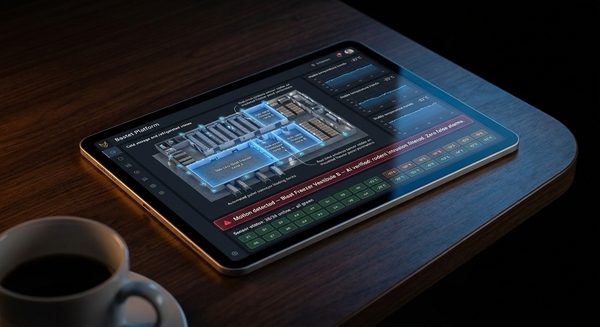
- Operational Workflow: Real-time telemetry is displayed on the Bastet Platform Mobile App and facility monitoring dashboard. Sensor heartbeats verify 100% network uptime every 60 minutes with zero disruption to white-space airflow or compute workloads.
8. Financial Model & Hidden ROI: Calculating the Uptime Business Case
For data center directors and chief technology officers (CTOs), investing in automated IoT pest monitoring is grounded in sound enterprise risk economics. The financial return is derived from four distinct pillars:
1. Avoided Outage Risk and SLA Penalty Protection
According to the Ponemon Institute and Uptime Institute, the baseline cost of an unplanned data center outage averages $540,000 per hour. In enterprise colocation facilities, contracts feature stringent four-nines (99.99%) or five-nines (99.999%) availability guarantees. Breaching these SLAs incurs immediate financial penalty credits ranging from 10% to 50% of monthly recurring revenue (MRR) across all affected tenants, accompanied by catastrophic reputational damage.
By preventing a single rodent-induced cable severance or electrical short circuit over a five-year lifecycle, the Bastet AI IoT monitoring platform delivers an effective return on investment (ROI) exceeding 1,200% against the initial capital and operational deployment costs.
2. Elimination of Contractor Escort Overhead
In high-security colocation facilities, escorting a third-party PCO technician through multiple secure data halls requires an average of 4 to 8 hours of dedicated facility engineer time per month. At an average fully loaded internal engineering labor rate of $75 per hour, routine manual pest escorting consumes between $3,600 and $7,200 annually in non-productive engineering labor per facility. Bastet AI automates continuous data gathering, reducing physical inspection visits strictly to on-demand, targeted remediation events.
3. Regulatory Audit Preparation Labor Savings
Enterprise data centers undergo extensive annual audits to maintain certifications including ISO/IEC 27001 (Physical and Environmental Security Controls, Annex A.11), SOC 2 Type II, TIA-942, and PCI-DSS. Compiling historical physical maintenance logs, environmental pest records, and incident reports typically consumes 15 to 25 hours of compliance management labor per audit.
The Bastet Platform Mobile App provides one-click export of tamper-evident, time-stamped digital monitoring reports, proving continuous 24/7 environmental surveillance. This automation slashes audit preparation labor by 85% while presenting auditors with unassailable electronic telemetry.
4. Lower Property and Business Interruption Insurance Premiums
Commercial property and business interruption insurance underwriters increasingly audit physical infrastructure resilience. Facilities that deploy continuous, non-chemical IoT monitoring and verified electrical-layer protection qualify for favorable risk classifications, unlocking discounts on property insurance deductibles and annual commercial premiums.
9. Frequently Asked Questions (FAQ)
How does Bastet LoRa communicate through dense steel server cabinets and raised floor tiles?
Bastet IoT sensors utilize sub-gigahertz LoRa wireless technology operating at 920MHz. Unlike high-frequency 2.4 GHz Wi-Fi or Bluetooth signals that suffer extreme reflection and absorption when encountering metal, the 32.6 cm wavelength of sub-GHz radio waves easily diffracts around steel server enclosures and penetrates through double-walled steel-faced raised floor tiles. A single Bastet LoRa Gateway provides reliable coverage across entire facilities up to 10 kilometers in line-of-sight without requiring physical Ethernet drops inside server halls.
Does deploying Bastet IoT devices introduce cybersecurity risks to our data center network?
No. Bastet IoT hardware is completely isolated from the data center's IT production network. All sensor telemetry communicates via a closed, proprietary sub-GHz LoRa RF protocol directly to the dedicated Bastet LoRa Gateway. The gateway connects to the management console via an isolated cellular 4G/5G backhaul or a physically separated out-of-band management VLAN. No sensor has an IP address on your internal corporate network, satisfying zero-trust network architecture and ISO/IEC 27001 physical security standards.
Why are chemical rodenticides prohibited inside data center server rooms?
Chemical rodenticides cause rodents to die over several days inside inaccessible spaces such as underfloor cold air plenums, cable raceways, or electrical cabinets. As carcasses decompose in high-velocity recirculating HVAC airflow, they generate foul odors and hazardous bio-aerosols that circulate throughout the facility. Furthermore, dying rodents seek warmth and water, often crawling onto live electrical busbars where their conductive bodies cause explosive phase-to-ground electrical short circuits. Bastet is 100% non-chemical, utilizing smart mechanical traps and optical edge AI detection.
How does Bastet AI in a Box prevent false alarms from flashing LEDs and vibrating cables?
Standard security cameras rely on basic pixel-change or infrared motion detection, which triggers continuous false alarms in server rooms due to flashing server LEDs, vibrating cable ties from CRAC airflow, and thermal shimmer in hot aisles. Bastet's "AI in a Box" runs specialized convolutional neural networks trained on over 250,000 pest movement and contour profiles. The algorithm filters out non-target environmental noise, achieving a 98% false-alarm filtering efficiency and alerting engineers only when true rodents enter monitored thresholds.
What is the expected battery life of Bastet underfloor sensors, and how are they maintained?
Bastet underfloor sensors are powered by industrial-grade lithium-thionyl chloride (Li-SOCl2) batteries engineered for long-term reliability. Coupled with Bastet's ultra-low-power sleep firmware, the sensors operate continuously for 3 to 5 years on a single battery cell. Sensors transmit daily battery health and operational heartbeats over the LoRa network, eliminating the need for technicians to routinely pull raised floor tiles for maintenance checks.
10. Authoritative References & Technical Standards
- Uptime Institute (2025). Annual Outage Analysis: Physical Layer Risks and the Financial Cost of Data Center Downtime.
- Telecommunications Industry Association (TIA) (2024). ANSI/TIA-942-B Telecommunications Infrastructure Standard for Data Centers (Physical Infrastructure Security and Environmental Isolation Guidelines).
- American Society of Heating, Refrigerating and Air-Conditioning Engineers (ASHRAE) (2024). ASHRAE Technical Committee 9.9: Data Center Environmental Guidelines and Airflow Quality Standards.
- International Organization for Standardization (ISO) (2022). ISO/IEC 27001: Information Security, Cybersecurity and Privacy Protection — Annex A.11 Physical and Environmental Security.
- National Fire Protection Association (NFPA) (2024). NFPA 75: Standard for the Fire Protection of Information Technology Equipment.
- Ponemon Institute (2024). Cost of Data Center Outages: An Analysis of Unplanned Downtime Across Mission-Critical Facilities.
Want to learn more? 想了解方案?