
AI Pest Monitoring for BSL-4 Biosafety Labs | Bastet AI
Continuous non-chemical IoT pest monitoring protects biological containment lines in high-containment laboratories by dep...
Key Takeaways
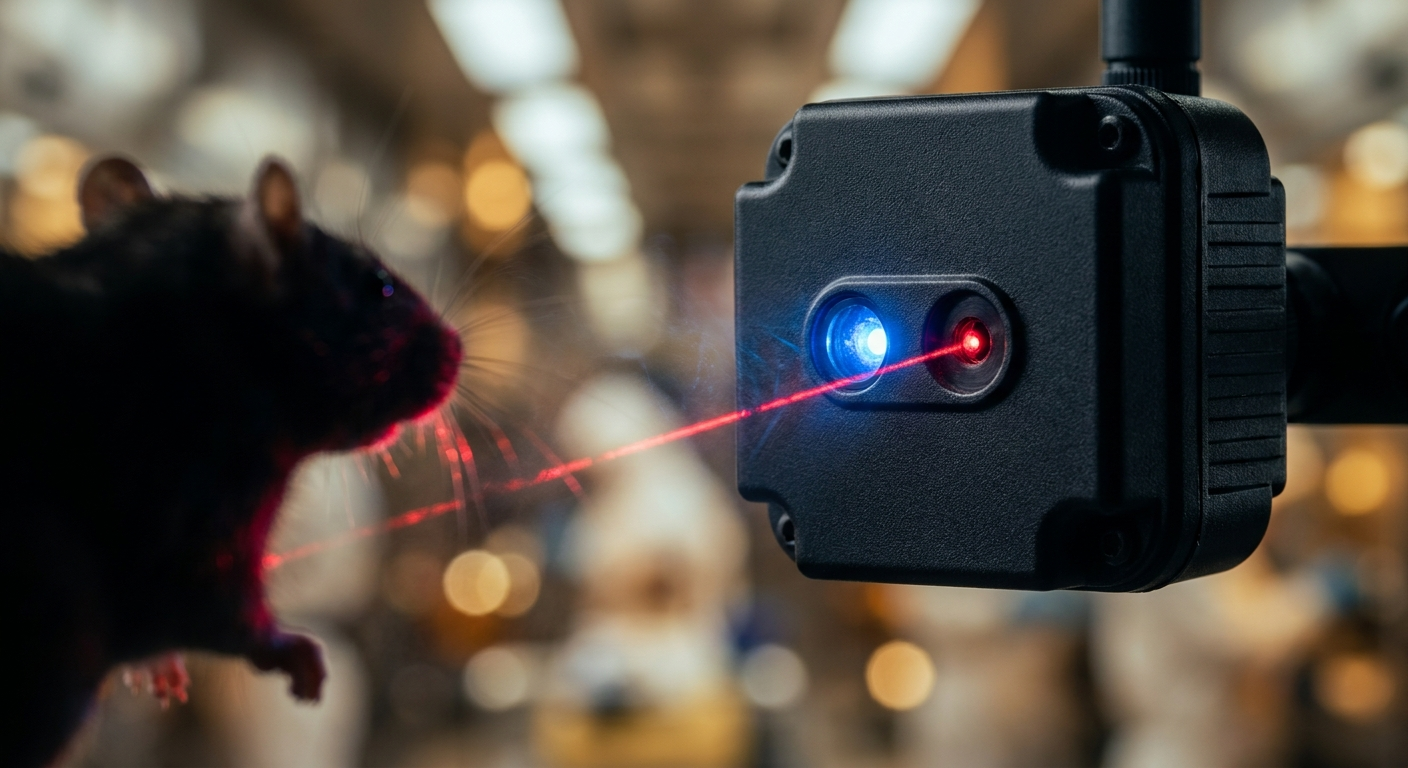
- Direct Answer: Continuous non-chemical IoT pest monitoring protects biological containment lines in high-containment laboratories by deploying sealed, sub-GHz LoRa sensors and edge-AI computer vision. This system detects, identifies, and alerts personnel to pest activity in real-time without the use of volatile chemical rodenticides, which are strictly prohibited due to outgassing risks that compromise air-handling systems and analytical equipment.
- Zero-Tolerance Biosecurity: Rodents can breach openings as small as 6mm, threatening physical containment lines, chewing critical fiber-optic cables, and creating vector pathways for high-consequence pathogens (BSL-4).
- Regulatory Compliance: The Bastet Platform automates audit trails, helping facilities achieve an 85% reduction in administrative hours spent on audit preparation for CDC, NIH, WHO, and ISO 35001 standards.
- Operational Efficiency: By replacing manual pest control with automated, continuous monitoring, facilities achieve a 31% reduction in operational maintenance costs and a 287% ROI within an 11-month payback period.
Table of Contents
- 1. Introduction: The Imperative of Pesticide-Free Biosecurity in BSL-4 Facilities
- 2. The Extreme Stakes of High-Containment Laboratories: BSL-4 and Virology Suites
- 3. The Traditional Pest Control Failure: Why Chemicals are Prohibited in Virology Suites
- 4. Continuous, Non-Chemical IoT Pest Monitoring via the Bastet Platform
- 5. Automated Audit Trails and Regulatory Compliance in Virology Labs
- 6. Financial and Operational Protection of Critical Science
- 7. Multi-Zone Implementation Blueprint for High-Containment Labs
- 8. Frequently Asked Questions (FAQ)
- 9. Conclusion: Next-Generation Biosecurity with Bastet AI
1. Introduction: The Imperative of Pesticide-Free Biosecurity in BSL-4 Facilities
In high-containment environments, maintaining absolute biological isolation is a matter of global public health. Implementing robust pesticide-free biosecurity protocols is no longer optional; it is a fundamental operational mandate. Biosafety Level 4 (BSL-4) laboratories handle the world's most dangerous pathogens—agents that cause severe to fatal diseases in humans for which there are no available vaccines or treatments. In these ultra-sterile, highly pressurized environments, the introduction of any external biological vector, such as a rodent or insect, represents a catastrophic failure of containment.
According to the Centers for Disease Control and Prevention (CDC, 2026), physical integrity is the primary line of defense in high-containment facilities. Traditional pest control methodologies, which rely on periodic manual inspections and the deployment of chemical rodenticides, are entirely incompatible with BSL-4 operations. Chemical agents introduce volatile organic compounds (VOCs) that disrupt sensitive environmental sensors and compromise sterile air-handling systems.
To bridge this critical security gap, Bastet AI has engineered an advanced, non-chemical, IoT-driven pest monitoring platform. By combining edge computer vision with long-range, low-power wireless sensors, Bastet AI provides continuous, real-time surveillance of containment boundaries. This ensures that any potential pest intrusion is detected and mitigated instantly, maintaining a sterile, secure, and fully compliant research environment.
2. The Extreme Stakes of High-Containment Laboratories: BSL-4 and Virology Suites
BSL-4 virology suites operate under strict negative air pressure regimes to ensure that air always flows inward, preventing airborne pathogens from escaping into the outside world. All exhaust air undergoes double High-Efficiency Particulate Air (HEPA) filtration, and liquid waste is routed through advanced thermal decontamination systems. Every physical barrier—from reinforced concrete walls to stainless steel doors with inflatable airtight gaskets—is engineered to be absolute.
However, the physical infrastructure of these facilities remains vulnerable to biological vectors. Rodents possess an innate capability to exploit structural micro-fissures. A juvenile mouse can easily pass through under 6mm openings, which are common around utility penetrations, conduit runs, and expansion joints. Once inside, a rodent's gnawing behavior poses a dual threat:
- Breaching Physical Containment: Gnawing through silicone sealants, gaskets, and flexible conduit lines can compromise the negative pressure envelope, creating micro-pathways for airborne pathogens.
- Pathogen Vectoring: If a rodent enters a containment zone, contacts a pathogen, and manages to return to a non-containment area, it becomes an active vector for biological dissemination, bypassing HEPA filtration and chemical showers entirely.
As outlined by the National Institutes of Health (NIH, 2026), even a single unmonitored pest inside a high-containment zone requires an immediate, facility-wide shutdown, decontamination cycle, and exhaustive validation process. The operational, scientific, and reputational costs of such an event are monumental.
3. The Traditional Pest Control Failure: Why Chemicals are Prohibited in Virology Suites
Traditional pest management relies on a reactive, manual service model. Pest control technicians typically inspect physical traps every 14 to 30 days. In a BSL-4 facility, this creates an unacceptable 30-day blind spot. If a rodent breaches a perimeter wall on day two of an inspection cycle, it can roam undetected for weeks, causing extensive structural and biological damage before a technician ever checks the trap.
Furthermore, the use of chemical rodenticides, baits, and liquid pesticides is strictly prohibited inside high-containment virology suites. The reasons for this chemical ban are clear:
| Risk Factor | Traditional Chemical Impact | BSL-4 Operational Consequence |
|---|---|---|
| Toxic Outgassing | Release of Volatile Organic Compounds (VOCs) from baits and sprays. | Contamination of sterile air supply; false readings on environmental sensors. |
| Analytical Interference | Chemical residues settling on laboratory surfaces and equipment. | Interference with high-precision mass spectrometers and genetic sequencing. |
| Secondary Poisoning | Rodents dying in inaccessible wall voids after ingesting slow-acting toxicants. | Decomposition gases, insect breeding grounds, and severe biohazard risks. |
Research published by the Harvard T.H. Chan School of Public Health (2025) emphasizes that chemical exposures in research environments can alter the physiological baselines of animal models, rendering experimental data invalid. Consequently, high-containment facilities require a 100% complete elimination of chemical pesticides, demanding a transition to continuous, non-chemical, and fully automated digital monitoring.
4. Continuous, Non-Chemical IoT Pest Monitoring via the Bastet Platform
The Bastet Platform redefines biosecurity by replacing chemical interventions with a highly advanced, continuous IoT monitoring ecosystem. The platform integrates hardware and software to create an impenetrable digital shield around containment lines.
Sub-Gigahertz LoRa Connectivity: Penetrating the Shield
BSL-4 facilities are constructed with heavy shielding, including high-density reinforced concrete, solid lead linings, and thick stainless steel panels. Standard wireless protocols like Wi-Fi, Bluetooth, or Zigbee cannot penetrate these barriers.
The Bastet LoRa Gateway utilizes sub-gigahertz LoRa (Long Range) radio frequencies. Operating at lower frequencies (typically 868 MHz or 915 MHz), these signals easily penetrate dense structural materials. A single Bastet LoRa Gateway can maintain stable, secure, bi-directional communications with sensors located deep within containment suites, covering distances of up to 10 kilometers in unobstructed environments, and easily penetrating multiple concrete floors and sealed containment walls.
The Bastet Sensor Ecosystem
To ensure comprehensive coverage, the Bastet Platform deploys a specialized suite of non-chemical IoT sensors:
- Bastet LoRa PIR Sensor: Passive Infrared (PIR) motion sensors calibrated specifically to detect the heat signatures and movement profiles of small rodents. These are placed along critical run-lines, service chases, and suspended ceilings.
- Bastet LoRa Trap Sensor: Retrofitted to mechanical, non-chemical snap traps. The moment a trap is triggered, the sensor transmits an instant alert, enabling immediate removal of the pest before decomposition can occur.
- Bastet Sensing Camera: Ultra-low-power, battery-operated cameras that remain in a deep-sleep state until triggered by motion. Once activated, they capture high-resolution imagery of the target area.
"AI in a Box" Edge Computer Vision
Sending raw, continuous video streams out of a BSL-4 facility is a severe data security risk and consumes excessive bandwidth. The Bastet Sensing Camera solves this by utilizing "AI in a Box" edge computer vision.
The camera processes visual data locally on the edge chip. Using advanced neural networks trained on millions of pest profiles, the device identifies the exact species (e.g., Mus musculus vs. Rattus norvegicus) and filters out environmental noise like moving shadows, dust, or air currents. This edge-processing model achieves a 98% reduction in false-positive alerts.
When a true pest is identified, the system transmits a highly compressed data packet via the Bastet LoRa Gateway, achieving a sub-3 second latency for edge-AI detection and notification. Biosafety officers receive instant, actionable alerts on their dashboards, complete with species verification and exact location mapping.
5. Automated Audit Trails and Regulatory Compliance in Virology Labs
Operating a high-containment facility requires strict adherence to international regulatory frameworks. Compliance audits from organizations such as the World Health Organization (WHO, 2025) and local regulatory bodies demand meticulous documentation of all facility maintenance, including pest control.
Under traditional systems, maintaining these records is a manual, error-prone process involving paper logs, physical signatures, and fragmented spreadsheets. The Bastet Platform completely digitizes and automates this workflow, aligning with the following standards:
- CDC/NIH BMBL 6th Edition (Biosafety in Microbiological and Biomedical Laboratories): Mandates strict facility design and operational practices to prevent pest entry. Bastet's continuous monitoring provides verifiable proof of physical barrier integrity.
- ISO 35001 (Biorisk Management for Laboratories and Other Related Organisations): Requires systematic risk assessments and continuous improvement protocols. Bastet's real-time data logging provides the quantitative metrics needed to satisfy ISO auditors.
The Bastet Platform's digital dashboard automatically generates time-stamped, tamper-proof audit trails. Every sensor trigger, trap activation, and maintenance response is logged in real-time. This automated reporting capability delivers an 85% reduction in administrative hours spent on audit preparation, allowing biosafety officers to focus on critical scientific oversight rather than manual paperwork.
6. Financial and Operational Protection of Critical Science
The financial consequences of a pest breach in a BSL-4 facility extend far beyond the cost of pest eradication. The primary financial risks are associated with operational downtime and the loss of irreplaceable scientific assets.
Modern high-containment laboratories rely heavily on high-speed fiber-optic networks, environmental sensors, and localized server infrastructure to monitor experiments and maintain negative pressure controls. Rodents have a biological need to gnaw on hard surfaces to wear down their continuously growing incisors. Thin fiber-optic cables and power lines are frequent targets.
"Data from the Uptime Institute (2025) indicates that critical IT and data infrastructure downtime in mission-critical facilities costs an average of $9,000 per minute. A single rodent chewing through a primary fiber-optic trunk line can instantly halt data collection, sever communication with environmental control systems, and trigger emergency fail-safes."
Furthermore, if a pest breach occurs within an active virology suite, the entire zone must be locked down. This requires:
- Immediate termination of ongoing experiments, potentially destroying years of research.
- Gaseous decontamination (using vaporized hydrogen peroxide or chlorine dioxide), which can degrade sensitive laboratory equipment over time.
- Comprehensive validation of all physical barriers and air filtration systems before researchers can re-enter.
By transitioning from manual, reactive pest control to the Bastet Platform, facilities achieve a 31% reduction in operational maintenance costs. More importantly, by preventing catastrophic shutdowns and protecting critical infrastructure, facilities realize an average of 287% ROI achieved within an 11-month payback period.
7. Multi-Zone Implementation Blueprint for High-Containment Labs
Securing a BSL-4 facility requires a defense-in-depth strategy. The Bastet Platform is deployed across distinct physical zones to create consecutive layers of protection.
Zone 1: The External Perimeter & Loading Docks
Objective: Intercept pests before they enter the facility envelope.
Deployment: Bastet Sensing Cameras are positioned at all loading dock bays, waste disposal areas, and main entry points. Bastet LoRa Trap Sensors are integrated into external bait stations (using non-toxic monitoring baits) to track localized pest pressure.
Zone 2: Support Corridors, Anterooms, & Chemical Showers
Objective: Detect pests that have bypassed the outer perimeter before they reach containment boundaries.
Deployment: Bastet LoRa PIR Sensors are installed in ceiling voids, cable trays, and along baseboards in changing rooms, anterooms, and mechanical support corridors.
Zone 3: Mechanical Penthouses & HEPA Filtration Decks
Objective: Protect critical air-handling systems and utility runs.
Deployment: Bastet Sensing Cameras with edge-AI are focused on major pipe penetrations and air duct junctions. Bastet LoRa Trap Sensors are deployed in mechanical spaces where high temperatures and vibrations might otherwise mask pest activity.
Zone 4: The Hot Zone (BSL-4 Virology Suites)
Objective: Absolute containment verification with zero chemical footprint.
Deployment: Hermetically sealed, chemically resistant Bastet LoRa PIR Sensors and non-chemical Bastet LoRa Trap Sensors are placed in strategic, low-access areas. All hardware in this zone is rated to withstand rigorous gaseous decontamination cycles (VHP).
8. Frequently Asked Questions (FAQ)
Q1: How do Bastet's sub-GHz LoRa sensors penetrate the heavy shielding and concrete walls of BSL-4 laboratories?
Bastet's LoRa sensors operate on sub-gigahertz radio frequencies (868/915 MHz). These longer wavelengths possess superior material penetration capabilities compared to high-frequency protocols like Wi-Fi or Bluetooth. This allows signals to easily pass through reinforced concrete, steel doors, and lead shielding, maintaining a reliable connection to the central gateway without compromising containment integrity.
Q2: Why is chemical pest control strictly prohibited inside high-containment virology suites?
Chemical pesticides and rodenticides release volatile organic compounds (VOCs) that can contaminate sterile air supplies, damage sensitive HEPA filters, and interfere with high-precision analytical instruments. Additionally, chemical baits can lead to rodents dying in inaccessible wall voids, creating secondary biohazards and insect breeding grounds that threaten the sterile environment.
Q3: How does the "AI in a Box" edge computer vision handle data security and privacy in secure facilities?
The Bastet Sensing Camera processes all visual data locally on its internal edge-AI chip. It does not stream continuous video over the network. The camera only transmits a highly compressed, encrypted data packet containing species identification and location metrics when a true pest is detected. This local processing model ensures strict compliance with facility data security protocols.
Q4: Can Bastet's hardware withstand the harsh gaseous decontamination cycles used in BSL-4 suites?
Yes. Bastet's specialized containment-zone sensors are engineered with hermetically sealed, IP67-rated enclosures. They are constructed from chemically resistant materials designed to withstand repeated exposure to vaporized hydrogen peroxide (VHP), chlorine dioxide, and other aggressive gaseous decontamination agents without degrading sensor performance or wireless connectivity.
9. Conclusion: Next-Generation Biosecurity with Bastet AI
The integration of AI and IoT into high-containment biosecurity represents a major advancement in laboratory management. Relying on manual, chemical-heavy pest control is no longer viable in environments where a single breach can have global consequences.
The Bastet Platform provides continuous, non-chemical surveillance, ensuring that containment boundaries are monitored 24/7. By combining sub-GHz LoRa connectivity with edge computer vision, Bastet AI delivers real-time detection, automated regulatory compliance, and robust protection for critical scientific research.
For biosafety officers, laboratory directors, and facility managers, the choice is clear. Transitioning to a digital, automated, and pesticide-free pest monitoring system protects your research, your personnel, and your community.
Secure Your Containment Lines Today
Contact our biosecurity engineering team to schedule a technical consultation and custom deployment blueprint for your facility.
Request a Technical Consultation
References & Authoritative Standards:
- • Centers for Disease Control and Prevention (CDC) & National Institutes of Health (NIH). (2026). Biosafety in Microbiological and Biomedical Laboratories (BMBL), 6th Edition.
- • World Health Organization (WHO). (2025). Laboratory Biosafety Manual, 5th Edition.
- • International Organization for Standardization (ISO). (2025). ISO 35001: Biorisk management for laboratories and other related organisations.
- • Uptime Institute. (2025). Annual Outage Analysis and Infrastructure Reliability Report.
- • Harvard T.H. Chan School of Public Health. (2025). Environmental Health Impacts of Chemical Pesticides in Controlled Research Environments.
Want to learn more about Bastet AI smart pest control solutions?
Message us on WhatsApp — our team will get back to you.
💬 WhatsApp Us