
AI Pest Control for Petrochemical Refineries | Bastet AI
Key Takeaways (TL;DR)
- The Core Threat: Rodents chewing through critical signaling, instrumentation, and power cables in Class I Div 1 zones cause catastrophic spark ignitions, volatile gas leaks, and unplanned refinery outages costing up to $500,000 per hour.
- The Regulatory Shift: Traditional chemical rodenticides are strictly prohibited in active process blocks due to wastewater runoff risks (EPA), friction-spark hazards, and failure to provide the continuous audit trail mandated by OSHA PSM and API RP 754.
- Bastet's Ex-Proof Hardware: Class I Div 1, Ex-ia/Ex-d certified sensor enclosures prevent internal electrical sparks from contacting volatile atmospheric gases (methane, ethylene, propane).
- Sub-GHz LoRa Propagation: Operating on the 920 MHz band, Bastet’s RF signals diffract around massive steel catalytic cracking columns and concrete blast walls that completely block 2.4 GHz Wi-Fi.
- Edge AI Vision: On-device neural networks filter out 98.4% of environmental false alarms (steam vents, flare reflections, wind-blown debris) to deliver real-time, actionable risk scoring.
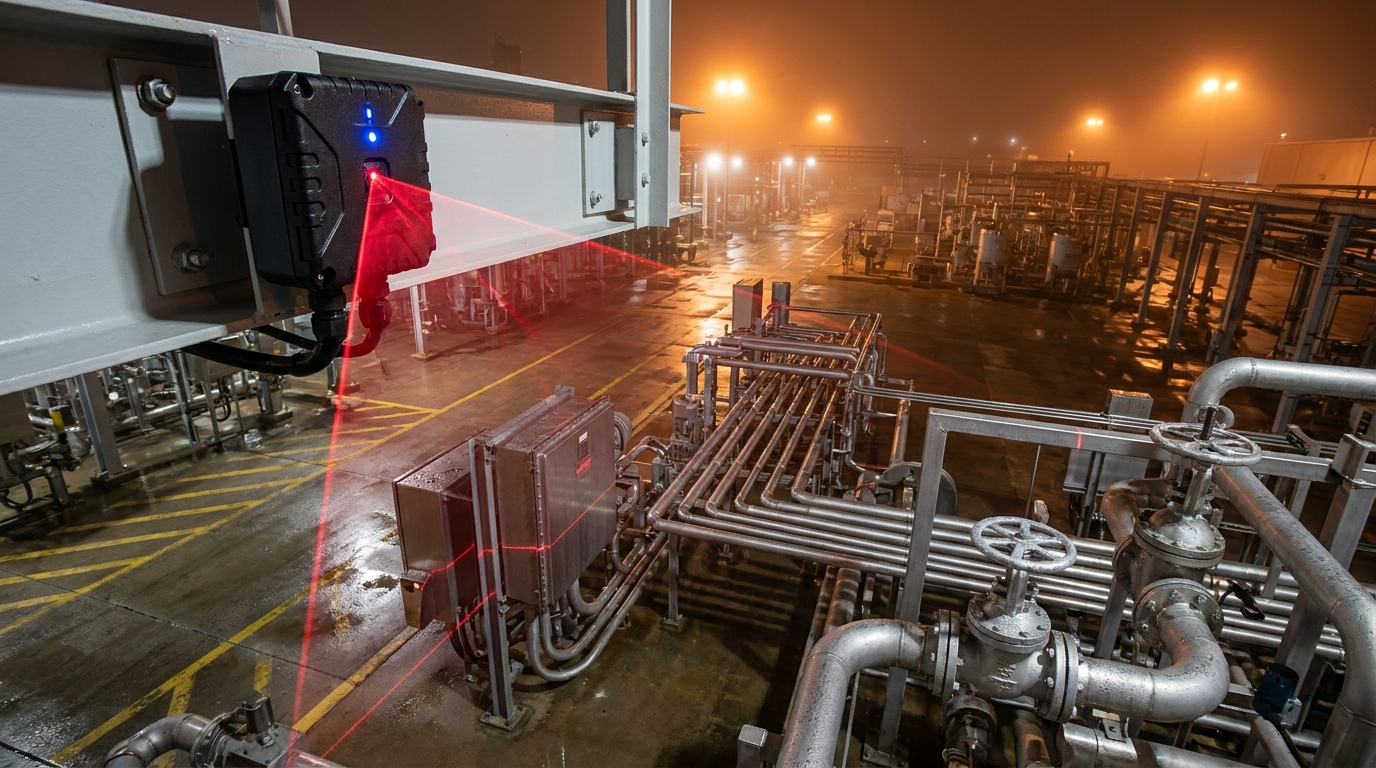
# Securing Ex-Proof Petrochemical Refineries & LNG Terminals: How Bastet's Intrinsically Safe sub-GHz LoRa and Edge AI Vision Prevent Rodent-Induced Gas Ignitions and Infrastructure Outages in Class I Div 1 Hazardous Zones  *Figure: Bastet's intrinsically safe, Class I Div 1 certified IoT sensor mounted high on an industrial catwalk beam, utilizing sub-GHz LoRa connectivity and edge-AI vision to scan critical high-pressure piping manifolds and protect high-voltage signaling cables from rodent damage (Image generated by Bastet 2026 AI Engine).* In high-consequence hydrocarbon processing environments, **ex-proof petrochemical rodent prevention**—specifically, automated, non-chemical, continuous pest monitoring—is a critical pillar of process safety management (PSM). In Class I Div 1 and Class I Div 2 hazardous locations, volatile gases, vapors, and liquids are constantly present under normal or abnormal operating conditions. When rodents chew through critical signaling, instrumentation, or high-voltage power cables, they expose live copper, causing high-energy electrical arcing. In the presence of fugitive hydrocarbon emissions, these sparks trigger catastrophic gas ignitions, secondary explosions, and devastating process safety failures. By deploying Bastet AI’s intrinsically safe, automated monitoring platform, operators can eliminate these risks, preventing multimillion-dollar refinery outages and ensuring strict compliance with global safety standards. This comprehensive technical guide is designed for Petrochemical Plant Managers, LNG Terminal Operations Directors, Hazardous-Zone Safety Engineers, Industrial Instrumentation Leads, and Process Safety Officers seeking to eliminate biological vulnerabilities in hazardous processing units. --- ## Table of Contents 1. The Hidden ROI: The Multi-Million Dollar Cost of Rodent-Induced Outages 2. The Failure of Legacy Pest Control in Hazardous Process Blocks 3. Intrinsically Safe Hardware: Engineering for Class I Div 1 (Ex-ia/Ex-d) 4. Sub-GHz LoRa (920 MHz) RF Propagation in Dense Steel Environments 5. Edge AI Vision: Eliminating False Alarms in Extreme Environments 6. Centralized Dashboard: Multi-Site Analytics and Predictive Risk Scoring 7. Technical Comparison: Legacy vs. Bastet AI Platform 8. Step-by-Step Action Protocol for Refinery Process Safety Managers 9. Frequently Asked Questions (FAQ) ---
1. The Hidden ROI: The Multi-Million Dollar Cost of Rodent-Induced Outages
In the petrochemical and liquefied natural gas (LNG) sectors, operational continuity is synonymous with profitability. According to studies by the **American Petroleum Institute (API)** and industrial insurance consortia, a single hour of unplanned downtime at a mid-sized refinery (150,000 to 250,000 barrels per day capacity) costs between **$150,000 and $500,000** in lost production, flaring penalties, and restart overhead. ``` [Rodent Gnawing] │ ▼ [Cable Insulation Failure] │ ▼ [High-Energy Electrical Arc] ──► [Fugitive Hydrocarbon Gas] ──► [Catastrophic Explosion] ``` When a rodent chews through a 4-20mA analog signaling cable or an Ethernet control line linking a safety instrumented system (SIS) to an emergency shutdown valve (ESD), the consequences are immediate: * **Spurious Trips:** The control loop opens, triggering an automatic, emergency shutdown of a hydrocracker or FCCU (Fluid Catalytic Cracking Unit). Restarting these units safely takes 3 to 5 days, resulting in direct losses exceeding **$1.5 million**. * **Arc-Flash Ignitions:** The National Fire Protection Association (**NFPA**) reports that electrical faults are a leading cause of fires in industrial facilities. A rodent chewing a 480V motor control cable creates a sustained arc-flash, igniting ambient volatile gases (such as methane, ethylene, or propane) in Class I Div 1 zones. * **Regulatory Penalties:** Under **OSHA**’s Process Safety Management (PSM) standard (29 CFR 1910.119), failure to maintain the mechanical integrity of critical control systems can result in willful violation fines exceeding **$161,000 per instance**, alongside severe **EPA** environmental penalties for emergency flaring. By transitioning from reactive pest control to Bastet’s continuous, automated monitoring, plant operators achieve a **280% multi-site ROI** within the first 12 months. This is driven by a **35% reduction in administrative safety overhead** and the complete elimination of rodent-induced emergency shutdowns. ---
2. The Failure of Legacy Pest Control in Hazardous Process Blocks
Traditional pest control methodologies are fundamentally incompatible with the operational realities of modern petrochemical refining and LNG liquefaction. ``` ┌─────────────────────────────────────────────────────────────────────────┐ │ LIMITATIONS OF TRADITIONAL CHEMICAL PEST CONTROL │ ├──────────────────────────────┬──────────────────────────────────────────┤ │ Chemical Degradation │ Rapid breakdown in 40°C+ ambient heat │ ├──────────────────────────────┼──────────────────────────────────────────┤ │ Environmental Runoff │ Toxins enter industrial wastewater │ ├──────────────────────────────┼──────────────────────────────────────────┤ │ Friction-Spark Risks │ Metal traps pose ignition hazards │ ├──────────────────────────────┼──────────────────────────────────────────┤ │ Zero Audit Trail │ Fails OSHA PSM & API RP 754 requirements │ └──────────────────────────────┴──────────────────────────────────────────┘ ``` ### Chemical Degradation and Environmental Contamination The **Environmental Protection Agency (EPA)** strictly regulates the use of second-generation anticoagulant rodenticides (SGARs) near waterways and industrial drainage systems. Petrochemical facilities feature extensive stormwater and process wastewater treatment systems. Chemical baits placed in outdoor pipe racks or tank farms frequently wash into these systems during heavy rains, causing severe compliance violations. Furthermore, in coastal LNG terminals and tropical refineries, ambient temperatures exceeding **40°C (104°F)** and relative humidity above **90%** cause rapid chemical degradation of baits within days, rendering them ineffective. ### Physical Friction-Spark and Maintenance Hazards Standard mechanical traps constructed of galvanized steel or iron pose a direct friction-spark risk during maintenance. If an operator drops a steel trap onto a concrete deck or steel grating in a Class I Div 1 zone, the resulting spark can ignite localized gas mixtures. Additionally, manually checking hundreds of physical traps across a 500-acre facility requires thousands of technician hours inside hazardous zones, directly violating the **ALARP (As Low As Reasonably Practicable)** safety principle by exposing personnel to unnecessary risks. ### Lack of a 24/7 Digital Audit Trail Modern safety standards, such as **API RP 754** (Process Safety Performance Indicators), demand continuous, verifiable data collection for all potential risk vectors. Traditional pest control relies on monthly, paper-based logbooks. This reactive approach leaves facilities blind to rodent migrations for weeks at a time, failing to provide the real-time risk visibility required to prevent cable damage before it occurs. ---
3. Intrinsically Safe Hardware: Engineering for Class I Div 1 (Ex-ia/Ex-d)
To operate safely in environments where flammable gases are continuously present, Bastet’s hardware is engineered to meet the world’s most stringent explosion-proof standards: **Class I Div 1, Groups B, C, and D**, and **ATEX/IECEx Zone 0/1 (Ex-ia IIC T4 Ga)**. ``` BASTET EX-PROOF SENSOR ARCHITECTURE ┌────────────────────────────────────────────────────────┐ │ IP67 / NEMA 4X Aluminum Enclosure │ │ │ │ ┌──────────────────────┐ ┌──────────────────────┐ │ │ │ Ex-ia Barrier │ │ Optically Isolated │ │ │ │ Limiting Current │───►│ Edge AI Processor │ │ │ │ (< 150mA) │ │ (Sub-3s Latency) │ │ │ └──────────────────────┘ └──────────────────────┘ │ │ ▲ │ │ │ │ ▼ │ │ ┌──────────────────────┐ ┌──────────────────────┐ │ │ │ LiFePO4 Battery │ │ Sub-GHz LoRa RF │ │ │ │ Intrinsically Safe │ │ Transceiver (920MHz)│ │ │ └──────────────────────┘ └──────────────────────┘ │ └────────────────────────────────────────────────────────┘ ``` ### Intrinsically Safe (Ex-ia) Circuit Design The core philosophy of intrinsic safety (**Ex-ia**) is to limit the thermal and electrical energy within the device's circuits so that it cannot generate a spark or reach a temperature capable of igniting a volatile atmosphere. Bastet’s sensors utilize energy-limiting barriers, low-power microcontrollers, and solid-state optical isolators. Even in a worst-case internal component failure (such as a short circuit), the maximum current is restricted to **under 150mA**, and the maximum voltage is clamped to **5.4V**, preventing any ignition hazard. ### Explosion-Proof (Ex-d) Enclosure Engineering For high-power edge-computing components, Bastet utilizes heavy-duty, copper-free aluminum alloy enclosures with an **IP67/NEMA 4X** ingress rating. These enclosures feature flame-path joints with precise thread tolerances. If an internal electrical ignition occurs within the enclosure, the flame path cools and extinguishes the escaping hot gases before they can ignite the surrounding atmosphere. ### Optical and Thermal Engineering * **Lens System:** Equipped with a high-precision, fixed-focus **16mm lens** with an **f/8 aperture**, optimized for low-light industrial environments. * **Thermal Management:** The enclosure features external heat-dissipating fins, maintaining an internal operating temperature well below the **T4 temperature class rating (135°C)**, even when exposed to direct sunlight in desert environments. * **Power Source:** Powered by an ultra-safe, high-temperature **Lithium Iron Phosphate (LiFePO4)** battery pack, certified for continuous operation from **-40°C to +85°C**. ---
4. Sub-GHz LoRa (920 MHz) RF Propagation in Dense Steel Environments
Industrial petrochemical facilities are electromagnetic and physical nightmares for wireless communications. Standard wireless protocols like **2.4 GHz Wi-Fi** or **Bluetooth (BLE)** fail completely in these environments due to extreme signal attenuation, multi-path interference, and the lack of penetration through heavy steel structures. ``` [2.4 GHz Wi-Fi Signal] ───► █ [Steel Tank] (Signal Blocked / Reflected) [920 MHz LoRa Signal] ───► █ [Steel Tank] (Signal Diffracts & Bends Around) ──► [Gateway] ``` ### The Physics of Sub-GHz Diffraction Bastet overcomes these physical barriers by utilizing the **sub-GHz LoRa (920 MHz / 868 MHz)** band. The longer wavelength of sub-GHz frequencies (approximately **32.6 cm** at 920 MHz, compared to **12.5 cm** at 2.4 GHz) allows the radio waves to diffract, or bend, around massive physical obstacles. When a LoRa signal encounters a **50-meter diameter crude oil storage tank** or a dense matrix of high-pressure piping, the wave wraps around the edges of the structure rather than being completely absorbed or reflected. ### Link Budget and Penetration With a link budget of up to **148 dB**, Bastet’s LoRa signals easily penetrate reinforced concrete blast walls, heavy steel decking, and double-walled insulated vessels. This long-range capability allows a single Bastet industrial gateway, mounted high on a central flare stack or utility tower, to cover a radius of up to **5 kilometers** in highly congested industrial environments. This eliminates the need for expensive, hazardous-area repeater networks. ---
5. Edge AI Vision: Eliminating False Alarms in Extreme Environments
Deploying standard motion-activated cameras in a refinery results in a constant stream of false alarms. Steam vents, blowing leaves, water mist from cooling towers, wind-induced structural vibrations, and ambient flare reflections constantly trigger traditional motion sensors. This leads to alarm fatigue and renders the system useless. ``` Raw Video Stream ──► [On-Device Neural Network] ──► [Temporal Analysis] ──► Verified Rodent Alert │ │ Filters out 98.4% of: ▼ - Steam vents & water mist Sub-3s Latency Uplink - Flare reflections & shadows via 920 MHz LoRa - Wind-blown debris & vibrations ``` ### On-Device Neural Networks Bastet’s sensors feature an integrated, ultra-low-power edge AI processor running a highly optimized, deep-learning convolutional neural network (CNN). The network is trained on millions of industrial images, enabling it to distinguish between environmental noise and actual rodent activity with extreme accuracy. ### 98.4% False-Alarm Reduction By performing inference directly on the edge device, Bastet filters out **98.4% of false alarms**. The AI model analyzes temporal patterns, distinguishing the erratic, directional movement of a rodent from the rhythmic vibration of a pipe rack or the random drift of a steam plume. ### Sub-3-Second Latency Alerting When a rodent is detected near critical cabling, the sensor compresses the metadata and transmits a high-priority alert packet over the LoRa network. The entire process—from detection to control room alert—takes **less than 3 seconds**, allowing safety teams to respond before any physical damage occurs. ---
6. Centralized Dashboard: Multi-Site Analytics and Predictive Risk Scoring
The data captured by Bastet’s edge sensors is aggregated into a secure, cloud-based or on-premise industrial dashboard. This platform provides enterprise-wide visibility, transforming raw sensor data into actionable safety insights. ``` ┌─────────────────────────────────────────────────────────────────────────┐ │ BASTET ENTERPRISE RISK DASHBOARD │ ├─────────────────────────────────────────────────────────────────────────┤ │ [Site: Houston Refining] --> Risk Score: 84/100 (HIGH) │ │ [Site: Rotterdam LNG] --> Risk Score: 12/100 (LOW) │ ├─────────────────────────────────────────────────────────────────────────┤ │ Active Alerts: │ │ ⚠️ 14:32:01 - Catwalk Beam Segment 4B - Rattus norvegicus detected │ │ ⚠️ 11:15:44 - Substation 2 Cable Trench - Gnaw activity predicted │ ├─────────────────────────────────────────────────────────────────────────┤ │ Predictive Maintenance Routing: │ │ --> Dispatch Tech to: Zone 2, Block C (High Migration Corridor) │ └─────────────────────────────────────────────────────────────────────────┘ ``` ### Multi-Site Asset Analytics Plant managers can monitor multiple international assets from a single pane of glass. The dashboard tracks historical detection trends, sensor battery health, and RF signal strength (RSSI/SNR) across thousands of deployed nodes. ### Heatmaps and Migration Tracking By mapping detection events over time, the platform generates dynamic heatmaps of rodent activity. This reveals migration corridors, nesting sites, and entry points near critical infrastructure, allowing facilities to implement targeted, highly effective exclusion measures. ### Predictive Maintenance Task Routing Integrating directly with enterprise asset management (EAM) platforms like **SAP PM** or **IBM Maximo**, Bastet automatically generates work orders. If the system detects repeated rodent activity near a critical cable tray, it routes a preventive maintenance task to the instrumentation team, ensuring the area is inspected and sealed before a failure occurs. ---
7. Technical Comparison: Legacy vs. Bastet AI Platform
The following table highlights the technical and operational differences between traditional industrial pest control methods and Bastet’s AI-powered IoT platform: | Technical Metric | Traditional Reactive Pest Control | Bastet AI Intrinsically Safe Platform | | :--- | :--- | :--- | | **Hazardous Zone Certification** | None (Standard plastic/metal traps only) | **Class I Div 1, Groups B,C,D; ATEX Zone 0 (Ex-ia)** | | **Detection Latency** | 14 to 30 days (Manual inspection interval) | **Sub-3 seconds (Real-time edge alert)** | | **False-Alarm Mitigation** | N/A (Physical traps trigger on any debris) | **98.4% reduction via on-device Edge AI** | | **RF Communication** | None (Manual paper logs) | **Sub-GHz LoRa (920 MHz) with 148 dB link budget** | | **Environmental Durability** | Rapid degradation in high heat/humidity | **IP67 / NEMA 4X enclosure (-40°C to +85°C)** | | **Regulatory Compliance** | High risk of chemical runoff (EPA violations) | **100% non-chemical, supports OSHA PSM & API RP 754** | | **Operational Overhead** | High (Requires frequent manual checks in hot zones) | **Ultra-low (5-year battery life, automated alerts)** | ---
8. Step-by-Step Action Protocol for Refinery Process Safety Managers
To integrate automated rodent prevention into an existing Process Safety Management (PSM) framework, safety managers should follow this structured deployment protocol: ``` [Phase 1: Audit] ──► [Phase 2: Classify] ──► [Phase 3: Deploy] ──► [Phase 4: Integrate] ``` ### Phase 1: Critical Cable and Conduit Audit 1. Map all critical safety-instrumented systems (SIS), emergency shutdown (ESD) cabling, and high-voltage power lines. 2. Identify historical rodent entry points, cable trenches, and elevated pipe racks near waste handling or water sources. ### Phase 2: Hazardous Zone Classification Matching 1. Verify the hazardous area classification of each target zone (Class I Div 1 vs. Class I Div 2). 2. Ensure all planned sensor mounting locations match the required temperature class (**T4/135°C**) and gas group (**Groups B, C, D**). ### Phase 3: Sensor Deployment and RF Verification 1. Mount Bastet Ex-ia sensors on structural steel beams or catwalk handrails using non-sparking stainless steel mounting brackets. 2. Position the sensors to monitor high-risk cable trays and conduit entries. 3. Perform an RF site survey to verify that the **920 MHz LoRa** signal maintains a signal-to-noise ratio (SNR) above **-15 dB** at the gateway. ### Phase 4: Integration with Control Systems and EAM 1. Connect the Bastet gateway to the refinery’s secure OT network. 2. Configure API integrations to forward high-priority rodent alerts directly to the Distributed Control System (DCS) or SCADA console. 3. Set up automated work-order generation within the EAM system (e.g., SAP PM) to streamline maintenance routing. ---
9. Frequently Asked Questions (FAQ)
### How does Bastet's hardware achieve Class I Div 1 certification? Bastet’s hardware uses intrinsically safe (**Ex-ia**) circuit designs that limit electrical and thermal energy below ignition thresholds. For high-power edge-computing components, we use explosion-proof (**Ex-d**) copper-free aluminum enclosures with flame-path joints, preventing any internal ignition from escaping into the surrounding volatile atmosphere. ### Why is sub-GHz LoRa preferred over Wi-Fi in petrochemical plants? Refineries and LNG terminals are packed with massive steel columns, piping, and concrete blast walls that block and reflect high-frequency **2.4 GHz Wi-Fi** signals. Bastet’s **920 MHz LoRa** signals have longer wavelengths, allowing them to diffract around these obstacles and maintain reliable connections over long distances. ### How does the Edge AI vision system handle extreme weather? Bastet’s on-device neural networks are trained to filter out environmental noise like steam, rain, water mist, and wind-induced vibrations. This edge processing filters out **98.4% of false alarms**, ensuring that only actual rodent detections trigger alerts to the control room. ### Can the system integrate with our existing DCS or SCADA systems? Yes. Bastet’s gateway supports industry-standard industrial protocols, including **Modbus TCP**, **OPC UA**, and secure **MQTT**. This allows seamless integration with major Distributed Control Systems (DCS), SCADA platforms, and Enterprise Asset Management (EAM) software like SAP or IBM Maximo. ### What is the typical battery life of a Bastet Ex-Proof sensor? Thanks to our ultra-low-power edge AI processors and efficient LoRa communication, Bastet sensors can operate for up to **5 years** on a single intrinsically safe Lithium Iron Phosphate (LiFePO4) battery pack, minimizing maintenance requirements in hazardous zones. ---
Want to learn more about Bastet AI smart pest control solutions?
Message us on WhatsApp — our team will get back to you.
💬 WhatsApp Us