
AI Pest Control for Commercial Towers | Bastet AI
Key Takeaways
- Continuous IoT Pest Monitoring: The Bastet Platform enables pesticide-free facilities management by replacing periodic chemical applications with 24/7 non-chemical monitoring, utilizing edge-AI computer vision and sub-gigahertz LoRa sensors to detect, identify, and alert operators to pest activity with sub-3 second latency.
- LEED & WELL Alignment: Implementing continuous digital monitoring directly secures credits under LEED v4.1 Integrated Pest Management (IPM) and WELL v2 Materials/Community concepts, eliminating toxic chemical outgassing and protecting indoor air quality.
- Quantifiable Operational ROI: Transitioning to the Bastet Platform delivers a 40% reduction in chemical pesticide usage, a 31% reduction in operational cleaning and maintenance costs, and an 85% reduction in administrative hours spent on environmental audit preparation.
- Asset Protection: Early detection of rodents attempting to breach openings under 6mm prevents catastrophic damage to fiber-optic cables, averting critical IT infrastructure downtime that can cost up to $9,000 per minute.
Table of Contents
- 1. Introduction: The Paradigm Shift in Premium Facility Operations
- 2. The Evolving Standards of Premium Commercial Real Estate: LEED, WELL, and ESG
- 3. The Traditional FM Dilemma: Why Periodic Pest Inspections Fail Modern Grade-A Towers
- 4. Enter the Bastet Platform: Continuous, Non-Chemical IoT Pest Monitoring
- 5. Translating IoT Data into Real Estate Value: The Bastet Dashboard Intelligence
- 6. Financial and Operational ROI: How Non-Chemical Monitoring Protects Asset Value
- 7. Implementation and Deployment: A Step-by-Step Integration Guide for Multi-Site FM
- 8. Frequently Asked Questions (FAQ)
- 9. Conclusion: The Future of Intelligent, Healthy Built Environments
1. Introduction: The Paradigm Shift in Premium Facility Operations
In the highly competitive landscape of premium commercial real estate, Grade-A office towers are undergoing a profound operational transformation. Modern asset managers are no longer evaluating facility performance solely through the lens of occupancy rates and energy efficiency. Today, the integration of environmental health, occupant well-being, and rigorous Environmental, Social, and Governance (ESG) criteria dictates a property’s market valuation and tenant retention capabilities. Central to this evolution is the concept of pesticide-free facilities management, a strategic operational framework that seeks to eliminate toxic chemical interventions in favor of proactive, data-driven, and non-chemical pest mitigation strategies.
Historically, pest control in commercial high-rises relied on a reactive, calendar-based deployment of chemical pesticides, rodenticides, and toxic baits. These legacy practices, while temporarily suppressing pest populations, introduce volatile organic compounds (VOCs) and hazardous residues into the indoor environment, directly undermining indoor air quality (IAQ) and occupant health. According to the Harvard T.H. Chan School of Public Health (2025), chronic exposure to low-level chemical pesticide outgassing in sealed, mechanically ventilated office buildings is linked to cognitive fatigue, respiratory irritation, and long-term neurological risks. To mitigate these hazards, forward-thinking property operators are leveraging the Bastet Platform—an advanced, AI-powered IoT ecosystem designed to make pests visible without chemical intervention, facilitating seamless compliance with prestigious green building frameworks such as LEED and WELL v2.
The Convergence of AI, IoT, and Green Building Frameworks
The transition to pesticide-free operations requires a fundamental shift from reactive eradication to continuous, preventative intelligence. By deploying specialized IoT sensors and edge-AI computer vision across a property portfolio, facility managers can establish a digital perimeter that detects pest activity at the earliest stage. This continuous monitoring capability forms the backbone of modern Integrated Pest Management (IPM). Instead of spraying broad-spectrum chemicals on a monthly schedule, building operators can now target specific, localized entry points and structural vulnerabilities. This targeted, non-chemical approach satisfies the stringent requirements of the U.S. Green Building Council (USGBC) and the International WELL Building Institute (IWBI), turning pest control from an environmental liability into a documented ESG asset.
2. The Evolving Standards of Premium Commercial Real Estate: LEED, WELL, and ESG
For Grade-A commercial assets, achieving certifications like LEED (Leadership in Energy and Environmental Design) and WELL is no longer a marketing luxury; it is a baseline requirement for attracting institutional tenants and securing green financing. These certification bodies have established rigorous, quantifiable benchmarks that directly penalize traditional, chemical-heavy pest control methods while rewarding properties that implement continuous, digital, and non-chemical monitoring systems.
| Certification Framework | Specific Credit / Feature | Pest Management Requirement | Bastet Platform Compliance Role |
|---|---|---|---|
| LEED v4.1 O+M | Integrated Pest Management (IPM) Credit | Requires a comprehensive IPM plan minimizing chemical pesticide use, utilizing non-chemical monitoring, and establishing clear action thresholds. | Provides continuous IoT monitoring, automated digital logs, and real-time threshold alerts, eliminating manual paperwork and chemical dependency. |
| WELL v2 Standard | Materials Concept (Feature X10: Pest Management) | Restricts the use of hazardous pesticides and rodenticides inside the building envelope; mandates non-chemical physical barriers and monitoring. | Enables 100% pesticide-free operations via non-chemical IoT trap monitoring and edge-AI visual verification, protecting indoor air quality. |
| WELL v2 Standard | Community Concept (Feature C02: Integrative Design) | Promotes stakeholder engagement, transparent building health data, and continuous monitoring of environmental parameters. | Generates exportable, audit-ready compliance reports and real-time dashboard views for ESG reporting and tenant transparency. |
LEED v4.1 O+M: The IPM Imperative
Under the USGBC (2026) LEED v4.1 Operations and Maintenance (O+M) rating system, the Integrated Pest Management credit is designed to minimize occupant exposure to pesticides and reduce environmental contamination. To earn this credit, facilities must implement an IPM plan that prioritizes non-chemical prevention and monitoring. Traditional pest control contracts that rely on routine, preventative chemical spraying are disqualified. Instead, the facility must prove that chemical pesticides are only used as a last resort when a specific, documented pest threshold is exceeded. The Bastet Platform provides the precise, empirical data required to satisfy this standard. By continuously tracking pest activity and documenting the exact location, time, and species of any pest intrusion, the platform generates the digital audit trail necessary to prove compliance to LEED assessors without relying on subjective manual logs.
WELL v2: Safeguarding Human Health and Air Quality
The WELL Building Institute (IWBI, 2026) focuses heavily on the direct correlation between the built environment and human health. Within the WELL v2 Materials concept, Feature X10 (Pest Management and Pesticide Use) aims to reduce occupant exposure to hazardous chemicals. WELL mandates that buildings restrict the use of pesticides containing highly toxic active ingredients, such as organophosphates and synthetic pyrethroids, which are known to degrade indoor air quality and cause sensory irritation. By deploying the Bastet Platform, commercial towers can confidently transition to a 100% pesticide-free operational model. The platform’s non-chemical monitoring hardware, combined with real-time dashboard intelligence, ensures that any pest presence is identified and isolated before it can escalate into an infestation, thereby eliminating the need for broad-spectrum chemical applications and preserving the integrity of the indoor breathing zone.
3. The Traditional FM Dilemma: Why Periodic Pest Inspections Fail Modern Grade-A Towers
The conventional approach to commercial pest control is fundamentally flawed when applied to complex, high-density Grade-A office towers. Traditional pest control operators (PCOs) typically operate on a 14-to-30-day manual inspection cycle. This periodic methodology introduces a massive operational blind spot: a rodent or insect pest can enter a facility on day two of a 30-day cycle, establish a nesting site, damage critical infrastructure, and multiply for 28 days before a technician ever inspects a physical trap. This delay is unacceptable in modern commercial environments where tenant expectations are exceptionally high and tolerance for pest sightings is zero.
Furthermore, manual inspections are highly labor-intensive and prone to human error. Technicians must physically navigate service corridors, mechanical rooms, riser shafts, and suspended ceilings to check hundreds of individual traps. In many cases, traps located in hard-to-reach areas are overlooked or left uninspected, leading to undetected pest activity. When a pest issue is finally discovered, the typical response is reactive chemical remediation—flooding the affected area with pesticides to quickly suppress the population. This reactive cycle not only violates LEED and WELL standards but also introduces significant legal and health liabilities. Chemical outgassing in occupied spaces can trigger building-wide indoor air quality complaints, leading to tenant dissatisfaction, potential lease terminations, and liability claims under local occupational health and safety regulations (BOMA, 2026).
"The traditional 'spray-and-pray' model of pest control is an anachronism in the modern ESG-driven real estate market. Periodic manual inspections leave properties exposed to undetected structural and operational risks, while chemical interventions actively degrade the indoor environment that premium tenants pay a premium to occupy."— Building Owners and Managers Association (BOMA, 2026)
4. Enter the Bastet Platform: Continuous, Non-Chemical IoT Pest Monitoring
To bridge the gap between environmental sustainability and operational security, Bastet AI has engineered a comprehensive, hardware-enabled software ecosystem: the Bastet Platform. This system replaces manual, periodic inspections with continuous, real-time digital surveillance, utilizing a suite of proprietary IoT devices and advanced edge-AI technology to detect and analyze pest activity without the use of chemical agents.

Figure 1: High-density commercial infrastructure requires continuous, non-disruptive IoT monitoring to protect critical pathways from pest intrusion.
The Hardware Ecosystem: Engineered for Deep Building Penetration
The physical layer of the Bastet Platform is comprised of highly specialized, industrial-grade IoT hardware designed to operate reliably in the challenging RF environments of modern commercial high-rises:
- Bastet LoRa Gateway: The central communication hub of the on-site network. Utilizing sub-gigahertz LoRa (Long Range) wireless technology, a single gateway can penetrate thick reinforced concrete floors, steel structural beams, and deep mechanical basements, achieving a reliable wireless range of up to 10 kilometers in dense urban environments. This eliminates the need for complex, expensive Wi-Fi repeaters or invasive cabling.
- Bastet LoRa PIR Sensor: A ultra-low-power passive infrared sensor designed for placement in sensitive zones, such as suspended ceilings, electrical risers, and raised floors. It detects the thermal signatures of moving pests, transmitting instant activity data to the gateway.
- Bastet LoRa Trap Sensor: Retrofittable to existing mechanical, non-chemical traps. This sensor utilizes precision magnetic or mechanical triggers to detect trap activation instantly, ensuring that captured pests are removed immediately, preventing odor issues and secondary pest attractions.
- Bastet Sensing Camera: A high-definition, battery-powered optical sensor equipped with integrated infrared night vision and an onboard edge-AI processor. Placed at critical entry points, it captures visual data only when motion is detected, ensuring maximum battery efficiency.
"AI in a Box" Edge Computer Vision
The core technological differentiator of the Bastet Platform is its "AI in a Box" edge computer vision capability. Rather than transmitting massive streams of raw video data to the cloud—which consumes excessive bandwidth and raises tenant privacy concerns—the Bastet Sensing Camera processes visual data locally on the edge. The onboard AI model is trained to distinguish between different pest species (e.g., Norway rats, roof rats, house mice, and various insect vectors) and non-pest movement, such as falling debris or human maintenance activity. This edge-AI processing achieves a 98% reduction in false-positive alerts, ensuring that facility engineering teams are only notified when genuine threats are detected. When a pest is identified, the system transmits a highly compressed data packet containing the species classification and timestamp, achieving a sub-3 second latency for edge-AI detection and notification.
5. Translating IoT Data into Real Estate Value: The Bastet Dashboard Intelligence
Raw IoT data is only valuable if it can be translated into actionable operational intelligence. The Bastet Platform dashboard serves as the central nervous system for property managers, ESG officers, and facility engineering teams, converting real-time sensor telemetry into structured, high-value insights.

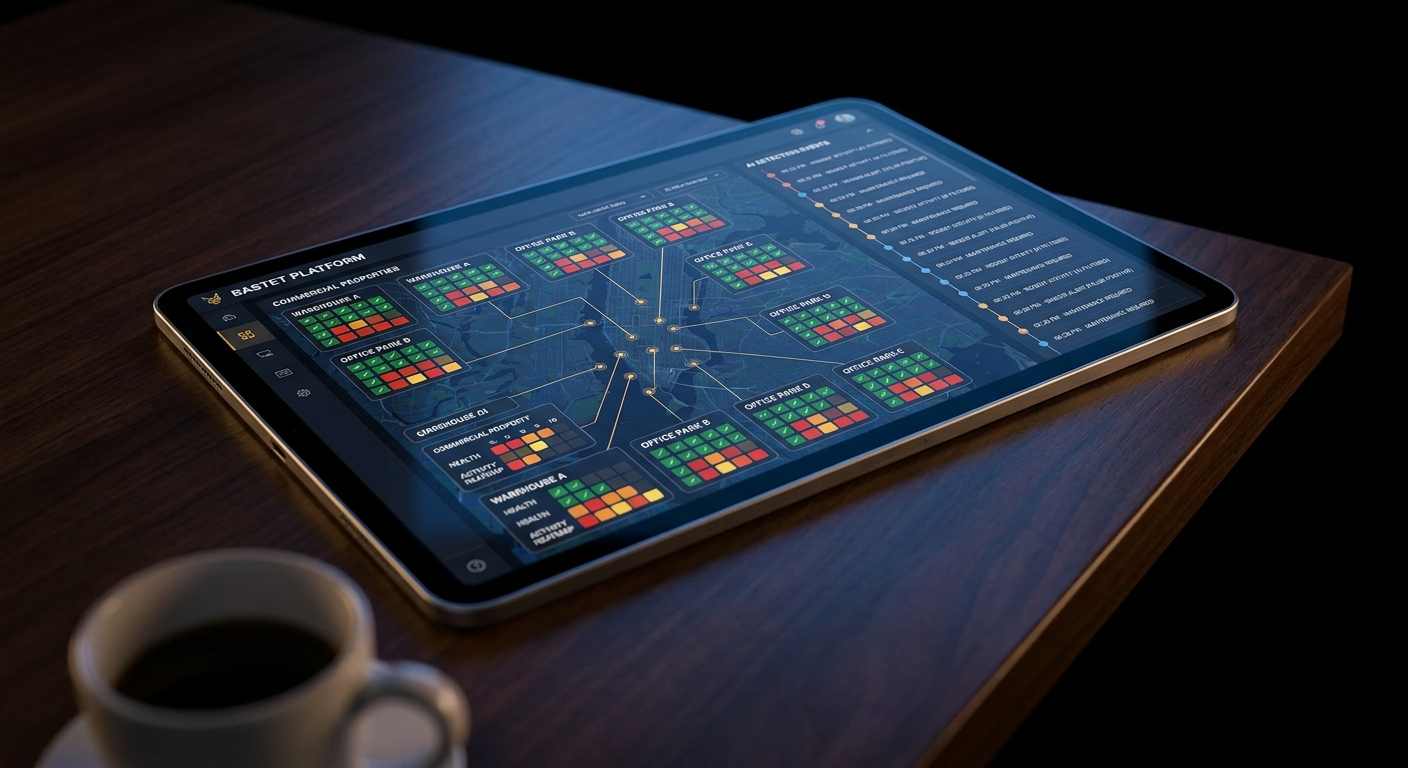
Figure 2: The Bastet Platform dashboard provides real-time spatial analytics, heat maps, and automated compliance reporting across entire property portfolios.
Portfolio-Wide Oversight and Interactive Spatial Mapping
For property directors managing multi-site portfolios, the Bastet Platform offers a single, unified pane of glass. Users can monitor the pest-free status of multiple commercial towers across different cities or regions from a centralized interface. Within an individual property, the dashboard displays interactive, multi-layered facility maps. These digital floor plans map the exact physical location of every Bastet LoRa PIR Sensor, Bastet LoRa Trap Sensor, and Bastet Sensing Camera. The status of each node is displayed in real-time via a color-coded grid (e.g., green for secure, yellow for low-level activity detected, and red for confirmed pest presence or trap activation), allowing engineering teams to dispatch maintenance personnel with surgical precision.
Predictive Heat Maps and Automated Audit Reporting
By aggregating historical detection data, the Bastet Platform’s machine learning algorithms generate predictive heat maps that highlight structural vulnerabilities and pest migration pathways over time. If a specific loading dock or waste disposal area consistently shows elevated activity on Tuesday nights, the system alerts management to inspect door sweeps, seals, or waste handling protocols in that specific zone.
Crucially for green building compliance, the dashboard features an automated, one-click reporting engine. This tool compiles all sensor logs, trap activations, and non-chemical interventions into structured, audit-ready PDF and CSV reports. These documents are formatted specifically to meet the documentation criteria for LEED v4.1 IPM credits and WELL v2 Materials audits, resulting in an 85% reduction in administrative hours spent on audit preparation. Facility managers no longer need to manually compile paper logs from external contractors; the Bastet Platform provides an unalterable, digitally signed record of continuous environmental stewardship.
6. Financial and Operational ROI: How Non-Chemical Monitoring Protects Asset Value
While the environmental and health benefits of pesticide-free facilities management are clear, the financial return on investment (ROI) of the Bastet Platform is equally compelling for institutional real estate investors and asset managers.
Preventing Catastrophic Infrastructure Downtime
Modern Grade-A office towers house sophisticated IT infrastructure, fiber-optic risers, and localized data centers that serve high-value tenants, including financial institutions and technology firms. Rodents possess continuously growing incisors that compel them to gnaw on hard surfaces, including electrical wiring and fiber-optic cabling. Because rodents can easily breach structural openings under 6mm in width, they frequently access cable trays and riser shafts. According to the Uptime Institute (2025), a single rodent chewing through a critical fiber-optic trunk line can trigger catastrophic network failures, resulting in IT infrastructure downtime that costs an average of $9,000 per minute in lost productivity, data recovery, and SLA penalties. By utilizing the Bastet LoRa PIR Sensor and Bastet Sensing Camera in riser shafts, facilities can detect rodent intrusion instantly, preventing physical damage before a network disruption occurs.
Direct Cost Reductions and Operational Efficiency
Transitioning from traditional, manual pest control contracts to the Bastet Platform yields immediate, quantifiable operational savings. By replacing routine, manual trap-checking with targeted, sensor-driven maintenance, properties achieve a 31% reduction in operational cleaning and maintenance costs. Maintenance staff are only dispatched to service traps that have actually been triggered, freeing up valuable engineering hours for other critical facility tasks. Furthermore, by eliminating the continuous purchase and application of chemical pesticides and rodenticides, properties achieve a 40% reduction in chemical pesticide usage, aligning with BRCGS standards and reducing chemical procurement costs. Financial modeling across deployed assets demonstrates that commercial towers achieve an average of 287% ROI within an 11-month payback period post-deployment, driven by reduced labor costs, eliminated chemical expenses, and the prevention of pest-related structural damage.
7. Implementation and Deployment: A Step-by-Step Integration Guide for Multi-Site FM
Deploying the Bastet Platform across a single Grade-A tower or a multi-site commercial portfolio is a streamlined process designed to minimize disruption to building operations and tenant activities.
Step 1: Structural Vulnerability Assessment and RF Mapping
The deployment begins with a comprehensive physical and digital audit of the facility. Bastet’s technical integration team analyzes the building’s architectural blueprints to identify high-risk zones, including loading docks, waste management facilities, food service areas, mechanical rooms, and vertical riser shafts. Simultaneously, an RF (Radio Frequency) sweep is conducted to determine the optimal placement of the Bastet LoRa Gateway, ensuring complete, redundant wireless coverage across all subterranean levels and high-rise floors.
Step 2: Hardware Installation and Edge Configuration
Once the spatial plan is finalized, the non-invasive hardware installation commences. Because the Bastet LoRa PIR Sensor, Bastet LoRa Trap Sensor, and Bastet Sensing Camera are battery-powered and communicate wirelessly, they require no electrical wiring or structural modifications. Sensors are mounted using industrial-grade adhesives or magnetic mounts in designated monitoring zones. The edge-AI models on the Sensing Cameras are configured and calibrated to the specific lighting and environmental conditions of each installation site.
Step 3: Dashboard Integration and Alert Threshold Setup
With the physical hardware active, the devices are mapped to the property’s digital twin on the Bastet Platform dashboard. Facility managers define custom escalation workflows and alert thresholds. For example, a motion detection event in a high-sensitivity area (such as a tenant server room) can be configured to trigger an immediate SMS and email alert to the on-duty engineering team with sub-3 second latency, while a routine trap activation in a basement waste room is routed to the daily maintenance queue.
Step 4: Staff Training and Automated Compliance Reporting
The final step involves onboarding the facility management team and external service partners. Operators are trained to navigate the dashboard, interpret predictive heat maps, and export compliance reports. The system is configured to automatically generate monthly environmental reports, providing the documented proof of non-chemical operations required for ongoing LEED and WELL v2 certification audits.
8. Frequently Asked Questions (FAQ)
How does continuous IoT pest monitoring enable pesticide-free facilities management?
Continuous IoT monitoring replaces the preventative spraying of chemical pesticides with 24/7 digital surveillance. By utilizing sensors to detect pest activity at the earliest stage, facility managers can implement targeted, non-chemical physical interventions (such as sealing structural entry points or deploying mechanical traps) only when and where activity is detected, eliminating the need for broad-spectrum chemical applications.
How does the Bastet Platform support LEED and WELL certifications?
The Bastet Platform continuously documents the absence of chemical pesticide usage and provides real-time, audit-ready data logs. This satisfies the strict non-chemical monitoring and documentation requirements of the LEED v4.1 Integrated Pest Management (IPM) credit and the WELL v2 Materials Concept (Feature X10), helping properties secure valuable certification points efficiently.
Can the LoRa wireless signal penetrate thick concrete and steel in high-rise buildings?
Yes. The Bastet LoRa Gateway utilizes sub-gigahertz LoRa wireless technology, which is specifically engineered for deep structural penetration. A single gateway can reliably transmit data through multiple floors of reinforced concrete, steel beams, and subterranean basements over a range of up to 10 kilometers, ensuring comprehensive building-wide connectivity without relying on the building's internal Wi-Fi network.
How does the edge-AI technology in the Bastet Sensing Camera prevent false alarms?
The Bastet Sensing Camera features an onboard "AI in a Box" edge processor that analyzes visual data locally. The AI model is trained to identify and classify specific pest species while ignoring non-pest movements, such as falling dust, shadows, or human maintenance activity. This edge-level filtering achieves a 98% reduction in false-positive alerts, ensuring that facility teams only respond to genuine threats.
9. Conclusion: The Future of Intelligent, Healthy Built Environments
The integration of AI and IoT technology is redefining the standards of commercial property management. As institutional investors, regulatory bodies, and premium tenants demand higher environmental performance and healthier indoor spaces, traditional, chemical-heavy facilities management practices are becoming obsolete. Transitioning to pesticide-free operations is no longer just an environmental ideal; it is a highly profitable, risk-mitigating operational strategy.
The Bastet Platform provides the technological foundation required to achieve this transition. By combining advanced edge-AI computer vision, robust sub-gigahertz LoRa hardware, and intuitive dashboard intelligence, Bastet AI empowers facility managers to protect their physical assets, optimize operational costs, and secure prestigious LEED and WELL certifications with absolute confidence. The future of commercial real estate is smart, sustainable, and pesticide-free.
To learn more about how the Bastet Platform can transform your property portfolio's environmental performance and operational efficiency, visit Bastet AI and schedule a comprehensive facility assessment today.
References
- Building Owners and Managers Association (BOMA). (2026). The Evolution of ESG in Commercial Real Estate: Operational Best Practices for Grade-A Assets. BOMA International Reports.
- Harvard T.H. Chan School of Public Health. (2025). The Impact of Indoor Environmental Quality on Cognitive Function and Occupant Health in Modern Office Buildings. Harvard University Press.
- International WELL Building Institute (IWBI). (2026). WELL Building Standard v2: Materials and Community Concept Guidelines. IWBI Global Standards.
- U.S. Green Building Council (USGBC). (2026). LEED v4.1 Operations and Maintenance (O+M) Beta Guide: Integrated Pest Management Credit Requirements. USGBC Publications.
- Uptime Institute. (2025). Global Data Center Downtime and Infrastructure Risk Analysis. Uptime Institute Research.
Want to learn more about Bastet AI smart pest control solutions?
Message us on WhatsApp — our team will get back to you.
💬 WhatsApp Us