
Deep-Freeze Integrity: How Bastet's sub-giga LoRa and Edge AI Revolutionize Pest Management in Cold Chain Logistics
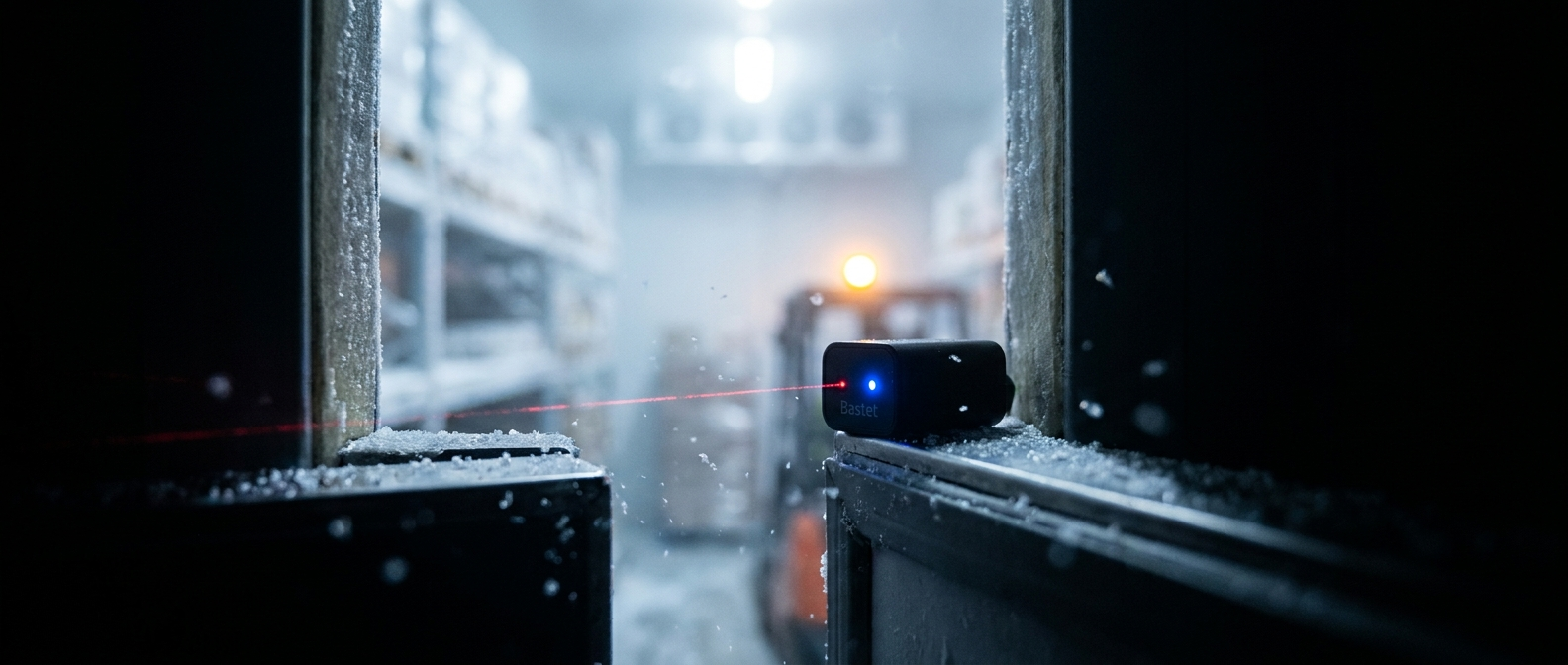
Key Takeaways
- Pesticide-Free Facilities Management: Continuous IoT pest monitoring enables pesticide-free facilities management by replacing scheduled chemical applications with targeted, data-driven interventions. Real-time alerts from thermal and optical sensors pinpoint rodent activity instantly, allowing operators to deploy localized, non-chemical exclusion tactics and physical traps only when and where pests are detected, eliminating prophylactic chemical spraying.
- Faraday Shielding Solved: Standard Wi-Fi and Bluetooth protocols fail inside metal-clad cold storage envelopes. Bastet AI’s 920MHz sub-gigahertz LoRa wireless communication penetrates dense insulated metal panels (IMPs) over a 10 kilometers signal range.
- Extreme Temperature Resilience: Standard IoT batteries fail rapidly in sub-zero environments. Bastet’s wide-temperature sensors utilize specialized lithium-thionyl chloride batteries certified to operate reliably down to -40°C.
- Edge AI Ingress Protection: By processing computer vision models locally on the Bastet Sensing Camera ("AI in a Box"), facilities achieve sub-3 second latency for rodent detection with a 98% reduction in false-positive alerts, all while operating offline to protect data privacy.
- Regulatory & Financial Compliance: Automated data logging on the Bastet Platform reduces audit preparation time for BRCGS and HACCP by 85%, while preventing structural damage that can trigger a 25% increase in refrigeration energy costs.
Table of Contents
- 1. Introduction: The Cold Chain Pest Dilemma
- 2. The Vulnerabilities of Cold Chain Storage: Why Rodents Target Insulated Panels
- 3. The RF Signal Battleground: Overcoming Metal Freezer Shielding
- 4. Extreme Environment Engineering: Battery Survival at -40°C
- 5. Loading Dock Ingress Protection: Edge Computer Vision and "AI in a Box"
- 6. Regulatory Compliance Automation: BRCGS Issue 4 and HACCP
- 7. The ROI Equation: Financial and Operational Benefits
- 8. Implementation Blueprint: Step-by-Step Integration Guide
- 9. Frequently Asked Questions (FAQ)
1. Introduction: The Cold Chain Pest Dilemma
In modern cold chain logistics, maintaining thermal integrity is only half the battle. Facilities managers face an insidious, hidden threat that directly undermines both structural insulation and food safety protocols: rodent infestation. Traditional pest control methodologies, which rely on scheduled manual inspections and toxic chemical baits, are fundamentally incompatible with modern cold storage environments. To address these challenges, operators are transitioning to pesticide-free facilities management. By deploying continuous IoT pest monitoring, facilities can eliminate the risks of chemical contamination, protect sensitive inventory, and satisfy stringent global safety standards.
According to the British Retail Consortium Global Standards (BRCGS, 2026), cold storage facilities must demonstrate proactive, preventative pest control measures rather than reactive treatments. Similarly, Hazard Analysis Critical Control Point (HACCP) Version 4 protocols mandate continuous monitoring of critical control points to prevent biological hazards. Traditional pest control companies visit facilities on a bi-weekly or monthly basis, leaving a dangerous visibility gap of up to 30 days. During this window, a single rodent can compromise insulated wall panels, chew through high-voltage electrical lines, and contaminate thousands of kilograms of frozen food or pharmaceutical stock.
To bridge this gap, Bastet AI has engineered an integrated ecosystem of hardware and software designed specifically for the harsh conditions of sub-zero logistics. By combining long-range, low-power wireless communication with edge-based artificial intelligence, Bastet AI makes the pest visible, allowing operators to transition from blind, reactive chemical applications to precise, automated, and continuous digital oversight.
2. The Vulnerabilities of Cold Chain Storage: Why Rodents Target Insulated Panels
Cold storage facilities are designed as sealed envelopes, typically constructed using Insulated Metal Panels (IMPs) with polyurethane or expanded polystyrene (EPS) cores. While these panels provide exceptional thermal resistance, their soft, synthetic interior cores represent an ideal nesting habitat for rodents. Mice and rats do not consume the insulation for food; instead, they excavate extensive tunnel networks within the IMPs to escape the extreme cold of the freezer floor and exploit the heat radiating from the building's exterior.
This nesting behavior causes severe structural and operational damage:
- Thermal Bridging: As rodents hollow out the polyurethane core, they destroy the thermal barrier. This creates localized thermal bridges where warm, humid exterior air collides with sub-zero interior air.
- Ice Formation and Structural Stress: The resulting condensation freezes instantly inside the wall panels. Over time, the expansion of this ice causes the metal skins of the IMPs to delaminate, warping the structural frame of the freezer envelope.
- Energy Inefficiency: Thermal bridging forces the refrigeration compressors to work harder to maintain setpoint temperatures. Studies by the Building Owners and Managers Association (BOMA, 2026) indicate that compromised insulation can lead to a 25% increase in refrigeration electricity costs.
Because these tunnel networks are hidden behind sheet metal skins, visual inspections cannot detect them until the structural damage is already severe. Rodents require under 6mm openings as the entry threshold to gain access to these wall cavities. Once inside, they can multiply undetected for months. Continuous, sensor-driven monitoring at potential entry points is the only viable method to intercept pests before they penetrate the thermal envelope.
3. The RF Signal Battleground: Overcoming Metal Freezer Shielding
Deploying wireless IoT sensors inside a cold storage facility presents a severe RF (Radio Frequency) engineering challenge. Standard industrial warehouses are constructed with massive steel columns, high-density racking, and metal-clad IMPs. This configuration acts as a giant Faraday cage, reflecting and absorbing high-frequency radio waves.
Traditional wireless technologies fail in these environments for specific physical reasons:
| Wireless Protocol | Frequency Band | Freezer Penetration Capability | Primary Failure Mode |
|---|---|---|---|
| Wi-Fi (802.11) | 2.4 GHz / 5 GHz | Extremely Poor | High attenuation through metal skins; signal scattering from high-density racking. |
| Bluetooth / Zigbee | 2.4 GHz | Extremely Poor | Short range; unable to penetrate insulated metal panels (IMPs); high power drain. |
| Bastet LoRa Technology | 920MHz (Sub-GHz) | Outstanding | Diffracts around structural steel; penetrates IMPs; up to 10km line-of-sight range. |
To overcome this RF barrier, the Bastet LoRa Gateway utilizes 920MHz sub-gigahertz LoRa wireless communication. Sub-gigahertz frequencies have much longer wavelengths than 2.4 GHz signals, allowing them to diffract around structural steel obstacles and pass through dense insulation materials.
By operating on a narrow bandwidth with Chirp Spread Spectrum (CSS) modulation, Bastet's devices maintain a stable link budget even in high-interference environments. This advanced RF engineering enables a single Bastet LoRa Gateway to achieve a 10 kilometers signal range in open space, and easily penetrate multiple layers of concrete and metal cladding within a 100,000-square-meter cold storage facility.
4. Extreme Environment Engineering: Battery Survival at -40°C
Standard consumer-grade electronics and lithium-ion batteries fail rapidly when exposed to sub-zero temperatures. At temperatures below 0°C, the internal resistance of standard batteries spikes, causing a severe drop in operating voltage and reducing the effective battery life from years to mere weeks. In deep-freeze environments operating at -30°C to -40°C, typical batteries freeze entirely, causing permanent physical damage to the cell structure and rendering the sensors useless.
Bastet AI addresses this environmental challenge through rigorous hardware engineering. The Bastet LoRa PIR Sensor and Bastet LoRa Trap Sensor are built with industrial-grade, wide-temperature components and powered by specialized lithium-thionyl chloride (Li-SOCl2) chemistry. These batteries are specifically formulated to maintain a stable operating voltage even under extreme thermal stress.
Bastet's Cold-Chain Hardware Specifications:
- Temperature Certification: Fully certified to operate continuously from -40°C to +85°C without signal drift or component degradation.
- Enclosure Protection: IP67-rated, hermetically sealed polycarbonate housings that prevent moisture ingress and internal condensation during defrost cycles.
- Power Management: Ultra-low-power sleep states combined with high-capacity Li-SOCl2 chemistry deliver an operational battery life of up to 5 years inside active deep-freeze zones.
By eliminating the need for frequent battery replacements, Bastet AI minimizes maintenance overhead and prevents technicians from having to enter hazardous, ultra-low-temperature zones simply to service pest control hardware.
5. Loading Dock Ingress Protection: Edge Computer Vision and "AI in a Box"
The loading dock is the primary point of entry for pests in cold chain logistics. High-traffic dock doors are opened and closed hundreds of times daily, creating brief but frequent opportunities for rodents to slip inside. Traditional motion-activated cameras are highly ineffective in these busy areas, generating thousands of false alarms triggered by forklifts, shifting shadows, dust, and moving plastic strip curtains.
To solve this, the Bastet Sensing Camera utilizes localized edge computer vision—a true "AI in a Box" architecture. Instead of streaming raw video footage to the cloud for processing, which consumes massive network bandwidth and introduces latency, the camera processes all visual data locally using an onboard neural network optimized for rodent detection.
"By moving the AI inference models directly to the edge, our systems achieve a sub-3 second latency for edge-AI detection and notification, allowing on-site teams to intercept pests immediately at the point of entry."
This edge-AI approach delivers several critical operational advantages:
- 98% Reduction in False-Positive Alerts: The localized neural network distinguishes between human workers, industrial machinery, and target pests (rats and mice), filtering out environmental noise.
- Zero Bandwidth Tax: The system only transmits metadata and short, compressed verification clips when a confirmed pest event occurs, preserving precious network bandwidth for core warehouse management systems.
- GDPR and Privacy Compliance: Because all video processing occurs locally on the device and human faces are automatically blurred or excluded at the edge, the system fully complies with strict workplace privacy regulations.
- Offline Autonomy: In the event of a primary network outage, the Bastet Sensing Camera continues to monitor, detect, and log pest events locally, syncing the data to the cloud once connectivity is restored.
6. Regulatory Compliance Automation: BRCGS Issue 4 and HACCP
For cold chain operators handling food, beverages, and pharmaceuticals, regulatory compliance is a continuous operational burden. Under the British Retail Consortium Global Standards (BRCGS) Storage and Distribution Issue 4, facilities must maintain detailed, tamper-proof records of all pest control activities, trap inspections, and corrective actions. Manual logbooks are prone to human error, omission, and falsification, presenting a major liability during unannounced third-party audits.
The Bastet Platform automates this entire compliance workflow. Every time a Bastet LoRa Trap Sensor or Bastet LoRa PIR Sensor detects activity, the event is permanently logged with a cryptographic timestamp, sensor ID, and temperature reading.
According to compliance data analyzed across multi-site logistics networks, implementing the Bastet Platform delivers a 40% reduction in chemical pesticide usage, aligning facilities with the environmental safety goals of the U.S. Green Building Council (USGBC, 2026) and the WELL Building Institute (IWBI, 2026). Furthermore, the automated logging capabilities yield an 85% reduction in administrative hours spent on audit preparation.
How the Bastet Platform Mobile App Streamlines Audits:
- Instant Digital Logbooks: Auditors can scan QR codes on individual traps to instantly view their entire inspection and activation history.
- Automated Trend Analysis: Generate heatmaps of pest activity over time to prove the effectiveness of corrective actions and structural exclusion measures.
- Digital Chain of Custody: Document the exact time a trap was triggered, when a technician responded, and how the pest was disposed of, creating a seamless audit trail.
7. The ROI Equation: Financial and Operational Benefits
While food safety and compliance are critical, the financial impact of rodent activity is often the most compelling driver for adopting smart pest systems. Beyond structural insulation damage, rodents pose a catastrophic threat to facility infrastructure by chewing through electrical wiring and fiber-optic communication lines.
According to research by the Uptime Institute (2025), the cost of critical IT and infrastructure downtime in automated warehouses averages $9,000 per minute. A single rat chewing through a primary control cable can halt automated storage and retrieval systems (ASRS), disrupt shipping schedules, and lead to massive inventory spoilage if cooling systems are knocked offline.
By transitioning from manual, reactive pest control to Bastet’s continuous monitoring ecosystem, logistics operators achieve substantial, measurable savings:
- 31% reduction in operational cleaning and maintenance costs by preventing pest nesting and structural damage before it requires major remediation.
- Elimination of emergency service call-out fees through real-time, precise trap alerts.
- Protection of brand reputation and avoidance of costly product recalls or regulatory fines.
Financial modeling across mid-to-large-scale cold chain deployments demonstrates that a typical facility achieves a 287% ROI achieved within an 11-month payback period. This makes the transition to Bastet AI not just a compliance victory, but a highly profitable operational upgrade.
8. Implementation Blueprint: Step-by-Step Integration Guide
Deploying the Bastet AI ecosystem into an active cold chain facility is designed to be non-disruptive, requiring no downtime or complex structural modifications. Below is the standard implementation blueprint used by our field engineering teams:
Step 1: RF Site Survey & Gateway Placement
Our engineers map the facility's structural steel and IMP layout. The Bastet LoRa Gateway is installed in a central, elevated location. Thanks to the high penetration of the 920MHz sub-gigahertz LoRa wireless communication, a single gateway can easily cover up to 100,000 square meters of dense cold storage space.
Step 2: Sensor Deployment & Ingress Protection
Bastet LoRa PIR Sensors are mounted along the interior perimeter of freezer walls and near insulated panel joints. Bastet LoRa Trap Sensors are attached to physical traps placed at critical control points. All hardware is verified to ensure the IP67 housings and wide-temperature batteries are securely positioned.
Step 3: Edge AI Camera Installation at Loading Docks
Bastet Sensing Cameras are mounted above high-traffic dock doors and rapid-roll freezer doors. The onboard "AI in a Box" models are calibrated to the specific lighting and traffic patterns of the dock, ensuring immediate, sub-3 second alerts for any incoming pests.
Step 4: Platform Integration & Staff Training
The local hardware is linked to the cloud-based Bastet Platform. Facility managers and QA leads are trained on the mobile app, enabling them to monitor real-time status, receive instant alerts, and generate automated compliance reports for upcoming audits.
9. Frequently Asked Questions (FAQ)
Q1: How does continuous IoT pest monitoring enable pesticide-free facilities management?
Answer: Continuous IoT pest monitoring replaces scheduled chemical treatments with highly targeted, data-driven interventions. Real-time alerts from sensors pinpoint rodent activity instantly, allowing operators to deploy localized, non-chemical exclusion tactics and physical traps only when and where pests are detected, eliminating the need for prophylactic chemical spraying.
Q2: Why do standard wireless sensors fail inside cold storage freezers?
Answer: Standard sensors rely on high-frequency protocols like Wi-Fi or Bluetooth, which cannot penetrate the metal-clad insulated panels of freezer envelopes due to Faraday shielding. Additionally, standard batteries lose voltage and freeze in sub-zero environments, causing rapid device failure.
Q3: What makes Bastet's hardware capable of surviving in deep-freeze environments?
Answer: Bastet’s sensors are engineered with industrial-grade, wide-temperature components and powered by specialized lithium-thionyl chloride batteries. They are certified to operate reliably down to -40°C and are housed in IP67-rated, hermetically sealed enclosures to prevent condensation damage.
Q4: How does the Bastet Sensing Camera protect employee privacy while monitoring loading docks?
Answer: The Bastet Sensing Camera utilizes localized edge computer vision ("AI in a Box"). All video processing is performed locally on the device, and human faces are automatically blurred or