
AI Pest Monitoring for the Cold Chain | Bastet AI
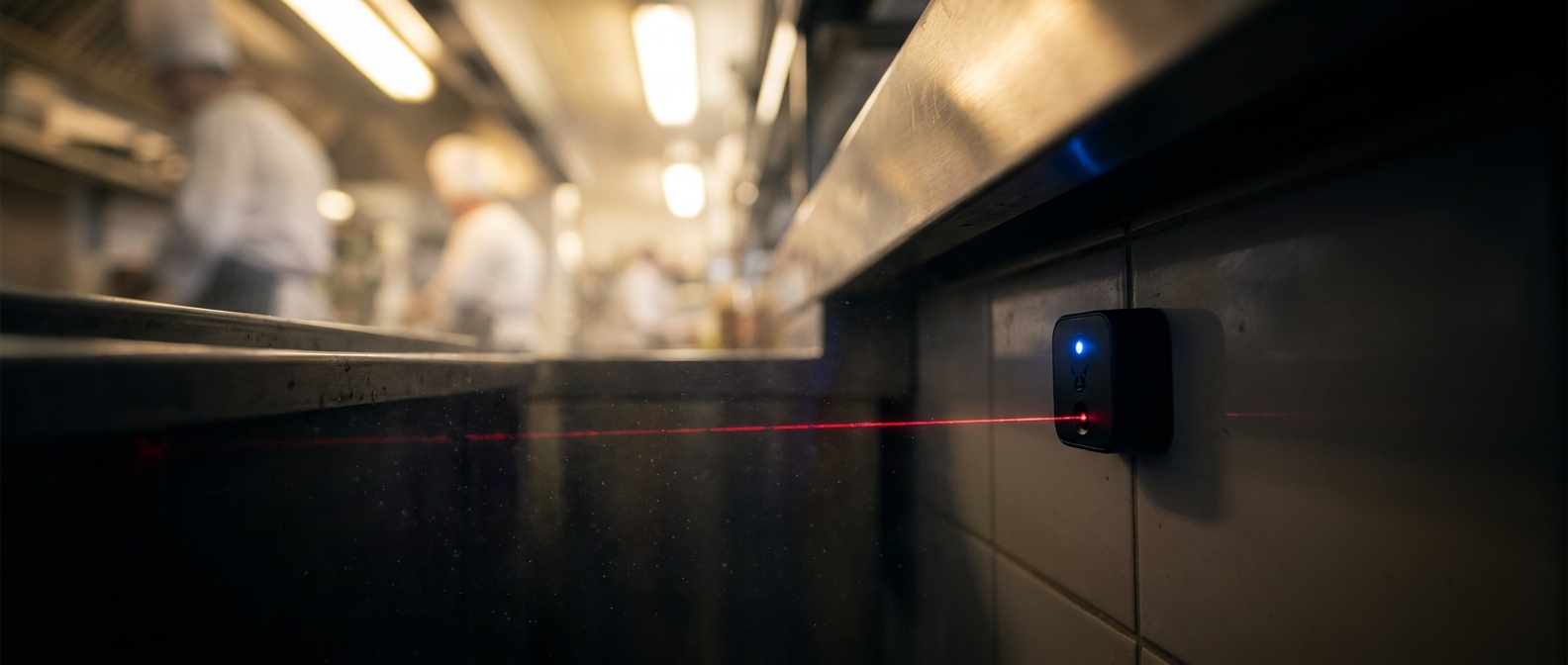
Securing the Temperature-Controlled Supply Chain with AI-Powered IoT Cold Chain Pest Control
Key Takeaways / Executive Summary
- Structural Integrity: Rodent gnawing in polyurethane/polystyrene panels causes up to 25% energy loss via thermal bridging.
- Signal Penetration: Standard Wi-Fi/Bluetooth fail in shielded cold rooms; Bastet's 920MHz sub-gigahertz LoRa band penetrates dense metal-lined walls.
- Extreme Thermal Performance: Specialized lithium-thionyl chloride batteries are certified to operate down to -40°C without capacity drop.
- Real-Time Edge AI: The Bastet Sensing Camera and "AI in a Box" edge processor catch pests at loading docks with under 3 seconds latency and a 98% false alarm reduction.
- Audit Readiness: Automated digital logs replace manual checklists, reducing audit prep time by up to 85% for BRCGS and HACCP compliance.
Table of Contents
- 1. Structural Risks: How Rodents Destroy Cold Storage Insulation
- 2. Overcoming RF Attenuation in Shielded Environments
- 3. Engineering for Extreme Cold: Sensor Survivability at -40°C
- 4. Edge Computer Vision: Real-Time Verification at Loading Docks
- 5. Regulatory Compliance: Automating BRCGS and HACCP Audits
- 6. Comparative Architecture: Bastet LoRa vs. Legacy Wireless
- 7. Frequently Asked Questions (FAQ)
- 8. References
1. Structural Risks: How Rodents Destroy Cold Storage Insulation
Modern cold storage facilities rely on high-efficiency insulated metal panels (IMPs) filled with polyurethane or polystyrene foam to maintain precise sub-zero temperatures. However, these insulated structures are highly vulnerable to rodent intrusion. Mice and rats can exploit any gap larger than the critical 6 millimeters (0.24 inches) gap threshold for rodent exclusion to gain entry into the wall cavities (GCCA, 2026). Once inside, they tunnel through the insulation core to build nests, seeking refuge from the extreme cold of the active storage zones.
This internal nesting activity causes severe structural damage. By hollowout the core of the IMPs, rodents create extensive thermal bridging—direct pathways for heat conduction into the refrigerated space. This localized thermal degradation creates warm pockets that force refrigeration compressors to run continuously. Industry studies show that polyurethane insulation thermal bridging energy increase can reach up to 25% in additional electricity costs (GCCA, 2026). Furthermore, if these hot pockets compromise high-value pharmaceuticals or frozen foods, the resulting lead-time and cost of premium cold storage facility downtime can exceed over $25,000 per hour in lost product and emergency operational recovery.
2. Overcoming RF Attenuation in Shielded Environments
Establishing reliable wireless communications inside a cold storage warehouse is a notoriously difficult RF engineering challenge. To prevent heat transfer, cold rooms are constructed as massive metallic envelopes, featuring thick steel sheeting, foil-faced vapor barriers, and reinforced concrete floors. These materials act as a highly effective Faraday cage, causing extreme signal attenuation that completely blocks high-frequency wireless protocols like Wi-Fi (2.4GHz/5GHz) and Bluetooth (BLE).
To bypass this physical barrier, the Bastet LoRa Gateway utilizes a sub-gigahertz 920MHz sub-gigahertz band. This lower frequency band features significantly longer wavelengths, allowing the signal to diffract around metal structural columns and penetrate thick, foil-lined insulated walls. In dense, multi-chambered cold storage facilities, Bastet's LoRaWAN architecture achieves a stable communication range of up to 10 kilometers. This ensures that deep-freeze zones remain continuously connected to the central monitoring system without requiring expensive, high-maintenance network repeaters inside the low-temperature envelopes.
3. Engineering for Extreme Cold: Sensor Survivability at -40°C
Standard commercial IoT sensors fail rapidly when deployed in commercial freezers. Standard lithium-ion or alkaline batteries experience severe voltage drops and electrolyte freezing at temperatures below 0°C, rendering them useless within weeks. Additionally, condensation from rapid temperature fluctuations during defrost cycles causes short circuits and rapid corrosion of standard PCB components.
To address these hostile environments, Bastet's specialized hardware lineup—including the Bastet LoRa PIR Sensor and the Bastet LoRa Trap Sensor—is engineered with industrial-grade, hermetically sealed enclosures. These devices are powered by specialized lithium-thionyl chloride (Li-SOCl2) batteries, certified for a continuous operating temperature down to -40°C. These batteries maintain flat discharge curves and high energy density even in deep-freeze environments, guaranteeing an operational lifespan of up to 5 years. This eliminates the need for frequent, manual battery replacements that disrupt cold room thermal profiles and increase operational labor costs.
4. Edge Computer Vision: Real-Time Verification at Loading Docks
Loading docks and high-speed roll-up doors represent the primary vector for pest ingress in logistics facilities. Rodents and insects exploit the brief moments these doors remain open during pallet transfers. Traditional passive traps only record captures after an infestation has occurred, offering no preventative defense. Bastet solves this vulnerability by deploying the Bastet Sensing Camera paired with an "AI in a Box" edge processing device directly at high-risk dock-levelers.
This system runs highly optimized deep learning models locally at the edge to detect, classify, and track moving pests in real time. By running the inference models locally on the edge device rather than routing raw video streams to the cloud, Bastet achieves a notification alert latency of under 3 seconds (Roboflow, 2026). This sub-3 second speed allows facility managers to receive instant push alerts via the Bastet Platform Mobile App and trigger automated deterrents or close secondary doors before the pest can migrate into the main storage zones. Furthermore, the advanced spatial filtering algorithms achieve up to 98% false alarm reduction, ignoring moving shadows, dust, and forklift exhaust plumes.
5. Regulatory Compliance: Automating BRCGS and HACCP Audits
In the highly regulated food and pharmaceutical logistics sectors, manual pest control logs are no longer sufficient. Under the BRCGS Storage and Distribution Standard Issue 4, facilities must demonstrate continuous, proactive pest monitoring and immediate corrective action documentation (BRCGS, 2026). Traditional pest control contracts rely on monthly manual trap inspections, leaving a 30-day blind spot where contamination can occur unnoticed, violating Hazard Analysis Critical Control Point (HACCP) principles (Food Safety Magazine, 2026).
The Bastet Platform Mobile App digitizes and automates this entire compliance framework. Every trigger from a Bastet LoRa Trap Sensor or Bastet Zigbee Trap Sensor is instantly timestamped, geolocated, and logged into an immutable digital ledger. This real-time data collection reduces manual trap inspection labor by up to 50%. When auditors request documentation, the platform generates comprehensive, audit-ready reports with a single click, reducing audit reporting preparation time by up to 85%. This guarantees that compliance officers can prove continuous, 24/7 facility oversight with zero gaps in data.
6. Comparative Architecture: Bastet LoRa vs. Legacy Wireless
To understand why specialized IoT hardware is required for cold chain environments, it is helpful to compare the performance profiles of sub-gigahertz LoRa networks against standard commercial wireless protocols:
| Performance Parameter | Bastet LoRa (920MHz) | Standard Wi-Fi (2.4GHz) | Bluetooth Low Energy (BLE) |
|---|---|---|---|
| Signal Penetration | Excellent (Diffracts around steel & thick insulation) | Extremely Poor (Reflected by metal-lined walls) | Poor (Highly absorbed by cold, dense structures) |
| Battery Life at -20°C | Up to 5 Years (Li-SOCl2 optimized) | Less than 3 Months (High power draw) | Less than 6 Months (Standard coin cell failure) |
| Max Indoor Range | Up to 10 kilometers (Line of sight / dense) | 50 - 100 meters (Severely degraded by obstacles) | 10 - 30 meters (Highly localized) |
| Deployment Complexity | Very Low (One gateway covers entire facility) | High (Requires multiple repeaters & cabling) | High (Requires dense mesh of local receivers) |
By leveraging the sub-gigahertz spectrum, the Bastet system minimizes infrastructure costs while guaranteeing reliable data transmission from inside the most heavily insulated cold rooms back to the cloud platform.
7. Frequently Asked Questions (FAQ)
Q1: How do Bastet sensors survive in temperatures as low as -40°C?
A1: Bastet sensors utilize specialized lithium-thionyl chloride (Li-SOCl2) batteries and IP67/IP68 hermetically sealed enclosures. This prevents moisture ingress during defrost cycles and maintains a stable voltage output, preventing the rapid battery drain common in standard consumer electronics.
Q2: Why is LoRa preferred over Wi-Fi for cold storage facilities?
A2: Cold storage walls are lined with thick sheet metal and foil insulation, which act as barriers to high-frequency signals like Wi-Fi (2.4GHz). Bastet's LoRa gateway operates on the sub-gigahertz 920MHz band, which easily penetrates these metal barriers and covers distances up to 10 kilometers without requiring signal repeaters.
Q3: How does the Bastet Sensing Camera prevent false alarms at loading docks?
A3: The camera uses localized edge AI processing that filters out non-pest movements such as forklift exhaust, dust, shadows, and shifting light. This advanced computer vision model reduces false alarms by up to 98% while delivering real-time alerts in under 3 seconds.
Q4: Does the Bastet Platform support compliance with BRCGS and HACCP standards?
A4: Yes. The Bastet Platform Mobile App replaces manual, error-prone paper checklists with continuous, timestamped digital logs. This automated reporting system reduces audit preparation time by up to 85% and provides auditors with verifiable, real-time proof of pest management compliance.
8. References
- Global Cold Chain Alliance (GCCA). (2026). Cold Storage Structural Integrity and Energy Efficiency Guidelines. GCCA Publications.
- BRCGS. (2026). Global Standard for Storage and Distribution (Issue 4). British Retail Consortium Global Standards.
- Food Safety Magazine. (2026). The Digitization of HACCP: Implementing Continuous IoT Monitoring in Food Logistics. Food Safety Media.
- Roboflow. (2026). Edge AI and Computer Vision Latency Standards in Industrial Automation. Roboflow Research.
- Edwards Vacuum. (2026). Thermal Dynamics and Energy Loss in Modern Industrial Refrigeration Systems. Edwards Engineering.
Want to learn more about Bastet AI smart pest control solutions?
Message us on WhatsApp — our team will get back to you.
💬 WhatsApp Us