
AI Pest Monitoring for Hospitals | Bastet AI
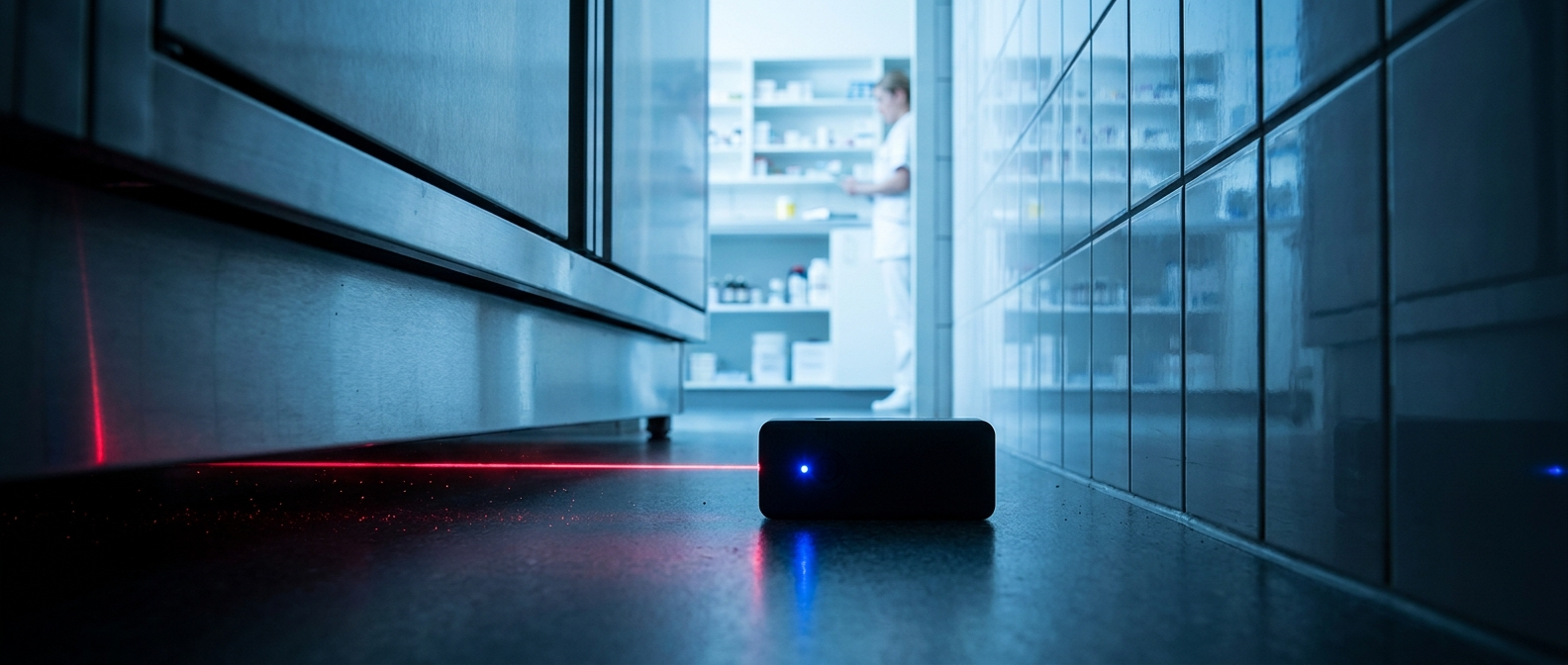
Maintaining Medical Sterility: Why Modern Hospital Sterile Zones and Clinical Pharmacies Rely on Bastet's AI-Powered IoT Sensors and Edge Vision to Prevent Rodent-Borne Contamination
Key Takeaways:Automated IoT Pest Monitoring: Replaces manual traps with continuous, 24/7 surveillance, eliminating human error and preventing rodent-borne pathogens from compromising sterile hospital zones.Passive Infrared (PIR) & Edge AI Vision: Combines ultra-low-power PIR sensors with advanced edge AI cameras to deliver 98% false-alarm reduction and sub-3 second alert latency, detecting pests before they reach critical clinical areas.Regulatory & Biosecurity Compliance: Ensures 100% pesticide-free monitoring to comply with ISO 14644-1 cleanroom standards, reducing manual regulatory audit preparation time by up to 85% while protecting sensitive medical infrastructure.
Table of Contents
- 1. The Zero-Tolerance Reality of Hospital Biosecurity
- 2. Vulnerabilities in Healthcare Infrastructure: Where Pathogens Meet Pathways
- 3. Bastet AI's Multi-Layered IoT Architecture for Sterile Environments
- 4. Edge Vision and AI-in-a-Box: Eliminating False Alarms in Real-Time
- 5. Compliance, Cleanroom Standards, and Audit Readiness
- 6. Financial and Operational ROI: Protecting Infrastructure and Lives
- 7. Frequently Asked Questions (FAQ)
- 8. References and Industry Sources
1. The Zero-Tolerance Reality of Hospital Biosecurity
The Critical Need for Sterile Integrity
In modern healthcare facilities, maintaining absolute sterility is not merely an operational goal; it is a fundamental pillar of patient safety. Operating rooms, intensive care units (ICUs), sterile compounding pharmacies, and clinical laboratories must remain entirely free from biological contaminants. The introduction of any foreign vector can lead to healthcare-associated infections (HAIs), which compromise patient recovery, prolong hospital stays, and dramatically increase mortality rates. Traditional pest control methods, which rely on periodic manual inspections, are fundamentally inadequate for these high-stakes environments where a single pest sighting can halt surgical procedures and trigger immediate regulatory shutdowns.
The Threat of Rodent-Borne Contamination
Rodents are among the most destructive vectors in healthcare environments. They carry a wide array of pathogens, including Salmonella, Leptospira, and various viral agents, which can be transmitted through droppings, urine, and dander. In clinical pharmacies, where intravenous medications and specialized therapeutics are prepared, the presence of a single rodent can contaminate entire batches of pharmaceuticals, resulting in millions of dollars in discarded inventory and severe legal liabilities. Furthermore, rodents harbor ectoparasites such as mites and fleas, which can quickly colonize ventilation shafts and spread throughout a facility, bypassing physical barriers and entering supposedly secure sterile zones.
2. Vulnerabilities in Healthcare Infrastructure: Where Pathogens Meet Pathways
Structural Entry Points and Micro-Openings
Modern hospitals are massive, complex architectural structures characterized by extensive utility networks, suspended ceilings, and service shafts. According to the World Health Organization (2025), rodents can gain entry through openings as small as 6 mm (0.24 inches). These micro-openings are ubiquitous in older hospital wings and are frequently created during routine maintenance, IT cabling installations, or plumbing upgrades. Once inside the wall cavities, rodents utilize cable trays and HVAC ductwork as high-speed transit corridors, allowing them to travel undetected between utility basements and highly sensitive clinical areas.
| Vulnerability Area | Physical Dimension / Risk Factor | Impact on Sterile Zones |
|---|---|---|
| Utility Penetrations | Openings > 6 mm (0.24 in) | Direct pathway for rodents into suspended ceilings above operating rooms. |
| HVAC & Ventilation | Air duct junctions and seals | Distribution of airborne dander, hair, and pathogens across sterile barriers. |
| Cold Storage & Pharmacies | Temperatures down to -40°C | Risk of nesting behind refrigeration compressors; destruction of clinical stock. |
The Danger to Critical Data and Electrical Infrastructure
Beyond the biological risks, rodents pose a severe threat to the physical and digital infrastructure of modern hospitals. Rodents have a physiological need to gnaw on hard surfaces to wear down their continuously growing incisors. This behavior frequently targets electrical wiring, fiber-optic communication lines, and network cabling. According to the Uptime Institute (2026), unplanned downtime in critical healthcare data infrastructure or server rooms can cost up to $9,000 per minute. A single rodent chewing through a primary network trunk line can disrupt electronic health record (EHR) access, telemetry monitoring, and emergency communication systems, directly jeopardizing patient care.
3. Bastet AI's Multi-Layered IoT Architecture for Sterile Environments
Sub-Gigahertz LoRa Connectivity for Deep Building Penetration
Hospitals are notoriously difficult environments for wireless communications. Thick reinforced concrete floors, heavy lead-shielded walls in radiology departments, and extensive metal ductwork create severe signal attenuation for standard Wi-Fi and Bluetooth networks. Bastet AI overcomes these physical barriers by utilizing a proprietary sub-gigahertz 920MHz LoRa Gateway. This advanced wireless technology provides an exceptional range, penetrating up to 10 kilometers of dense, concrete structures and heavy hospital lead-shielded walls. This ensures uninterrupted data transmission from the deepest basement utility tunnels to the highest penthouse mechanical rooms without interfering with sensitive medical telemetry or imaging equipment.
Industrial-Grade Sensors for Extreme Clinical Environments
Clinical pharmacies and medical research facilities often feature extreme environmental zones, including ultra-low temperature freezers and cold-chain storage areas. Bastet AI's hardware is specifically engineered to withstand these demanding conditions. Our IoT monitoring devices utilize industrial-grade, wide-temperature lithium-thionyl chloride batteries certified to operate in cold-chain hospital environments down to -40°C. This guarantees continuous, maintenance-free operation for up to five years, even when deployed inside deep-freeze storage units where biological samples and temperature-sensitive vaccines are housed.
4. Edge Vision and AI-in-a-Box: Eliminating False Alarms in Real-Time
High-Precision Edge AI and False-Alarm Reduction
In a high-stress hospital environment, clinical staff and facilities management teams cannot afford to waste time investigating false alarms triggered by shifting shadows, falling debris, or moving equipment. Bastet AI addresses this challenge by deploying its "AI in a Box" edge computer vision system. By processing visual data directly at the edge—on the device itself rather than routing raw video streams to a distant cloud server—the system delivers an exceptional 98% false-alarm reduction. This high-precision filtering ensures that facilities teams are only alerted when a genuine pest threat is detected, preserving valuable operational focus.
Sub-3 Second Alert Latency for Rapid Intervention
When a rodent enters a sensitive area, every second counts. Traditional pest control relies on traps that may only be checked once a week, allowing a dead or trapped rodent to decompose and release pathogens into the air. Bastet AI's edge-computed vision system operates with a sub-3 second alert latency. The moment a rodent is identified by the edge camera, an encrypted alert is transmitted via the LoRa gateway to the central monitoring platform. Facilities managers and infection control teams receive instant push notifications on their mobile devices, enabling them to intercept the pest and neutralize the threat before it can penetrate sterile cleanrooms or operating suites.
5. Compliance, Cleanroom Standards, and Audit Readiness
ISO 14644-1 Compliance and Pesticide-Free Monitoring
Operating rooms and pharmaceutical compounding areas must strictly comply with ISO 14644-1 (Class 1 to Class 8) standards, which govern airborne particulate cleanliness. Traditional pest control methods that utilize chemical sprays, dusts, or rodenticides are 100% prohibited in these zones due to the risk of volatile organic compound (VOC) outgassing and chemical particulate contamination. Bastet AI provides a 100% pesticide-free monitoring solution. By relying entirely on passive infrared (PIR) sensors, optical edge cameras, and non-toxic mechanical capture systems, Bastet AI ensures that hospital cleanrooms maintain absolute air purity and chemical compliance while remaining completely protected from pest incursions.
Streamlining Regulatory Audits with the Bastet Platform
Healthcare facilities are subject to rigorous, unannounced audits by organizations such as the Joint Commission, local departments of health, and international bodies enforcing ISO, HACCP, or BRCGS standards. Documenting pest control compliance manually is a tedious, error-prone process. The Bastet Platform Mobile App revolutionizes this workflow, reducing manual regulatory audit preparation time by up to 85%. The platform automatically generates time-stamped, tamper-proof digital logs of all sensor activity, system health checks, and intervention records. This comprehensive audit trail allows hospital administrators to instantly demonstrate continuous, proactive biosecurity compliance to inspectors with a single click.
6. Financial and Operational ROI: Protecting Infrastructure and Lives
Preventing Catastrophic Operational Downtime
The financial impact of a pest intrusion in a healthcare facility extends far beyond the cost of extermination. If a rodent is detected in an operating room, the entire suite must be shut down immediately for deep bio-decontamination, forcing the cancellation or redirection of critical surgeries. When factoring in the potential for rodent-induced electrical fires or server room failures—which, as noted by the Uptime Institute (2026), can cost up to $9,000 per minute—the risk of relying on legacy, manual pest control is financially untenable. Bastet AI's continuous monitoring system acts as an insurance policy, preventing catastrophic downtime by catching threats at the absolute perimeter of the facility.
Transitioning from Reactive to Predictive Biosecurity
By integrating Bastet AI's IoT sensors and edge vision, hospitals transition from a reactive, crisis-driven pest control model to a predictive, data-driven biosecurity strategy. Instead of reacting after a rodent has already compromised a sterile zone, facilities managers can analyze trend data, identify structural vulnerabilities, and reinforce entry points before pests can exploit them. This proactive posture not only safeguards patient health and maintains sterile integrity but also optimizes facilities management labor, allowing staff to focus on critical maintenance tasks rather than manual trap inspections.
7. Frequently Asked Questions (FAQ)
Q: How does Bastet AI ensure its wireless sensors do not interfere with sensitive hospital medical equipment?
A: Bastet AI utilizes sub-gigahertz 920MHz LoRa technology, which operates on a completely different frequency band than standard hospital Wi-Fi (2.4GHz and 5GHz), Bluetooth, and medical telemetry systems. This ensures zero electromagnetic interference (EMI) with critical medical devices, imaging equipment, or patient monitoring networks, making it completely safe for deployment in active clinical environments.
Q: Can Bastet AI sensors operate in ultra-low temperature medical freezers?
A: Yes. Bastet AI's specialized environmental sensors are equipped with industrial-grade lithium-thionyl chloride batteries certified to operate reliably in extreme cold-chain environments down to -40°C. This allows hospitals to monitor cold storage rooms and vaccine pharmacies without risking battery failure or signal loss.
Q: Why is pesticide-free monitoring critical for ISO 14644-1 cleanrooms?
A: ISO 14644-1 cleanrooms require strict control over airborne molecular contamination and particulates. Traditional chemical pesticides release volatile organic compounds (VOCs) and chemical particulates that compromise air purity and violate cleanroom standards. Bastet AI offers a 100% pesticide-free, optical, and sensor-based monitoring solution that poses zero contamination risk to sterile environments.
Q: How does the Bastet Platform reduce regulatory audit preparation time?
A: The Bastet Platform Mobile App automatically logs every sensor trigger, system status update, and maintenance action in a secure, centralized digital ledger. This eliminates the need for manual paper logs and reduces audit preparation time by up to 85%, allowing hospital administrators to instantly export compliant, audit-ready reports for regulatory inspectors.
8. References and Industry Sources
- World Health Organization (2025): Environmental Health Standards in Healthcare Facilities: Vector Control and Structural Biosecurity Guidelines. Geneva, Switzerland.
- Uptime Institute (2026): Global Data Center Risk Assessment: Analyzing the Financial and Operational Impact of Unplanned Infrastructure Downtime in Critical Sectors. New York, NY.
- AlphaCIS (2026): Healthcare IT and Infrastructure Security: Mitigating Physical and Environmental Threats to Clinical Networks. Chicago, IL.
Protect your clinical integrity, secure your critical infrastructure, and streamline your regulatory compliance with the industry's leading AI-powered IoT pest monitoring solution. Contact the experts at Bastet AI today to request a comprehensive facility risk assessment, download our technical datasheets, or schedule a live system demonstration. Reach out directly to our engineering team at info@bastet-tech.ai or visit bastet-tech.ai to learn how we can safeguard your healthcare facility.
Want to learn more about Bastet AI smart pest control solutions?
Message us on WhatsApp — our team will get back to you.
💬 WhatsApp Us